Ever wonder who shapes the personality of your favorite companies? It isn’t just luck—it’s the strategic, creative work of a dedicated professional shaping how you feel. If you’ve asked yourself, “What does a brand marketer do?” you’re not alone. This article reveals what goes on behind the scenes to build an unforgettable brand.
This comprehensive guide explores the multifaceted role of a brand marketer, detailing responsibilities like developing brand strategy, conducting market research, and executing innovative campaigns. Learn about the essential skills, daily tasks, evolving industry trends, and actionable steps to start a successful brand marketing career. By the end, you’ll understand how the best in the business use branding to drive loyalty, trust, and measurable growth.
What Does a Brand Marketer Do? Understanding the Big Picture
When you ask, “What does a brand marketer do?” the answer stretches far beyond crafting logos or writing catchy slogans. A brand marketer is the architect of a company’s reputation and the champion of its story. Their mission is to build strong, lasting emotional connections between a business and its customers—a task that encompasses everything from high-level strategy to execution and performance analysis.
Why Brand Marketing Matters
Brand marketing is the heartbeat of any successful business. It influences how consumers perceive a company, helps products stand out in a busy market, and drives long-term customer loyalty. In today’s digital-first world, an effective brand marketer can make the difference between a brand that disappears among competitors and one that people remember and recommend.
- Stat: According to Forbes, consistent brand presentation across all platforms increases revenue by up to 23%.
- Example: Think about the instant recognition of Coca-Cola’s red and white script, or the trust evoked by Apple’s minimalist design. Brand marketers shape these critical details and the feeling behind them.
The Core Responsibilities of a Brand Marketer

1. Developing Brand Strategy
Every effective brand starts with a strategy. The brand marketer’s first responsibility is mapping out a plan that covers the foundations of brand identity, positioning, values, and promise.
- Brand Identity: This is more than a logo; it’s the sum of every visual, verbal, and emotional cue a customer experiences—from color palettes to the tone of voice.
-
- Actionable Tip: Develop a brand style guide with clear do’s and don’ts for your team.
- Brand Positioning: Where does the brand fit in the competitive market? Identifying your brand’s unique position clarifies both the target audience and core differentiators.
- Example: Tesla’s position as an innovative, sustainable luxury automaker distinguishes it from traditional car brands.
- Brand Values and Mission: What’s your brand’s purpose? Values direct not only marketing but company culture and business decisions.
- Actionable Tip: Ensure brand values are reflected in internal communications and hiring practices, not just marketing material.
- Brand Promise: This is the commitment—implicit or explicit—that you make to customers. It sets expectations for product quality and service.
Building a Winning Brand Strategy
|
Step |
Key Activities |
|---|---|
|
Research |
Analyze competitors, conduct SWOT, survey your customers |
|
Differentiation |
Define your unique selling proposition (USP) |
|
Messaging Architecture |
Create messaging pillars to guide all communication |
|
Visual Identity |
Align colors, typography, imagery, and logo for clear visual recognition |
|
Activation |
Plan campaigns and brand launches that bring strategy to life |
2. Conducting Market Research
Brand marketers must know the landscape in which they operate. This includes awareness of industry trends, audience behaviors, and competitors’ strengths and weaknesses.
- Target Audience Analysis: Discover who your customer truly is—demographics, psychographics, habits, pain points, and aspirations.
Actionable Tip: Use tools like Google Analytics and SEMrush to track audience demographics and interests.
- Competitor Analysis: Compare your brand’s strengths and weaknesses with competitors. Identify gaps you can fill or areas where you outperform.
- Example: A small bakery noticed competitors lacked gluten-free options. By filling this gap and messaging it, they attracted a new loyal customer base.
- Trend Analysis: Monitor social, cultural, and technological shifts that can influence your industry.
3. Designing and Executing Campaigns
Equipped with strategy and research, brand marketers design creative campaigns that get noticed, grow audience engagement, and spark conversions.
- Crafting Creative Messaging: Everything should align with brand identity and values. Messaging must resonate emotionally.
-
- Example: Nike’s “Just Do It” energizes and unites diverse audiences under one motivating call to action.
- Channel Planning: Coordinating across digital and traditional touchpoints, such as social media, video marketing, email campaigns, and events.
- Actionable Tip: Use channel performance data to prioritize where you invest advertising dollars.
- Collaboration: Work with copywriters, designers, web developers, content marketers, and social media managers, ensuring brand consistency at every touch.
- Leveraging Influencer and Affiliate Marketing: Partner with micro-influencers or run affiliate campaigns to broaden reach cost-effectively.
4. Managing Brand Consistency
Consistency builds trust. Brand marketers ensure every public and internal display of the brand reflects its core identity. This is critical for both large corporations and emerging startups.
- Brand Guidelines: Maintain up-to-date guides for imagery, messaging, and tone—used by all teams, agencies, and partners.
- Auditing Content: Regularly review websites, ads, social channels, and customer communications for alignment.
-
- Actionable Tip: Set up quarterly brand audits and checklists.
- Employee Training: Facilitate workshops or onboarding sessions on brand standards to create brand advocates within your company.
5. Measuring Success and Optimizing Performance
A modern brand marketer is results-driven. Data analytics and performance metrics are their compass for refining efforts.
- Key Metrics: Track brand awareness, customer acquisition cost (CAC), return on marketing investment (ROMI), social media growth, and engagement.
-
- Example Table:
|
Metric |
Why It Matters |
Tools Used |
|---|---|---|
|
Brand Awareness |
Measures recognition and recall among target audience |
Google Analytics, Surveys |
|
Customer Loyalty |
Indicates retention and repeat purchases |
NPS, CRM Data, Testimonials |
|
Engagement Rate |
Reveals message resonance and participation |
Social Dashboards, Email Metrics |
|
Market Share |
Demonstrates competitive position |
Industry Reports, Benchmarking |
|
ROI |
Shows campaign effectiveness in driving profits |
Analytics Platforms |
- A/B Testing: Continuously improve messaging, creative, and offers by running split tests.
- Dashboards: Build custom dashboards to synthesize data from various sources (social, web, ads) for clear insight.
What Does a Brand Marketer Do Day-to-Day? A Closer Look
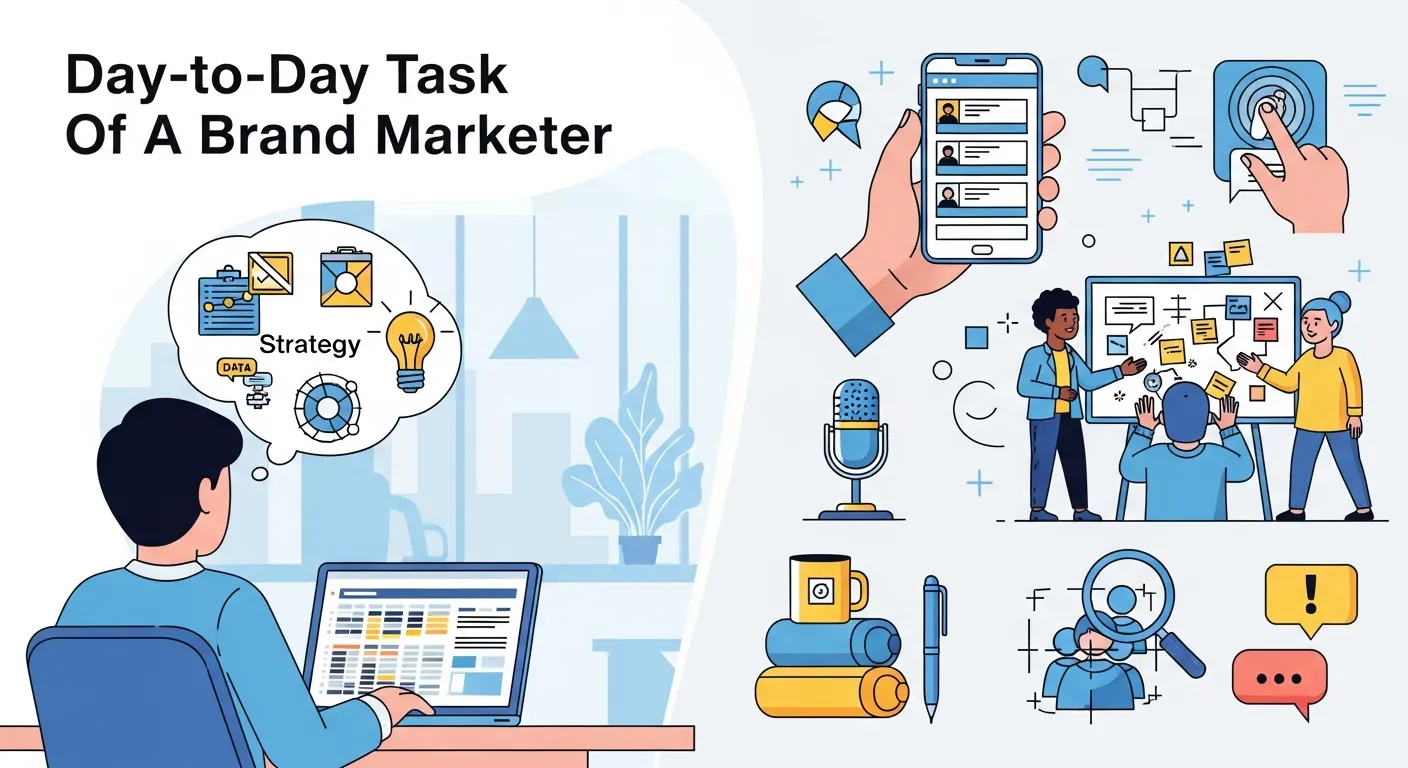
Let’s break down a typical day for a brand marketer, covering everything from planning to performance review.
Morning: Strategic Alignment
- Review campaign schedules and dashboards for previous day’s performance.
- Attend meetings with content, design, and product teams.
- Scan for trends in industry news, social media, and competitor activity.
Midday: Creative Execution and Collaboration
- Draft or approve ad copy, emails, and social posts.
- Collaborate with influencers, freelancers, or creative agencies.
- Monitor and respond to brand mentions or feedback online.
Afternoon: Measurement and Optimization
- Analyze campaign results and performance metrics.
- Prepare reports for leadership or clients.
- Adjust budgets, strategy, or creative assets based on data.
Evening: Research and Learning
- Explore new tools (e.g., AI-driven analytics, chatbot marketing).
- Read case studies on brands succeeding with unique strategies.
- Network in online communities or attend webinars for continued education.
Key Skills and Qualities of an Exceptional Brand Marketer
What does a brand marketer do to stand out? Here are the core competencies and qualities required for ongoing success:
Creativity
- Example: Developing a viral campaign that leverages trending memes or UGC (user-generated content).
- Tip: Brainstorm regularly with other creative-minded team members for innovative ideas.
Analytical Skills
- Ability to read between the lines of complex data, draw actionable insights, and optimize marketing in real time.
- Tool Recommendation: Leverage Google Analytics, Tableau, and CRM dashboards.
Clear Communication
- An effective brand marketer is a storyteller and educator—aligning internal teams and exciting external audiences.
- Tip: Create regular brand narrative workshops for teams.
Project Management
- Multitasking and prioritization are key. Brand marketers often juggle numerous campaigns or initiatives at once.
- Tool Recommendation: Use project management tools like Asana, Monday.com, or Trello.
Empathy and Customer Focus
- Truly understanding and anticipating customer needs is the fastest route to emotional engagement and loyalty.
- Tip: Regularly conduct voice-of-customer interviews or online surveys.
Brand Marketing in the Digital Era: Strategies That Work
Embracing Digital Transformation
Modern brand marketing is inseparable from digital marketing. What does a brand marketer do online? They lead:
- Social Media Management and Optimization
- Content Marketing and Blogging
- SEO-Driven Campaigns
- Email Drip Campaigns and Automation
- Mobile Marketing for Growing Audiences
Leveraging Emerging Technologies
Brand marketers who adopt new technologies stay ahead. From programmatic ads and video marketing to augmented reality (AR) branded experiences and voice search optimization, success hinges on staying relevant.
- Example: IKEA’s use of AR in its app, allowing customers to visualize furniture in their space, reinforces brand innovation and customer experience.
Overcoming Common Brand Marketing Challenges

Even the best brand marketers face obstacles. Here’s how to tackle them:
Limited Budgets
- Focus on high-ROI channels (e.g., content, community building, referral marketing).
- Build partnerships with like-minded brands, influencers, or creators to amplify reach organically.
Market Saturation
- Prioritize authenticity and customer-centric values.
- Use micro and nano-influencers for niche engagement.
- Try gamification strategies or experiential marketing to foster deeper connections.
Navigating Brand Crisis
- Have a crisis management plan, clear lines of communication, and a transparent approach.
- Prepare holding statements, FAQs, and assign spokespersons ahead of time.
Building Your Career: How Do You Become a Brand Marketer?
Education and Experience
- Degrees in marketing, communications, business, or related fields are helpful.
- Real-world experience is even more valuable—seek internships, freelancer projects, or volunteer for nonprofits.
Growing Your Skill Set
- Take online courses in digital marketing, analytics, branding, and social media.
-
- Resource: Coursera, HubSpot Academy.
Building a Portfolio
- Start small with freelance clients or side projects.
- Document campaigns: goals, process, outcomes, and lessons learned.
- Create a personal branding project to showcase storytelling and design ability.
Networking
- Join professional groups on LinkedIn or in your local community.
- Attend digital marketing meetups, webinars, or conferences.
- Engage on industry forums, share ideas, and learn from peers.
Possible Career Paths
- Brand Coordinator → Brand Manager → Senior Brand Manager → Director of Brand → Chief Marketing Officer
- Lateral moves into strategy, research, digital, or creative leadership roles.
The Future of Brand Marketing: Trends to Watch
Brand marketing is evolving quickly. What does a brand marketer do to keep ahead? They anticipate and adapt to these trends:
AI, Personalization, and Automation
- Tailor messages for segments and individual consumers at scale.
- Use AI-driven insights for predictive analytics, trend spotting, and real-time optimization.
Metaverse and Web3 Engagement
- Build communities, host events, and create branded assets or NFTs for use in virtual realities.
Authenticity, Sustainability, and Social Impact
- Gen Z and younger Millennial consumers demand authenticity, social responsibility, and environmental stewardship.
- ESG (Environmental, Social, and Governance) values increasingly drive consumer loyalty.
Multisensory and Experiential Branding
- Brands are investing in sensory marketing (think color, scent, sound) and engaging storytelling experiences, both in-store and online.
Brand Marketing Tools & Resources
Brand marketers rely on an evolving toolkit:
- Analytics: Google Analytics, HubSpot, Tableau
- SEO & Content: SEMrush, Ahrefs, Moz
- Social Media: Hootsuite, Sprout Social, Buffer
- Design: Canva, Adobe Creative Cloud
- Project Management: Trello, Asana
Case Studies: What Does a Brand Marketer Do in Practice?
Case Study 1: Airbnb
Challenge: Establish trust with travelers worldwide.
Solution: Focus on user-generated content, localized storytelling, and emotional ads. Brand marketers drove the “Belong Anywhere” campaign, emphasizing community and experience over transactions.
Case Study 2: Lego
Challenge: Remain relevant to digital-first generations.
Solution: Brand marketers reinvigorated Lego through partnerships (e.g., movies, video games) and creating digital communities. Consistent visual identity and playful tone helped Lego remain a global icon.
Case Study 3: Patagonia
Challenge: Distinguish itself in the crowded outdoor apparel market.
Solution: Emphasized sustainability and activism in all brand messaging. Marketers aligned core values with actions, such as encouraging customers to repair instead of replace, building a community that lives the brand’s purpose.
Table: Brand Marketing Responsibilities and Essential Tools
|
Responsibility |
Example Task |
Common Tools or Channels |
|---|---|---|
|
Strategy Development |
Creating brand story and value proposition |
Strategy maps, workshops, team brainstorms |
|
Research & Insights |
Consumer and competitor surveys, data analysis |
Google Analytics, SEMrush, Industry Journals |
|
Campaign Management |
Planning, launching, and optimizing campaigns |
Email, Social Media, Paid Ads Platforms |
|
Creative Direction |
Overseeing asset creation |
Canva, Adobe Suite |
|
Consistency Enforcement |
Brand audits, team training |
Brand Guidelines Docs, Project Mgmt Tools |
|
Performance Measurement |
KPI tracking and reporting |
Dashboards, Analytics Platforms |
|
Crisis Communication |
Developing and executing crisis management strategies |
PR Teams, Prepared Statement Templates |
|
Community Engagement |
Building and nurturing online/offline communities |
Forums, Groups, Live Events |
Conclusion
So, what does a brand marketer do? In summary, they are the strategic visionaries, skilled communicators, and creative problem-solvers who shape how the world perceives a business. By blending big-picture thinking with data-driven tactics, brand marketers foster trust and build loyalty that stands the test of time. For anyone passionate about combining creativity with analytics, brand marketing offers a fulfilling, impactful, and ever-evolving career path.
If you want your business to resonate in crowded markets, or you dream about becoming a brand marketing leader, understanding what does a brand marketer do is your launchpad to success.
Frequently Asked Questions (FAQs)
1. What is the difference between brand marketing and product marketing?
Brand marketing is about the “why” and “who”—defining the company’s overall reputation, vision, and emotional appeal. Product marketing targets the “what” and “how”—the specifics of the product, its features, and immediate sales strategies. Brand marketing builds long-term trust and brand equity; product marketing aims for quick wins, lead generation, and immediate conversions.
2. Do brand marketers need SEO knowledge?
Absolutely. SEO is fundamental for increasing brand visibility. Even the most creative brand stories need to be found. Understanding how to rank for relevant keywords in Google helps brand marketers boost organic reach, increase awareness, and maintain digital relevance.
3. How is a brand marketing strategy created?
A successful strategy starts with research (customer, competitor, industry), followed by defining a unique position and message. From there, clear guidelines and activation plans are developed. Regular audits and performance reviews ensure the strategy adapts to changing market conditions.
4. What does a brand marketer do to measure success?
Brand marketers use KPIs like brand awareness, customer engagement, market share, sentiment analysis, and ROI. Tools such as Google Analytics, CRM dashboards, and survey platforms help collect, visualize, and interpret these results.
5. What sectors employ brand marketers?
Brand marketers work in virtually every industry: retail, tech, healthcare, finance, hospitality, non-profit, and beyond. Any organization seeking long-term growth and recognition needs brand marketing expertise.
6. Is social media a core responsibility for brand marketers?
Increasingly, yes. While dedicated social teams may execute day-to-day posts, the overall brand narrative and tone are set by brand marketers. They ensure alignment between what’s said on social channels and the broader strategic message.
7. What’s the difference between a brand marketer and a brand manager?
A brand marketer typically focuses more on the tactics—campaigns, content, outreach—while a brand manager oversees brand health, long-term strategy, P&L, and often manages multiple marketers or agency relationships. In some organizations, these titles and responsibilities overlap.
8. Can small businesses leverage brand marketing successfully?
Definitely. Brand marketing is scalable. Even on a tight budget, small business owners can clarify their identity, tell an authentic story, fix customer pain points, and instill trust in their audience.
9. Are certifications important for brand marketing careers?
Certifications in digital marketing, analytics, or brand strategy can strengthen your resume, but practical experience, a strong portfolio, and proven results are far more important. Still, credentials from platforms like HubSpot or Google are a great way to show your up-to-date expertise.
10. Do brand marketers work with external partners?
Yes—brand marketers often collaborate with creative agencies, PR firms, market research consultants, and influencer partners. Successful partnerships can amplify a brand’s reach and impact.