Social media marketing isn’t just for connection; it’s a critical business engine. This comprehensive guide explores exactly how marketers are using social media to build brands, drive sales, and foster loyalty.
This article dissects how marketers are using social media through advanced tactics like AI-driven content, influencer marketing, and social commerce. We provide a deep dive into platform-specific strategies, actionable tips for online engagement, and a detailed FAQ section to help you master the digital landscape.
The Role of Social Media in Modern Marketing
To understand the current digital landscape, we must first look at the foundational role these social media platforms play. When we ask, “how are marketers using social media,” we are really asking how businesses are integrating into the daily lives of their consumers. It is no longer about shouting messages into a void; it is about participation.
Social media has evolved from a simple networking tool into a sophisticated digital marketing ecosystem. It serves as the primary touchpoint for customer service, brand awareness, and community building. Marketers leverage these platforms to humanize their brands, transforming faceless corporations into relatable entities with distinct voices and values. By doing so, they build trust, which is the currency of the modern web.
Furthermore, the data-rich environment of social media analytics allows for unprecedented market research. Every like, share, and comment provides insight into consumer behavior. Marketers analyze this data to refine products, tailor messaging, and predict social media trends before they hit the mainstream. This proactive approach is a key example of how marketers are using social media to stay ahead of the curve.
Building Brand Awareness and Reach
The most fundamental answer to “how are marketers using social media” lies in visibility. With billions of active users across platforms like Instagram, TikTok, and LinkedIn, the potential reach is virtually limitless. However, reach alone is vanity; relevant reach is sanity.
Marketers are using social media to target specific demographics with laser precision. Through tools like Facebook Ads Manager and LinkedIn Campaign Manager, brands can ensure their content is seen by the people most likely to care. This involves a mix of organic strategies—creating shareable, viral social media content—and paid advertising strategies that amplify that content to new audiences.
For example, a sustainable fashion brand might use hashtags related to eco-friendly living to reach organic users interested in sustainability. Simultaneously, they might run paid ads targeting users who follow competitor brands or have shown interest in ethical fashion. This dual approach maximizes visibility and ensures that the brand enters the consideration set of potential customers.
Fostering Customer Engagement and Community Building
Engagement is the heartbeat of social media marketing. It is not enough to post and walk away; successful marketers are active participants in the conversation. How are marketers using social media to foster this engagement? By creating two-way dialogues.
Community management has become a specialized role within marketing teams. These professionals are dedicated to responding to comments, answering direct messages, and even engaging with content on other users’ pages. This high-touch approach signals to customers that they are valued and heard.
Brands are also creating dedicated spaces for their communities. Facebook Groups, Discord servers, and exclusive Instagram “Close Friends” lists are becoming popular tools. These spaces allow for deeper connections and offer loyal customers a sense of exclusivity. By nurturing these micro-communities, marketers turn customers into advocates who voluntarily promote the brand to their own networks.
Key Strategies Marketers Use on Social Media
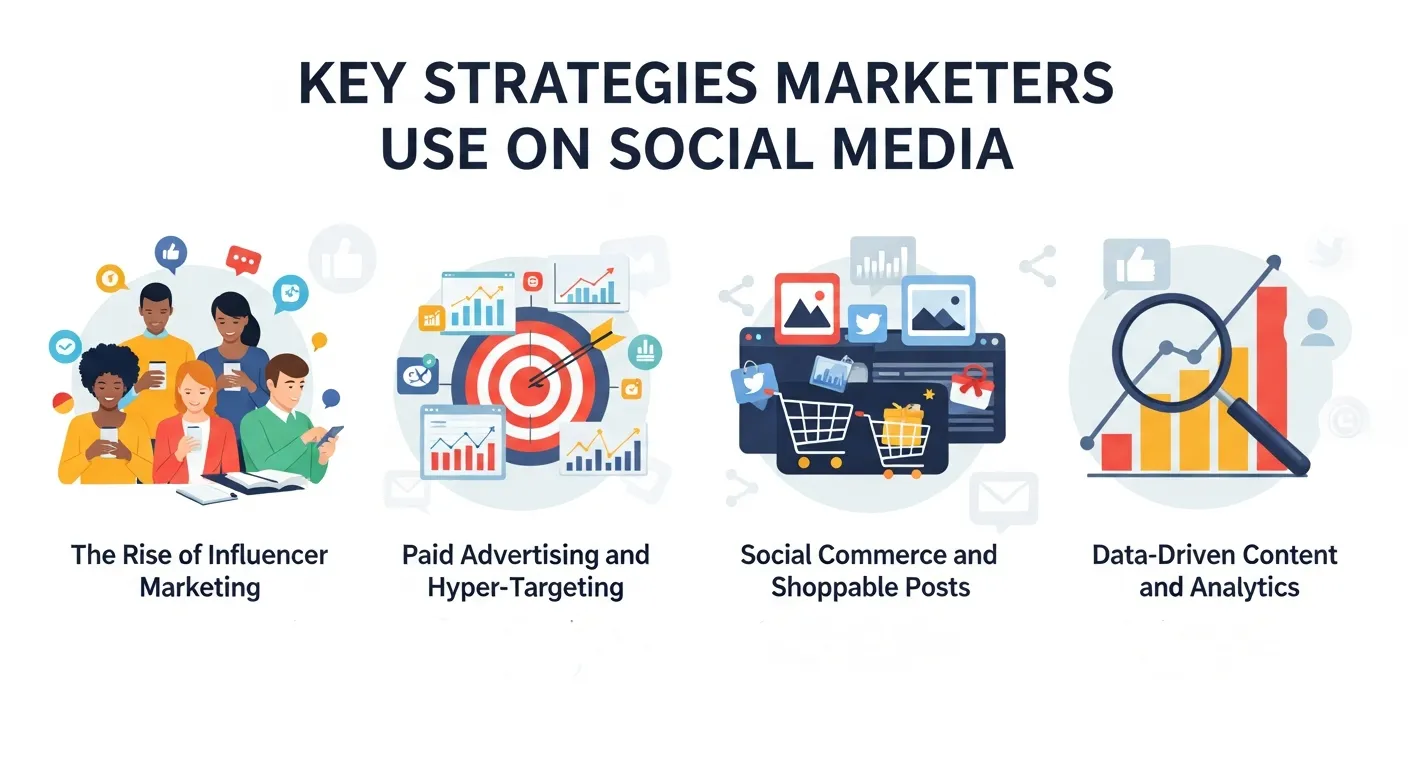
The tactics employed today are diverse and constantly evolving. To fully grasp how marketers are using social media, we need to explore the specific digital marketing strategies that drive results.
Content Marketing and Strategic Storytelling
Content marketing is the vehicle for your marketing message. But how are marketers using social media content differently today than five years ago? The shift is towards storytelling over selling.
Consumers are savvy; they tune out overt advertisements. Marketers counter this by creating content that adds value. This could be educational (tutorials, how-to guides), entertaining (memes, skits), or inspiring (customer success stories).
Actionable Tip: Use the “3 E’s” framework for your content calendar: Educate, Entertain, Empower. Ensure every post falls into one of these categories.
Marketers are also repurposing content across platforms to maximize efficiency. A long-form YouTube video can be sliced into three TikToks, five tweets, and a LinkedIn article. This “create once, distribute everywhere” model is a prime example of how marketers are using social media to get more mileage out of their resources.
The Rise of Influencer Marketing
Influencer marketing has matured from a buzzword into a standard budget line item. But how are marketers using social media influencers effectively? The focus has shifted from macro-influencers (celebrities) to micro- and nano-influencers.
These smaller creators often boast higher engagement rates and more trust within their niche communities. A recommendation from a micro-influencer feels like a tip from a knowledgeable friend, whereas a celebrity endorsement often feels like a paid script.
Example: A skincare brand might partner with 20 micro-influencers who specialize in treating acne, rather than one major celebrity. The collective noise generated by these 20 authentic voices often yields a higher ROI.
Marketers are also using influencers for content creation, not just distribution. Brands hire creators to produce content for the brand’s own channels, leveraging the creator’s unique style and understanding of social media trends.
Paid Advertising and Hyper-Targeting
Organic reach is declining across most major platforms. To combat this, marketers are using social media paid advertising aggressively. The sophistication of these social media ads platforms allows for granular targeting that traditional media cannot match.
How are marketers using social media ads?
- Retargeting: Showing ads to people who visited your website but didn’t buy.
- Lookalike Audiences: Uploading a customer list and asking the platform to find new users who share similar characteristics.
- Behavioral Targeting: reaching users based on recent purchase behaviors or device usage.
This level of precision ensures that marketing dollars are not wasted on irrelevant audiences. It allows for a direct correlation between ad spend and revenue, making social media a performance marketing channel.
Social Commerce and Shoppable Posts
One of the most revolutionary shifts is the integration of shopping directly into social apps. How are marketers using social media for sales? By removing friction.
Instagram Shops, TikTok Shop, and Pinterest Product Pins allow users to go from discovery to purchase without ever leaving the app. This seamless experience reduces cart abandonment and captures impulse buys.
Marketers are optimizing their product catalogs for these platforms, ensuring high-quality images and clear descriptions. They are also using livestream shopping events, where hosts demonstrate products in real-time while viewers purchase instantly. This blend of entertainment and commerce is reshaping the retail landscape.
Social Media Platforms and Their Unique Benefits
A “one-size-fits-all” approach does not work. Marketers must tailor their strategies to the unique culture and algorithms of each platform. Let’s examine how marketers are using social media platforms individually.
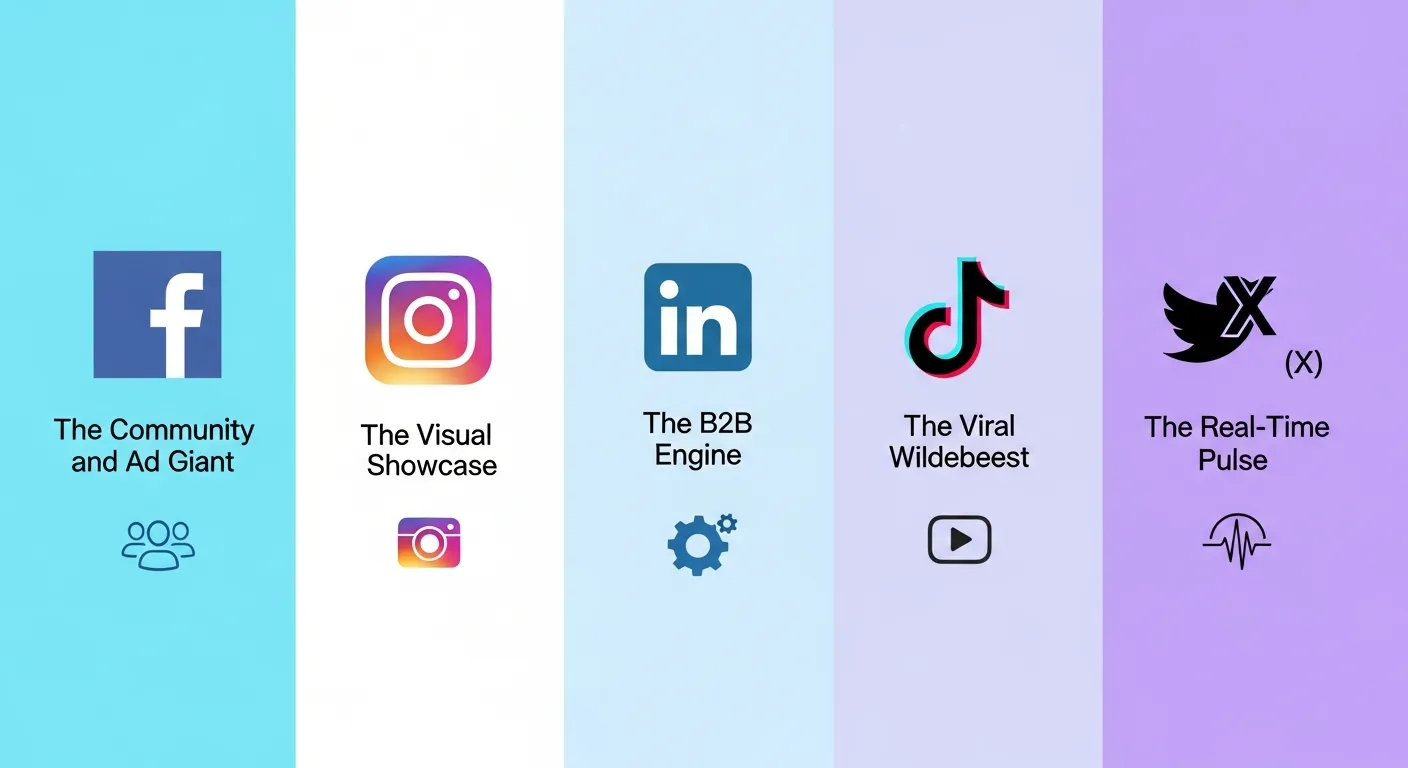
Facebook: The Community and Ad Giant
Despite rumors of its decline, Facebook remains a powerhouse. How are marketers using social media on Facebook?
- Groups: As mentioned, groups are vital for community building. Brands use them to gather feedback and beta-test new ideas.
- Meta Ads: The ad platform is robust, offering the best targeting options available. It is essential for retargeting and reaching older demographics.
- Local Discovery: For local businesses, Facebook pages serve as a second website, hosting hours, reviews, and events.
Instagram: The Visual Showcase
Instagram is where brand aesthetics live. How are marketers using social media here?
- Reels: To compete with TikTok, Instagram pushes Reels heavily. Marketers use this format for reach and viral potential.
- Stories: These are for retention. Stories allow for raw, unpolished updates that keep current followers engaged daily.
- Influencer Hub: It remains the primary platform for influencer marketing partnerships, especially in lifestyle, fashion, and beauty.
LinkedIn: The B2B Engine
For B2B companies, LinkedIn is non-negotiable. How are marketers using social media in the professional sphere?
- Thought Leadership: Executives post long-form content to establish authority.
- Account-Based Marketing (ABM): Marketers target specific companies they want to work with, delivering content directly to decision-makers.
- Recruitment Marketing: It’s not just for sales; it’s for attracting top talent by showcasing company culture.
TikTok: The Viral Wildebeest
TikTok changed the rules of content. How are marketers using social media on this chaotic platform?
- Trendjacking: Rapid participation in trending audio or formats. Speed is key here.
- Edutainment: Educational content delivered in an entertaining way.
- Search Optimization: Gen Z uses TikTok as a search engine. Marketers are optimizing captions and video text for social media SEO to appear in these search results.
Twitter (X): The Real-Time Pulse
X is for the now. How are marketers using social media for real-time engagement?
- Customer Service: It acts as a public help desk.
- Event Commentary: Live-tweeting industry events or cultural moments to stay relevant.
- Brand Banter: Engaging with other brands or viral tweets to show personality.
Emerging Social Media Trends in Marketing
To answer “how are marketers using social media” fully, we must look at the cutting edge.
AI and Automation
Artificial Intelligence is streamlining workflows. Marketers use AI tools to generate captions, schedule posts at optimal times, and even create visual assets. Chatbots handle initial customer service inquiries, freeing up human teams for complex issues. This automation allows for 24/7 presence without 24/7 staffing.
Authenticity and “De-Influencing”
There is a growing fatigue with polished, perfect feeds. The “de-influencing” trend, where creators tell you what not to buy, highlights a demand for honesty. Marketers are responding by producing lo-fi, authentic user-generated content (UGC). They are showcasing failures alongside successes and pulling back the curtain on operations.
User-Generated Content (UGC) as Ads
Ads that look like ads are being ignored. Ads that look like user reviews are being watched. How are marketers using social media ads now? By whitelisting UGC. This means running ads through a creator’s handle rather than the brand’s handle. It increases trust and click-through rates significantly.
How to Measure Success on Social Media
You cannot manage what you do not measure. How are marketers using social media analytics? They focus on KPIs that align with business goals.
- Awareness: Reach, Impressions, Share of Voice.
- Engagement: Likes, Comments, Shares, Saves.
- Conversion: Click-through Rate (CTR), Cost Per Acquisition (CPA), Return on Ad Spend (ROAS).
Advanced marketers use attribution modeling to understand how social media contributes to a sale, even if it wasn’t the last click. They track the customer journey across multiple touchpoints to prove the ROI of their efforts.
Detailed Social Media Case Studies
Let’s look at real-world examples of how marketers are using social media to achieve massive success.
Case Study 1: The Fast Food Twitter Wars
Several fast-food chains have adopted a sassy, combative persona on X (formerly Twitter). By engaging in playful “beef” with competitors, they generate massive organic virality. This strategy answers “how are marketers using social media” by showing that brand voice can be a differentiator. It turns a commodity product (burgers) into a personality-driven brand.
Takeaway: Don’t be afraid to have a distinct personality. Neutral is boring; boring is invisible.
Case Study 2: The Spotify Wrapped Campaign
Every year, Spotify dominates social media with “Wrapped.” They provide users with personalized data stories about their listening habits, formatted perfectly for Instagram Stories. Users voluntarily share this data, effectively becoming free billboards for Spotify.
Takeaway: Personalization drives sharing. If you make the user the hero of the story, they will share your brand for you.
Case Study 3: Duolingo on TikTok
Duolingo’s mascot, a green owl, became a TikTok sensation by being unhinged, obsessed with Dua Lipa, and threatening users who missed their lessons. They ignored traditional “corporate” guidelines and embraced the chaotic nature of the platform.
Takeaway: Meet the platform where it is. Corporate polish doesn’t work on TikTok; chaos does.
Actionable Tips for Small Businesses
You don’t need a massive budget to succeed. Here is how small business marketers are using social media effectively:
- Focus on One Platform: Don’t try to be everywhere. Master one channel where your audience hangs out.
- Batch Create Content: Spend one day a month filming all your videos. This prevents burnout.
- Collaborate Locally: Partner with other local businesses for giveaways. You trade audiences and double your reach.
- Use specific hashtags: Instead of #coffee, use #AustinCoffeeShop. You want local customers, not global likes.
How Are Marketers Using Social Media: A Deep Dive into Content Formats
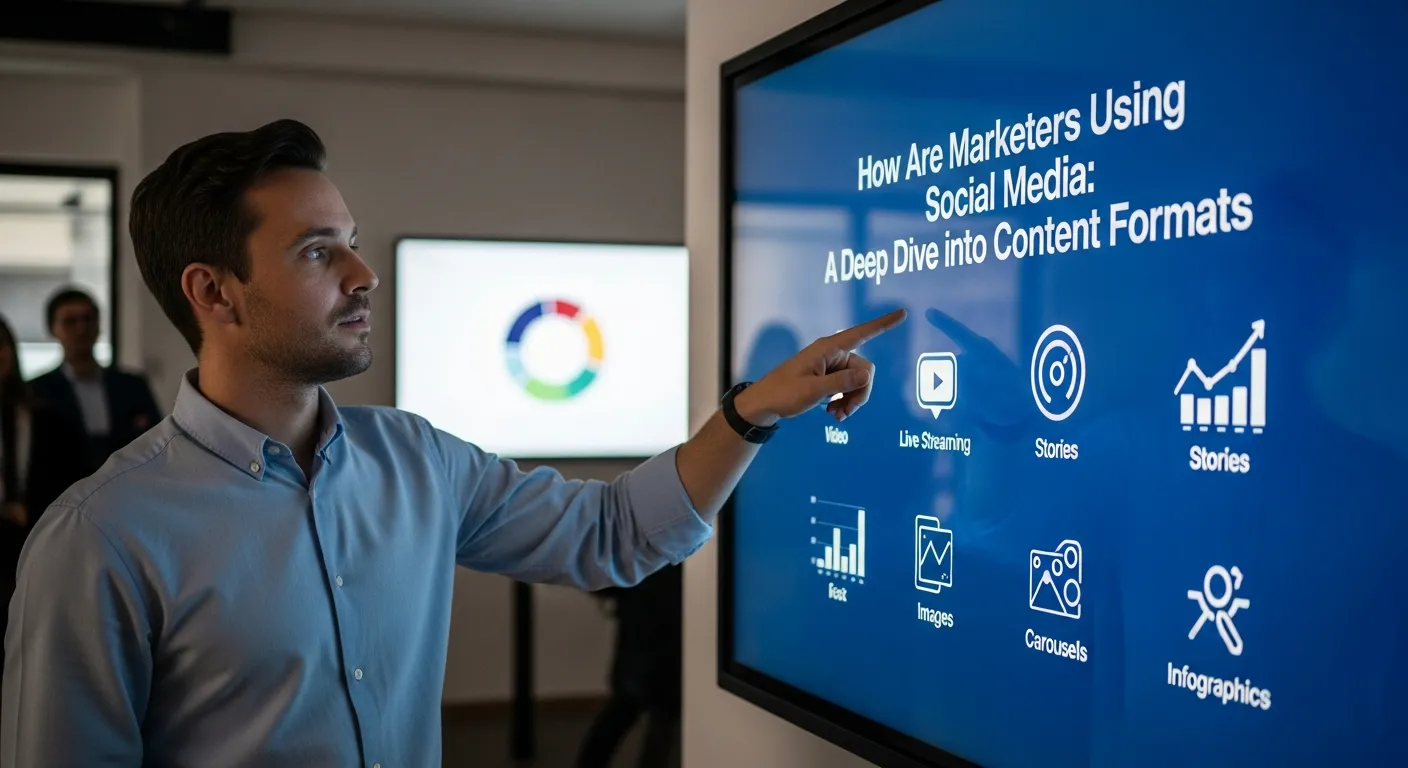
To further elaborate on how marketers are using social media, we must look closely at content formats. The medium is the message, and choosing the right format is critical.
Short-Form Video (Reels, TikToks, Shorts)
This is currently the king of social media content. Marketers use short-form video because it has the highest retention rates. It forces brands to be concise and engaging. It is used for quick tips, behind-the-scenes, and trend participation.
Long-Form Video (YouTube, IGTV)
While short-form grabs attention, long-form builds depth. Marketers use this for deep-dive tutorials, interviews, and documentary-style brand storytelling. This format builds authority and trust over time.
Carousel Posts (Instagram, LinkedIn)
Carousels engage users by encouraging them to swipe, which signals to the algorithm that the content is valuable. Marketers use carousels for step-by-step guides, lists, and storytelling that requires more than one image.
Live Streaming
Going live offers unedited authenticity. How are marketers using social media live streams? For Q&A sessions, product launches, and giving viewers access to events they couldn’t attend in person. It creates a “FOMO” (fear of missing out) effect.
Stories (Ephemeral Content)
Content that disappears after 24 hours lowers the stakes. It allows brands to post more frequently without clogging the main feed. Marketers use Stories for time-sensitive offers, polls, and casual updates.
The Psychology Behind Social Media Marketing
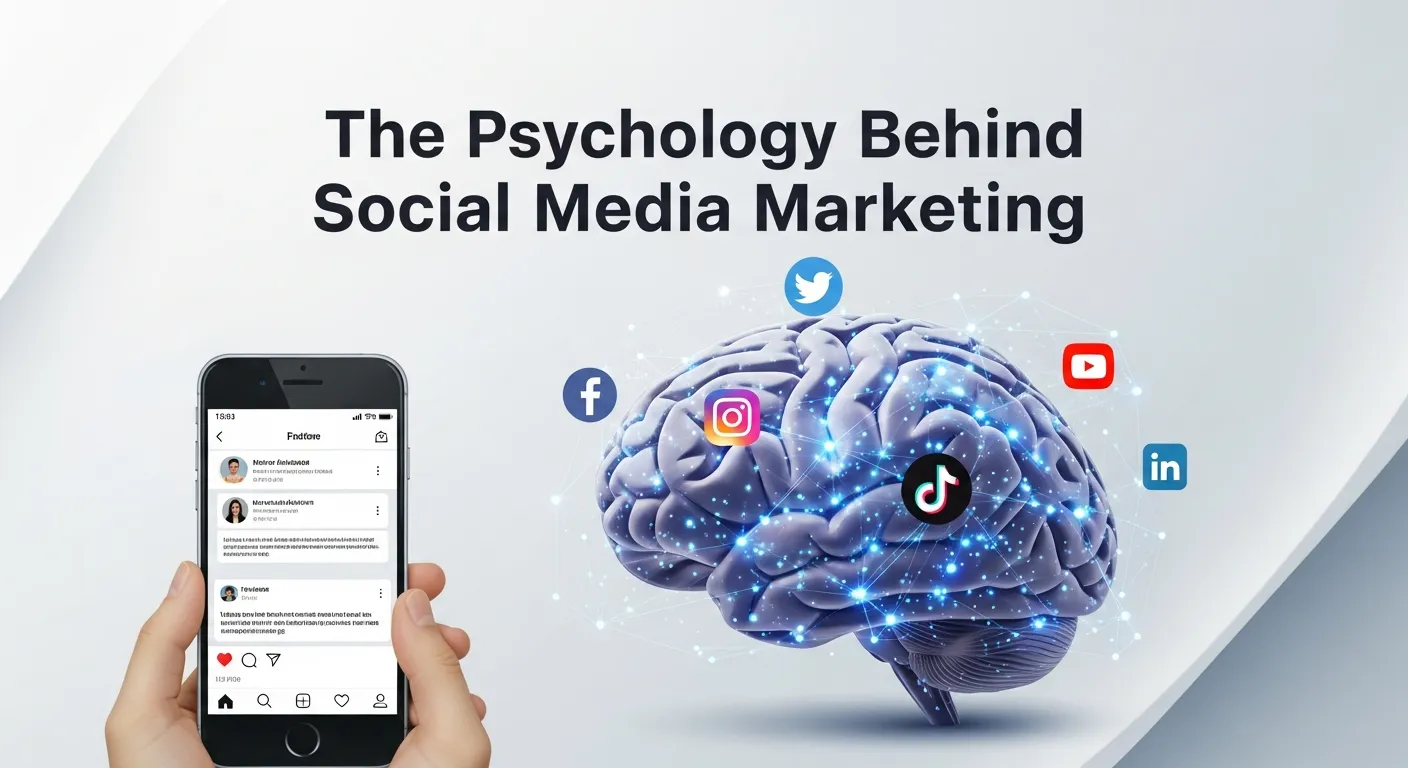
Understanding how marketers are using social media requires a look at behavioral psychology. Marketers leverage cognitive biases to drive action.
- Social Proof: By showcasing user reviews and follower counts, marketers trigger the “bandwagon effect.” If others like it, it must be good.
- Reciprocity: By giving away free value (content, advice, templates), marketers create a subconscious desire in the audience to give back (buy, sign up).
- Scarcity: Limited-time offers promoted on social media trigger urgency. “Link in bio for 24 hours only” is a powerful motivator.
- Authority: Collaborating with experts or using verified badges signals status and reliability.
Navigating Algorithm Changes
One constant in social media is change. Algorithms are updated frequently, often disrupting strategies overnight. How are marketers using social media amidst this volatility? They diversify.
Smart marketers never rely 100% on one platform. If Instagram changes its algorithm to bury photos, they have a YouTube channel or an email list as a backup. They also stay educated, constantly testing new features. Platforms often reward accounts that use their newest features (e.g., when Instagram launched Reels, they gave Reels massive reach). Marketers piggyback on these platform goals to boost their own visibility.
The Future of Social Media Marketing
Looking ahead, how are marketers using social media in the future? We will likely see a rise in:
- VR and AR: Virtual try-ons and immersive brand experiences within the metaverse.
- Decentralized Social Media: Platforms where users own their data, forcing marketers to pay users directly for their attention.
- Voice Search Optimization for Social: As smart speakers integrate with social feeds, audio content will gain importance.
By staying adaptable and focusing on the core human desire for connection, marketers will continue to find innovative ways to use these powerful platforms.
Advanced Tactics: How Are Marketers Using Social Media for Customer Retention?
Acquisition gets all the glory, but retention pays the bills. How are marketers using social media to keep customers coming back?
- Exclusive Content: Creating “Close Friends” lists on Instagram for VIP customers who get early access to sales.
- Surprise and Delight: Monitoring social media for customers posting about the brand and sending them free gifts or personalized thank-you notes.
- Educational Post-Purchase Support: Running ads targeting recent purchasers with videos on how to clean, care for, or best use the product they just bought. This reduces returns and increases satisfaction.
- Community Spotlights: Regularly featuring loyal customers on the main feed. This validates their purchase decision and makes them feel part of the “family.”
How Are Marketers Using Social Media for Local SEO?
For brick-and-mortar businesses, social signals are vital. How are marketers using social media to dominate local SEO?
- Geotags: Every post includes a location tag. This helps the business show up when users search for that location on Instagram or Facebook.
- Local Hashtags: Using tags like #NYCMainStreet or #LondonFoodie helps target people physically near the business.
- Google Business Profile Integration: Savvy marketers treat their Google Business Profile like a social network, posting updates and photos regularly, which directly impacts Google Maps rankings.
Ethical Considerations: How Are Marketers Using Social Media Responsibly?
With great power comes great responsibility. Consumers are demanding ethics. How are marketers using social media ethically?
- Transparency: Clearly labeling AI-generated content and sponsored posts.
- Inclusivity: Ensuring visual content represents diverse races, bodies, and abilities.
- Data Privacy: Being transparent about how data is collected and used for targeting.
- Mental Health Awareness: Avoiding filters that promote unrealistic beauty standards and taking breaks from posting during tragic global events.
In conclusion, the question “how are marketers using social media” has a limitless number of answers because the landscape changes daily. However, the principles of value, connection, and authenticity remain constant. Whether you are a solo entrepreneur or a CMO of a Fortune 500 company, mastering these tools is essential for survival in the digital age. By understanding the strategies, platforms, and psychological triggers discussed in this article, you are well-equipped to navigate the complex world of social media marketing.
How Are Marketers Using Social Media to Drive Innovation?
Social media often acts as a testing ground for new products. How are marketers using social media for R&D?
- Crowdsourcing Ideas: Asking followers, “What flavor should we make next?” This validates demand before manufacturing begins.
- Beta Testing Groups: Recruiting intense users from social media to test early versions of software or products.
- Trend Spotting: If a specific hack involving their product goes viral, marketers might release an official accessory or version that makes that hack easier.
This feedback loop shortens the innovation cycle and reduces the risk of product flops. It transforms marketing from a downstream activity (selling what is made) to an upstream activity (helping decide what to make).
The Integration of Email and Social Media
Silos are dangerous. How are marketers using social media in conjunction with email marketing?
- List Building: Using social media contests where entry requires an email sign-up.
- Content Teasers: Sending an email that teases a video, with a link to watch the full version on YouTube or Instagram, driving traffic across channels.
- Social Proof in Emails: Including screenshots of tweets or Instagram comments in sales emails to provide third-party validation.
- Custom Audiences: Uploading email lists to Facebook to run ads specifically to subscribers, reinforcing the message they saw in their inbox.
This integrated approach ensures that the brand surrounds the customer, appearing in their inbox and their feed with a consistent message.
By examining how marketers are using social media from every angle—strategic, tactical, ethical, and integrative—we see a picture of a discipline that is central to modern business. It is a field that requires both analytical rigor and creative flair. As we move forward, the marketers who win will be those who can balance the data with the human element, using technology to forge deeper, more meaningful connections.
Conclusion
So, how are marketers using social media? They are using it as a multi-functional tool for research, service, sales, and community. It is the glue that holds modern digital marketing strategies together. As platforms evolve, the marketers who succeed will be those who remain agile, data-driven, and deeply human in their approach. By implementing the strategies outlined in this guide—from embracing video content to leveraging micro-influencers—you can transform your social media presence from a passive profile into a dynamic engine for business growth.
FAQs
1. How are marketers using social media to improve SEO?
Marketers use social media to distribute content marketing, which drives traffic to websites. While social signals (likes, shares) aren’t direct Google ranking factors, high engagement increases the visibility of content, leading to more backlinks and organic searches. Additionally, social media profiles often rank in search results for brand names.
2. What are the biggest mistakes marketers make on social media?
The biggest mistake is treating social media as a one-way broadcast channel rather than a two-way conversation. Other errors include being inconsistent with posting, ignoring customer comments, buying fake followers, and using the exact same content across all platforms without optimization.
3. How are marketers using social media for B2B lead generation?
B2B marketers use LinkedIn for targeted outreach and content distribution. They use gated content (whitepapers, webinars) promoted via social media ads to capture email addresses. They also use social listening to identify businesses complaining about competitors, offering their solution as an alternative.
4. How much budget should be allocated to social media marketing?
This varies by industry, but a common rule of thumb is 10-20% of the total marketing budget. This should be split between content creation (production costs) and paid distribution (ad spend).
5. How are marketers using social media to handle crisis management?
Social media is the first line of defense in a crisis. Marketers use it to issue apologies, correct misinformation, and provide real-time updates. A swift, transparent response on Twitter or Facebook can mitigate reputational damage significantly.
6. Is organic reach truly dead?
Not entirely, but it has changed. “Viral” reach is still possible on interest-based algorithms like TikTok and Instagram Reels. However, consistent reach for business pages on platforms like Facebook is very low without paid support. Marketers now view organic as a nurture tool and paid as a growth tool.
7. How are marketers using social media specifically for Gen Z?
Marketers are prioritizing video content, authenticity, and social responsibility. Gen Z values ethical brands. Marketers are also moving away from Facebook towards TikTok, Instagram, and Snapchat to reach this demographic.
8. What tools are essential for social media marketing?
Essential tools include scheduling platforms (Buffer, Hootsuite), design tools (Canva), analytics tools (Sprout Social), and community management dashboards.
9. How often should a brand post on social media?
Consistency matters more than frequency. However, general guidelines are: Instagram (3-5x/week), TikTok (1-3x/day), LinkedIn (2-4x/week), Twitter (multiple times daily).
10. How are marketers using social media to conduct market research?
They use social listening tools to track brand mentions, competitor mentions, and industry keywords. They analyze sentiment to understand how people feel about their products. They also use polls and questions in Stories to get direct product feedback.