Unlock the secret to customer loyalty. Discover how brand personality transforms businesses from faceless entities into relatable partners that audiences trust, love, and advocate for passionately.
Brand personality infuses businesses with human characteristics, fostering deep emotional connections. This guide explores the definition of brand personality, its critical importance for differentiation and trust, the six core archetypes, actionable steps to build your own, and real-world examples of success.
What Is Brand Personality in Marketing?
Brand personality refers to the specific set of human characteristics attributed to a brand name. It is the “who” behind the “what” of your business. If your brand were a person, brand personality determines how that person speaks, acts, dresses, and interacts with others. It is the qualitative value that businesses add to their functional value to create a distinct identity in the marketplace.
While a product provides a function, a brand offers an experience. Brand personality is the vehicle for that experience. It moves a company beyond sterile spreadsheets and profit margins into the realm of emotional engagement. When consumers can describe a brand using adjectives typically reserved for people—sincere, exciting, competent, sophisticated, or rugged—that brand has successfully established a personality.
The Psychology Behind the Persona
At its core, brand personality leverages the psychological principle of anthropomorphism, where humans attribute human-like traits to non-human entities. We do this with our pets, our cars, and yes, the companies we buy from. By defining a personality, marketers tap into the human desire for connection and relationship.
Consider the difference between a generic cola and Coca-Cola. The liquid inside might be chemically similar, but the personality differs vastly. One is a sugary beverage; the other is “happiness in a bottle,” associated with joy, community, and nostalgia. This distinction is entirely the result of a carefully cultivated brand personality.
Dimensions of Brand Personality
Jennifer Aaker, a behavioral psychologist and Stanford professor, developed a framework that breaks down brand personality into five core dimensions, often referred to as the “Big Five”:
- Sincerity: Down-to-earth, honest, wholesome, and cheerful. (e.g., Disney, Hallmark)
- Excitement: Daring, spirited, imaginative, and up-to-date. (e.g., Red Bull, Tesla)
- Competence: Reliable, intelligent, and successful. (e.g., Microsoft, Volvo)
- Sophistication: Upper class and charming. (e.g., Rolex, Mercedes-Benz)
- Ruggedness: Outdoorsy and tough. (e.g., Jeep, Timberland)
Understanding which dimension your brand naturally aligns with is the first step in crafting a strategy that resonates with your target audience.
Why Is Brand Personality Important?
In an era of digital noise and infinite choice, having a great product is no longer enough. Brand personality is the differentiator that captures attention and retains it. Here is why it is critical for your marketing strategy.
1. Differentiation in a Competitive Market
Imagine walking down the cereal aisle. There are fifty options, many offering the same basic nutritional value. Why do you choose one over the other? Often, it’s not the price or the ingredients, but the personality. One box screams fun and adventure for kids; another whispers health and responsibility for adults.
Your brand personality is your unique fingerprint. It separates you from the “sea of sameness.” If you are a B2B software company, the market expects you to be dry and technical. If you adopt a personality that is witty and approachable, you immediately stand out. This differentiation is vital for survival in saturated markets.
2. Building Emotional Connections
People buy based on emotion and justify with logic. This is a fundamental tenet of consumer psychology. A well-defined personality allows a brand to connect emotionally with its audience.
When a customer feels that a brand “gets” them—that the brand shares their values, humor, or worldview—a bond is formed. This is emotional branding at its finest. It transforms a transactional relationship (I give you money; you give me a product) into a relational one (We are partners in this lifestyle). Nielsen studies consistently show that consumers with an emotional connection to a brand have a significantly higher lifetime value (LTV).
3. Enhancing Brand Recall
Memorable characters are easier to recall than abstract concepts. The Geico Gecko is a prime example. Insurance is a complex, often boring topic. But by attaching a funny, distinct personality (the Gecko) to the service, Geico made itself unforgettable.
A distinct voice, consistent visual style, and unique attitude make your brand “stick” in the consumer’s mind. When the need for your product arises, your brand will be the first one they think of because its personality has made a lasting impression.
4. Fostering Trust and Loyalty
Trust is built on consistency. We trust people who act in predictable ways that align with their stated values. The same applies to brands. If a brand claims to be “customer-centric” but uses a cold, robotic tone in its support emails, trust is broken.
A strong brand personality acts as a compass for your company. It ensures that every touchpoint—from social media posts to customer service scripts—feels like it comes from the same source. This consistency builds trust. Over time, trust evolves into loyalty, turning customers into brand advocates who will defend your company to their peers.
5. Guiding Business Decisions
Your brand personality isn’t just for external marketing; it’s an internal filter for decision-making. Should we partner with this influencer? Does this new product design fit our image? Is this copy too aggressive?
If your brand personality is “The Caregiver,” you likely won’t launch a marketing campaign that mocks your competitors. If you are “The Rebel,” you might avoid safe, traditional advertising channels. Having a defined personality simplifies complex strategic choices by providing a clear “North Star.”
Six Archetypes That Shape Brand Personalities
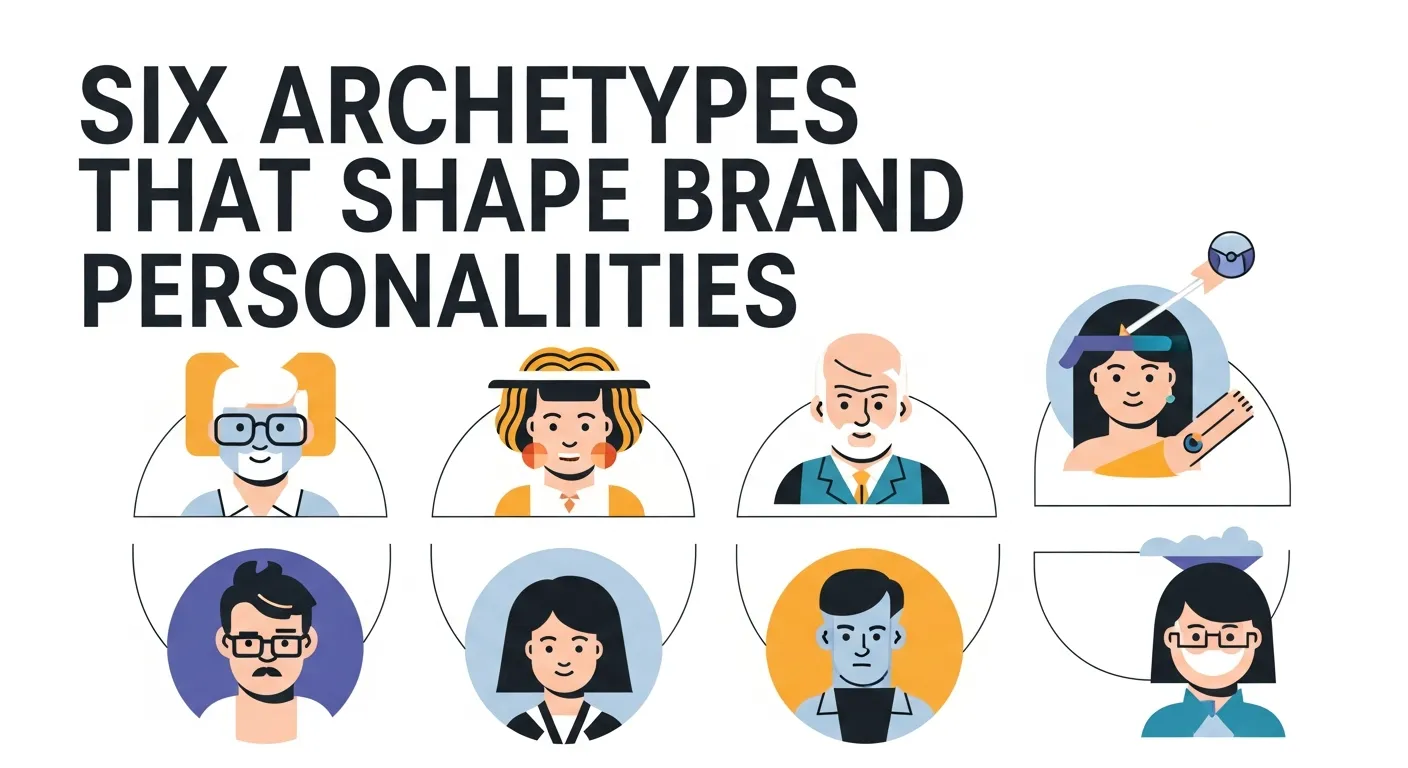
Psychologist Carl Jung introduced the concept of archetypes—universal, archaic patterns and images that derive from the collective unconscious. In marketing, these 12 archetypes (often condensed into broader categories) help brands anchor their personality in narratives that humans intuitively understand. Here are six of the most powerful archetypes used in Brand Voice Strategy.
1. The Hero
Motto: Where there’s a will, there’s a way.
Goal: To prove worth through courageous action and improve the world.
Strategy: Become as strong, competent, and powerful as you are capable of being.
The Hero brand is all about rising to the challenge. They don’t just sell products; they sell triumph over adversity. They appeal to the consumer’s desire for achievement and mastery.
- Example: Nike. Their “Just Do It” slogan isn’t a suggestion; it’s a command to the inner hero in every athlete. Nike champions the underdog and celebrates the grind, positioning its products as the tools needed to overcome obstacles.
- Tone: Motivational, direct, confident, empowering.
2. The Caregiver
Motto: Love your neighbor as yourself.
Goal: To help others and protect people from harm.
Strategy: Do things for others.
The Caregiver is altruistic, compassionate, and generous. These brands promise safety and support. They are common in healthcare, non-profits, and education sectors, but also appear in consumer goods that focus on family and home.
- Example: Johnson & Johnson. For decades, their marketing has focused on the tender bond between mother and child. Their personality is soft, reassuring, and deeply empathetic. They aren’t selling lotion; they are selling a mother’s touch.
- Tone: Warm, gentle, reassuring, nurturing.
3. The Originator (The Creator)
Motto: If you can imagine it, it can be done.
Goal: To create something of enduring value.
Strategy: Develop artistic control and skill.
The Originator (often called the Creator) is driven by the desire to craft something new. They hate mediocrity and thrive on self-expression. These brands appeal to the artist, the writer, the builder, and the dreamer in all of us.
- Example: Lego. Lego is the ultimate Creator brand. It provides the bricks, but the user provides the imagination. Their marketing celebrates the endless possibilities of what can be built, positioning the brand as a catalyst for innovation.
- Tone: Inspirational, innovative, visionary, artistic.
4. The Explorer
Motto: Don’t fence me in.
Goal: To experience a better, more authentic, more fulfilling life.
Strategy: Journey, seek out and experience new things, escape boredom.
The Explorer craves freedom. They are independent, ambitious, and spiritual. Explorer brands align themselves with the outdoors, travel, and the unknown. They appeal to the consumer’s desire to escape the mundane and find themselves in the wild.
- Example: Jeep. Jeep doesn’t sell cars for commuting; they sell vehicles for escaping. Their imagery is consistently rugged—mud, mountains, and open skies. The personality is rugged and resilient.
- Tone: Adventurous, rugged, independent, daring.
5. The Scholar (The Sage)
Motto: The truth will set you free.
Goal: To use intelligence and analysis to understand the world.
Strategy: Seek out information and knowledge; self-reflection and understanding thought processes.
The Scholar (or Sage) believes that knowledge is power. They are experts, advisors, and thinkers. They don’t rely on flash or gimmicks; they rely on data, research, and wisdom. These brands build trust through authority.
- Example: Google. Google organizes the world’s information. Their brand personality is helpful, intelligent, and unobtrusive. They are the smart friend who always has the answer but never makes you feel stupid for asking.
- Tone: Analytical, authoritative, articulate, objective.
6. The Jester
Motto: You only live once.
Goal: To have a great time and lighten up the world.
Strategy: Play, make jokes, be funny.
The Jester lives in the moment with full enjoyment. They fear being bored or boring others. Jester brands are great at connecting with people who feel overwhelmed by the seriousness of adult life. They use humor to disarm and engage.
- Example: Old Spice. After their rebrand, Old Spice embraced the Jester archetype completely. Their commercials are absurd, chaotic, and hilarious. They turned a dusty “grandpa brand” into a viral sensation by refusing to take themselves seriously.
- Tone: Playful, humorous, irreverent, energetic.
Steps to Building a Strong Brand Personality
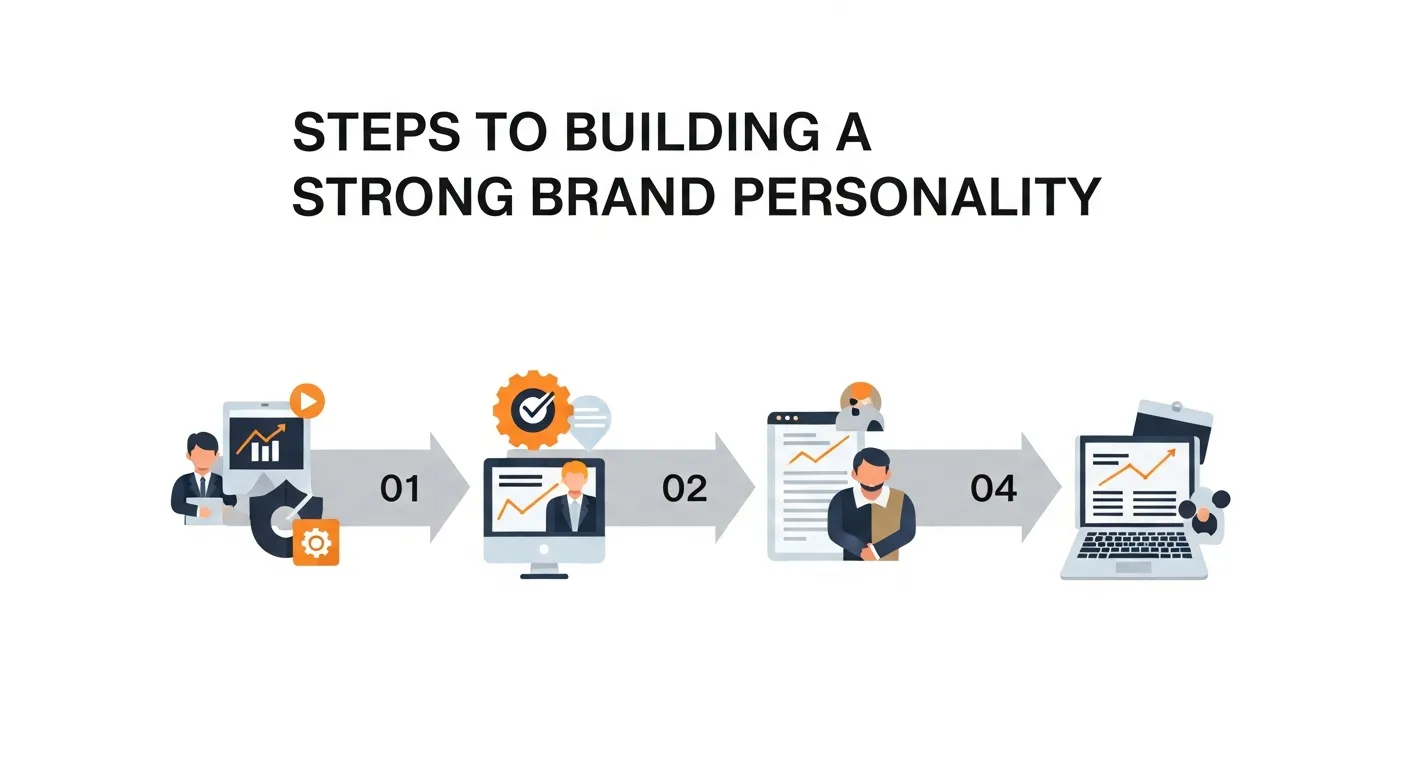
Building a brand personality that commands attention requires more than picking an archetype out of a hat. It involves deep research, introspection, and strategic planning. Follow this comprehensive roadmap to define your Brand Storytelling and personality.
1. Define Your Target Audience with Precision
You cannot be everything to everyone. A personality that appeals to a 60-year-old investment banker will likely alienate a 19-year-old skateboarder.
- Actionable Step: Create detailed buyer personas. Go beyond demographics (age, location). Dive into psychographics:
-
- What are their fears?
- What makes them laugh?
- What slang do they use?
- Who are their heroes?
- Tip: Look at your existing “super fans.” Who engages most with your content? Analyze their profiles to find common threads in their own personalities.
2. Define Your Brand Values and Mission
Your personality is the outward expression of your inner values. If your company values transparency, your personality should be candid and open. If you value innovation, your personality should be forward-thinking and bold.
- Actionable Step: Write down your “Why.” Why does your company exist beyond making money?
-
- Patagonia’s Why: To save our home planet.
- Resulting Personality: Activist, serious, nature-loving.
- Tip: Conduct a “This, Not That” exercise. “We are funny, but not silly.” “We are confident, but not arrogant.” This helps refine the nuances of your values.
3. Choose Your Voice and Tone
Your voice is consistent; your tone adapts to the context. Your brand voice is the verbal expression of your personality.
- Actionable Step: Create a Brand Voice Chart.
-
- Voice Characteristic: Helpful.
- Description: We are always looking for ways to assist the customer.
- Do: Use phrases like “How can we help?” or “Here is a tip.”
- Don’t: Use passive aggressive language or industry jargon that confuses the user.
- Tip: Read your website copy aloud. Does it sound like a human talking, or a corporation droning on? If it sounds like a robot, rewrite it.
4. Narrow Your Visuals (Visual Identity)
Your visual identity (logo, typography, colors) must align with your personality. Incongruence here creates cognitive dissonance for the consumer.
- Actionable Step: Apply color psychology.
-
- Blue: Trust, stability (Bank of America, Facebook).
- Red: Excitement, passion, danger (Coca-Cola, Netflix).
- Green: Nature, growth, money (Whole Foods, Android).
- Yellow: Optimism, warmth (McDonald’s, Snapchat).
- Tip: Create a mood board. Collect images, textures, and fonts that “feel” like your brand. If you are a “Rugged” brand, your fonts should be bold and blocky, not script and delicate.
5. Build a Personality Structure
Treat your brand like a character in a novel. Give it depth.
- Actionable Step: Answer the “Cocktail Party Question.” If your brand walked into a cocktail party:
-
- What would it be wearing?
- What drink would it order?
- Who would it talk to?
- What jokes would it tell?
- Tip: Assign adjectives to your brand. Pick 3-5 words that define you (e.g., Witty, Brief, Intelligent). Ensure every piece of content passes the filter of these three words.
6. Be Consistent Across All Touchpoints
Inconsistency kills brands. You cannot be a “Jester” on TikTok and a “Scholar” in your email newsletter. This confuses the audience and creates a sense of inauthenticity.
- Actionable Step: Create a Brand Style Guide. This document should explicitly state your voice, tone, forbidden words, and visual guidelines. Distribute this to everyone who creates content for your brand.
- Tip: Audit your current channels. Look at your last 10 social posts, your homepage, and your automated email receipts. Do they sound like they came from the same person? If not, align them.
Examples of Successful Brand Personalities
Studying the masters is the best way to learn. These brands have perfected the art of personality, using it to dominate their respective markets.
Wendy’s: The Sassy Challenger
Wendy’s revolutionized social media marketing by breaking the “corporate nice guy” rule. They adopted a persona that was snarky, reactive, and incredibly funny.
- The Strategy: Wendy’s realized their audience (young, hungry, internet-savvy) didn’t want corporate speak. They wanted entertainment. Wendy’s began “roasting” competitors and even followers on Twitter.
- The Result: This “Sassy Challenger” persona generated massive organic reach. People followed Wendy’s not just to see burgers, but to see what they would say next. It turned a fast-food chain into a pop culture icon.
Apple: The Sophisticated Creator
Apple’s personality is a blend of the Creator and the Magician. They focus on simplicity, innovation, and elitism.
- The Strategy: Apple never talks about specs (RAM, gigahertz) in the way competitors do. They talk about dreams, creativity, and “thinking different.” Their visual style is minimalist—lots of white space, sleek lines.
- The Result: Apple successfully positioned itself as a lifestyle brand. Owning an Apple product signals that you value design and innovation. Their personality justifies their premium pricing. You aren’t buying a phone; you’re joining a club of sophisticated creators.
Airbnb: The Global Neighbor (The Caregiver/Explorer)
Airbnb disrupted the hospitality industry by shifting the focus from “accommodation” to “belonging.”
- The Strategy: Their “Belong Anywhere” campaign perfectly encapsulates their personality. They are the welcoming friend in a foreign city. Their content focuses on stories of hosts and travelers, emphasizing human connection over amenities.
- The Result: By adopting a warm, community-focused personality, Airbnb overcame the initial fear people had of staying in a stranger’s home. Their brand personality creates a sense of safety and adventure simultaneously.
Harley-Davidson: The Outlaw
Harley-Davidson is the quintessential “Outlaw” or “Rebel” archetype.
- The Strategy: They sell freedom. Their brand personality is loud, aggressive, and fiercely independent. They don’t appeal to everyone, and they don’t try to. Their marketing often features open roads, leather, and grit.
- The Result: Harley-Davidson has one of the most loyal followings in history. Their customers literally tattoo the brand’s logo on their bodies. This level of devotion is only possible because the brand personality so perfectly mirrors the self-image of its customers.
Dove: The Sincere Realist
Dove transformed the beauty industry by challenging beauty standards.
- The Strategy: The “Real Beauty” campaign positioned Dove as a brand that cares about self-esteem, not just soap. Their personality is supportive, honest, and empowering. They use real people in ads, not models.
- The Result: Dove differentiated itself in a shallow industry by having depth. Their personality resonated with millions of women tired of unrealistic beauty standards, driving massive growth and loyalty.
Practical Tips for Maintaining Brand Personality

Once you have established your personality, the challenge is maintaining it as you scale.
1. Train Your Team
Your customer support team is the frontline of your brand personality. If your brand is “fun and quirky,” your support agents shouldn’t sound like lawyers. Train them to use the brand voice in their tickets and calls.
2. Use “Micro-Copy” to Your Advantage
Don’t overlook small spaces. Error messages, loading screens, and button text are great places to inject personality.
- Boring: “404 Error. Page Not Found.”
- Brand Personality (Pixar): An image of a crying character with text: “Awww… Don’t Cry. It’s just a 404 Error!”
3. Evolve with Your Audience
Brand personality isn’t static. Just as people mature, brands must evolve. However, the core DNA should remain. Old Spice changed its tone, but it kept its masculinity. Monitor cultural trends and adjust your tone to stay relevant without losing your identity.
4. Monitor Sentiment
Use social listening tools to see how people describe your brand. Are they using the adjectives you want them to use? If you think you are “witty” but customers say you are “offensive,” you need to recalibrate immediately.
Conclusion
Start with baby steps as you strive to craft your brand personality. Think of brand personality as the human qualities your company brings into every interaction. It is what helps your audience feel close to you and decide on your brand rather than somebody else’s. Whether you are a newly created company or one that has been around for decades, putting time and effort into forming your brand personality is one of the best things you can do.
If you want your marketing to have a human touch, or you want to add some panache to the personality you already have developed, try discovering just what your brand stands for and aligning it with what your chosen audience likes. With a little cleverness and consistency, you can bring into being a personality that not only attracts but retains customers for a lifetime.
FAQs
1. Can a brand have more than one personality archetype?
Yes, but with caution. Most successful brands have a dominant archetype (e.g., 70%) and a secondary archetype (e.g., 30%) to add nuance. For example, Apple is primarily a Creator but has elements of the Magician. However, trying to mix conflicting archetypes (like the Jester and the Ruler) can confuse your audience and dilute your brand message.
2. How often should I update my brand personality?
Your core brand personality should remain relatively stable to build trust. However, your expression of that personality (visuals, specific slang, platforms used) should evolve with the times. A full rebrand of personality is usually only necessary if the current one is damaging the business or if the company is pivoting to a completely new market.
3. Does brand personality impact SEO?
Indirectly, yes. A strong brand personality leads to better engagement metrics (time on site, social shares, click-through rates), which are signals Google uses to rank content. Furthermore, creating unique, voice-driven content helps you target long-tail keywords and natural language queries that generic content often misses.
4. What is the difference between brand identity and brand personality?
Brand identity is the visual and tangible elements of a brand (logo, colors, design). Brand personality is the emotional and human characteristics (voice, values, behavior). Think of identity as the clothes a person wears, and personality as the way they speak and act. They must work together, but they are distinct concepts.
5. How do B2B brands use brand personality?
B2B brands often mistake “professional” for “boring.” However, B2B buyers are still humans. Companies like Salesforce (The Hero/Inspirator) or Mailchimp (The Jester/Creator) use distinct personalities to stand out. In B2B, personality helps build trust and reduces the perception of risk, which is crucial for high-value contracts.
6. Can a small business afford to build a brand personality?
Absolutely. In fact, small businesses have an advantage here. It is easier for a founder-led business to be authentic and personal than a faceless multinational corporation. Building a personality doesn’t cost money; it costs thought and consistency. It’s about how you write your emails and how you treat customers, not how much you spend on ads.
7. What happens if my brand personality doesn’t match my product?
This creates a “disconnect” that erodes trust. For example, if you sell high-end, serious financial security software but use a goofy, meme-filled “Jester” personality, customers may doubt the security of your product. Your personality must support the promise of your product, not undermine it.
8. How do I measure the success of my brand personality?
You can measure success through Brand Equity KPIs such as brand sentiment analysis, customer loyalty rates (retention), and net promoter score (NPS). Qualitative feedback—like comments saying “I love your emails!” or “This post made my day”—is also a strong indicator that your personality is resonating.
9. Is it risky to have a polarizing brand personality?
Yes, but it can be a calculated risk with high rewards. Brands like Liquid Death (water sold in skulls) or Cards Against Humanity rely on being polarizing. They accept that 50% of people will hate them so that the other 50% will obsess over them. If you try to please everyone, you often end up delighting no one.
10. Can AI help in defining brand personality?
Yes. Tools like ChatGPT can help you brainstorm archetypes, generate voice examples, and audit your content for consistency. However, the core strategy and emotional nuance should be defined by human leadership to ensure it feels authentic and aligns with the company’s true values.