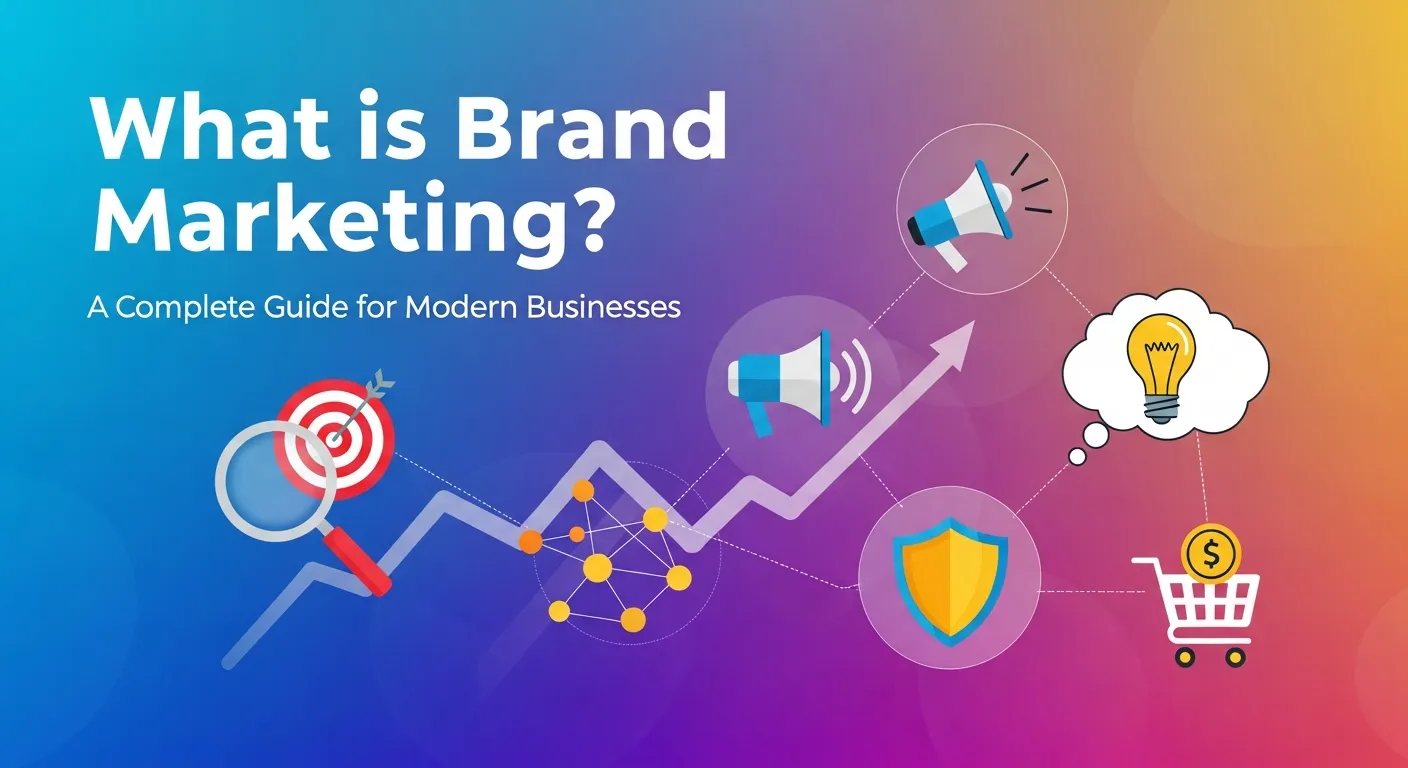
Building a business isn’t just about selling items; it’s about crafting an identity. Brand marketing transforms casual buyers into loyal advocates by connecting through values, stories, and emotions.
This guide explores brand marketing deeply, distinguishing it from product marketing. You will learn core elements like brand identity and voice, why emotional connection matters, and actionable strategies to build trust. We also cover modern trends like AI branding and sustainability to help you grow.
What Is Brand Marketing? Understanding the Core
At its most fundamental level, brand marketing is the strategic process of promoting a company’s identity, values, and narrative rather than focusing exclusively on individual products or services. While product marketing asks, “Do you want to buy this item?”, brand marketing asks, “Do you want to join us?”
The goal is to cultivate a brand that exists in the minds of consumers as a distinct entity with personality and purpose. It is about playing the long game. Short-term sales tactics might spike revenue for a quarter, but successful brand marketing builds the equity that sustains a business for decades. It creates a reputation that precedes you, ensuring that when a customer is finally ready to make a purchase, your name is the first one they think of.
The Shift from Product to Purpose
Historically, marketing was transactional. If you made the best mousetrap, you marketed the features of the spring and the wood. Today, markets are saturated. Consumers are overwhelmed with choices, many of which are functionally identical.
In this environment, differentiation rarely comes from features alone. It comes from brand storytelling and emotional resonance. Brand marketing shifts the conversation from “what we do” to “why we do it.” This “why” is the anchor that holds customers steady even when competitors lower prices or launch flashy new features.
Brand Marketing vs. Product Marketing: A Critical Distinction
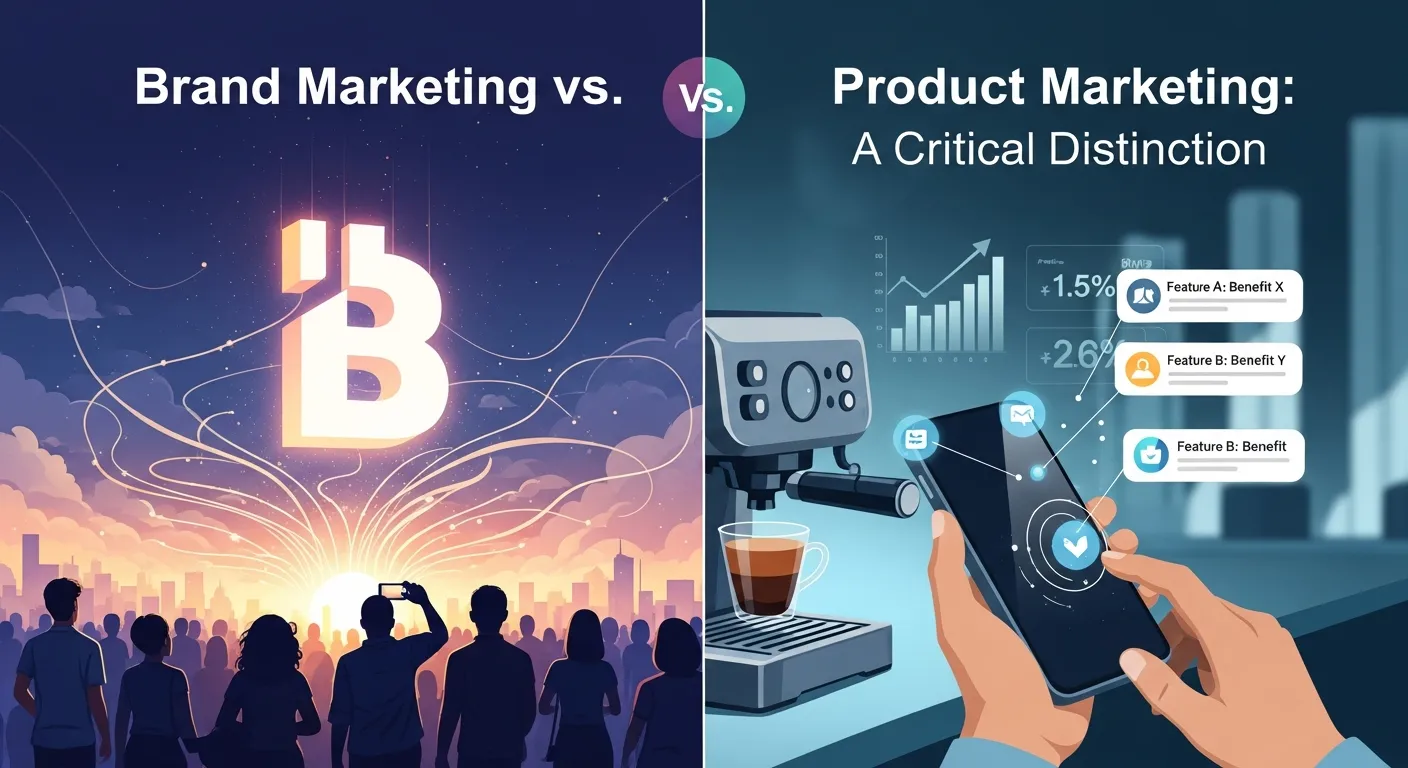
To truly master brand marketing, you must understand how it differs from product marketing. They are two sides of the same coin, but they serve different functions in the customer journey.
The Focus
- Product Marketing: Focuses on the specific utility, features, and benefits of a single offering. It answers the question, “What problem does this specific tool solve?”
- Brand Marketing: Focuses on the overarching reputation and feeling of the company. It answers the question, “Who is this company, and can I trust them?”
The Timeline
- Product Marketing: Often short-term or campaign-based. It is driven by launch cycles, seasonal trends, and immediate conversion goals.
- Brand Marketing: Always long-term. Brand equity is built over years of consistent messaging and positive customer experiences. It is an infinite game where consistency is the primary metric of success.
The Metric
- Product Marketing: Measured in sales, click-through rates (CTR), and conversion rates.
- Brand Marketing: Measured in brand awareness, sentiment, Net Promoter Score (NPS), and customer lifetime value (CLV).
|
Feature |
Product Marketing |
Brand Marketing |
|---|---|---|
|
Primary Goal |
Drive immediate sales |
Build long-term equity and trust |
|
Target Audience |
Specific segment for a product |
Broad audience aligning with values |
|
Key Message |
“This product helps you do X” |
“Our brand stands for Y” |
|
Emotional Depth |
Functional satisfaction |
Emotional connection & loyalty |
|
Timeline |
Short-term / Seasonal |
Continuous / Long-term |
Why Brand Marketing Matters in the Digital Age
In an era of endless scrolling and digital noise, being recognized is difficult. Being remembered is even harder. Here is why investing in brand marketing is non-negotiable for modern businesses.
1. It Builds Emotional Connections
Neuromarketing studies suggest that consumers rely heavily on emotions when making purchasing decisions, often using logic only to justify the choice later. Emotional branding taps into this by aligning your business with feelings of safety, prestige, joy, or belonging. When you market your brand effectively, you aren’t just selling a commodity; you are selling a feeling.
2. It Differentiates You in a Crowded Market
Consider the bottled water industry. The product is essentially identical across competitors. Yet, some brands command a premium price while others struggle on the bottom shelf. The difference is branding. One brand sells “purity from the Alps,” while another sells “smart hydration for athletes.” Brand marketing carves out a unique space in the consumer’s mind, making your product the only logical choice for a specific type of person.
3. It Increases Customer Loyalty and Retention
Acquiring a new customer can cost five times more than retaining an existing one. Strong brands create “sticky” customers. When people identify with your brand values—such as sustainability or innovation—they stick around. They become brand advocates who defend you in comment sections and recommend you to friends, acting as a powerful form of referral marketing.
4. It Supports Premium Pricing
Apple is the classic example of brand equity. Because they have successfully marketed their brand as a symbol of creativity, innovation, and status, they can charge significantly more than competitors for hardware with similar specifications. People pay for the logo on the back of the phone because of what that logo signals to the world.
Core Elements of a Successful Brand Marketing Strategy
Building a brand is like building a house. You need a solid foundation before you can decorate. Here are the pillars you must establish.
Brand Identity: The Visual Language
Your brand identity includes your logo, color palette, typography, and imagery. These visual cues serve as mental shortcuts for consumers. When someone sees that specific shade of “Tiffany Blue” or the “Golden Arches,” they immediately recall the brand’s promise. Consistency here is vital. If your website looks sleek and modern but your packaging looks outdated and cluttered, you create cognitive dissonance that erodes trust.
Brand Voice and Tone: The Verbal Personality
How does your brand speak? A law firm generally shouldn’t use the same brand voice as a skateboard company.
- Voice: This is your brand’s personality (e.g., authoritative, witty, empathetic). It remains consistent.
- Tone: This is the emotional inflection applied to your voice depending on the situation. You might be “witty” on Twitter but “empathetic” when dealing with a customer complaint.
Brand Values and Mission
Your mission statement explains what you do, but your values explain how you do it. Do you prioritize green marketing and sustainability? Are you committed to diversity and inclusion? Modern consumers, especially Gen Z and Millennials, are increasingly “belief-driven buyers.” They want to buy from companies that share their worldview.
The Brand Story
Facts tell, but stories sell. Your brand story isn’t just a history of when you were founded. It is the narrative of the struggle you faced, the problem you solved, and the journey you are on. A compelling story makes your brand relatable. It transforms a faceless corporation into a group of humans trying to make a difference.
How to Build a Brand Marketing Strategy: Step-by-Step

Developing a strategy requires research, creativity, and discipline. Follow this roadmap to launch or refine your efforts.
Step 1: Define Your Purpose and “Why”
Start with the “Golden Circle” concept popularized by Simon Sinek. Why does your organization exist beyond making money? If your answer is “to provide the best customer service,” dig deeper. Why does that matter? Perhaps your true purpose is “to make people feel heard and valued in a busy world.” This purpose becomes the North Star for all your content marketing and communication.
Step 2: Understand Your Target Audience
You cannot be everything to everyone. Attempting to appeal to a universal audience usually results in a bland message that appeals to no one. Use data from Google Analytics and social media insights to build detailed buyer personas.
- What are their pain points?
- What values do they hold dear?
- Where do they spend their time online?
- What other brands do they love?
Step 3: Conduct a Competitive Analysis
Look at your competitors not to copy them, but to find the “white space.” If everyone in your industry is using blue logos and talking about “efficiency,” perhaps there is an opening for a brand that uses orange and talks about “creativity.” Tools like SEMrush or Ahrefs can help you analyze competitors’ keywords and traffic sources to understand their positioning.
Step 4: Craft Your Brand Messaging
Develop a tagline and key messaging pillars. These are the 3-5 core themes you will repeat across all channels. Repetition is the mother of learning—and branding. If one of your pillars is “Speed,” ensure your website loads fast, your customer service replies quickly, and your ads emphasize time-saving.
Step 5: Execute Across All Channels (Omnichannel Strategy)
Your brand must live everywhere your customers are. This includes:
- Social Media: Tailor your presence to the platform. Instagram is for visuals; LinkedIn is for thought leadership.
- Content Marketing: Create blogs, videos, and whitepapers that provide value without asking for a sale immediately.
- Email Campaigns: Use your brand voice in subject lines and body copy.
- Customer Experience: Your support team is the frontline of your brand. Train them to embody your brand values in every interaction.
Modern Trends Reshaping Brand Marketing
The landscape is shifting. Here are the trends you need to watch to keep your brand relevant in 2025 and beyond.
1. Authentic Influencer Partnerships
Consumers are growing skeptical of massive celebrity endorsements. They are turning to micro-influencers and nano-influencers who have smaller, highly engaged followings. These creators are viewed as more authentic and trustworthy. Partnering with them can help transfer their trust to your brand.
2. Sustainability and Ethical Branding
Green marketing is no longer a niche; it is a baseline expectation for many consumers. Brands that engage in “greenwashing” (faking sustainability) face severe backlash. Authentic commitment to environmental and social causes can become a major pillar of your brand identity.
3. Personalization and AI
Artificial Intelligence allows for hyper-personalization. Brands like Netflix and Spotify use data to curate experiences so effectively that the algorithm feels like a friend. Using AI to tailor email recommendations or website content enhances the feeling that the brand “knows” the customer.
4. Community Building
The most successful brands today are building communities, not just customer bases. Whether it’s a Discord server, a Facebook Group, or a branded hashtag, giving your customers a place to connect with each other strengthens their connection to you. This is often referred to as brand advocacy.
5. Video and Interactive Content
Static images are losing ground to short-form video (TikTok, Reels, Shorts). Video allows for richer storytelling, showing the faces behind the brand, and demonstrating products in real-life scenarios. Interactive content like polls and quizzes also drives higher engagement rates.
Measuring the Success of Brand Marketing
Because brand marketing is intangible, measuring it can be tricky. You cannot simply look at a sales dashboard. You need to track a mix of qualitative and quantitative metrics.
Brand Awareness Metrics
- Direct Traffic: Are people typing your URL directly into their browser? This means they know who you are.
- Search Volume: Use Google Search Console to see how many people are searching for your brand name specifically.
- Social Mentions: How often are people tagging you or using your branded hashtags?
Brand Sentiment Analysis
It’s not enough to be known; you must be liked. Tools can scan social media and review sites to analyze the sentiment (positive, neutral, negative) of the conversation surrounding your brand. This is crucial for reputation management.
Share of Voice (SOV)
This metric measures how much of the market conversation you own compared to your competitors. If there are 10,000 tweets about “vegan sneakers” this week, and 2,000 mention your brand, you have a 20% share of voice.
Customer Loyalty Metrics
- Retention Rate: What percentage of customers return for a second purchase?
- Net Promoter Score (NPS): How likely are customers to recommend you to a friend? This is a gold standard for measuring brand health.
Examples of World-Class Brand Marketing
Learning from the best is the fastest way to improve. Let’s look at three examples of distinct brand marketing strategies.
1. Nike: Empowerment and Heroism
Nike rarely talks about the rubber in their soles. They talk about the athlete in your soul. Their campaigns celebrate resilience, overcoming adversity, and the “Just Do It” attitude. They have successfully aligned their brand with the concept of human potential.
2. Dove: Real Beauty
Dove disrupted the beauty industry by shifting the focus from “fixing flaws” to celebrating natural beauty. Their “Real Beauty” campaigns featured diverse body types and no airbrushing. This emotional branding created a deep bond with women who were tired of unrealistic beauty standards.
3. Red Bull: Extreme Lifestyle
Red Bull is a media company that happens to sell energy drinks. They sponsor extreme sports, own F1 teams, and host massive events. Their brand marketing is all about adrenaline and pushing limits. They don’t sell a drink; they sell a lifestyle.
Common Mistakes to Avoid in Brand Marketing
Even seasoned marketers stumble. Avoid these pitfalls to protect your brand equity.
Inconsistency
Using a formal tone on your website and a meme-heavy tone on social media confuses customers. Inconsistency signals a lack of professionalism and reliability. Ensure your visual and verbal identity is uniform across all touchpoints.
Ignoring Customer Feedback
Your brand isn’t what you say it is; it’s what they say it is. If you market yourself as a “customer-first” brand but have terrible support response times, the market will punish you. You must listen to brand feedback and align your operations with your marketing promises.
Over-complicating the Message
The most powerful brands have simple messages. “Think Different.” “Open Happiness.” “Belong Anywhere.” If your mission statement is a paragraph long, it’s too complex. Simplify your core message until it can be understood by anyone.
Neglecting Internal Branding
Your employees are your best brand ambassadors. If they don’t understand or believe in the brand values, they cannot communicate them to customers. Invest in internal training to ensure everyone from the CEO to the intern understands the brand mission.
Conclusion
Brand marketing is the soul of your business. It is the bridge that connects your products to the hearts and minds of your customers. In a marketplace defined by infinite choice, the brand is the deciding factor.
By defining a clear purpose, maintaining consistency, and fostering genuine emotional connections, you can build a brand that withstands market fluctuations and price wars. Remember, products have lifecycles, but brands—if nurtured correctly—can live forever. Start today by asking not what you want to sell, but who you want to be.
FAQs
1. What is the difference between branding and marketing?
Marketing is the set of tools and strategies you use to promote your business (like SEO, ads, or email). Branding is the identity (logo, voice, values) that you are promoting. Marketing is the action; branding is the essence.
2. How long does it take to see results from brand marketing?
Unlike performance marketing (ads), brand marketing is a long-term play. It typically takes 6 to 12 months to see significant shifts in brand awareness or sentiment, though the compound effects last for years.
3. Can small businesses afford brand marketing?
Absolutely. Brand marketing isn’t about expensive Super Bowl ads. It’s about consistency, storytelling, and customer service. A local coffee shop that remembers your name and uses sustainable cups is doing excellent brand marketing.
4. What is a brand archetype?
Brand archetypes are a framework based on Carl Jung’s psychology theories, categorizing brands into 12 personalities (e.g., The Hero, The Jester, The Caregiver). This helps companies define their voice and connect deeply with specific human desires.
5. How does SEO relate to brand marketing?
They work together. Strong SEO optimization ensures your brand is visible when people search for relevant topics. Conversely, a strong brand leads to more branded searches (people typing your name), which signals authority to search engines like Google.
6. What is “Brand Equity”?
Brand equity is the commercial value that derives from consumer perception of the brand name, rather than the product or service itself. High brand equity allows companies to charge premium prices.
7. How do I improve my brand awareness?
Focus on content marketing, leverage social media, partner with influencers, and ensure your visual identity is consistent. Guest posting on reputable sites (like those analyzed by Backlinko or Moz) also helps spread your name.
8. Is a logo the most important part of brand marketing?
No. While a logo is critical for recognition, it is just a symbol. The most important part is the promise and experience behind the logo. A great logo cannot save a company with bad values or poor service.
9. What is “rebranding”?
Rebranding is the process of changing the corporate image of an organization. It might involve a new name, logo, or a complete shift in strategy. It is usually done to stay relevant, shed a negative reputation, or target a new demographic.
10. How does social media impact brand marketing?
Social media is the primary channel for two-way communication. It allows brands to show their personality, engage directly with customers, and build community. It is essential for modern brand storytelling.