Achieving true brand consistency is the ultimate secret to unlocking scalable growth, ensuring every customer interaction builds unwavering trust and unmistakable market presence across all available channels.
This comprehensive guide explores the strategic importance of aligning your messaging, visuals, and tone. You will learn actionable frameworks, discover common pitfalls, and explore expert strategies designed to safeguard your corporate identity, boost consumer trust, and maximize your long-term commercial success.
The Strategic Foundation of a Unified Presence

In the modern commercial landscape, organizations are fiercely competing for consumer attention across an unprecedented number of platforms. From social media feeds and email newsletters to physical packaging and in-store experiences, the sheer volume of touchpoints makes maintaining a unified presence both highly challenging and absolutely critical. When a company successfully executes brand consistency, it does much more than simply make its marketing materials look aesthetically pleasing. It actively constructs a psychological shortcut in the consumer’s mind, signaling reliability, professionalism, and trustworthiness.
Consumers are inherently drawn to the familiar. When a company presents a disjointed image—perhaps using a playful, casual tone on social media but a rigid, overly formal tone in email communications—it creates cognitive dissonance. This friction forces the consumer to work harder to understand what the company actually represents, which often leads to them abandoning the interaction altogether. Conversely, a unified approach ensures that every single interaction reinforces the core message, compounding the overall impact of your marketing efforts and significantly lowering customer acquisition costs.
The Psychology Behind Consumer Trust
To truly master this discipline, one must understand the psychological mechanisms at play. The human brain is wired to seek patterns and predictability. When an organization’s visual and verbal cues remain stable over time, it establishes a reliable pattern. This predictability breeds comfort, and comfort is the foundational building block of customer loyalty. According to consumer behavior studies, repetitive exposure to a uniform brand identity creates an anchoring effect. The customer no longer needs to evaluate the company from scratch during each interaction; instead, they instantly recall the positive feelings associated with previous encounters.
Measuring the Impact on the Bottom Line
The financial implications of maintaining a uniform corporate image are staggering. Organizations that successfully align their messaging across all platforms frequently report significant increases in overall revenue. When brand recognition is high, marketing campaigns yield much better return on investment (ROI) because the audience requires fewer impressions to take action.
Furthermore, a cohesive identity protects against price sensitivity. When consumers implicitly trust an organization because of its reliable and professional presentation, they are far more likely to pay a premium for its products or services. They are not simply buying a commodity; they are buying the assurance and quality that the uniform identity represents. Research published by authoritative sources like Forbes routinely highlights that companies with highly uniform presentation command significantly higher market valuations than their disjointed competitors.
The Role of Internal Alignment
External uniformity is impossible without internal alignment. Large organizations often struggle with brand consistency because they operate in silos. The public relations team might have a different understanding of the core messaging than the direct sales team, while the product development team might use a completely different visual vocabulary.
To bridge these gaps, leadership must champion the uniform identity from the top down. Every employee, from the customer service representatives to the executive board, must understand the core values and the approved methods for communicating them. This requires comprehensive internal training, easily accessible digital asset management systems, and a culture that values corporate uniformity as much as it values individual creativity.
Structured Comparison: Traditional vs. Cohesive Identity
To illustrate the profound operational differences, let us examine how traditional, decentralized marketing approaches compare to a fully unified, cohesive identity strategy.
|
Strategic Element |
Traditional Marketing Approach |
Cohesive Identity Strategy |
Impact on the Consumer |
|---|---|---|---|
|
Visual Assets |
Created ad hoc by different teams |
Governed by centralized, strict rules |
Eliminates visual confusion |
|
Messaging Tone |
Varies wildly based on the author |
Dictated by a universal style guide |
Builds deep customer loyalty |
|
Asset Storage |
Scattered across local hard drives |
Housed in a unified Digital Asset Management (DAM) system |
Ensures only approved graphics are seen |
|
Campaign Execution |
Siloed and highly disjointed |
Synchronized across all channels simultaneously |
Maximizes overall brand recognition |
|
Market Adaptation |
Reactive and often off-message |
Strategic, localized within global guardrails |
Protects the core brand identity |
Developing Comprehensive Governance

The most effective way to ensure long-term alignment is through the development of robust brand guidelines. This living document serves as the ultimate source of truth for the entire organization. However, creating the document is only the first step; enforcing it is where many companies fail.
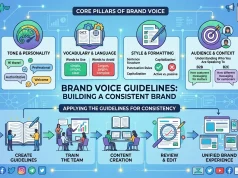
A comprehensive style guide must detail every aspect of the organization’s public and private presentation. This includes exact color hex codes, typographic hierarchies, logo clear-space rules, and photographic styling. Furthermore, it must explicitly define the corporate voice. Are you authoritative but approachable? Are you disruptive and energetic? The guidelines must provide concrete examples of how this voice sounds in various contexts, from a short social media post to a lengthy white paper.
Leveraging Technology for Scale
As an organization grows, manual enforcement of brand consistency becomes mathematically impossible. This is where modern marketing technology (MarTech) becomes indispensable. Implementing a robust Digital Asset Management (DAM) system ensures that every internal team and external agency has immediate access to the latest, fully approved assets.
Additionally, AI-powered content review tools can now scan marketing materials before they are published, flagging unauthorized font changes, off-brand vocabulary, or improper logo usage. By integrating these automated safeguards into your operational workflow, you empower your creative teams to move quickly without compromising the integrity of the corporate image. Insights from MarTech Advisor continually emphasize that technological enablement is the primary differentiator between organizations that scale successfully and those that fracture under their own weight.
Cross-Channel Integration Strategies

Customers do not view your social media presence, your website, and your physical store as separate entities; they view them as a single, continuous experience. Therefore, cross-channel integration is absolutely vital.
When launching a new campaign, the visual motifs, core messaging, and specific calls to action must be synchronized perfectly. If a customer sees a digital advertisement featuring a specific color palette and value proposition, clicking that advertisement must lead them to a landing page that uses the exact same visual and verbal language. Any disconnect in this journey introduces doubt and drastically lowers conversion rates.
The Nuance of Localization
Global enterprises face the unique challenge of maintaining brand consistency while simultaneously appealing to distinct local cultures. What resonates deeply in North America might be entirely ineffective or even offensive in Southeast Asia.
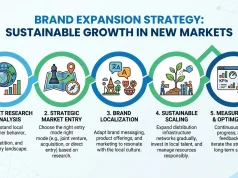
The solution lies in creating a flexible framework. The core brand identity—such as the logo, primary color palette, and fundamental values—must remain strictly locked. However, the imagery, cultural references, and specific phrasing can be localized. This localized approach, often referred to as “glocalization,” allows the company to feel relevant and respectful to local audiences while still preserving the global recognition that drives enterprise value. Deloitte research on global marketing effectiveness frequently points to this careful balance of strict central governance and flexible local execution as the hallmark of highly successful multinational corporations.
Common Mistakes to Avoid
Even well-intentioned marketing teams can inadvertently damage their corporate identity. To protect your organization, actively avoid these common and costly mistakes:
- Treating Guidelines as Suggestions: Failing to strictly enforce your brand guidelines allows localized teams to gradually dilute the corporate image through minor, unapproved tweaks.
- The “Set It and Forget It” Mentality: An identity must evolve. Failing to update your standards to accommodate new social media platforms or technological shifts results in an outdated, fragmented presence.
- Neglecting the Internal Culture: If your employees do not believe in or understand the core values, their external communications will naturally lack authenticity and uniformity.
- Over-Policing Creativity: While rules are necessary, an overly rigid system can stifle innovation. Your framework should guide creativity, not completely paralyze your marketing teams.
- Ignoring the Customer Experience: Consistency is not just about logos and fonts; it is about the entire operational experience, including shipping times, customer service interactions, and product quality.
Pro Tips and Expert Insights
To elevate your marketing operations from average to exceptional, consider implementing these advanced, expert-level strategies:
- Establish a Governance Board: Create a cross-functional committee consisting of leaders from marketing, sales, product, and human resources. This board should meet quarterly to review asset usage, address systemic issues, and approve necessary updates to the visual standards.
- Conduct Routine Audits: Do not wait for a major rebranding initiative to check your alignment. Schedule bi-annual audits where your team randomly samples emails, sales decks, and digital advertisements to ensure strict adherence to the visual and verbal standards.
- Create Template Libraries: The easiest way to prevent rogue, off-message content is to make the right way the easiest way. Provide your sales and regional teams with heavily locked, pre-approved templates for presentations, proposals, and social graphics.
- Gamify Compliance: Instead of only punishing deviations, reward teams that flawlessly execute campaigns within the established framework. Highlighting these successes in company-wide meetings reinforces the importance of the initiative.
Conclusion
Building strong brand consistency is no longer optional in today’s competitive marketplace. Organizations that align their messaging, visuals, customer experience, and internal culture create stronger emotional connections, increase consumer trust, and improve long-term profitability. A unified identity helps businesses stand out across crowded digital and physical channels while reinforcing professionalism and reliability at every touchpoint. By combining clear governance, strategic localization, employee alignment, and modern marketing technology, companies can scale confidently without diluting their core identity. Ultimately, maintaining consistency transforms a business from being simply recognizable into becoming truly memorable, trusted, and commercially resilient.