

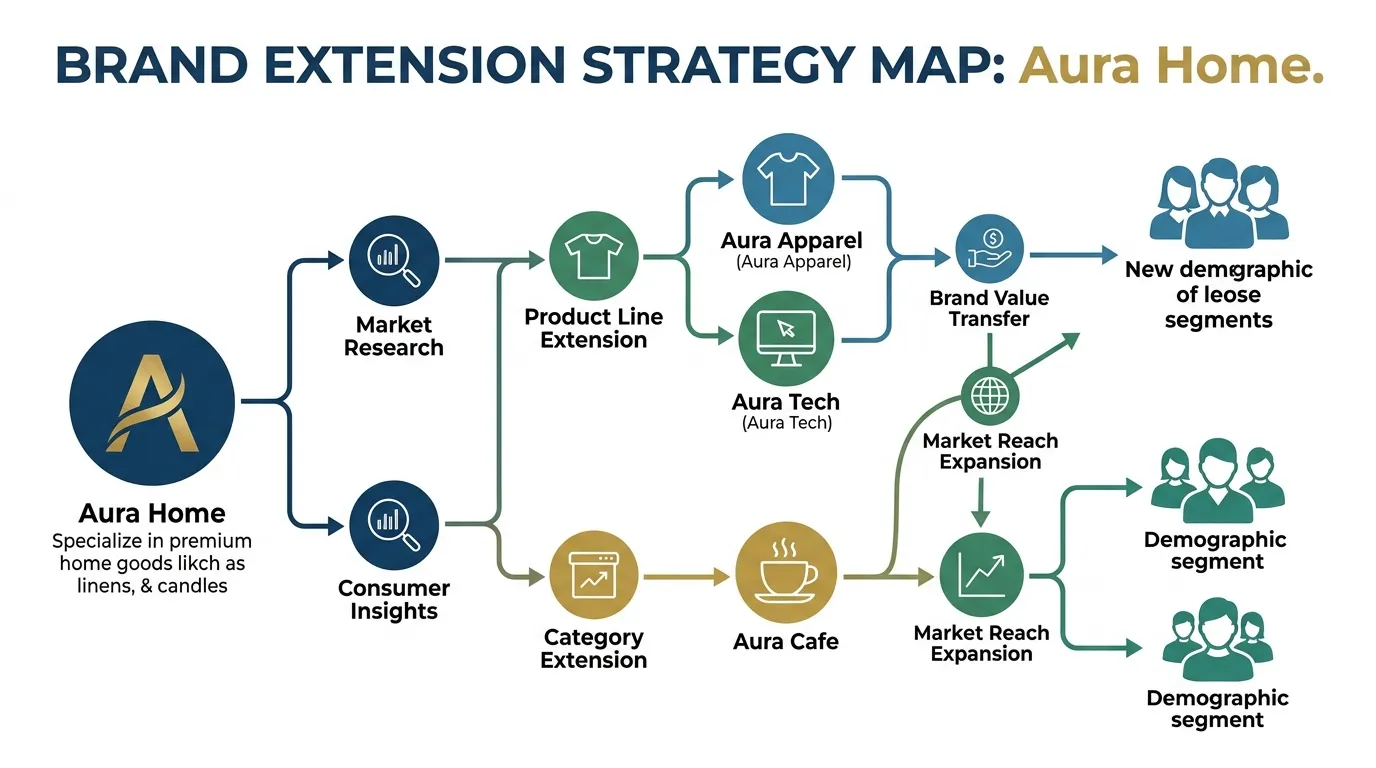
Brand Extension Planning helps businesses expand into new products, services, and markets while maintaining the identity and reputation of an established brand. A successful approach considers customer expectations, market demand, product relevance, brand positioning, and operational capabilities. By managing extensions carefully and measuring their impact, businesses can create new growth opportunities while protecting customer trust and long-term brand value.
Brand Extension Planning plays an important role in helping businesses expand their presence, introduce new products, reach different customer segments, and strengthen their position in competitive markets. As companies grow, they often look for opportunities to use their existing brand reputation to support new products, services, or market categories. A well-planned brand extension can help businesses build on customer familiarity while creating additional opportunities for long-term growth.
However, expanding a brand involves more than introducing something new under an established name. Businesses need to understand their existing brand identity, customer expectations, market demand, competitive environment, and available resources. When these elements are considered together, brand extension becomes a strategic approach to business development rather than an isolated product launch.
Understanding Brand Extension Planning

Brand Extension Planning refers to the process of evaluating and preparing opportunities to introduce an established brand into new product categories, services, or markets. It allows businesses to build on existing brand recognition and customer trust while exploring additional revenue opportunities.
Customers often develop associations with brands through their experiences, product quality, communication, and overall reputation. These associations can influence how they respond when a company introduces a new offering. If the extension feels relevant to the existing brand, customers may be more willing to consider it.
For example, a company known for skincare products may expand into personal care accessories because the new category connects naturally with its existing audience. In contrast, entering an unrelated market without a clear connection to the brand may create confusion and weaken its positioning.
Brand Extension Strategy and Market Growth
A strong Brand Extension Strategy connects new business opportunities with the identity and reputation of an established brand. It helps organizations determine which categories, products, or services are suitable for expansion and how these offerings should be introduced to customers.
Brand extension decisions should reflect the expectations of the existing audience. A company with a reputation for affordability may need to consider how a premium product extension will affect customer perceptions. Similarly, a brand recognized for innovation may need to ensure that new offerings maintain the same commitment to quality and originality.
The strategy should also consider the competitive environment. Businesses need to understand whether the proposed extension addresses an existing customer need, offers meaningful differentiation, and has enough market potential to justify the investment.
Brand Expansion Planning and Business Development
Brand Expansion Planning helps businesses evaluate how their brand can grow beyond its current products, services, or customer segments. Expansion may involve introducing complementary products, entering new geographic markets, targeting different audiences, or creating additional service categories.
The connection between existing and new offerings is particularly important. Customers should be able to understand why the brand is entering a new category and how the extension relates to its established identity. A clear connection can make the new offering feel like a natural development rather than an unexpected change.
Expansion planning also involves reviewing operational capabilities. Businesses need to consider production capacity, distribution, customer support, marketing resources, pricing, and product development requirements.
Managing Brand Portfolio Extension
Brand Portfolio Extension involves expanding the range of products or services offered under an existing brand or within a broader brand portfolio. This can help businesses serve different customer needs and create more opportunities for cross-selling and customer retention.
A wider portfolio can strengthen a company’s position in its industry. When customers can access multiple relevant offerings from the same brand, the business may become a more convenient choice. However, portfolio growth needs careful management because too many unrelated products can make brand identity less clear.
Businesses should evaluate how each new offering contributes to the overall portfolio. Products should have a clear purpose, a defined audience, and a meaningful relationship with the existing brand.
Product Line Extension Strategy
A Product Line Extension Strategy focuses on introducing new variations within an existing product category. These variations may include different sizes, features, designs, materials, performance levels, or price points.
Product line extensions allow companies to respond to changing customer preferences without completely entering an unfamiliar category. For example, a beverage brand may introduce additional flavors, while a technology company may offer different versions of an existing device to serve different budgets.
Although product line extensions can increase customer choice, businesses need to understand whether the new variations offer genuine value. Introducing too many similar products may create confusion and make purchasing decisions more difficult.
Brand Diversification Strategy
A Brand Diversification Strategy allows businesses to explore opportunities beyond their existing product or service categories. Diversification may help companies reach new audiences, reduce dependence on a single market, and develop additional sources of revenue.
However, diversification involves different levels of risk depending on how closely the new category relates to the existing brand. Expanding into a complementary category may benefit from existing customer knowledge and brand recognition, while entering an unfamiliar industry may require additional research and resources.
The brand’s existing reputation should be considered carefully before diversification. Customers need a clear reason to trust the company in a new category.
Brand Development Planning and Consistency
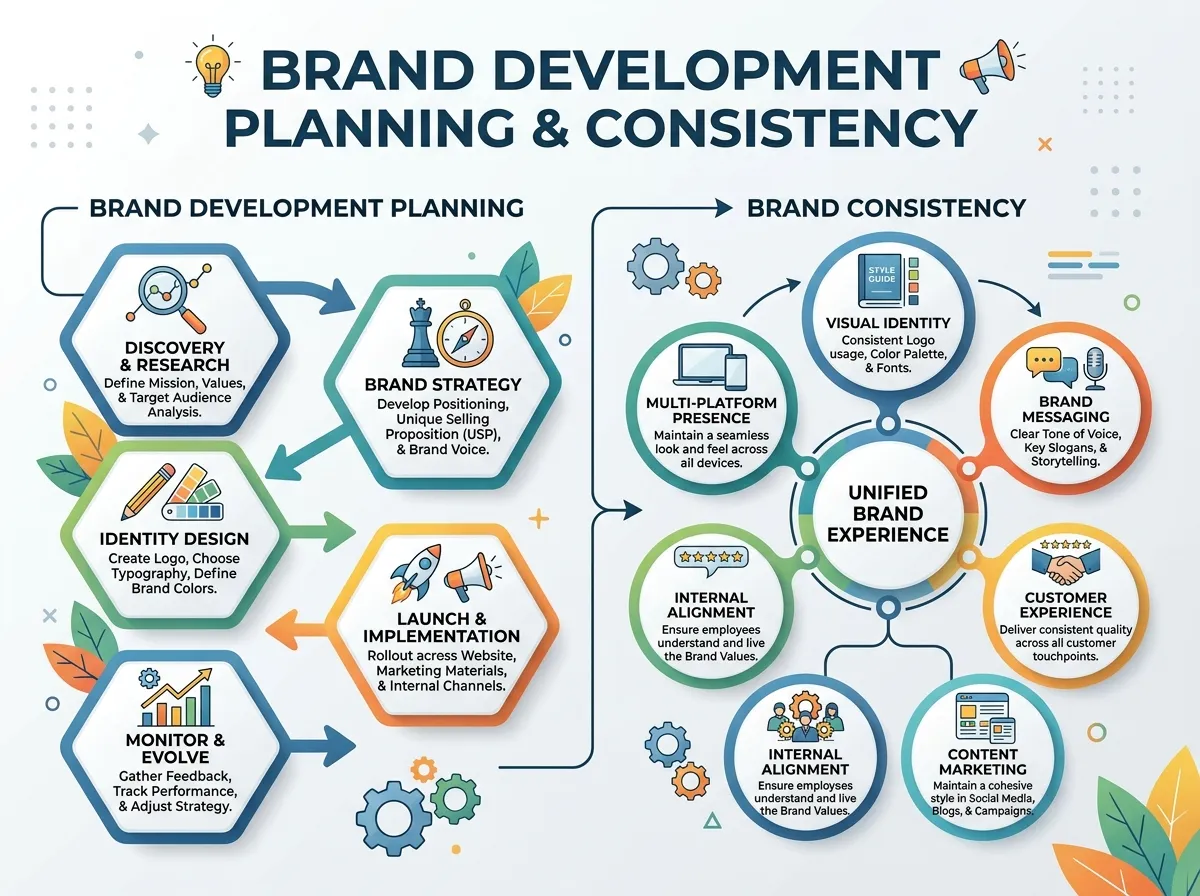
Brand Development Planning supports the long-term growth of a brand by ensuring that new initiatives remain connected to its purpose, values, personality, and customer expectations. Brand extensions should not weaken the identity that originally attracted customers.
Consistency across visual identity, messaging, product quality, and customer experience is particularly important. Although an extension may require new packaging, promotional messages, or product features, it should still communicate the qualities associated with the parent brand.
Marketing communication can reinforce this relationship. For example, a company introducing a new product category may work with creators through an Influencer Marketing Strategy to introduce the extension to relevant audiences while maintaining consistent brand messaging.
Market Extension Strategy and Audience Reach
A Market Extension Strategy focuses on taking an existing brand or offering into new geographic areas, customer segments, or market environments. Unlike product line extensions, which primarily introduce variations within an existing category, market extensions focus on reaching additional audiences.
Entering a new market requires an understanding of local preferences, purchasing behavior, competition, pricing expectations, and cultural differences. A brand message that performs well in one market may need adjustments to connect effectively with customers elsewhere.
Businesses should also consider distribution and promotional requirements. New markets may involve different retail channels, digital platforms, partnerships, or customer service expectations.
Identifying Brand Growth Opportunities
Brand Growth Opportunities can emerge from changing customer needs, market trends, product innovation, competitor activity, and gaps in existing product categories. Businesses that regularly evaluate these factors can identify potential extensions that align with their capabilities and customer expectations.
Customer feedback is an especially useful source of insight. Existing customers may reveal unmet needs, request complementary products, or express interest in services related to the brand’s current offerings.
Promotional opportunities can further support growth when the new offering is ready for the market. An Online Advertising Strategy can help businesses introduce an extension to relevant audiences through targeted digital campaigns while clearly communicating its relationship with the established brand.
Brand Positioning Strategy for New Extensions
A Brand Positioning Strategy helps businesses establish how a new offering should be perceived in the market. Even when an extension comes from an established brand, it may need its own positioning to communicate its value, audience, and competitive differences.
The positioning should remain connected to the parent brand while making the new product or service understandable. Customers should be able to recognize the established brand behind the offering and understand what makes the extension relevant to their needs.
Pricing, product features, packaging, communication, and customer experience all influence positioning. If these elements send inconsistent messages, customers may struggle to understand where the extension fits within the market.
Brand Extension Management and Long-Term Performance
Brand Extension Management involves monitoring and improving new offerings after they enter the market. The process includes reviewing customer responses, product performance, brand perception, sales results, and operational challenges.
Businesses should evaluate both the commercial performance of an extension and its effect on the parent brand. A product may generate revenue while creating confusion about the company’s identity. Similarly, an extension may initially receive limited sales but strengthen customer engagement or introduce the brand to a valuable new audience.
Brand communities can provide useful feedback during this process. Customers who already have an established relationship with a business may share their experiences and expectations about new products. Building Brand Communities can help organizations encourage these conversations and better understand customer sentiment around brand development.
Event Brand Activation and Brand Extensions
Introducing a new product or service requires more than simply announcing its availability. Customers need opportunities to understand, experience, and engage with the extension. Brand activation can help turn the launch into a more memorable experience through events, demonstrations, interactive campaigns, product experiences, and other forms of audience engagement.
For example, a company launching a new consumer product may organize an experiential campaign that allows customers to test the offering and interact with the brand. A relevant Event Brand Activation can create direct engagement while communicating the qualities and benefits of the new extension.
These activities can also generate customer feedback and useful promotional content. When activation is consistent with the brand’s identity, it can strengthen the relationship between the established brand and its new offering.
Measuring Brand Extension Performance
The success of Brand Extension Planning should be evaluated through both business performance and customer perception. Revenue, sales growth, market share, customer acquisition, repeat purchases, and profitability can provide insight into commercial results.
Brand-related measurements are equally important. Customer awareness, brand recognition, perceived quality, customer trust, and feedback can reveal whether the extension strengthens or weakens the parent brand.
Performance should be reviewed over an appropriate period because new offerings may require time to gain market acceptance. Businesses should compare actual results with the objectives established during planning and use the findings to improve future decisions.
Building Sustainable Growth Through Brand Extensions
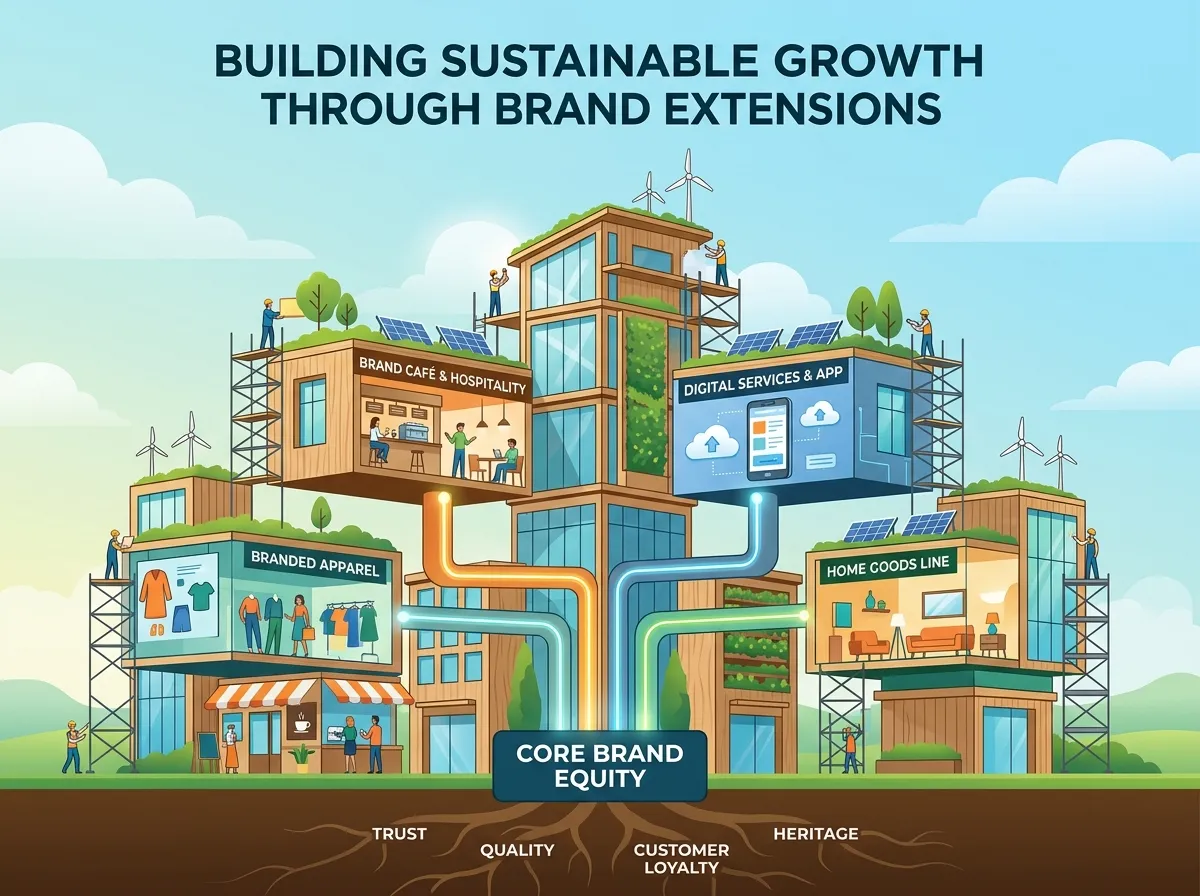
Brand Extension Planning can support sustainable growth when businesses expand with a clear understanding of their identity, customers, and market opportunities. The strongest extensions are not simply new products carrying a familiar name. They offer relevant value while maintaining a meaningful connection with the established brand.
Successful expansion requires coordination across product development, marketing, operations, customer experience, and financial planning. When these areas work together, businesses can explore new opportunities without losing the consistency that supports customer trust.
A thoughtful approach also recognizes that not every opportunity needs to become a brand extension. Careful evaluation, realistic expectations, and ongoing performance monitoring help organizations focus on opportunities that support their long-term objectives.
Frequently Asked Questions
1. What is Brand Extension Planning?
Brand Extension Planning is the process of evaluating and preparing opportunities to expand an established brand into new products, services, or markets. It involves understanding customer expectations, market demand, brand identity, and business capabilities.
2. Why is Brand Extension Strategy important?
A Brand Extension Strategy helps businesses use existing brand recognition and customer trust when introducing new offerings. It provides direction for expansion while helping ensure that new products or services remain relevant to the established brand.
3. What is Brand Portfolio Extension?
Brand Portfolio Extension involves increasing the range of products or services offered under an existing brand or across a company’s brand portfolio. It can help businesses serve different customer needs and create additional revenue opportunities.
4. How does Product Line Extension Strategy work?
Product Line Extension Strategy focuses on introducing variations within an existing product category. These variations may include new features, sizes, designs, or price points while maintaining a connection with the original product line.
5. What is the difference between brand extension and diversification?
Brand extension generally involves moving an established brand into a new but related product or service category. Diversification can involve entering less-related or entirely new markets and may require additional market research and resources.
6. How does Brand Development Planning support extension?
Brand Development Planning ensures that new offerings remain connected to the brand’s purpose, values, identity, and customer expectations. It helps maintain consistency while the company expands.
7. What is a Market Extension Strategy?
A Market Extension Strategy involves taking an existing brand or product into new geographic areas or customer segments. It requires consideration of local preferences, competition, distribution, and market conditions.
8. How can businesses identify Brand Growth Opportunities?
Businesses can identify Brand Growth Opportunities through customer feedback, market research, competitor analysis, industry trends, and purchasing behavior. These sources can reveal unmet needs and potential categories for expansion.
9. Why is Brand Positioning Strategy important for new extensions?
Brand Positioning Strategy helps customers understand the value and purpose of a new offering. It establishes how the extension differs from competitors while maintaining a connection with the parent brand.
10. How can businesses measure Brand Extension Management performance?
Businesses can measure performance through sales, revenue, profitability, market share, customer acquisition, repeat purchases, brand awareness, and customer feedback. Evaluating both commercial results and brand perception provides a broader view of the extension’s impact.