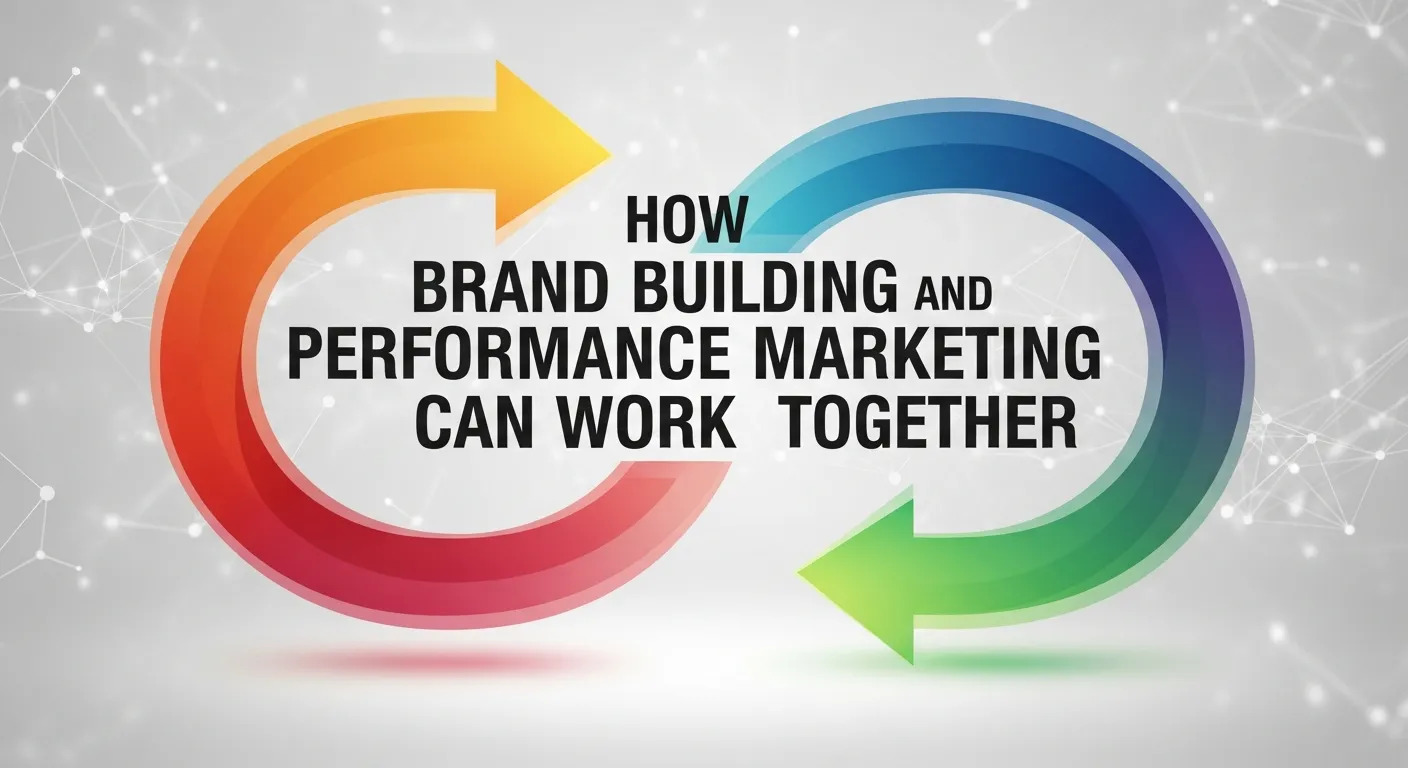
Are you struggling to balance long-term growth with immediate sales? Discover the powerful synergy between brand building and performance marketing strategies today.
This guide explores the essential partnership between brand building and performance marketing. We delve into how integrating these two distinct approaches creates a multiplier effect, driving sustainable growth. Learn actionable strategies, see real-world examples, and understand how to measure success across the entire funnel for maximum impact.
The Power Couple: Uniting Brand Building and Performance Marketing
For decades, a silent war has raged in marketing departments. On one side sits the brand team, focused on long-term equity, emotional connection, and storytelling. On the other sits the performance team, obsessed with clicks, conversions, and immediate ROI. The truth is, relying on just one is a recipe for stagnation. To truly succeed in the modern landscape, you must understand how brand building and performance marketing can work together to create a cohesive, unstoppable force.
By treating these disciplines as partners rather than rivals, businesses can unlock a level of growth that neither could achieve alone. Brand building and performance marketing are not mutually exclusive; they are symbiotic. Brand building creates the demand, while performance marketing captures it. Without brand awareness, performance ads become expensive and inefficient. Without performance tactics, brand equity fails to translate into tangible revenue. This comprehensive guide will show you how to bridge the gap and build a marketing engine that fires on all cylinders.
The Core Difference: Brand vs. Performance
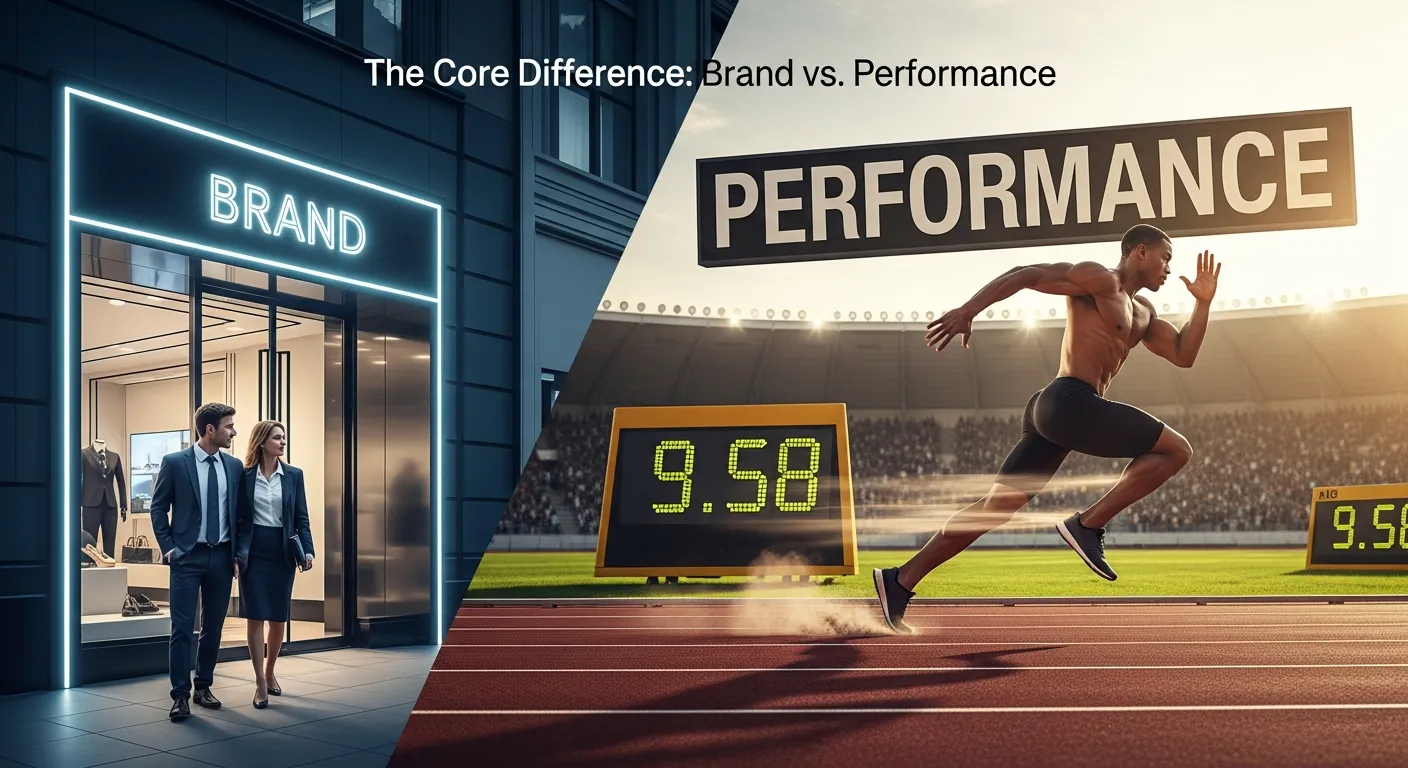
Before we can integrate them, we must understand what sets brand building and performance marketing apart. They operate on different timelines and target different parts of the human brain, yet they share the ultimate goal of business growth.
Brand Building: The Long Game
Brand building is the art of creating a distinct identity and emotional connection with your audience. It is about shaping brand perception and securing a place in the customer’s mind so that when they are ready to buy, you are the only logical choice.
- Focus: Long-term growth, emotional connection, trust, and loyalty.
- Key Metrics: Brand awareness, sentiment, brand equity, share of voice, Net Promoter Score (NPS).
- Tactics: Storytelling, content marketing, public relations, inclusive brand strategies, sponsorships.
- Goal: To influence future sales and build a resilient business moat.
Performance Marketing: The Short Game
Performance marketing is the science of capturing existing demand. It is highly targeted, data-driven, and focused on driving a specific action right now.
- Focus: Short-term sales, immediate conversion, lead generation.
- Key Metrics: Click-through rate (CTR), conversion rate, cost per acquisition (CPA), return on ad spend (ROAS).
- Tactics: Pay-per-click (PPC), social media advertising, retargeting, email marketing.
- Goal: To capture current intent and drive immediate revenue.
Why You Need Both: The Multiplier Effect

The magic happens when you stop viewing brand building and performance marketing as an “either/or” choice. Research by Les Binet and Peter Field, widely cited in marketing circles, suggests a 60/40 split is optimal—60% of budget towards brand building and 40% towards activation (performance).
Here is why this combination works:
- Brand Lowers Acquisition Costs: Strong brands enjoy higher click-through rates and conversion rates because users already recognize and trust them. When brand building and performance marketing align, your CPA drops significantly.
- Performance Feeds Brand Intelligence: Performance marketing provides real-time data on what messages resonate. This feedback loop can inform your broader brand strategy, helping you refine your brand voice and brand positioning.
- Efficiency at Scale: You cannot scale a business on performance marketing alone. Eventually, you tap out the existing market of “ready-to-buy” customers. Brand building expands the total addressable market by educating and nurturing future buyers.
Strategic Alignment: How to Integrate the Two
Integrating brand building and performance marketing requires a shift in mindset and operations. It moves beyond simple coordination to deep strategic alignment where integrated marketing becomes the standard.
1. Unified Goals and KPIs
Often, brand and performance teams have conflicting incentives. Brand teams are rewarded for reach, while performance teams are rewarded for efficiency. To fix this, establish shared KPIs.
- Blended CAC: Look at the cost of acquisition across all channels, acknowledging that brand spend assists performance conversions.
- Brand Search Volume: A rise in people searching for your brand name is a clear sign that brand efforts are fueling performance pools.
- Customer Lifetime Value (CLV): Brand building and performance marketing should both be judged on the quality of customers they bring in, not just the quantity.
2. Consistent Messaging Across the Funnel
A disconnect occurs when a user sees an emotional, high-level brand video and is then retargeted with a jarring, aggressive “Buy Now” banner. Brand consistency is crucial.
- Visual Identity: Ensure colors, fonts, and imagery are aligned.
- Tone of Voice: Your brand personality should shine through even in a 30-character headline.
- Narrative Arc: Use performance channels to tell the next chapter of the story introduced in brand campaigns.
3. Full-Funnel Retargeting
Use brand building and performance marketing together to guide users through the funnel.
- Top of Funnel (Brand): Use video ads or educational blog posts to generate brand awareness and capture attention without a hard sell.
- Middle of Funnel (Bridge): Retarget video viewers with branded content marketing that deepens the relationship, such as a case study or a webinar sign-up.
- Bottom of Funnel (Performance): Serve conversion-focused ads to users who have engaged with the previous content, offering a demo or a discount.
The Role of Digital Marketing in Integration
Digital marketing strategies are the glue that holds brand building and performance marketing together. In the digital realm, the line between brand and performance is increasingly blurred.
- Social Media: Is a viral TikTok video brand or performance? It is both. It builds brand awareness (brand) while the link in the bio drives traffic (performance). Can social media marketing increase brand awareness? Absolutely, but it also drives direct sales.
- Influencer Marketing: Influencers are potent hybrids. They offer the trust and reach of brand partners while often working on affiliate models that drive performance. The ROI of influencer marketing can be measured in both engagement and direct sales.
- Content Marketing: High-quality SEO content builds authority (brand equity) over time, but specific landing pages are optimized for conversion (performance marketing).
Navigating the Challenges of Integration
While the benefits of combining brand building and performance marketing are clear, the path is not without obstacles.
- Attribution Issues: It is easy to track the last click, giving performance marketing all the credit. It is harder to track the billboard or YouTube ad that sparked the initial interest. Utilizing multi-touch attribution models is essential to give credit where it is due.
- Budget Wars: In tough economic times, CFOs often slash brand budgets because the ROI isn’t immediate. Marketers must defend brand spend by showing its long-term impact on performance efficiency.
- Siloed Teams: If your creative agency handles brand and an in-house team handles PPC, they might never talk. Regular cross-functional meetings are vital to ensure brand building and performance marketing are telling the same story.
Advanced Strategies for Synergy
To truly master the art of brand building and performance marketing, you need to look at advanced tactics that leverage the strengths of both.
1. Brand-Led Performance Creative
Stop using generic stock photos for performance ads. Infuse your high-quality brand assets into your direct response campaigns. Use brand storytelling techniques in your Facebook ads. Testimonials, founder stories, and behind-the-scenes content often outperform generic product shots because they build trust before asking for the sale.
2. Performance-Driven Brand Development
Use your performance channels as a testing ground. Before launching a massive TV campaign or a global brand launch, test different value propositions and visual styles via Facebook Ads or Google Ads. The data you gather on click-through rates can reveal which messages resonate most, reducing the risk of your large-scale brand campaigns. This is data-driven brand storytelling in action.
3. The Halo Effect of Retail Media
For CPG brands, platforms like Amazon Advertising offer a unique blend. Amazon brand promotion allows you to bid on keywords (performance) while building your brand store and using video ads (brand). The visibility gained from paid placements often leads to a lift in organic sales—a classic example of brand building and performance marketing working in tandem.
Future Trends: The Convergence
As technology evolves, the distinction between brand building and performance marketing will continue to erode.
- Generative Engine Optimization (GEO): As AI search becomes dominant, optimizing for brand visibility will require a blend of technical SEO (performance) and authoritative content creation (brand).
- Connected TV (CTV): Television advertising, once the stronghold of pure brand building, is now programmatic and measurable. You can run TV ads with the precision of digital display, bringing brand building and performance marketing to the living room.
- AI Sensory Branding: As AI tools help generate assets, maintaining a distinct brand personality and sensory branding (voice, visual style) will become even more critical to stand out from the sea of AI-generated generic content.
Case Studies: Success Stories

Case Study 1: The Direct-to-Consumer (DTC) Pivot
A popular mattress company started purely with performance marketing on social media. They grew fast but hit a ceiling as CAC rose. They pivoted to brand building and performance marketing integration by launching a “Sleep Health” educational campaign (brand) and partnering with sleep influencers.
- Result: Their performance ads became 30% more effective because the audience was already primed by the brand content.
Case Study 2: The B2B Tech Giant
A SaaS company relied heavily on cold outreach and PPC. They decided to invest in brand resilience by launching a podcast and a high-quality industry report.
- Result: The “brand” assets were used as lead magnets in performance campaigns. The leads generated from these brand-led assets had a 20% higher close rate than cold leads.
Balancing the Mix
|
Feature |
Brand Building Focus |
Performance Marketing Focus |
The Integrated Approach |
|---|---|---|---|
|
Primary Goal |
Mindshare & Emotion |
Conversion & Revenue |
Sustainable Growth |
|
Time Horizon |
Long-term (Years) |
Short-term (Days/Weeks) |
Continuous Loop |
|
Key Metric |
Share of Voice / Brand Lift |
ROAS / CPA |
Customer Lifetime Value (CLV) |
|
Target Audience |
Future Buyers (Broad) |
Active Buyers (Narrow) |
Full Funnel Coverage |
|
Creative Style |
Emotional, Story-driven |
Rational, Benefit-driven |
Emotionally Compelling Offers |
Why “Brand vs. Performance” is a False Dichotomy
The debate often framed as brand marketing vs performance marketing creates a false dichotomy. It forces marketers to choose between being popular or being profitable. The reality is that the most successful companies—Apple, Nike, Coca-Cola—are masters of both. They build massive brand equity while simultaneously executing ruthless retail and digital performance strategies.
Ignoring brand building and performance marketing integration is a risk. If you focus only on brand, you may run out of cash before your reputation pays off. If you focus only on performance, you commoditize your product, forcing you to compete solely on price, which is a race to the bottom.
Actionable Tips for Implementation
- Audit Your Spend: Are you following the 60/40 rule? If 95% of your budget is on Google Ads, you are over-indexed on performance.
- Map the Journey: Create a customer journey mapping document that explicitly labels touchpoints as “Brand,” “Performance,” or “Hybrid.” Ensure there are no dead ends.
- Invest in Creative: Creative is the biggest variable in performance success. High-quality brand design improves performance results.
- Test and Learn: Use neuromarketing techniques to test ad creative. Does a smiling face (emotional/brand) drive more clicks than a product close-up (rational/performance)?
Conclusion
Ultimately, the question isn’t whether to prioritize brand building and performance marketing, but how to weave them into a unified strategy. Brand building provides the “why”—the emotional hook and trust that makes a consumer choose you. Performance marketing provides the “how” and “when”—the mechanism to capture that interest and turn it into revenue. By harmonizing these two forces, you build a business that is not only profitable today but resilient tomorrow. Embrace the synergy of brand building and performance marketing to secure your place in the market and drive long-term success.
Frequently Asked Questions (FAQs)
1. What is the main difference between brand building and performance marketing?
Brand building focuses on long-term reputation, emotional connection, and awareness. Performance marketing focuses on short-term results, immediate conversions, and measurable actions like clicks or sales. While brand building and performance marketing have different timelines, they work best when aligned.
2. Can a small business afford both brand building and performance marketing?
Yes. Brand building doesn’t require a Super Bowl ad. For small businesses, brand building and performance marketing can mean consistent social media storytelling (brand) paired with targeted local SEO or small-budget Facebook ads (performance). Consistency in brand voice is free and is a huge part of brand building.
3. How do I measure the ROI of brand building?
Measuring brand ROI is harder than performance but possible. Look for lift in direct traffic, lower cost per acquisition (CPA) on your performance ads (as brand awareness makes people more likely to click), and increases in branded search volume. Tools for measuring brand authenticity using real-time data can also help.
4. What is the “60/40 rule” in marketing?
This rule, derived from Binet and Field’s research, suggests that for maximum effectiveness, approximately 60% of a budget should go toward long-term brand building and 40% toward short-term sales activation (performance marketing). This balance helps brand building and performance marketing support each other optimally.
5. How does brand building improve performance marketing results?
Strong brands enjoy higher trust. When a user sees an ad for a brand they recognize and like, they are much more likely to click and convert. This lowers your CPM (cost per thousand impressions) and CPA, making your brand building and performance marketing efforts more efficient.
6. Is content marketing considered brand or performance marketing?
It is both. A thought leadership article builds brand perception and authority (brand). However, if that article has a clear call-to-action to download a whitepaper or sign up for a trial, it acts as a lead generation tool (performance). This dual nature makes content a key player in brand building and performance marketing.
7. Can performance marketing damage a brand?
Yes. Over-aggressive performance tactics, like spammy emails, misleading clickbait, or low-quality ad creatives, can hurt your brand reputation and brand safety. It is crucial to ensure that even your “hard sell” ads align with your core brand values.
8. How do I get my brand and performance teams to collaborate?
Encourage shared goals. Instead of just “clicks” or “reach,” give both teams a shared revenue or growth target. distinct brand marketing vs performance marketing silos often lead to disjointed customer experiences. Regular “creative reviews” where performance teams share data on what creatives are working can help brand teams design better assets.
9. What is “Brand Equity” and why does it matter?
Brand equity is the accumulated value of your brand—the premium people are willing to pay just for your name. High brand equity makes brand building and performance marketing easier because customers are less price-sensitive and more loyal, reducing churn.
10. How does SEO fit into brand building and performance marketing?
SEO is a hybrid channel. Ranking for broad, informational keywords builds brand awareness and authority (brand building). Ranking for high-intent transactional keywords (e.g., “buy running shoes near me”) drives immediate sales (performance marketing). A good SEO strategy covers both.