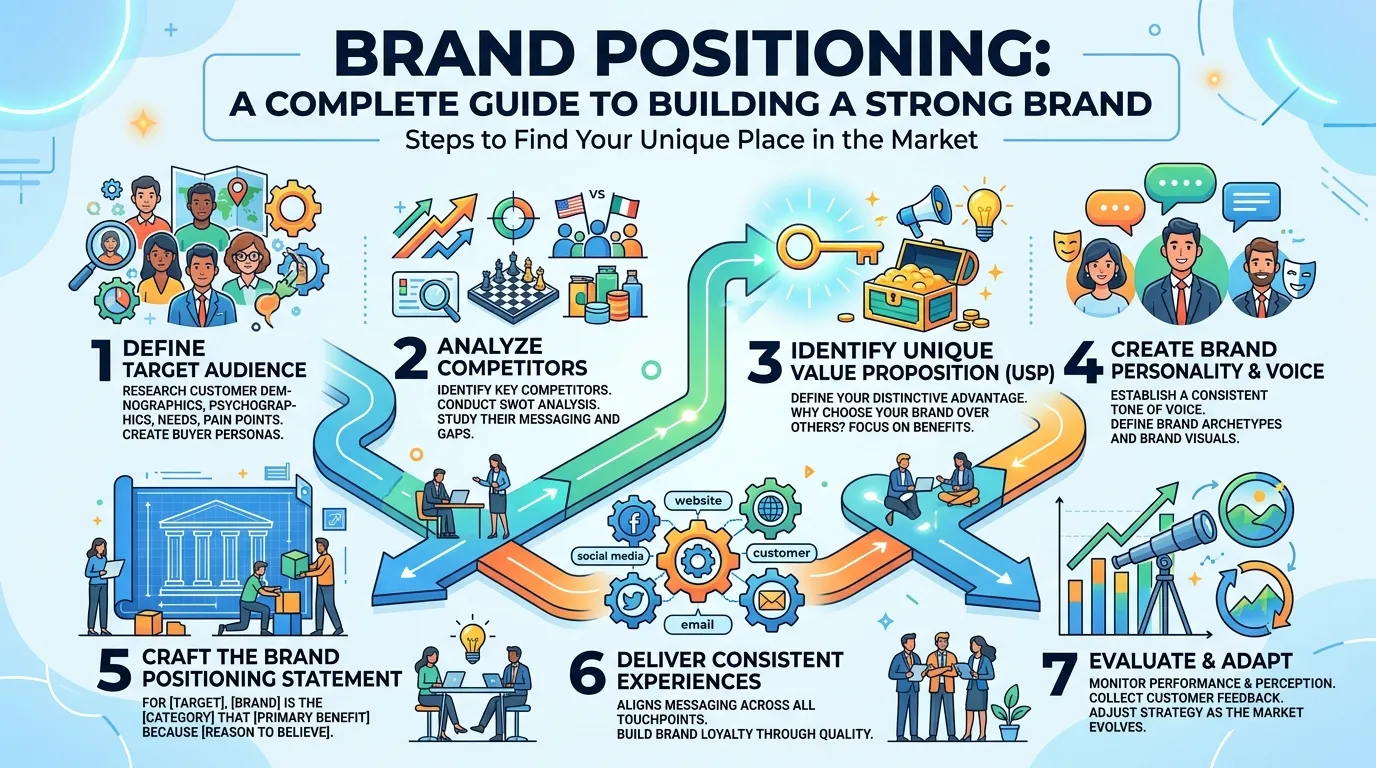
Brand positioning is an important part of marketing because it determines how a business is perceived in the minds of its target customers. In competitive markets, simply having a good product or service is not always enough. Customers need a clear reason to recognize, remember, and choose one brand over another.
A company may offer excellent quality, competitive prices, innovative products, or outstanding service, but if customers cannot understand what makes the company different, the brand can easily become lost among competitors. Brand positioning helps solve this problem by creating a clear and meaningful place for a brand in the market.
A successful positioning approach connects the company’s strengths with customer needs. It explains what the brand stands for, who it serves, what makes it different, and why customers should believe in its promise.
What Is Brand Positioning?
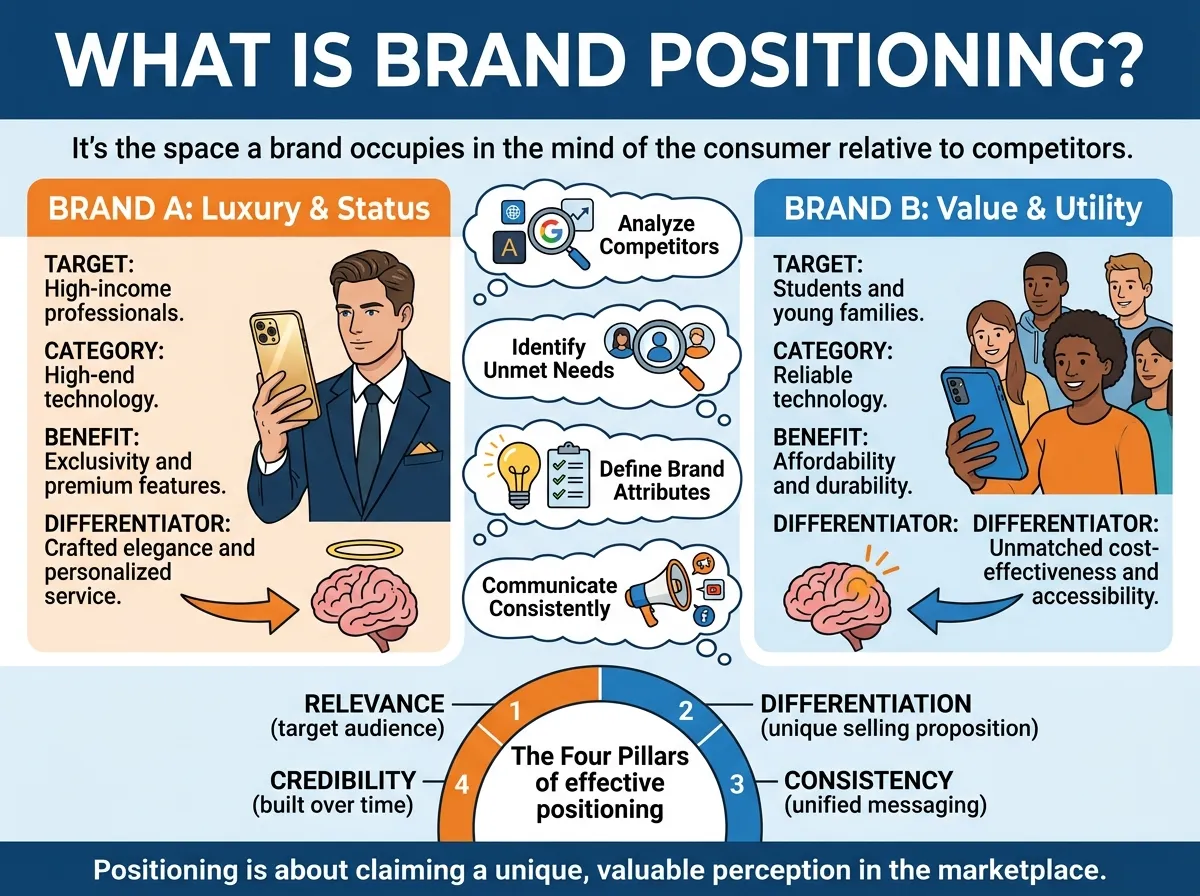
Brand positioning is the process of establishing how a brand should be perceived by its target audience. It involves defining the unique value a company provides and communicating that value consistently across its marketing channels.
Positioning is not simply a slogan or advertising message. It is a broader strategic decision that influences the company’s identity, messaging, products, customer experience, and marketing activities.
For example, one company may position itself as a premium provider focused on quality and exclusivity, while another may compete by emphasizing affordability and convenience. Both businesses can succeed if their positioning matches the needs and expectations of their target audiences.
Strong positioning makes it easier for customers to understand a brand quickly. When people can clearly identify what a company represents and why it is different, they are more likely to remember it and consider it when making purchasing decisions.
Why Brand Positioning Matters
A clear position can help a business stand out in a crowded market. Customers are exposed to countless advertisements, products, and marketing messages every day. A brand with a clear identity has a better opportunity to remain memorable.
Positioning also helps businesses attract the right customers. Rather than trying to appeal to everyone, a company can communicate directly with the people who are most likely to value its products or services.
A strong position can also support customer loyalty. When customers understand what a brand represents and consistently receive an experience that matches that promise, they can develop stronger trust and familiarity.
Internally, positioning can provide direction for marketing teams. It can help determine what messages to use, which audiences to target, what content to create, and how the company should present itself.
Developing a Brand Positioning Strategy
A brand positioning strategy provides a framework for defining and communicating a brand’s place in the market. The process should begin with a clear understanding of the company’s target customers. Businesses can also develop brand resilience strategies to ensure their positioning remains relevant and adaptable over time.
Businesses need to understand customer needs, expectations, preferences, problems, and purchasing behavior. Research can reveal what customers value most and which factors influence their decisions.
The next step is understanding the competitive environment. Businesses should examine competing brands and identify how they present themselves. This can reveal opportunities to occupy a position that is meaningful to customers and different from existing alternatives.
The company’s own strengths should also be considered. A strong position should be based on something the business can actually deliver. Promising premium service without consistently providing it can damage customer trust.
The final positioning strategy should connect customer needs, competitive opportunities, and the brand’s genuine strengths.
Creating a Brand Positioning Statement
A brand positioning statement summarizes the position a business wants to establish in the market. It provides internal guidance for marketing and communication.
A useful positioning statement generally identifies the target audience, the category or market, the key benefit or value offered, and the reason the brand is different or credible.
The statement does not necessarily need to appear publicly in advertising. Instead, it can serve as a strategic foundation for developing marketing messages and customer experiences.
For example, a business serving small companies could position itself around simplicity and accessibility rather than trying to compete directly with enterprise-focused competitors.
The positioning statement should be clear enough that employees and marketing teams can understand what the brand stands for and use that understanding consistently. As digital experiences continue to evolve, brands may also communicate their positioning through emerging environments and experiences, including metaverse branding.
Brand Differentiation Strategy
A brand differentiation strategy focuses on what makes a company meaningfully different from its competitors. Differentiation can come from many areas, including product quality, service, technology, pricing, convenience, expertise, design, customer experience, or brand values.
The most effective differentiation is valuable to customers. Being different simply for the sake of being different does not necessarily create a competitive advantage.
For example, a company might differentiate itself through exceptionally fast service. Another company may focus on highly personalized support. A technology business might differentiate itself through ease of use.
Businesses should identify differences that are both meaningful to customers and difficult for competitors to copy quickly. Emerging technologies can also create new opportunities for differentiation, such as using augmented reality branding to create interactive experiences that make a brand more memorable.
Competitive Brand Positioning

Competitive brand positioning involves establishing how a brand should be perceived in relation to competing businesses. Understanding competitors helps companies identify opportunities and avoid simply copying existing market messages.
Businesses should examine competitor products, pricing, marketing communication, customer reviews, visual identity, and perceived strengths.
This research can reveal areas where customers believe existing solutions are weak. A company may then create a position around solving that particular problem.
Competitive positioning should not mean attacking competitors constantly. The goal is to communicate the brand’s own value clearly and show why it is a suitable choice for a specific audience.
Brand Identity Strategy
A brand identity strategy supports positioning by determining how the brand presents itself visually and verbally. It can include the brand name, logo, colors, typography, tone of voice, messaging style, imagery, and overall customer experience.
Brand identity should reinforce positioning rather than exist separately from it. A premium brand, for example, may use a visual and communication style that reflects quality and sophistication.
A company focused on simplicity may use straightforward language and an easy-to-understand visual identity.
Consistency is important. If a brand communicates one position on its website but presents a completely different personality on social media, customers may become confused.
Market Positioning Strategy
A market positioning strategy determines how a business wants to compete within its chosen market. This can involve deciding which customer segment to target, which needs to prioritize, and which value proposition to emphasize.
Some brands position themselves around price, while others focus on quality, innovation, specialization, convenience, or customer service.
Businesses do not necessarily need to dominate an entire market. In many cases, focusing on a specific segment can create a stronger position.
For example, instead of becoming a general provider for everyone, a company might specialize in serving startups, local businesses, enterprise customers, or a particular industry. Specialization can make the brand easier to understand and remember.
Understanding Brand Perception
Brand perception refers to how customers actually view a company. This can be different from how the business wants to be perceived.
A company may describe itself as innovative, but customers may see it as difficult to use. A business may promote affordable pricing, while customers may perceive its products as expensive.
Understanding this gap is important. Businesses can collect customer feedback, conduct surveys, monitor reviews, analyze social media conversations, and examine customer interactions to understand how people perceive the brand.
The goal is to create alignment between intended positioning and actual perception.
When the two are closely aligned, the brand’s marketing becomes more credible and consistent.
Target Audience Positioning
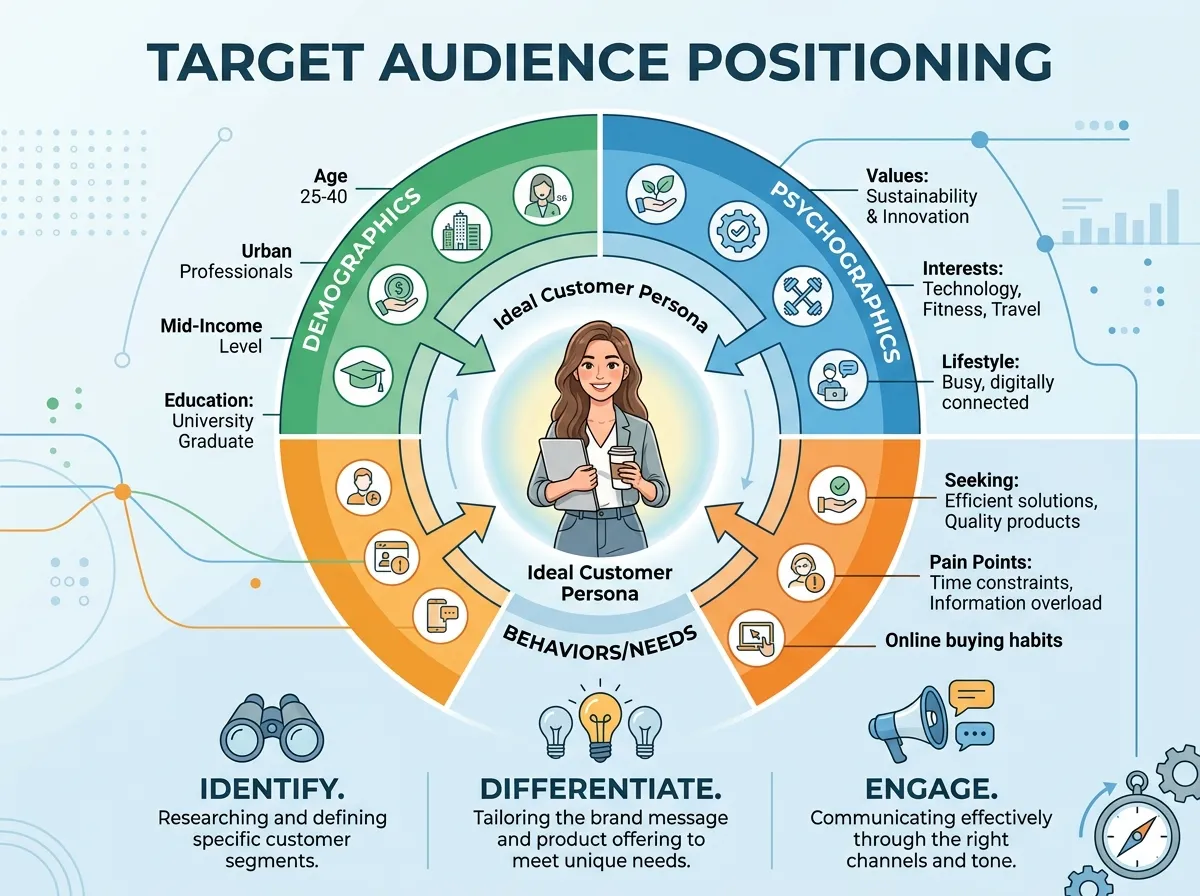
Target audience positioning focuses on creating a brand message specifically for the people a business wants to attract. Different audiences can have very different priorities.
For example, a business selling software to large companies may emphasize security, scalability, integration, and reliability. A company selling the same type of software to freelancers may focus more on simplicity, affordability, and ease of use.
Understanding the target audience allows brands to choose messages that are more relevant.
Businesses should consider customer demographics as well as motivations, problems, goals, preferences, and purchasing behavior. These insights can help create positioning that connects with customers on a deeper level.
Creating Unique Brand Positioning
Unique brand positioning gives customers a clear reason to choose one company over another. The position should be distinctive enough to stand out while remaining relevant to the target audience.
Uniqueness does not necessarily require inventing something completely new. Sometimes a business can combine familiar benefits in a way that creates a distinctive proposition.
A company might combine specialized expertise with exceptional customer service. Another might combine affordability with premium convenience.
The important question is whether customers recognize the difference and consider it valuable.
A unique position also needs to be believable. If a business claims to be the best at everything, the message may become less credible.
Effective Brand Positioning
Effective brand positioning requires consistency between what a company promises and what it delivers. Marketing cannot create a strong position on its own if the actual customer experience does not support the message.
Every customer interaction can influence positioning. Website design, advertising, product packaging, customer support, sales communication, social media, and after-sales service can all contribute to how the brand is perceived.
Consistency does not mean using exactly the same message everywhere. Different channels can communicate different aspects of the brand while maintaining the same overall positioning.
The brand should feel recognizable regardless of where customers encounter it.
Brand Positioning and Customer Experience
Customer experience has a direct impact on brand positioning. If a business positions itself around exceptional service, customers need to experience that promise during every important interaction.
A company that claims simplicity should make its website, purchasing process, onboarding, and support easy to understand.
This connection between positioning and experience is important because customers often judge brands based on what actually happens rather than what advertisements promise.
Businesses should therefore review the complete customer journey and identify whether each stage supports the intended brand position. Consistent messaging across marketing channels, including influencer marketing for brands, can also help reinforce the brand’s identity and ensure that external promotions align with the experience customers receive.
Brand Positioning for Small Businesses
Small businesses can benefit significantly from clear positioning because they often cannot compete with larger companies on advertising budgets or overall market reach.
Instead of attempting to appeal to everyone, a small business can focus on a specific audience or specialized need.
A local business might position itself around personalized service and community connection. A specialized agency might focus on expertise in a particular industry. A small ecommerce company might differentiate itself through product quality or carefully curated offerings.
Specialization can help smaller brands become more memorable and establish stronger relationships with their customers.
Common Brand Positioning Mistakes
One common mistake is trying to appeal to everyone. When a brand attempts to communicate with every possible customer, its message can become too broad to be meaningful.
Another problem is copying competitors. Businesses should understand competitors, but simply using similar messaging makes it harder to create a distinctive position.
Some brands also focus too heavily on features instead of customer benefits. Customers generally want to understand how a product or service improves their situation rather than simply seeing a list of technical features.
Inconsistent communication can also weaken positioning. If different departments or channels describe the brand differently, customers may have difficulty understanding what the company represents.
Another mistake is making promises that the business cannot consistently deliver. Strong positioning should reflect the real capabilities of the company.
Measuring Brand Positioning
Brand positioning can be evaluated through several forms of research and performance data. Businesses can monitor brand awareness, customer feedback, reviews, engagement, customer retention, and competitive perception.
Surveys can help determine what customers associate with the brand. Interviews can provide deeper insights into why customers choose or reject the company.
Online reviews can also reveal how customers describe their experiences in their own words. These descriptions can provide valuable clues about whether the intended positioning is being communicated successfully.
Businesses should also compare their brand perception with competitors. If customers consistently associate the brand with a meaningful benefit that competitors do not strongly own, the positioning may be working effectively.
When Should a Brand Reposition?
Brand repositioning may become necessary when customer expectations, markets, competitors, or business offerings change.
A company may outgrow its original audience or introduce new products that require a different market position. Competitive changes can also make an existing position less distinctive.
Repositioning should not be done simply because a company wants a new logo or slogan. A meaningful repositioning involves examining the company’s audience, value proposition, competitive environment, and customer perception.
The transition should also be managed carefully. Existing customers need to understand what is changing and what remains consistent.
Final Thoughts
Brand positioning gives businesses a clear foundation for communicating their value and standing apart from competitors. It helps define who the company serves, what it offers, how it is different, and why customers should choose it.
A strong brand positioning strategy should be based on customer needs, competitive research, and genuine business strengths. It should influence the brand’s identity, messaging, customer experience, and marketing activities.
The strongest brands do not try to be everything to everyone. They create a clear position that is relevant to a specific audience and consistently deliver on their promise.
By developing a strong brand positioning statement, creating meaningful differentiation, understanding brand perception, and aligning the brand with its target audience positioning, businesses can build greater recognition, trust, and long-term competitive value.
Frequently Asked Questions
1. What is brand positioning?
Brand positioning is the process of defining how a brand should be perceived by its target customers compared with competitors. It communicates the brand’s value, differences, and reasons customers should choose it.
2. Why is brand positioning important?
Brand positioning helps businesses stand out in competitive markets, attract the right customers, communicate their value clearly, and create stronger brand recognition and customer loyalty.
3. What is a brand positioning strategy?
A brand positioning strategy is a plan for establishing a specific position in the minds of target customers. It considers customer needs, competitors, business strengths, and the value the brand wants to communicate.
4. What is a brand positioning statement?
A brand positioning statement is a concise internal statement that describes the target audience, market category, key benefit, and differentiation of a brand.
5. How is brand positioning different from branding?
Brand positioning focuses on the place a brand occupies in the market and in customers’ minds. Branding is broader and includes the visual identity, messaging, personality, and experiences used to communicate that position.
6. What is brand differentiation?
Brand differentiation is the process of identifying and communicating meaningful characteristics that make a company different from its competitors. Differentiation can involve quality, price, service, expertise, innovation, convenience, or customer experience.
7. How can a business improve brand perception?
Businesses can improve brand perception by understanding customer feedback, delivering consistent experiences, communicating clearly, addressing customer concerns, and ensuring that marketing promises match the actual product or service experience.
8. Can small businesses benefit from brand positioning?
Yes. Small businesses can use focused positioning to target specific customer groups and compete through specialization, expertise, service, convenience, or other meaningful advantages instead of trying to compete with larger companies on every factor.
9. How do you create unique brand positioning?
Unique positioning begins by understanding the target audience, studying competitors, identifying genuine business strengths, and finding a valuable difference that customers recognize and appreciate.
10. When should a company change its brand positioning?
A company may need to reconsider its positioning when its target audience, market, products, competitors, or customer expectations change. Repositioning can help the brand remain relevant and competitive.