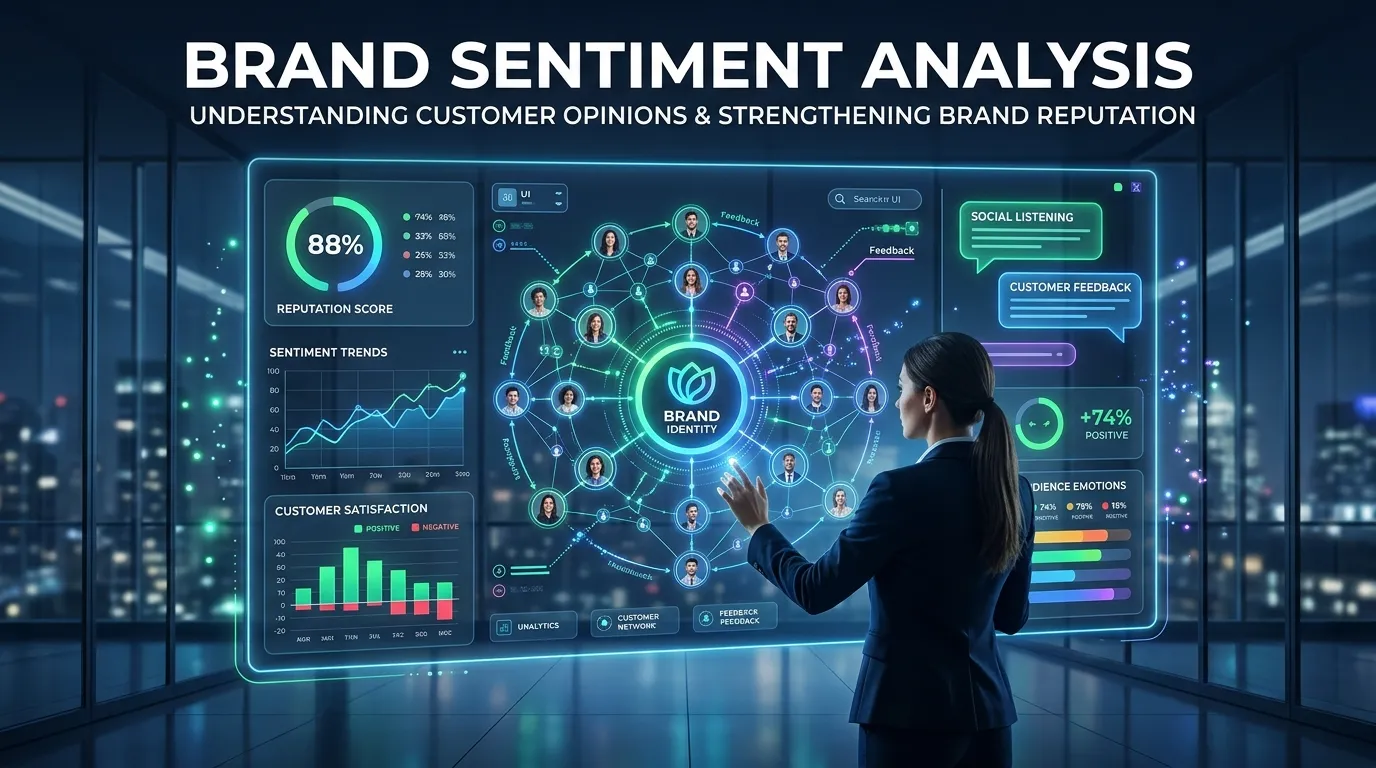
Brand Sentiment Analysis helps businesses understand how customers feel about their brands by examining online conversations, reviews, social media discussions, and customer feedback. Using AI and natural language processing, companies can identify positive and negative opinions, monitor brand perception, evaluate reputation, and recognize changing customer expectations. These insights support better marketing decisions, improved customer experiences, and stronger long-term brand relationships.
A brand is shaped by more than the products it sells or the services it provides. Every customer interaction, online review, social media discussion, and public comment contributes to how people perceive a business. Some customers may appreciate a company’s quality and customer service, while others may express dissatisfaction because of delayed deliveries, poor experiences, or unmet expectations. Understanding these different opinions is essential for businesses that want to maintain a positive public image and build lasting customer relationships.
This is where Brand Sentiment Analysis becomes valuable. It helps organizations understand how people feel about their brand by examining conversations, reviews, feedback, and other forms of customer communication. Instead of focusing only on the number of mentions or interactions, businesses can explore whether those conversations reflect positive, negative, or neutral opinions.
As digital communication continues to influence purchasing decisions, understanding customer sentiment has become an important part of brand management. A single customer experience can influence public perception when shared across social platforms or review websites. Similarly, positive discussions can strengthen credibility and encourage potential customers to consider a company’s products or services.
Brand Sentiment Analysis allows businesses to look beyond surface-level engagement and understand the emotions and opinions behind customer conversations. It provides useful insights into brand perception, customer expectations, reputation challenges, and opportunities for improvement.
What Brand Sentiment Analysis Reveals About a Business
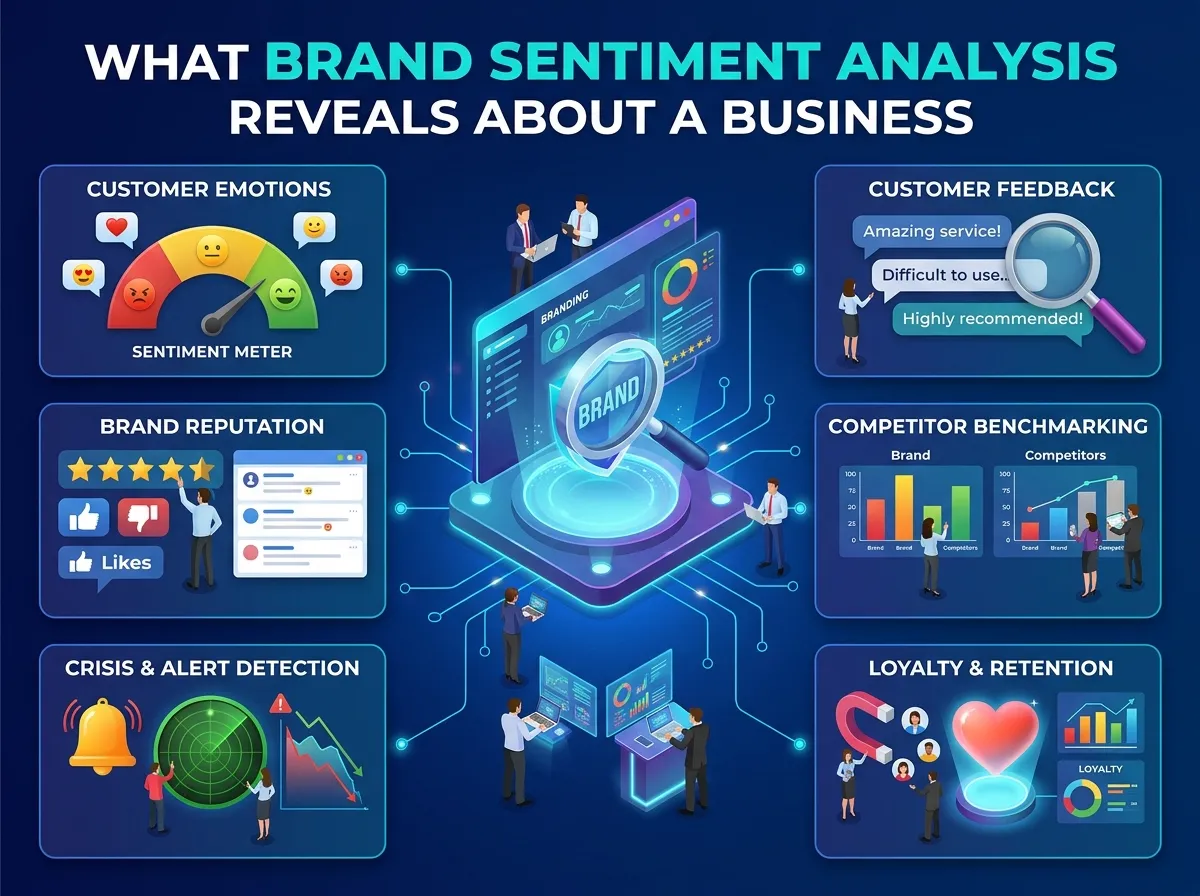
Brand Sentiment Analysis is the process of examining customer conversations and feedback to understand the overall feelings people associate with a particular brand. It uses techniques such as natural language processing, machine learning, and text analysis to identify emotional patterns in written communication.
These conversations may come from social media platforms, online reviews, discussion forums, blogs, news websites, surveys, and customer support interactions.
For example, a company may receive thousands of social media mentions during a product launch. A basic monitoring system can count those mentions and measure engagement. However, this information does not explain whether customers are satisfied with the product.
Sentiment analysis provides another layer of understanding. It can identify positive reactions, complaints, neutral discussions, and recurring concerns within those conversations.
This distinction matters because high engagement does not always indicate a successful brand experience. A product may receive significant attention because customers are discussing a problem or expressing disappointment.
By understanding the context behind online conversations, businesses can make better decisions about communication, customer experience, and reputation management.
Brand sentiment can generally be grouped into three categories:
-
Positive sentiment: Conversations expressing satisfaction, trust, appreciation, or recommendations.
-
Negative sentiment: Discussions involving complaints, disappointment, criticism, or frustration.
-
Neutral sentiment: Mentions that provide information or discuss a brand without expressing a clearly positive or negative opinion.
Some advanced systems can also identify emotions such as excitement, frustration, confusion, and disappointment, providing a deeper understanding of customer experiences.
Why Brand Sentiment Tracking Matters in a Competitive Market
Customer opinions can influence how potential buyers evaluate a business. Before purchasing a product or choosing a service provider, people often read reviews, compare brands, and look for recommendations from other customers.
Brand Sentiment Tracking helps businesses understand these opinions as they develop across different digital channels.
Imagine an ecommerce company receiving an increasing number of negative comments about its delivery experience. Without consistent monitoring, management may not recognize the issue until it begins affecting customer retention and public reputation.
A sentiment tracking system can help identify this pattern earlier by analyzing recurring complaints and changes in customer discussions.
It can also reveal what customers appreciate. Positive feedback about product quality, responsive support, or convenient services can show businesses which parts of their customer experience are working well.
Another important benefit is competitive awareness. Businesses can examine public conversations about competing brands and understand which features, services, or experiences influence customer preferences.
These insights can support more informed business decisions. Rather than relying entirely on assumptions about customer satisfaction, organizations can use actual feedback to understand how their brand is being discussed.
Customer Sentiment Analysis and the Real Meaning Behind Feedback
Customer feedback is not always straightforward. People express opinions differently depending on their experiences, communication styles, and expectations.
A customer might write, “The delivery was incredibly fast, but the packaging was disappointing.” This statement contains both positive and negative opinions.
Customer Sentiment Analysis helps identify these different perspectives rather than treating the entire comment as a single emotional response.
This is particularly useful for businesses that receive feedback across multiple products and services. A customer may be satisfied with one aspect of a company’s offering while expressing dissatisfaction with another.
Aspect-based sentiment analysis can help identify the specific features being discussed. For example, a restaurant may receive positive comments about food quality but negative feedback about waiting times.
Understanding these differences makes customer feedback more actionable.
Businesses can also combine sentiment analysis with customer service records to identify recurring issues. If customers repeatedly express frustration about the same process, the company may need to investigate the underlying cause.
The goal is not simply to classify opinions. It is to understand what those opinions reveal about the customer experience and how the business can respond.
Brand Perception Monitoring Across Digital Channels
People discuss brands across many online environments. A customer may leave a review on an ecommerce website, share an experience on social media, publish a detailed blog post, or participate in an industry discussion.
Brand Perception Monitoring helps organizations understand how these conversations collectively influence their public image.
Different platforms can reveal different aspects of customer perception.
Social media discussions often provide immediate reactions to announcements, campaigns, and customer experiences. Review websites can reveal more detailed opinions about product quality and service reliability. Blogs and discussion forums may contain longer conversations about brand credibility, product comparisons, and customer expectations.
Monitoring multiple sources gives businesses a broader understanding of public opinion.
However, not every platform carries the same relevance for every organization. A business-to-business software company may gain more useful insights from professional communities and industry discussions than from entertainment-focused social platforms.
Similarly, a consumer lifestyle brand may need to pay closer attention to visual social networks, product reviews, and creator conversations.
Effective monitoring therefore depends on understanding where the target audience communicates and which platforms influence its purchasing decisions.
The Growing Role of Social Media Sentiment Analysis
Social media has become an important environment for public brand conversations. Customers use social platforms to share recommendations, ask questions, express complaints, and discuss their experiences with businesses.
Social Media Sentiment Analysis examines these conversations to understand how people feel about brands, products, campaigns, and customer experiences.
For example, a company launching a new advertising campaign may receive thousands of comments and shares. Analyzing the sentiment behind these interactions can reveal whether the campaign is connecting with its intended audience.
A positive response may indicate that the message resonates with customers. Negative reactions may reveal confusing communication, cultural misunderstandings, or dissatisfaction with the advertised product.
Sentiment analysis can also help identify changes in public opinion. If negative conversations increase shortly after a product update, the business may need to investigate whether the change has created customer difficulties.
Social listening and sentiment analysis work particularly well together. Social listening identifies relevant conversations, while sentiment analysis helps interpret the opinions expressed within them.
Businesses should remember that automated systems can sometimes misunderstand sarcasm, humor, slang, and cultural expressions. Human review remains important when interpreting sensitive or high-impact conversations.
How Brand Reputation Analysis Connects Sentiment With Trust
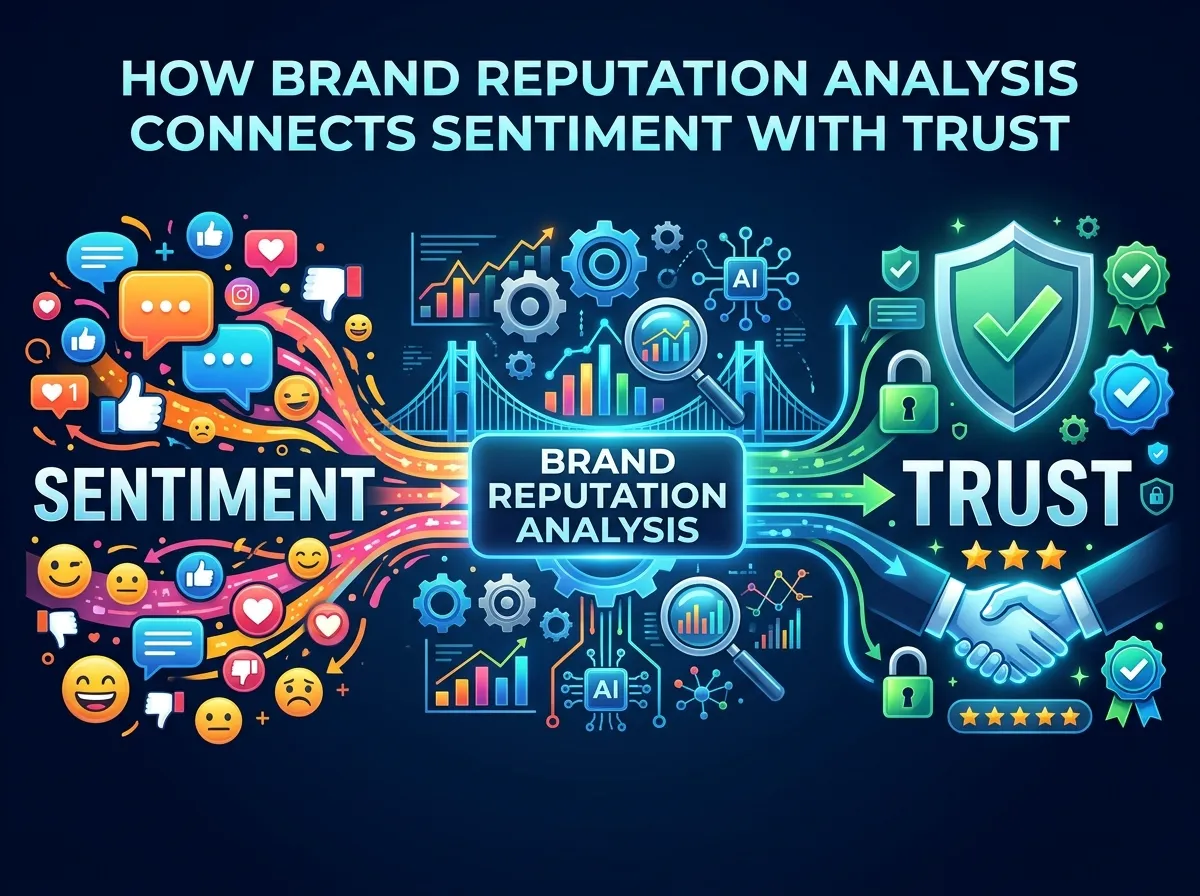
A company’s reputation develops through repeated experiences and public interactions. Customers may form opinions based on product quality, service reliability, business transparency, and how an organization responds to problems.
Brand Reputation Analysis helps businesses evaluate these perceptions and understand how public opinion affects their credibility.
Sentiment data provides one important part of this picture. However, reputation involves more than positive and negative comments.
For example, a business may receive mostly positive product reviews but still face concerns about transparency or customer support. Another company may receive occasional negative feedback while maintaining strong overall customer trust because it handles complaints responsibly.
This is why sentiment analysis should be interpreted alongside other reputation indicators.
Businesses can examine review patterns, customer complaints, media coverage, recurring discussion topics, and public responses to better understand their reputation.
Reputation analysis also helps organizations recognize the connection between brand identity and customer expectations. The symbols, visual elements, and messages associated with a business can influence how people interpret its personality and values. Companies developing this connection can explore Brand Symbolism Strategy to understand how meaningful brand elements contribute to stronger identity and recognition.
When businesses understand both public sentiment and brand identity, they can identify gaps between the image they want to communicate and the experience customers actually receive.
Customer Opinion Monitoring and the Importance of Early Insights
Customer opinions can change quickly, particularly when businesses introduce new products, update existing services, or experience operational problems.
Customer Opinion Monitoring helps organizations recognize these changes by continuously examining feedback and public conversations.
Consider a company that recently redesigned its website. Customers may appreciate the improved appearance but experience difficulties navigating the new checkout process.
Monitoring customer opinions can reveal this difference before the problem affects a larger portion of the customer base.
It can also help businesses identify emerging expectations. Customers may begin requesting additional payment options, faster support, improved product features, or more transparent pricing.
These discussions provide useful information for product development and service improvement.
Another important application involves campaign feedback. If a marketing campaign creates confusion or receives unexpected criticism, businesses can review the feedback and adjust their communication.
However, companies should avoid treating every isolated negative comment as evidence of a widespread problem. Sentiment trends become more meaningful when analyzed over time and compared with the volume, source, and context of customer feedback.
Measuring Brand Sentiment Beyond Positive and Negative Mentions
Brand Sentiment Measurement provides a way to evaluate how customer opinions change over time.
A basic sentiment report may classify mentions as positive, negative, or neutral. More detailed measurement can examine the proportion of each category, the topics associated with different emotions, and the sources generating those conversations.
For example, a business may notice that positive sentiment has increased following improvements to its customer support service. It may also discover that negative discussions remain concentrated around product availability.
These insights help businesses understand where improvements are producing results and where additional attention is needed.
Some useful measurements include:
Sentiment distribution: Shows the proportion of positive, negative, and neutral mentions within a defined period.
Sentiment trends: Tracks how customer opinions change over days, weeks, or months.
Share of voice: Compares the volume of brand-related conversations with those of competitors.
Topic-based sentiment: Identifies which products, services, campaigns, or business activities generate particular reactions.
Response patterns: Examines how customer opinions change after a company responds to complaints or introduces improvements.
One commonly used calculation is net sentiment:
For example, if a business records 600 positive mentions, 200 negative mentions, and 200 neutral mentions, its net sentiment is 40%.
This is an illustrative measurement, not a universal industry benchmark.
Although these measurements provide useful direction, businesses should avoid depending on a single score. Understanding the reasons behind sentiment changes is more valuable than simply reporting a positive or negative percentage.
Online Brand Sentiment Tracking and Competitive Intelligence
Online Brand Sentiment Tracking helps organizations understand how their brands are perceived across the wider digital environment.
Unlike monitoring that focuses only on a company’s official social media accounts, online tracking can examine discussions across independent review platforms, websites, forums, blogs, and other publicly accessible sources.
This broader perspective is particularly useful because customers do not always share their opinions directly with businesses.
A customer may publish a detailed product comparison on a personal blog or discuss a service experience in an online community without tagging the company.
Monitoring these conversations can help organizations identify concerns and understand how customers compare different brands.
Competitive intelligence adds another dimension. By examining sentiment around competing businesses, companies can identify customer expectations, service gaps, and opportunities to differentiate their offerings.
For example, if customers frequently complain about limited support availability across an industry, a business with responsive customer service may be able to position that capability as a meaningful advantage.
Online sentiment information can also help marketing teams understand which brand messages are receiving positive attention and which are creating confusion.
Businesses developing campaigns around these insights should connect their findings with a clear Online Advertising Strategy. This helps ensure that advertising messages reflect customer expectations and communicate relevant brand benefits.
Consumer Perception Analysis and the Connection With Brand Consistency
Consumer Perception Analysis examines how customers understand and evaluate a brand based on their experiences, expectations, and interactions.
This perspective is closely connected to brand consistency. When a business communicates one message through advertising but delivers a different experience through customer service, customers may develop conflicting opinions.
For instance, a company may promote itself as customer-focused while making it difficult for customers to resolve complaints. Over time, this difference can influence brand sentiment and reduce trust.
Consistent branding helps reduce this gap by creating a recognizable experience across different customer touchpoints.
Visual identity, communication style, product quality, customer support, and promotional messages should reinforce the same overall brand positioning.
Businesses interested in maintaining this alignment can explore Mastering Brand Consistency to understand how a cohesive identity supports recognition and customer confidence.
Sentiment analysis can help evaluate whether these efforts are reflected in public conversations. If customers consistently associate a business with reliability, transparency, and quality, those associations may indicate that its brand positioning is being communicated effectively.
Brand Sentiment Analysis Tools and the Technologies Behind Them
Brand Sentiment Analysis Tools help businesses collect, organize, and interpret customer opinions from different information sources.
These tools use various technologies depending on their capabilities and intended applications.
Natural language processing helps systems understand written language and identify sentiment-related expressions. Machine learning can classify large volumes of text and recognize recurring patterns. Advanced AI models can also interpret more complex language and summarize conversations.
Some tools focus primarily on social media monitoring, while others provide review analysis, media monitoring, customer feedback analytics, and competitive sentiment reporting.
When selecting a solution, businesses should consider several factors:
-
Source coverage: Whether the platform monitors the websites and channels relevant to the brand.
-
Language support: Whether it can accurately interpret the languages used by the target audience.
-
Sentiment accuracy: How effectively it identifies positive, negative, and neutral opinions.
-
Topic analysis: Whether it can connect sentiment with specific products, services, and campaigns.
-
Reporting capabilities: Whether reports help teams understand changes over time.
-
Integration: Whether the platform connects with existing customer support and marketing systems.
Data ownership and usage rights also deserve attention. Businesses should ensure that information collected through monitoring activities is handled according to platform rules and applicable privacy requirements. Organizations managing visual identities and other protected marketing materials may also benefit from understanding Brand Asset Rights, particularly when customer-generated content and third-party creative assets become part of brand communication.
The right tool should provide useful insights without making analysis unnecessarily complicated.
Turning Sentiment Insights Into Better Business Decisions
Collecting sentiment information is only valuable when businesses use it to improve their decisions.
For example, an increase in negative feedback about product reliability may indicate a need for technical investigation. Repeated complaints about customer service may suggest that employees require additional training or that support processes need improvement.
Positive sentiment can also reveal opportunities. If customers frequently praise a particular product feature, the company may consider highlighting that feature in its marketing communication.
Marketing teams can use sentiment insights to understand how audiences respond to campaign messages. Product teams can identify requested improvements, while customer service departments can recognize recurring problems.
Senior management can use broader sentiment trends to understand whether the company’s reputation is improving or declining.
However, effective decision-making requires collaboration between departments. Marketing teams may identify a growing customer concern, but resolving it could require action from product development, operations, or customer support.
Businesses should therefore treat sentiment analysis as a shared source of customer intelligence rather than a responsibility limited to the marketing department.
The Future of Brand Sentiment Analysis
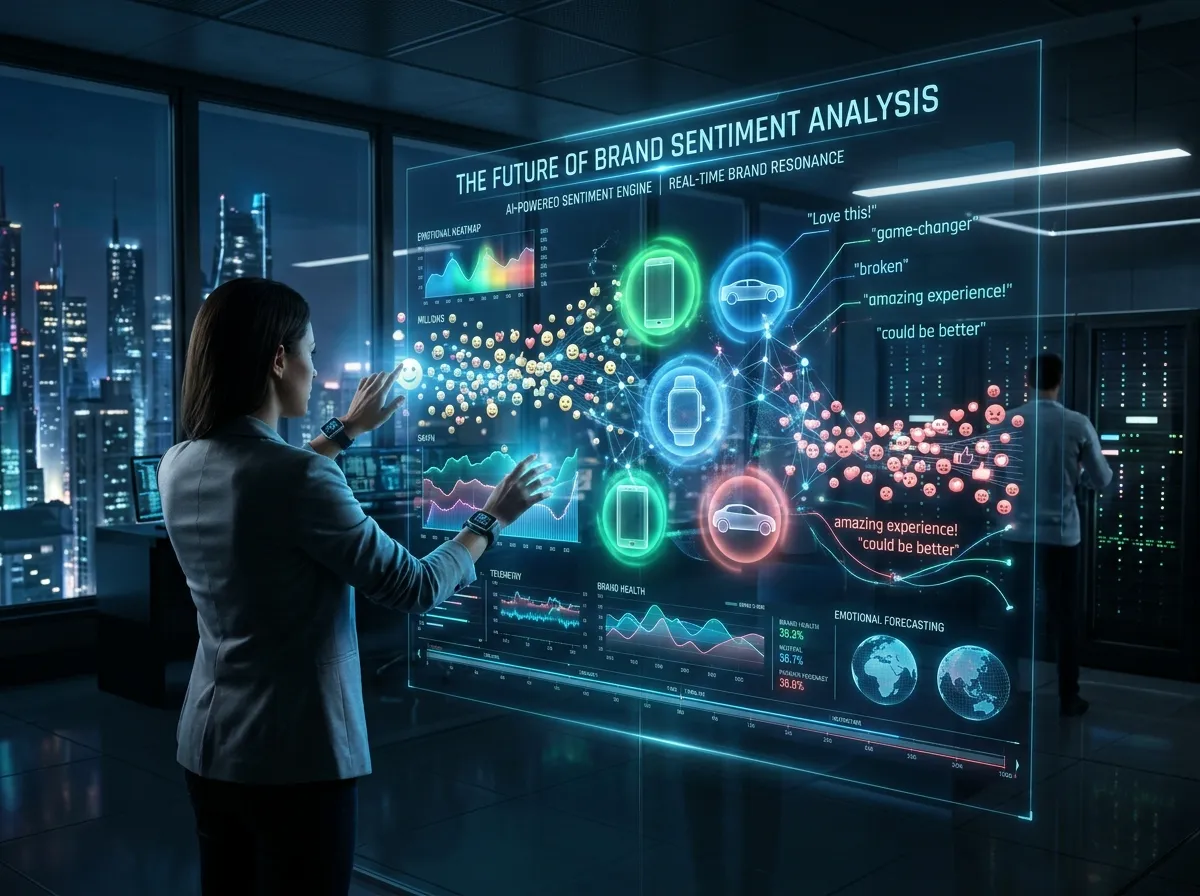
Brand Sentiment Analysis is becoming more sophisticated as artificial intelligence and language technologies continue to develop.
Modern AI systems are increasingly capable of interpreting context, identifying emotional expressions, and analyzing conversations across multiple communication channels.
Multilingual sentiment analysis may become particularly valuable for international businesses that interact with customers from different geographical markets.
Another developing area is real-time sentiment monitoring. Faster analysis can help organizations recognize emerging issues and understand public reactions shortly after important announcements or events.
AI may also help businesses connect customer sentiment with operational information. For example, organizations could compare changes in public opinion with product updates, service performance, and customer support records.
Visual and audio analysis may provide additional insights as brands receive feedback through images, videos, and voice-based interactions.
Nevertheless, technological improvements will not eliminate the need for human judgment. Sarcasm, cultural differences, complicated customer experiences, and sensitive public discussions still require careful interpretation.
Businesses that combine automated analysis with responsible human oversight will be better positioned to understand their customers and maintain meaningful relationships.
Conclusion
Brand Sentiment Analysis gives businesses a deeper understanding of how customers perceive their products, services, and overall identity. By examining online conversations, customer feedback, reviews, and social media discussions, organizations can identify positive experiences, recognize potential reputation challenges, and understand changing customer expectations.
From sentiment tracking and reputation analysis to competitive intelligence and brand perception monitoring, these insights support more informed marketing and business decisions.
However, meaningful results depend on more than collecting large amounts of feedback. Businesses must understand the context behind customer opinions, recognize recurring patterns, and use the findings to improve actual customer experiences.
When combined with consistent communication, reliable products, and responsive customer service, Brand Sentiment Analysis becomes a valuable part of building customer trust and maintaining a strong brand reputation.
10 Frequently Asked Questions About Brand Sentiment Analysis
1. What is Brand Sentiment Analysis?
Brand Sentiment Analysis is the process of examining customer opinions and online conversations to understand how people feel about a particular brand. It helps businesses identify positive, negative, and neutral perceptions.
2. Why is Brand Sentiment Analysis important?
It helps businesses understand customer satisfaction, recognize reputation risks, evaluate marketing campaigns, identify recurring complaints, and make informed decisions about improving their products and services.
3. How does Brand Sentiment Tracking work?
Brand Sentiment Tracking collects brand-related conversations from relevant digital sources and analyzes the language used to identify emotional patterns and changes in public opinion.
4. What is the difference between social listening and sentiment analysis?
Social listening focuses on discovering and monitoring online conversations about a brand. Sentiment analysis examines those conversations to understand whether the expressed opinions are positive, negative, or neutral.
5. What is Customer Sentiment Analysis used for?
It helps businesses understand customer reactions to products, services, advertisements, and customer experiences. Companies use these insights to improve satisfaction and identify opportunities for development.
6. Which metrics are used to measure brand sentiment?
Common measurements include positive and negative mention percentages, neutral mentions, net sentiment, sentiment trends, share of voice, and topic-based customer opinions.
7. What are Brand Sentiment Analysis Tools?
These are software solutions that use AI, natural language processing, and machine learning to collect and analyze customer opinions from social media, reviews, websites, and other digital sources.
8. How does brand sentiment affect brand reputation?
Positive customer sentiment can strengthen trust and credibility, while recurring negative opinions may indicate reputation challenges. Consistent monitoring helps businesses understand and address these perceptions.
9. Can small businesses benefit from Brand Sentiment Analysis?
Yes. Small businesses can monitor customer reviews, social media comments, and online discussions to understand customer satisfaction, identify service problems, and improve their brand image.
10. How can businesses improve negative brand sentiment?
Businesses can investigate recurring complaints, respond professionally to customer concerns, improve product and service quality, communicate transparently, and monitor whether their improvements lead to better customer experiences.