Launching a brand globally requires precision, cultural intelligence, and strategic foresight. This comprehensive guide provides the roadmap you need to transition from market evidence to worldwide brand advocacy.
This extensive article details a step-by-step Global Brand Launch Checklist, covering everything from initial market research and legal compliance to cultural adaptation and digital activation. We explore actionable strategies for building brand equity, managing international teams, and measuring success to ensure your global expansion drives real business growth.
Phase 1: The Foundation – Evidence and Strategy

Before a single asset is designed or a slogan is written, a successful global launch begins with rigorous evidence gathering. A Global Brand Launch Checklist must start with data, not assumptions.
1. Conduct Deep Market Research
The graveyard of failed global launches is filled with brands that didn’t do their homework. You must understand the major objective of all brand marketing in your target region.
- Market Segmentation: Don’t treat a continent as a country. Asia is not a monolith; neither is Europe. Segment by behavior, psychographics, and purchasing power.
- Competitor Analysis: Who owns the market share? Use tools like SEMrush to analyze local competitors’ keywords and backlink profiles.
- Consumer Behavior: How do they shop? In some regions, mobile-first is the only way; in others, brick-and-mortar trust is paramount.
2. Define Your Global Brand Identity
Your identity is your anchor. While tactics change, your core must remain stable.
- Brand Purpose: Why do you exist beyond making money?
- Brand Archetypes: Are you the Hero, the Sage, or the Jester? Brand Archetypes in Practice: From Theory to Marketplace Reality shows that consistent personality traits build trust faster across borders.
- Brand Voice Strategy: Define What Is Brand Voice in Marketing? for your brand. Is it authoritative or playful? This needs to be documented clearly so local teams can adapt it without breaking it.
3. Legal and Compliance Audit
Nothing stalls a Global Brand Launch Checklist faster than a cease-and-desist letter.
- Trademark Availability: Check your brand name in every target jurisdiction. Brand Naming: Scientific Methods Explained suggests checking for linguistic traps.
- Regulatory Compliance: GDPR in Europe, CCPA in California, and various data laws in Asia must be adhered to.
- Brand Safety in Digital Marketing: Ensure your programmatic advertising settings prevent your brand from appearing on unsafe or brand-damaging websites.
Phase 2: Adaptation – Localization and Culture
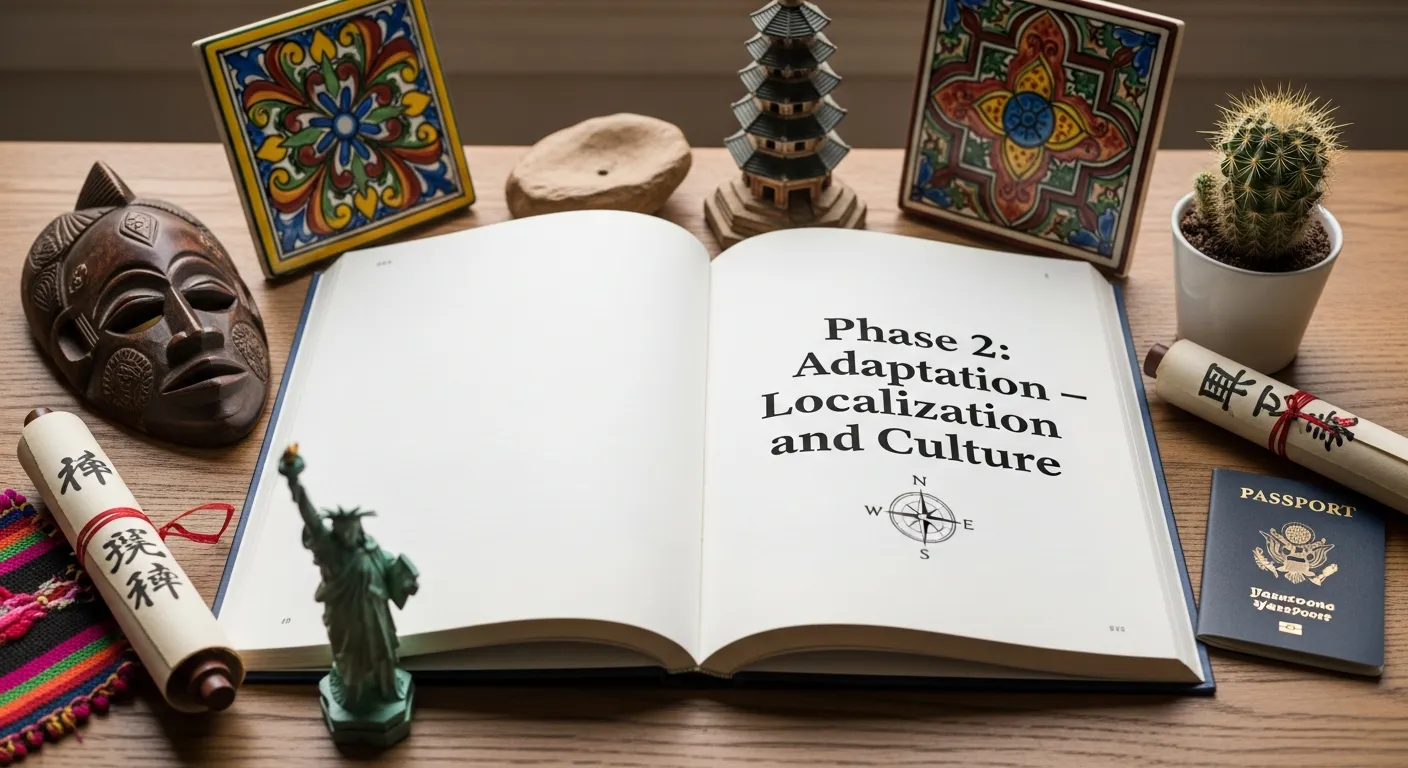
Global Brand Localization is more than translation; it is transcreation. It is the art of adapting your message so it resonates emotionally, not just linguistically.
4. The Science of Brand Memory and Cultural Relevance
You want to build mental availability. The Science of Brand Memory dictates that brands must be distinct and salient.
- Visual Identity: The Psychology of Color in Branding varies by culture. White represents purity in the West but mourning in parts of Asia. Ensure your palette sends the right signal.
- Nostalgia in Digital Branding: Can you tap into local history? Nostalgia in Digital Branding is a powerful tool, but it requires deep local knowledge to avoid appearing inauthentic.
5. Language and Semantics
- Transcreation: Don’t just translate words; translate meaning. “Got Milk?” famously translated to “Are you lactating?” in Spanish markets—a disaster you want to avoid.
- Voice Search Optimization: How do locals speak their queries? Voice Search Optimization is crucial as more consumers use smart speakers and voice assistants.
6. Inclusive Brand Strategies
The modern consumer expects representation. Inclusive Brand Strategies are non-negotiable.
- Representation: Do your visuals reflect the local population?
- Accessibility: Ultimate Guide to Brand Accessibility includes web compliance (WCAG) and ensuring your physical products are usable by people with diverse abilities.
Phase 3: The Build – Digital and Physical Infrastructure

With the strategy set, you must build the engine that drives the brand.
7. Digital Ecosystem Setup
- Website Localization: It’s not enough to have a Google Translate plugin. You need local domains (.co.uk, .de, .jp) and locally hosted servers for speed.
- Mastering Digital Marketing: Integrate your SEO, PPC, and content strategies. How to Use Digital Marketing to Enhance Brand Awareness differs by region; WeChat dominates in China, while WhatsApp is king in Brazil.
- Generative Engine Optimization: Prepare your content for AI search engines. As search evolves, Generative Engine Optimization ensures your brand appears in AI-generated summaries.
8. Social Media Command Center
- Platform Selection: Don’t assume Facebook is the answer everywhere. In Russia, it’s VK; in South Korea, it’s KakaoTalk.
- Social Listening: Use Social Listening as a Brand Strategy Tool. Monitor local sentiment before you launch to understand the cultural mood.
- Brand Crisis Management in the Social Media Era: Have a protocol. If a tweet goes wrong in Tokyo while your HQ is asleep in New York, who responds?
9. Supply Chain and Operations
- Amazon Brand Promotion: If you are selling physical goods, Amazon Brand Promotion strategies must be localized. The “A+ Content” that works in the US might need tweaking for the German marketplace.
- Distribution Channels: Will you go Direct-to-Consumer (DTC) or use local distributors?
Phase 4: The Launch – Activation and Promotion
This is the “go live” moment on your Global Brand Launch Checklist.
10. Integrated Brand Promotion
Silos kill launches. Integrated Brand Promotion ensures your message is consistent across TV, social, email, and PR.
- The Big 5 Model of Brand Management: Use this framework to ensure personality consistency across channels.
- Co-branding in Marketing: Partner with a trusted local brand. Co-branding in Marketing can lend you instant credibility.
11. Influencer and Creator Strategy
- The ROI of Influencer Marketing: In many global markets, influencers are more trusted than traditional media.
- Celebrity Endorsement vs. Micro-Influencer Strategy: In high-context cultures, a mega-celebrity might be necessary. In niche markets, micro-influencers often drive better engagement.
- User-Generated Content: Encourage Consumer Brand Marketing by getting locals to create content with your product.
12. Paid Media Blitz
- Programmatic Advertising: Use data to buy ad inventory efficiently across borders.
- Neuromarketing Techniques: Apply Neuromarketing Techniques to your ad creatives. Eye-tracking studies show that faces draw attention universally, but the context of the face matters.
Phase 5: The Sustenance – Advocacy and Growth

A launch is a moment; a brand is a legacy. Phase 5 turns buyers into advocates.
13. Customer Experience (CX) and Support
- Hyper-Personalized Branding: Use AI to deliver Hyper-Personalized Branding. If a customer in France buys a winter coat, don’t email them a summer swimsuit promotion the next week.
- Conversational Marketing: Implement chatbots. Conversational Marketing: Harnessing Chatbots and AI for Real-Time Engagement is essential for 24/7 global support.
14. Building Brand Resilience
Markets fluctuate. Building Brand Resilience ensures you survive downturns.
- Brand Loyalty: Move customers up the ladder of loyalty. The Neuroscience of Brand Loyalty suggests that emotional connections create “sticky” customers who forgive minor errors.
- Internal Branding: Your employees are your first ambassadors. Why Internal Communication Is the Lifeline of a Strong Brand? Because if your team doesn’t believe it, the market won’t either.
15. Measurement and Optimization
- Brand Equity KPIs: Track awareness, associations, and perceived quality. How to Measure Brand Equity involves regular tracking studies.
- Data-Driven Brand Storytelling: Use the data you gather to tell better stories. Data-Driven Brand Storytelling closes the loop between analytics and creativity.
Deep Dive: Brand Positioning in Global Markets

Brand Positioning in Marketing is the art of owning a specific space in the consumer’s mind. When launching globally, this positioning might need to shift.
- The “Country of Origin” Effect: Does your origin help or hurt? Swiss watches and German cars benefit from their origin. American fast food might not always carry a premium perception.
- Value Based Brand Positioning: Align with local values. Value Based Brand Positioning means if a market values Sustainable Branding Strategies, your eco-friendly credentials must be front and center.
- Luxury Brand Marketing: If you are in the luxury space, scarcity and exclusivity are universal drivers, but the definition of “luxury” shifts. In some markets, it’s about heritage; in others, it’s about flash and logo visibility.
The Role of Technology in Global Launches
Technology is the accelerator of your Global Brand Launch Checklist.
- AI Brand Storytelling: AI tools can help localize narratives at scale. AI Brand Storytelling allows for dynamic content creation that adjusts to user preferences.
- Mastering Metaverse Branding: For forward-thinking brands, the Metaverse offers a borderless playground. Mastering Metaverse Branding can generate buzz among younger demographics globally.
- Augmented Reality Branding: Use AR to let users “try on” products. Augmented Reality Branding reduces return rates and increases conversion in e-commerce.
Navigating Brand Architecture
As you expand, your structure might get complex.
- House of Brands vs. Branded House: Do you launch under one master brand (Virgin) or separate brands (P&G)? Brand Architecture: Organizing Your Portfolio for Maximum Market Impact is a critical decision in the checklist.
- Brand Extension: Be careful. Why Is Brand Extension a Popular Marketing Strategy? Because it leverages existing equity. But extend too far, and you risk Brand Dilution.
Psychological Triggers in Global Branding
Understanding the human mind is key.
- Emotional Branding: Logic leads to conclusions; emotion leads to action. Emotional Branding transcends language barriers. A smile, a tear, or a moment of surprise is universal.
- Sensory Branding: Sensory Branding involves engaging more than just sight. The Power of Sonic Branding (like the Netflix “Ta-Dum”) creates instant recognition without words. Multisensory Branding is the next frontier.
Advanced Tactics: Beyond the Basics
To truly dominate, you need advanced strategies.
- Gamified Branding: Gamified Marketing Strategies: Boost Customer Engagement with Play. People love to win. Incorporate points, badges, or leaderboards into your launch.
- Zero-Click Marketing: Provide value directly in the feed. Zero-Click Marketing respects the user’s time and builds authority.
- Brand Ecosystems: Don’t just sell a product; build an ecosystem. Apple does this well. Brand Ecosystems: How to Craft Cohesive Experiences That Engage keeps customers locked in.
The Importance of Brand Voice and Personality
What Is Brand Voice in Marketing? It’s not just what you say, but how you say it.
- Brand Personality In Marketing: Is your brand sophisticated, rugged, or sincere?
- Brand Archetypes: Use the Brand Archetyping 2.0 framework to ensure your personality remains consistent even when translated into different languages.
- Personal Branding for CEOs: The founder often embodies the brand. Personal Branding for CEOs can humanize a faceless corporation during a global launch.
Measuring Success: KPIs and ROI
You can’t manage what you don’t measure.
- Share of Voice (SOV): Are you part of the conversation?
- Net Promoter Score (NPS): Are customers recommending you?
- Customer Lifetime Value (CLV): Are you acquiring profitable customers?
- Brand Authenticity: How to Measure Brand Authenticity Using Real-Time Data? Look at sentiment analysis and engagement ratios.
Conclusion
Completing a Global Brand Launch Checklist is a monumental task that demands a blend of rigorous evidence and creative advocacy. By following these steps—grounding your strategy in research, adapting culturally, building robust infrastructure, and fostering emotional connections—you position your brand not just to enter a market, but to lead it. The journey from a domestic player to a global powerhouse is paved with challenges, but with a clear roadmap, your brand can resonate with hearts and minds in every corner of the world.
FAQs
1. What is the most critical step in a Global Brand Launch Checklist?
The most critical step is Market Research. Without deep insights into local consumer behavior, competitors, and cultural nuances, even the best creative work will fail. You must understand the Major Objective of All Brand Marketing in that specific region before spending a dime.
2. How does “Global Brand Localization” differ from translation?
Translation changes words from one language to another. Global Brand Localization adapts the entire experience—images, colors, layout, humor, and cultural references—to feel native to the audience. It ensures Brand Perception in Marketing remains positive and relevant.
3. Can small businesses use this Global Brand Launch Checklist?
Yes. While the scale differs, the principles of Brand Positioning in Marketing, legal compliance, and consistent messaging apply to everyone. Small businesses can leverage Digital Marketing Strategies to reach global niches without the budget of a multinational corporation.
4. How do I handle Brand Crisis Management during a global launch?
Preparation is key. Have a Brand Crisis Management in the Social Media Era plan ready. Identify local spokespeople, monitor Social Listening channels 24/7, and have pre-approved responses for common issues. Speed and transparency are vital.
5. What is the role of Influencer Marketing in a global launch?
Influencer Marketing provides social proof and local trust. Influencers act as cultural bridges. The ROI of Influencer Marketing is often higher in new markets because locals trust personalities they know over foreign brands they don’t.
6. How important is “Sonic Branding” globally?
Very important. The Power of Sonic Branding lies in its ability to bypass language barriers. A distinct sound logo creates immediate Brand Recognition in Marketing regardless of the language spoken in the ad.
7. Should I use a “House of Brands” or “Branded House” strategy?
This depends on your portfolio. A Branded House (like Google) offers efficiency and shared equity. A House of Brands (like P&G) offers protection—if one brand fails, it doesn’t hurt the others. Brand Architecture decisions should be based on your risk tolerance and market diversity.
8. What is “Generative Engine Optimization” and why does it matter?
Generative Engine Optimization (GEO) is optimizing content for AI search engines like ChatGPT or Google Gemini. As search shifts from links to answers, ensuring your brand is cited in AI responses is crucial for Mastering Digital Marketing.
9. How do I measure “Brand Authenticity”?
How to Measure Brand Authenticity Using Real-Time Data? Monitor the alignment between your stated values and customer perception. High engagement, positive sentiment, and user-generated content are strong indicators of authenticity.
10. What is the “Big 5 Model of Brand Management”?
The Big 5 Model of Brand Management relates to brand personality traits: Sincerity, Excitement, Competence, Sophistication, and Ruggedness. Aligning your global brand with one of these dimensions helps maintain consistency across different markets.