Brand marketing is the soul of a business, shaping perception and building lasting relationships that transcend transactions and drive sustainable growth for modern companies.
This guide explores the core objectives of brand marketing, including building awareness, creating preference, driving sales, fostering loyalty, and enhancing brand equity. You will learn actionable strategies and see real-world examples that illustrate how these goals work together to create a powerful, resilient brand.
What Is Brand Marketing and Why Does It Matter?
Brand marketing is the strategic process of shaping public perception of a company. It moves beyond simply advertising products or services. Instead, it focuses on crafting a distinct identity, communicating core values, and building an emotional connection with an audience. This comprehensive approach encompasses everything from visual design and messaging (Brand Voice) to customer service and corporate responsibility.
Its importance cannot be overstated. In a marketplace saturated with choices, a strong brand acts as a mental shortcut, helping consumers navigate their decisions. According to a report by Nielsen, 59% of consumers prefer to buy new products from brands they are already familiar with. This preference is not accidental; it is the direct result of effective brand marketing that cultivates trust and reliability. When executed correctly, brand marketing elevates a business from a mere commodity provider to an integral part of a customer’s lifestyle and identity.
Objective 1: Building Brand Awareness
The foundational objective of all brand marketing is to build brand awareness. A customer cannot choose, prefer, or become loyal to a brand they do not know exists. Awareness building is the top-of-funnel activity that ensures your brand is present and considered when a potential customer begins their purchasing journey. It’s about securing a foothold in the consumer’s mind long before a transaction is even considered.
Strategies for Building Brand Awareness
- Leverage Social Media: Platforms like Instagram, TikTok, and LinkedIn are powerful tools for reaching vast audiences. A strong Social Media Management (SMM) strategy can create viral moments and build a dedicated community. For example, Wendy’s famously witty and sassy Twitter presence has earned it a cult following, generating massive awareness far beyond its customer base. This kind of creator marketing feels authentic and engages users directly.
- Invest in Content Marketing: High-quality content establishes your brand as a thought leader. Blogs, videos, podcasts, and infographics that provide value can attract organic traffic and build authority. HubSpot’s blog is a prime example; by offering free, expert advice on marketing, they reinforce their brand’s position as an industry leader, attracting millions of visitors through SEO Optimization.
- Utilize Out-of-the-Box Advertising: Creative campaigns that invite participation can transform passive viewers into active brand advocates. Spotify’s annual “Wrapped” campaign is a masterclass in this. It provides personalized, shareable content that users eagerly post across their social networks, generating enormous organic reach and reinforcing Spotify’s connection to music and personal identity. This is a form of interactive content marketing that makes the user the hero.
Objective 2: Creating Brand Preference
Once your audience is aware of your brand, the next goal is to become their preferred choice. Brand preference is a critical milestone where consumers actively choose your brand over competitors, even when other options are readily available or cheaper. This objective focuses on building a rational and emotional case for why your brand is the superior option.
Techniques for Building Preference
- Highlight Your Unique Value Proposition (UVP): Clearly communicate what makes you different and better. Is it superior quality, innovative features, exceptional customer experience, or a commitment to ethical sourcing? Apple’s brand preference is built on its reputation for sleek design, user-friendly interfaces, and a secure ecosystem that just works. This consistent delivery of a unique promise makes customers willing to pay a premium.
- Tell a Compelling Brand Story: People connect with narratives, not just products. A powerful brand storytelling strategy can create a deep emotional bond. Patagonia has built immense preference by weaving its commitment to environmental activism into its brand identity. Consumers don’t just buy a jacket; they buy into a mission to save the planet, making Patagonia the go-to brand for the eco-conscious adventurer. This is a powerful form of emotional branding.
- Deliver Unwavering Consistency: Every interaction a customer has with your brand must reinforce your promise. From your visual identity and brand voice to your product quality and customer service, consistency builds trust. McDonald’s is a global icon of consistency. Whether you are in New York or Tokyo, the golden arches signify the same familiar menu and service standards, creating a reliable and predictable experience that customers count on.
Objective 3: Driving Sales and Revenue
While brand marketing often focuses on long-term perception, it must ultimately contribute to the bottom line. A brand that is well-known and preferred is in a prime position to convert that positive sentiment into sales. This objective bridges the gap between feeling and action, making it easy and compelling for customers to make a purchase.
Integrating Brand Marketing with Sales
|
Strategy |
Description |
Real-World Example |
|---|---|---|
|
Personalized Marketing |
Using data to tailor offers and recommendations to individual users. This makes the customer feel understood and increases conversion rates. |
Amazon’s recommendation engine is legendary. By analyzing past purchases and browsing behavior, it suggests products with uncanny accuracy, driving billions in incremental revenue. |
|
Strong Calls-to-Action (CTAs) |
Language that is aligned with your brand voice and prompts immediate action. CTAs should be clear, concise, and compelling. |
Nike’s “Just Do It” is more than a tagline; it’s a motivational CTA that inspires action. It’s used across campaigns to encourage people to start their fitness journey, with Nike products as the enabler. |
|
Sales-Driven Campaigns |
Branded promotions, limited-time offers, and seasonal campaigns that create a sense of urgency and excitement, driving immediate sales. |
Starbucks’ Pumpkin Spice Latte is a cultural phenomenon. This seasonal offering creates immense hype and drives a significant portion of its fall revenue, all while reinforcing its brand as a purveyor of comforting, seasonal treats. |
Effective brand marketing removes friction from the buying process. When a customer trusts your brand, they are less likely to second-guess their purchase, leading directly to increased sales and higher market share.
Objective 4: Fostering Brand Loyalty and Advocacy
Acquiring a new customer is significantly more expensive than retaining an existing one. Research by Bain & Company has shown that a mere 5% increase in customer retention can boost profits by as much as 25% to 95%. Therefore, a crucial objective of brand marketing is to foster deep brand loyalty, turning one-time buyers into lifelong fans and, eventually, vocal advocates for your brand.
Strategies to Build Brand Loyalty
- Implement Loyalty and Reward Programs: Exclusive programs make customers feel valued and give them a compelling reason to return. Sephora’s Beauty Insider program is a brilliant example. It offers points, free products, and exclusive access to events, creating a gamified marketing experience that keeps customers locked into the Sephora ecosystem.
- Engage and Interact with Your Community: Modern brands thrive on two-way conversations. Being active where your customers are, responding to their comments, and featuring their content builds a strong sense of brand community. Glossier built its empire on Instagram by actively engaging with followers and using user-generated content in its official marketing, making its community feel like co-creators of the brand.
- Continuously Exceed Expectations: The most effective way to build loyalty is to consistently deliver an exceptional product and customer experience. Netflix excels at this by constantly refining its recommendation algorithm and investing in high-quality original content. This dedication to providing value keeps subscribers engaged and reduces churn, even as competition intensifies.
- Encourage Brand Advocacy: Loyal customers often become your most powerful marketers. Encourage them to share their positive experiences through referral programs, affiliate marketing, or simply by creating share-worthy moments. Dropbox famously grew its user base by offering free extra storage for every friend a user referred, turning its customers into an enthusiastic, incentivized sales force.
Objective 5: Enhancing Brand Equity
The ultimate, overarching objective of all brand marketing efforts is to build and enhance brand equity. As defined by sources like Wikipedia, brand equity is the added value a company generates from a product with a recognizable name when compared to a generic equivalent. High brand equity allows a company to command premium prices, enjoy greater customer loyalty, expand into new markets more easily, and weather crises more effectively. It is the cumulative result of achieving all other branding objectives.
Key Drivers of Brand Equity
- Customer Perception and Associations: Brand equity resides in the minds of consumers. It’s the sum of all their feelings, experiences, and beliefs about your brand. Apple has immense brand equity because customers perceive it as innovative, stylish, and reliable. This positive perception allows it to launch new products with a built-in audience ready to buy. Ahrefs and SEMrush are excellent tools for monitoring brand mentions and sentiment to track this perception.
- Experience Consistency and Reliability: Brands with high equity deliver a consistent experience every time. Coca-Cola is arguably the world’s most recognized brand because it has delivered the same taste and brand promise for over a century, across virtually every country on Earth. This unwavering consistency makes it a trusted and timeless choice.
- Social Responsibility and Brand Purpose: Modern consumers increasingly prefer brands that align with their values. Brands that demonstrate a genuine commitment to social or environmental causes can build powerful brand equity. TOMS Shoes pioneered the “One for One” model, donating a pair of shoes for every pair sold. This act of giving became integral to its brand identity, building a deep connection with socially conscious consumers. This is a form of green marketing that builds a positive brand legacy.
- Name Awareness and Recognition: Simply being well-known is a major component of equity. When a brand name becomes synonymous with a product category (e.g., “Google” for search, “Xerox” for copying), it has reached the pinnacle of awareness. This recognition gives the brand a significant competitive advantage.
How These Objectives Create a Powerful Brand Ecosystem
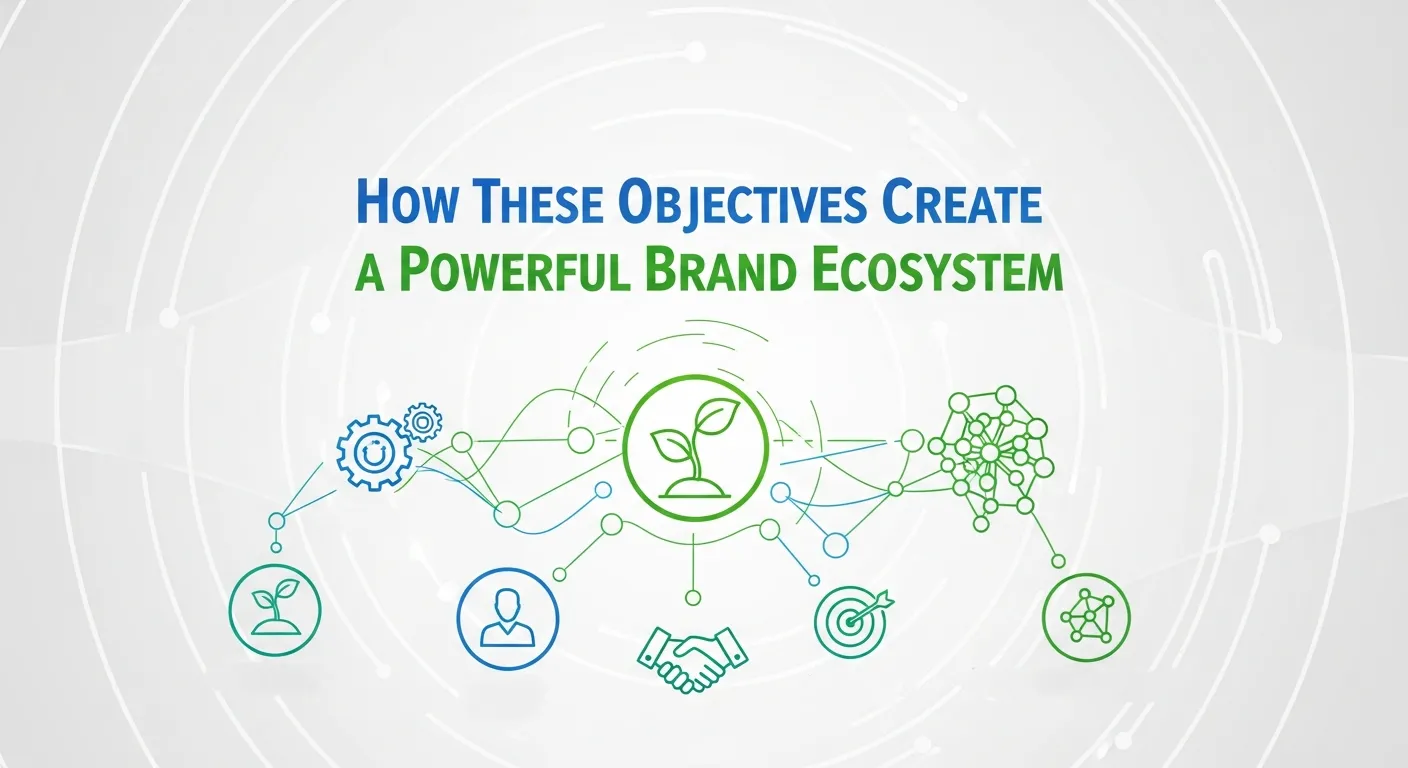
The objectives of brand marketing are not isolated goals; they are interconnected stages in a continuous cycle. Each objective builds upon the last, creating a flywheel effect that drives sustainable growth.
- Awareness is the entry point. It introduces your brand to the world.
- Preference grows from that awareness, as you prove your value.
- Sales are the natural result of being the preferred choice.
- Loyalty is cultivated through positive post-purchase experiences.
- Equity is the cumulative asset you build through consistent execution across all stages.
A brand with high equity finds it easier and cheaper to generate new awareness, creating a self-reinforcing loop. Whether you are launching a startup or managing a global corporation, focusing on these five objectives provides a clear roadmap for building a brand that doesn’t just compete but thrives for the long term.
Conclusion
The major objective of all brand marketing is to build lasting brand equity—the intangible asset that makes your business more valuable and resilient. This is achieved by strategically pursuing a sequence of goals: establishing awareness, earning preference, converting that preference into sales, and nurturing those customers into loyal advocates. By focusing on this holistic journey, you create more than just customers; you build a legacy.
Frequently Asked Questions (FAQs)
1. What is the single most important objective of brand marketing?
While all objectives are interconnected, the ultimate goal is to build brand equity. Equity represents the long-term, stored value of your brand in the minds of consumers. It is the culmination of successful awareness, preference, and loyalty campaigns, and it is what allows a brand to command premium pricing and withstand market pressures.
2. How does digital marketing support brand marketing objectives?
Digital marketing provides the tools to execute brand marketing strategies at scale. SEO builds awareness in search engines, social media fosters community and preference, content marketing establishes thought leadership, and email campaigns nurture loyalty. Digital channels make branding efforts more measurable and targeted than ever before.
3. What’s the difference between brand marketing and product marketing?
Brand marketing focuses on shaping the perception of the entire company and its values (the “why”). It’s a long-term strategy. Product marketing, on the other hand, focuses on promoting a specific product to a specific audience (the “what”). It’s more tactical and often has shorter-term sales goals. Strong brand marketing makes product marketing easier.
4. How do you measure the ROI of brand marketing?
Measuring brand marketing can be complex because its effects are long-term. Instead of direct ROI, marketers often track Brand Equity KPIs such as:
- Brand Awareness: Measured through surveys, direct traffic (via tools like Google Analytics), and share of voice.
- Customer Perception: Tracked via brand sentiment analysis and Net Promoter Score (NPS).
- Financial Metrics: Such as price premium (the ability to charge more than competitors) and customer lifetime value (CLV).
5. How long does it take to build a strong brand?
Building a brand is a marathon, not a sprint. While initial awareness can be generated quickly with a large ad spend, building deep trust, preference, and loyalty takes years of consistent effort. There are no shortcuts to creating a brand that truly resonates with people and stands the test of time.
6. Can a small business effectively compete in brand marketing?
Absolutely. Small businesses can’t outspend large corporations, but they can “out-care” them. By focusing on a niche audience, telling an authentic brand story, delivering exceptional customer experience, and building a tight-knit community on social media, small businesses can create intense loyalty and preference that larger, more impersonal brands struggle to replicate.
7. What is a brand archetype and how does it help in brand marketing?
Brand archetypes are universally recognized character types (e.g., the Hero, the Sage, the Rebel) that help define a brand’s personality. Adopting an archetype, like Harley-Davidson embodying the “Outlaw,” helps ensure a consistent brand voice and story, making the brand more recognizable and relatable to a specific type of customer.
8. Why is emotional branding so important?
Decisions are often driven by emotion and justified by logic. Emotional branding aims to create a deep, psychological connection with consumers by tapping into their aspirations, fears, or values. Brands that forge this emotional bond—like Nike with inspiration or Disney with magic—create far more powerful loyalty than those that compete on features and price alone.
9. How do you manage a brand crisis?
Brand crisis management requires speed, transparency, and empathy. The key steps are to:
- Acknowledge the problem immediately and take responsibility.
- Communicate clearly and frequently across all channels.
- Provide a clear plan of action to fix the issue.
- Show genuine empathy for those affected.
A well-handled crisis can, in some cases, even strengthen customer trust.
10. What is the role of employees in brand marketing?
Employees are the most important brand ambassadors. Brand alignment starts internally. When employees understand and believe in the brand’s mission and values, they deliver a more authentic and consistent customer experience. Encouraging employee advocacy, where staff share positive news about the company, is a powerful and credible form of brand marketing.