Integrated marketing is the practice of unifying all marketing and communication efforts to deliver a consistent, seamless, and customer-centric brand experience across all channels.
This guide provides a deep dive into the world of integrated marketing. We will break down its core components, explore why a unified strategy is essential in today’s fragmented media landscape, and provide a step-by-step framework for implementation. You will discover actionable tips, learn from successful real-world examples, and gain the insights needed to transform your disjointed tactics into a powerful, cohesive marketing machine that builds trust and drives sustainable growth.
The Power of One Voice: A Deep Dive into Integrated Marketing
In a world where consumers are bombarded with thousands of messages daily, brands cannot afford to send mixed signals. A disjointed social media post, a conflicting email campaign, or a customer service interaction that feels off-brand can create confusion and erode trust. This is where integrated marketing, also known as integrated marketing communications (IMC), becomes not just a strategy, but a necessity.
So, what is integrated marketing? At its core, it is the strategic alignment of all your marketing channels and customer touchpoints to tell the same story. It ensures that your brand’s message, tone, and visual identity are consistent whether a customer encounters you through an advertisement, a social media update, your product packaging, or a conversation with a sales representative. When executed correctly, this holistic approach transforms fragmented efforts into a powerful, unified force that strengthens your brand, clarifies your message, and forges a deeper connection with your audience.
Why Integrated Marketing is Non-Negotiable Today
Imagine a brand that presents itself as playful and witty on TikTok but sends formal, corporate-style emails. On its website, the tagline is “Innovation for Tomorrow,” but its print ads use “Quality You Can Trust.” This lack of consistency creates a jarring customer experience. The customer is left wondering, “Who is this brand, really?”
An integrated marketing strategy prevents this confusion. It ensures every message, regardless of the channel, looks, feels, and sounds the same. This harmony delivers several critical business benefits:
- Builds Trust and Credibility: Consistency breeds familiarity, and familiarity builds trust. When customers receive a consistent message, they perceive the brand as reliable and professional.
- Improves Brand Recognition and Recall: Repetition is the key to memory. By presenting a unified message across multiple platforms, you reinforce your brand identity, making it easier for customers to recognize and remember you. This is crucial for building brand awareness.
- Increases Marketing ROI: An integrated approach eliminates redundant work, streamlines content creation, and creates synergies between channels. For example, a single piece of pillar content, like a research report, can be repurposed into blog posts, social media updates, an email series, and a webinar, maximizing its value and reach.
- Enhances the Customer Journey: It provides a seamless and logical path for the customer, from awareness to conversion and beyond. Each touchpoint reinforces the previous one, guiding the customer smoothly through the sales funnel.
The Core Components of an Integrated Marketing Strategy
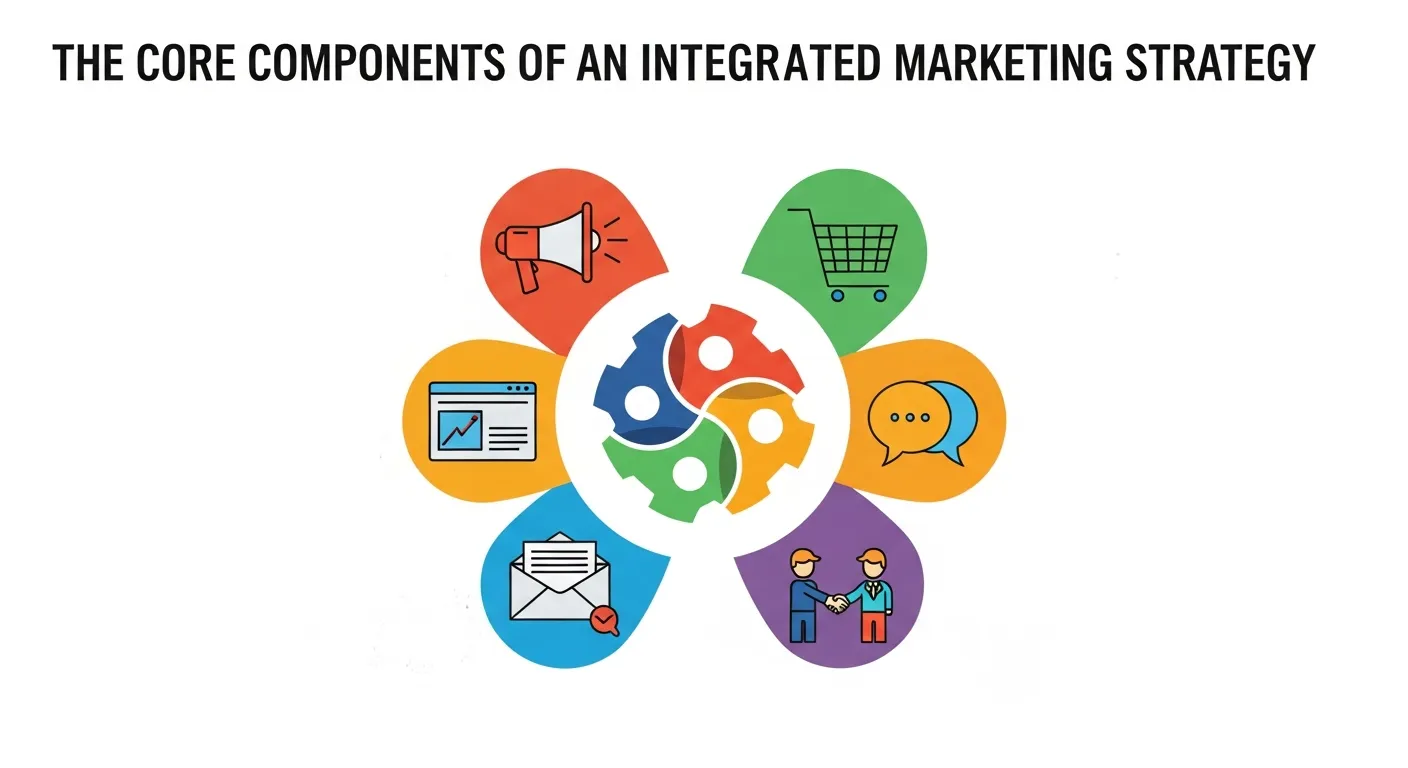
At the heart of integrated marketing is the simple yet powerful idea of unity. It’s about ensuring that the whole is greater than the sum of its parts. This requires a strong foundation and a clear understanding of several key components.
1. A Clearly Defined Brand Strategy
Before you can integrate your marketing, you must have something clear to integrate. Everything starts with a deep understanding of your brand.
- Mission, Vision, and Values: What is your company’s purpose? What do you stand for? This is the “why” that drives everything you do.
- Brand Personality and Archetype: Is your brand a helpful Sage, a rebellious Outlaw, or a nurturing Caregiver? Defining a brand archetype helps personify your brand and guide its behavior.
- Unique Value Proposition (UVP): What makes you different from your competitors? This should be a clear, concise statement that communicates your unique benefit.
2. The Unifying Power of Brand Voice and Tone
While visual identity captures attention, it’s the brand voice that builds the relationship. In an integrated marketing framework, your voice is the glue that holds all communication together.
- Brand Voice: This is the consistent personality of your brand’s communication. It doesn’t change. For example, a brand’s voice might be authoritative, inspiring, or witty.
- Brand Tone: This is the emotional inflection applied to the voice, which can adapt to different situations. For example, your tone might be more empathetic in a customer service email than in a celebratory social media post, but the underlying voice remains the same.
Once defined, your brand voice becomes the guide for all content creation, from a PPC ad headline to a comprehensive whitepaper.
3. Consistent Visual Identity
Humans are visual creatures. A consistent visual identity ensures your brand is instantly recognizable across all platforms. This includes:
- Logo: The primary symbol of your brand, used consistently everywhere.
- Color Palette: A defined set of colors that evoke the right emotions and are used across your website, ads, and physical materials.
- Typography: The specific fonts your brand uses to maintain a consistent look.
- Imagery Style: The type of photography, illustration, or graphics that reflect your brand’s personality.
4. Cross-Channel Alignment
This is where the integration becomes visible. It’s about ensuring that different marketing channels are not operating in silos but are working together to achieve a common goal. This is a cornerstone of omnichannel strategies.
|
Channel |
Role in an Integrated Campaign |
Example |
|---|---|---|
|
Content Marketing |
Creates a central, high-value asset (e.g., an ebook or webinar). |
A software company publishes an in-depth guide on “The Future of AI in E-commerce.” |
|
Email Marketing |
Nurtures leads by sharing the content and related insights. |
A series of emails promotes the guide to subscribers, offering exclusive excerpts. |
|
Social Media |
Amplifies the message and drives engagement with bite-sized content. |
Instagram posts share key stats from the guide, and LinkedIn articles discuss its implications. |
|
Paid Advertising |
Targets new audiences to drive traffic to the core content asset. |
Google Ads and Facebook Ads target professionals interested in AI and e-commerce, leading them to the guide’s landing page. |
|
Public Relations (PR) |
Secures media coverage to build authority and reach a wider audience. |
A press release about the guide’s findings is sent to industry publications, resulting in articles and interviews. |
True Integration Extends Beyond Marketing
A common misconception is that integrated marketing is only about aligning advertising channels. True integration permeates every corner of the organization, because every employee interaction is a brand touchpoint.
- Customer Service: How support representatives communicate with customers should reflect the brand’s voice and values. An empathetic and helpful tone reinforces a customer-centric brand promise.
- Sales Team: The scripts and language used by the sales team must align with the messaging in marketing campaigns. This ensures a consistent narrative from the first ad a customer sees to the final sales call.
- Product and Packaging: The unboxing experience, the product’s user interface (UX), and the text on the packaging are all opportunities to reinforce the brand story.
- Human Resources: The way a company communicates with its employees (internal branding) and recruits new talent shapes its external reputation.
When all these departments are aligned, the result is a powerful and authentic brand identity that is lived, not just advertised.
How to Build and Implement a Successful Integrated Marketing Strategy
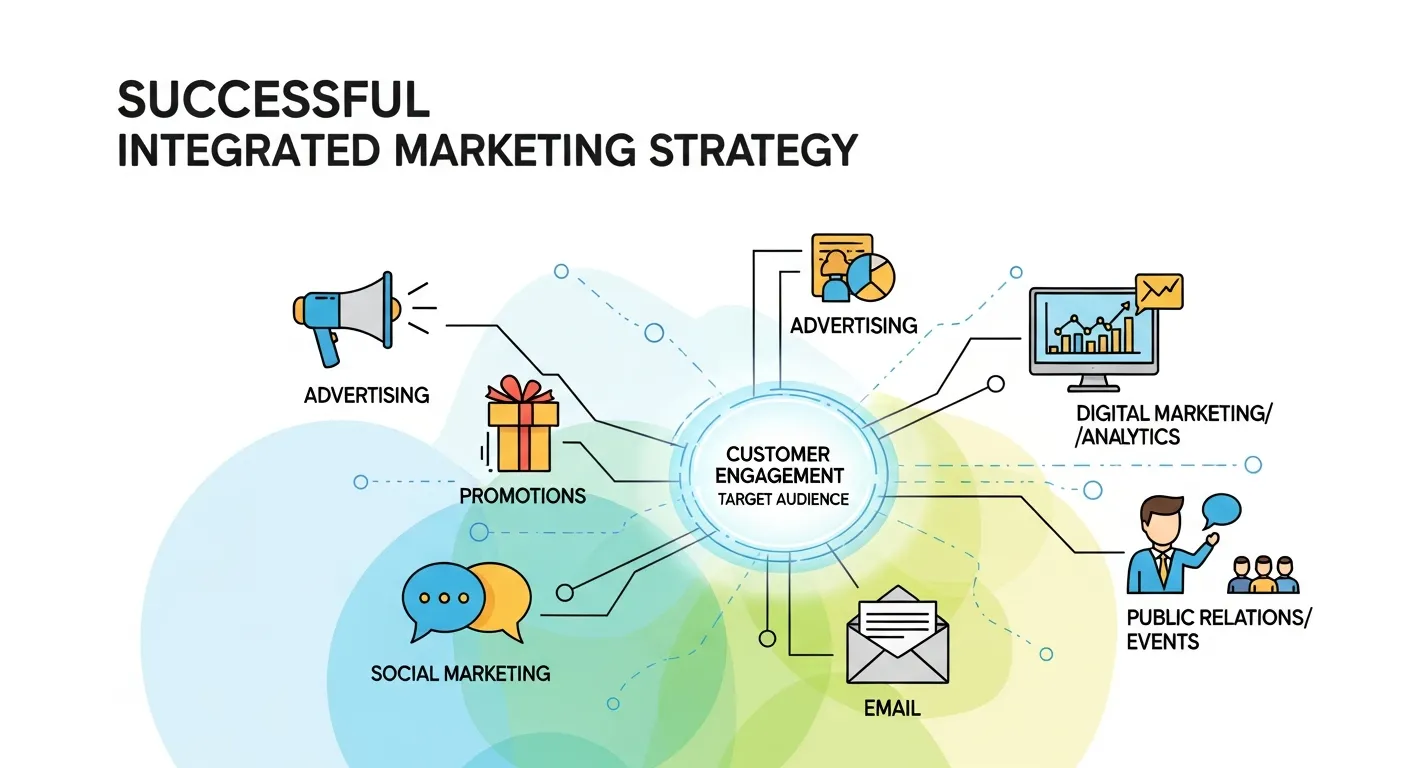
Developing an integrated marketing strategy requires discipline, collaboration, and a customer-centric mindset. Here is a step-by-step process to guide you.
Step 1: Conduct a Comprehensive Audit
Start by understanding where you currently stand. Audit all your marketing materials and customer touchpoints: your website, social media profiles, recent ad campaigns, email newsletters, sales scripts, and even customer service chat logs. Look for inconsistencies in messaging, tone, and visual design. This will reveal the gaps you need to close.
Step 2: Establish a Strong Brand Foundation
If the audit reveals a lack of clarity, go back to the basics. Work with key stakeholders to create a comprehensive brand style guide. This document should be the single source of truth for your brand and must include:
- Brand Purpose and Mission
- Brand Voice and Tone Guidelines (with examples of do’s and don’ts)
- Visual Identity Rules (logo usage, color codes, typography)
- Core Messaging and Key Value Propositions
Step 3: Deeply Understand Your Customer Journey
An integrated strategy must be built around the customer. Use tools like customer journey mapping to visualize every touchpoint a customer has with your brand, from initial awareness to post-purchase support. For each stage, ask:
- What does the customer need at this stage?
- What is the best channel to reach them?
- What message will be most relevant and helpful?
This process, informed by tools like Google Analytics, helps you deliver the right message on the right channel at the right time.
Step 4: Plan Integrated Campaigns, Not Siloed Tactics
Instead of planning a “social media campaign” or an “email campaign,” start thinking in terms of “integrated campaigns.” Center each campaign around a single core idea or “big rock” piece of content.
For example, a campaign to launch a new feature could look like this:
- Theme: “Effortless Collaboration, Anywhere.”
- Pillar Content: A detailed blog post and a short demo video showcasing the new feature.
- Social Media: Teaser posts leading up to the launch, a live Q&A with the product manager on launch day, and user-generated content showcasing how people are using the feature.
- Email: An announcement to existing users with a direct link to try the feature.
- PR: Outreach to tech bloggers and journalists for reviews.
Step 5: Foster a Culture of Collaboration
Integrated marketing cannot succeed without breaking down departmental silos. Create cross-functional teams for campaign planning that include members from marketing, sales, product, and customer service. Use shared project management tools like Asana or Trello to ensure everyone is aligned and working toward the same goals.
Step 6: Measure and Optimize Holistically
Measuring the success of an integrated strategy requires looking beyond channel-specific metrics. While metrics like email open rates and social media engagement are important, you also need to track the overall impact.
- Brand Recognition: Use surveys and tools like Google Search Console to track branded search volume.
- Conversion Path Analysis: Use Google Analytics to see how different channels work together to drive conversions.
- Customer Lifetime Value (CLV): A rising CLV can indicate that a better, more consistent experience is improving customer retention.
- Attribution Modeling: Move beyond last-click attribution to models that give credit to all the touchpoints that influenced a conversion. For deeper insights on analytics, the SEMrush blog is an excellent resource.
Conclusion
So, what is integrated marketing? It’s far more than just matching colors or repeating a tagline. It’s a strategic commitment to creating one unified voice, one clear identity, and one seamless experience that lives across every single customer interaction. It is the disciplined practice of ensuring that everything you do and say reinforces who you are as a brand. In today’s crowded market, this level of clarity and consistency is no longer just an advantage—it is essential for survival. The brands that will thrive are those that move from chasing disparate trends to building genuine, lasting trust through integration.
FAQs
1. What is the difference between integrated marketing and omnichannel marketing?
They are closely related. Omnichannel strategies focus on creating a seamless and unified customer experience across all channels, allowing the customer to move between them smoothly. Integrated marketing is the broader strategy of ensuring the messaging and branding within that experience are consistent. You can think of omnichannel as the “how” (the channels) and integrated marketing as the “what” (the message).
2. Can a small business implement an integrated marketing strategy?
Absolutely. In fact, small businesses can often be more agile in implementing an integrated strategy because they have smaller teams and fewer departmental silos. The key is to start with a clear brand strategy and a commitment to consistency, even if you are only using two or three marketing channels.
3. What is the biggest challenge in implementing integrated marketing?
The biggest challenge is often organizational, not tactical. Breaking down internal silos between departments (like marketing, sales, and customer service) and getting everyone to work from the same strategic playbook requires strong leadership and a culture of collaboration.
4. How do I start creating an integrated marketing plan?
Start with a communications audit. Review all your current marketing materials and channels to identify inconsistencies. The next step is to create a comprehensive brand style guide that clearly defines your voice, tone, and visual identity. This document will become the foundation for all future efforts.
5. What are some key metrics to measure the success of an integrated campaign?
Look at both channel-specific and holistic metrics. Track overall campaign reach, brand search volume, conversion rates across different paths, and customer lifetime value. Analyzing assisted conversions in Google Analytics can also show how different channels are working together.
6. Is integrated marketing only for B2C companies?
Not at all. B2B companies benefit greatly from an integrated approach. The B2B buying journey is often long and complex, involving multiple decision-makers and touchpoints. A consistent and trustworthy brand message across LinkedIn, whitepapers, sales calls, and webinars is crucial for nurturing leads through this complex cycle. This is a core part of account-based marketing.
7. How does content marketing fit into an integrated strategy?
Content marketing is often the engine of an integrated strategy. A high-value piece of “pillar” content (like an ebook, a webinar, or a research study) can serve as the central asset for a campaign. It can then be repurposed and distributed across social media, email, and paid channels, ensuring a consistent message.
8. What role does public relations (PR) play?
PR is a vital component. It focuses on earning media coverage and building relationships with journalists and influencers. In an integrated strategy, PR efforts are aligned with marketing campaigns to amplify the core message, build credibility, and reach a wider audience through trusted third-party sources.
9. How do you ensure your entire team is on board with the strategy?
Training and documentation are essential. Once you have a brand style guide, conduct training sessions with all customer-facing teams, including sales and support. Make the guide easily accessible to everyone and regularly review work to ensure it aligns with the strategy.
10. What’s an example of a brand that does integrated marketing well?
Apple is a classic example. Every aspect of their brand—from the minimalist design of their products and stores to their aspirational advertising and the seamless user experience of their software—is perfectly integrated. The message of simplicity, creativity, and premium quality is consistent across every touchpoint.