Brand awareness elevates your business from an unknown name to a trusted market leader. It’s the critical first step in ensuring customers think of you first and choose you with confidence.
To increase brand awareness, execute a cohesive digital marketing strategy combining search engine optimization (SEO), value-driven content, and authentic social media engagement. By incorporating influencer marketing and strategic partnerships, you can build recognition, establish authority, and foster lasting customer loyalty in a competitive marketplace.
How to Increase Brand Awareness: The Definitive Guide
What makes someone choose a $5 Starbucks coffee over a $2 cup from a generic café? Why do people line up for the latest iPhone when a comparable Android device costs hundreds less? The answer is a powerful, intangible asset: brand awareness. It’s the force that transforms a simple product into a cultural icon and a business into a household name.
For any business, from a fledgling startup to an established enterprise, understanding how to increase brand awareness is not just a marketing objective—it’s a fundamental pillar of survival and growth. Awareness is the first step in the customer journey. Without it, even the most innovative product or exceptional service will remain invisible.
This guide provides a comprehensive roadmap for building and amplifying your brand’s presence. We will explore proven brand strategies, from foundational digital tactics to creative offline initiatives, that will help you cut through the noise, capture attention, and build a brand that people remember, trust, and champion.
1. Master Search Engine Optimization (SEO) for Lasting Visibility 
Before a customer can become aware of your brand, they have to find you. In the digital age, that discovery process almost always begins with a search engine. SEO is the practice of optimizing your online presence to rank higher in search results for queries relevant to your business. It is the most sustainable way to generate consistent, high-quality traffic.
Foundational SEO for Brand Awareness
Keyword Research as a Compass
You must understand the language your target audience uses when searching for solutions you provide. Use tools like the Google Keyword Planner or Ahrefs to identify three types of keywords:
- Navigational: People searching for your brand name directly (e.g., “Nike shoes”). This is a direct measure of existing awareness. Tracking branded search volume in Google Search Console is a key performance indicator for brand awareness campaigns.
- Informational: People looking for answers to questions (e.g., “best running shoes for flat feet”). This is your opportunity to introduce your brand as an expert. Creating high-value content around these terms attracts users at the top of the marketing funnel.
- Transactional: People ready to buy (e.g., “buy running shoes online”). While this is lower-funnel, ranking for these terms still contributes to awareness among active shoppers.
On-Page SEO: Your Digital Storefront
This involves optimizing the elements on your website. Ensure your target keywords are naturally integrated into your page titles, headers (H1, H2, H3), meta descriptions, and image alt-text. Create user-friendly URLs (e.g., yourbrand.com/blog/how-to-increase-brand-awareness instead of yourbrand.com/p?123). Ensure your site has a logical structure, making it easy for both users and search engines to navigate. Internal linking—linking from one page on your site to another—is also critical for distributing page authority and helping Google understand your content’s context.
Technical SEO: The Engine Under the Hood
A technically sound website is crucial for a good customer experience, which Google rewards. Key elements include:
- Site Speed: Your pages should load in under three seconds. A slow site leads to high bounce rates, sending a negative signal to search engines. Use Google’s PageSpeed Insights to test and improve your load times.
- Mobile-Friendliness: With most searches happening on mobile devices, a responsive design is non-negotiable. Google uses mobile-first indexing, meaning it primarily considers your mobile site for ranking.
- Secure Connection (HTTPS): A secure site is a basic sign of trustworthiness for both users and search engines. It’s no longer optional.
2. Create High-Value Content That Builds Authority
Content marketing is the art of providing value to your audience without explicitly selling to them. By consistently creating and distributing relevant and helpful content, you position your brand as a trusted authority, which naturally builds awareness and attracts customers.
Content Strategies to Boost Your Brand
Pillar Pages and Topic Clusters
Instead of writing random blog posts, adopt a structured approach. Create a “pillar page,” a comprehensive guide on a broad topic like “Digital Marketing.” Then, create “cluster” articles on specific subtopics (e.g., “A Beginner’s Guide to SEO,” “How to Run Facebook Ads”), all linking back to the pillar. This structure tells search engines you are an expert, boosting your rankings. For more on this strategy, Backlinko offers an excellent guide on how this “hub and spoke” model builds topical authority.
Leverage Diverse Content Formats
People consume content in different ways. To maximize reach, diversify your output:
- Video Content: Create short-form tutorials or behind-the-scenes looks for platforms like TikTok and Instagram Reels. Long-form video, like webinars or in-depth product demos on YouTube, can establish deeper authority.
- Podcasts: Start a branded podcast discussing industry trends, or appear as a guest on relevant shows to tap into engaged, niche audiences. This strategy is excellent for building thought leadership.
- Infographics and Case Studies: Use data-driven visuals to make complex information digestible and highly shareable. Case studies provide social proof by demonstrating how your product or service solved a real-world problem for a customer.
Embrace Brand Storytelling
Your content should do more than inform; it should connect on an emotional level. Use brand storytelling to share your mission, values, and origin. What problem did you set out to solve? Who are the people behind your company? A compelling narrative creates an emotional bond that turns casual readers into loyal fans who feel invested in your brand’s journey.
3. Harness Social Media for Community Building
Social media platforms (SMM) are not just advertising channels; they are virtual communities. Engaging authentically on platforms like Instagram and TikTok can humanize your brand, foster direct relationships, and amplify your message exponentially.
Building a Strong Social Media Presence
Choose Your Platforms Wisely
You don’t need to be everywhere. Focus on where your target audience spends their time. A B2B software company will find more value on LinkedIn, where they can share industry insights and network with professionals. A clothing marketing brand will thrive on the visual-first nature of Instagram and the viral trend-driven culture of TikTok.
Develop a Unique Brand Voice
Your brand voice is your personality. Are you witty and humorous like Wendy’s? Inspirational and empowering like Nike? Professional and authoritative like IBM? A consistent voice makes your brand more relatable and memorable. Document this voice in a style guide to ensure consistency across all team members who post on behalf of the brand.
Engage, Don’t Just Broadcast
Social media is a two-way street. Don’t just post promotional content. Ask questions, run polls, and respond to comments and direct messages promptly. When you engage, you show that you are listening and that you care about your community. This interaction is a critical component of a positive customer experience.
Embrace User-Generated Content (UGC)
Encourage your customers to share photos and videos of themselves using your products. Reposting this content on your own channels serves as powerful social proof. A recommendation from a real customer is far more credible than an advertisement. Create a unique, branded hashtag to collect and curate this content easily.
4. Foster Strategic Partnerships and Collaborations
Partnering with other brands or influencers allows you to tap into their existing audiences, borrowing their credibility and expanding your reach far more quickly than you could on your own.
Types of Partnerships for Brand Awareness
Influencer Marketing
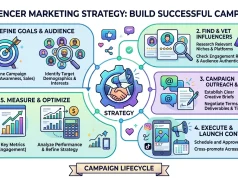
Creator marketing is booming because it leverages trust. Collaborate with influencers whose followers align with your target audience. Focus on authenticity over follower count. Micro-influencers (10k-100k followers) often have higher engagement rates and a more dedicated community, making their recommendations feel more like advice from a trusted friend. Ensure the partnership feels genuine to the creator’s content, rather than a forced advertisement.
Co-Marketing and Sponsorship
Team up with a non-competing brand that serves a similar audience for joint webinars, co-branded content, or social media takeovers. Branding and sponsorship of events, podcasts, or even community newsletters can put your name in front of a relevant audience and associate your brand with positive experiences and established entities.
Affiliate Marketing
Create a program where partners earn a commission for driving sales. This incentivizes bloggers, content creators, and other businesses to talk about your brand, effectively creating a decentralized sales force that builds awareness. It’s a performance-based way to ensure your marketing spend is directly tied to results.
5. Implement Targeted Paid Advertising Campaigns
While organic growth is sustainable, paid advertising, or brand promotion, offers a way to accelerate brand awareness by guaranteeing visibility.
Effective Paid Advertising Strategies
Brand Awareness Campaigns on Social Media
Platforms like Facebook and Instagram have specific campaign objectives designed to maximize reach and impressions. Use visually compelling ads to introduce your brand to a “cold” audience based on their demographics, interests, and behaviors. The goal here isn’t direct sales but familiarity.
Search Ads (Pay-Per-Click)
Run ads on Google for keywords your audience is searching for. While often used for lead generation, running ads for informational keywords can be a great way to introduce your brand at the exact moment someone has a relevant problem. This ensures you are part of the initial consideration set.
Remarketing (Retargeting)
This tactic involves showing ads to users who have already visited your website but didn’t convert. Remarketing keeps your brand top-of-mind and gently nudges potential customers back to your site, reinforcing brand recall until they are ready to convert. It takes an average of 7 touchpoints to make a sale, and remarketing is a cost-effective way to achieve them.
6. Don’t Overlook Offline and Experiential Marketing
In a digitally saturated world, tangible, real-world experiences can make a lasting impression and generate significant buzz. This is a core part of reality branding, where you connect with customers in their physical environment.
Strategies for Offline Impact
Sponsor or Host Events
Sponsoring a local community event, an industry conference, or a charity run puts your brand in a positive light and connects it to values your audience cares about. This form of sponsorship can dramatically boost local or industry-specific awareness. Hosting your own workshops or meetups can position you as a community leader and create a direct line of communication with your most engaged customers.
Branded Merchandise (Swag)
High-quality, well-designed merchandise like t-shirts, tote bags, or water bottles can turn your customers into walking billboards, generating countless impressions. The key is to create something people actually want to use or wear, which means investing in good design and quality materials.
Public Relations (PR)
Earning media coverage in reputable publications can dramatically boost your credibility and awareness. This can be achieved by sharing original research, commenting on industry trends as an expert, or telling a compelling human-interest story related to your brand. A feature in a major publication can be more valuable than months of advertising.
Conclusion
Building strong brand awareness is a marathon, not a sprint. It demands a dedicated, multi-channel approach focused on delivering a consistent and positive customer experience. By investing in SEO, content, and community, you create a resilient brand that not only survives but thrives, securing long-term growth and becoming the go-to choice for your audience.
Frequently Asked Questions (FAQs)
1. What is the fundamental difference between brand awareness and brand equity?
Brand awareness is the degree to which consumers are familiar with your brand and can recognize it. It’s the foundation. Brand equity is the commercial value built upon that awareness, encompassing perceptions of quality, loyalty, and positive associations that allow a brand to charge a premium.
2. How long does it realistically take to see a noticeable increase in brand awareness?
While initial results from paid ads can be immediate, building sustainable brand awareness through organic efforts like SEO and content marketing typically takes 6 to 12 months of consistent work. The process is cumulative, meaning early efforts will compound over time to create significant momentum.
3. As a small business, can I effectively build brand awareness against larger competitors?
Absolutely. Small businesses can excel by targeting a specific niche, allowing them to become a big fish in a small pond. By focusing on an exceptional customer experience, authentic community building, and highly targeted local marketing, a small brand can build deeper, more meaningful connections than a large, impersonal corporation.
4. What are the most crucial metrics for measuring brand awareness?
Key metrics include direct website traffic, branded search volume (tracked via Google Search Console), social media reach and engagement (likes, shares, comments), and “share of voice” (how often your brand is mentioned compared to competitors). Customer surveys are also invaluable for direct feedback.
5. How does brand storytelling contribute to building awareness?
Brand storytelling creates an emotional connection that helps consumers remember your brand and its purpose. A compelling narrative about your mission, values, or origin makes your business more relatable and memorable, transforming customers into loyal advocates who are eager to share your story with others.
6. Is it more important to focus on acquiring new audiences or engaging an existing one?
A balanced approach is best. Acquiring new audiences is essential for growth and expanding your reach. However, engaging your existing audience is crucial for building loyalty and turning customers into brand ambassadors who will generate powerful word-of-mouth marketing, one of the most effective forms of brand awareness.
7. Why is a consistent brand voice so important for awareness?
A consistent brand voice, or personality, humanizes your business and makes it recognizable across all platforms. Whether your voice is witty, professional, or nurturing, maintaining it builds trust and familiarity, helping you stand out from competitors and making your brand more memorable to consumers.
8. Can negative brand awareness be repaired?
Yes, but it requires a solid brand crisis management plan. Repairing a damaged reputation involves publicly acknowledging mistakes, making concrete operational changes to address the root cause of the issue, and consistently delivering positive experiences over an extended period to slowly rebuild trust with the public.
9. What role does packaging and unboxing play in brand awareness?
In the age of social media, the “unboxing experience” has become a powerful marketing tool. Thoughtful, unique, and aesthetically pleasing packaging creates a memorable, shareable moment that encourages user-generated content, effectively turning the act of receiving a product into a viral brand awareness opportunity.
10. How do offline marketing efforts support online brand awareness?
Offline marketing, such as sponsorship of a local event or industry trade show, creates real-world interactions that drive online activity. After a positive offline experience, people are more likely to search for your brand online, follow you on social media, or talk about you in digital forums, bridging the gap between physical and digital awareness.
Read more: What is Brand Sponsorship in Marketing?