
Brand Royalties are payments businesses receive when they allow authorized partners to use their trademarks, names, designs, or other intellectual property. These payments may be based on sales percentages, fixed fees, minimum guarantees, or combined structures. Effective royalty management requires clear licensing agreements, accurate rate calculations, transparent reporting, and defined usage rights. When managed carefully, brand royalties create additional revenue opportunities while protecting brand identity and supporting long-term commercial partnerships.
A recognizable brand can create commercial value far beyond the products or services sold directly by its owner. Businesses may allow other organizations to use their names, trademarks, logos, characters, designs, or other intellectual property in exchange for financial compensation. These arrangements create an additional source of income while allowing authorized partners to benefit from an established brand identity.
Brand Royalties are payments made to a brand owner in exchange for the permitted use of its intellectual property. They commonly appear in licensing relationships, where one business receives the right to use another company’s brand under agreed conditions. Depending on the arrangement, payments may be calculated as a percentage of sales, a fixed amount, a guaranteed minimum, or a combination of different structures.
For brand owners, royalties can turn intellectual property into a recurring revenue opportunity without requiring them to manufacture, distribute, or sell every licensed product themselves. For licensees, an established brand can provide recognition, customer confidence, and access to an existing market position.
However, successful royalty arrangements require more than agreeing on a payment amount. Businesses need to understand the value of the licensed brand, establish suitable financial terms, define usage rights, monitor performance, and maintain a transparent relationship between the parties. These elements determine whether a licensing arrangement becomes a sustainable commercial opportunity.
The Commercial Value Behind Brand Royalties
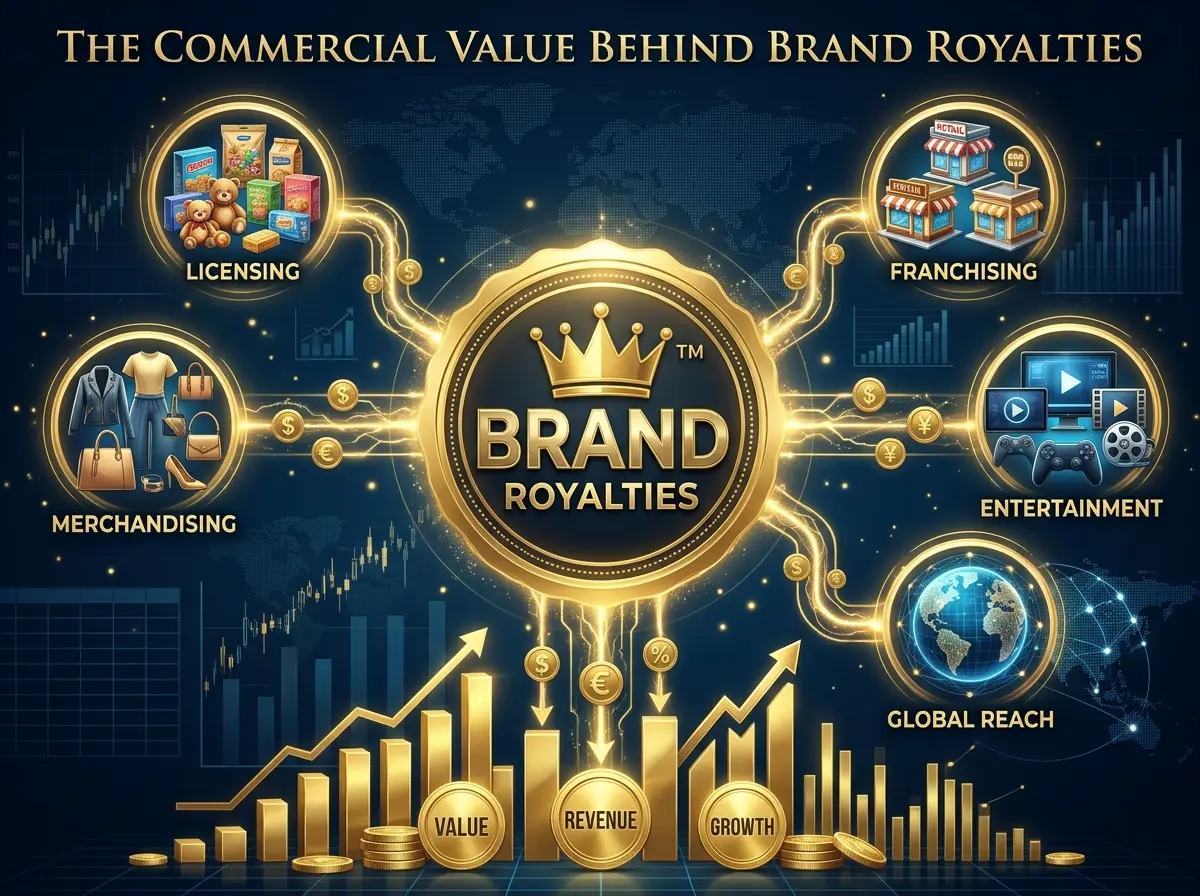
A brand develops value through recognition, reputation, customer relationships, and the meaning people associate with its identity. When customers recognize a name or logo, that familiarity can influence their expectations and purchasing decisions. Another business may therefore be willing to pay for the opportunity to use that identity in an approved commercial context.
Consider a popular clothing brand that allows a manufacturer to produce accessories using its trademark. The manufacturer benefits from the brand’s existing recognition, while the brand owner receives compensation for granting permission. The resulting products can reach customers who already have an interest in the brand.
This is one of the central advantages of brand licensing. It allows intellectual property owners to generate income from assets they have developed while giving partners access to a recognizable identity.
Brand licensing revenue can come from different commercial arrangements, including merchandise licensing, product collaborations, franchise-related agreements, promotional partnerships, and authorized distribution relationships. The exact structure depends on the rights being granted and the responsibilities assigned to each party.
Not every brand is equally suitable for licensing. Recognition alone does not guarantee commercial success. A brand must also have a relevant audience, a positive reputation, and a clear connection to the products or services being licensed.
A strong licensing opportunity emerges when the licensed identity adds genuine value to the partner’s offering without weakening the brand owner’s positioning.
How Brand Licensing Fees Reflect Brand Value
The financial terms of a licensing arrangement should reflect the commercial value of the rights being provided. A well-known brand with strong customer demand may command different fees from a newer brand with limited recognition.
Brand licensing fees compensate the owner for allowing another party to use specified intellectual property. These fees can be influenced by brand awareness, market demand, product category, geographic coverage, licensing duration, exclusivity, and expected sales.
For example, a licensee seeking exclusive rights to use a brand across an entire country may face different financial terms from a business receiving permission to use the same brand for a limited product range in one region.
The scope of the agreement matters because licensing rights can vary significantly. A company may grant permission to use a logo on packaging but retain control over advertising campaigns and product development. Another arrangement may allow a partner to produce and market a broader collection under the licensed identity.
Businesses should also consider the costs and responsibilities associated with maintaining the relationship. Brand owners may need to review product samples, approve marketing materials, monitor quality, and manage trademark protection. These activities can influence the overall commercial structure.
A licensing fee should therefore reflect more than the popularity of a name. It should account for the value of the rights, the opportunities available to the licensee, and the obligations required to protect the brand.
Understanding Royalty Rate Calculation
One of the most important financial decisions in a licensing agreement is determining how much the licensee will pay. Royalty rate calculation provides a method for connecting compensation with the commercial use of the licensed brand.
A common approach is to calculate royalties as a percentage of an agreed sales base. For example, if a licensing agreement specifies a 6% royalty rate on eligible net sales and the licensee generates $100,000 in qualifying sales, the royalty payment would be $6,000.
The calculation may look simple, but the definition of the sales base is extremely important. The agreement needs to clarify whether royalties are calculated using gross sales, net sales, wholesale revenue, or another agreed financial measure.
If the calculation uses net sales, the contract should define which deductions are permitted. These might include approved returns, refunds, discounts, or certain taxes, depending on the agreement. Without clear definitions, the parties may interpret the same sales figures differently.
The royalty percentage also depends on the commercial context. A licensing arrangement involving a highly recognizable brand may justify a different rate from one involving a smaller or specialized identity. Product margins, manufacturing costs, distribution expenses, and market conditions may also influence negotiations.
Businesses should avoid selecting a royalty rate simply because it appears common in another industry. Rates can vary considerably between product categories and licensing models. A realistic calculation should reflect the specific rights being granted and the economic conditions of the agreement.
Brand Royalty Payments and the Financial Relationship Between Partners
Once a royalty structure is established, businesses need a reliable process for calculating and transferring payments. Brand royalty payments represent the financial compensation owed to the brand owner under the licensing agreement.
Payment arrangements may be monthly, quarterly, semiannual, or annual. The appropriate frequency depends on sales volume, reporting requirements, business operations, and the terms negotiated by the parties.
A typical payment process connects sales reporting with royalty calculations. The licensee records eligible transactions, applies the agreed royalty rate, accounts for permitted adjustments, and submits a royalty statement to the brand owner.
For example, a manufacturer may report quarterly sales of licensed products and calculate the payment due for that period. The brand owner can then review the statement, compare it with supporting records, and confirm whether the payment follows the agreement.
Timely reporting is important because delayed or incomplete information can create uncertainty about revenue. Businesses should establish clear reporting deadlines and explain what information must accompany each payment.
The agreement may also include provisions for late payments, disputed calculations, currency conversion, taxes, and adjustments for returns or cancellations. These details help prevent financial misunderstandings.
A consistent payment process benefits both parties. The licensee gains a predictable financial obligation, while the brand owner receives better visibility into the commercial performance of its intellectual property.
Trademark Royalty Agreements and the Protection of Intellectual Property

Brand licensing often involves trademarks, making legal clarity essential. A trademark may represent a company’s name, logo, slogan, or another protected identifier. Allowing another business to use it creates responsibilities that extend beyond financial compensation.
Trademark royalty agreements establish the terms under which a licensee can use specified trademarks and how the associated royalties will be calculated and paid.
Such agreements commonly identify the licensed marks, permitted products or services, approved territories, duration, payment structure, quality standards, and restrictions on use. They may also address sublicensing, renewal, termination, reporting, and dispute resolution.
Quality control is particularly important. A brand owner has an interest in ensuring that licensed products and marketing materials meet appropriate standards. If a partner sells poor-quality merchandise under a trusted brand name, customers may associate the negative experience with the original owner.
The agreement may therefore require approval of product samples, packaging, promotional materials, or other public-facing content. It can also establish procedures for correcting unauthorized use.
Legal requirements differ between jurisdictions, so businesses should seek appropriate professional advice when preparing or reviewing significant trademark licensing agreements. A contract should reflect the relevant intellectual property rights and applicable laws rather than relying on a generic payment arrangement.
Strong agreements protect both commercial interests and the identity that gives the license its value.
Different Royalty Payment Structures and Their Business Impact
Not all licensing relationships use the same payment method. The structure should reflect how the licensed product generates revenue and how financial risk is shared between the brand owner and licensee.
A percentage-based royalty is one of the most familiar approaches. The licensee pays an agreed percentage of eligible sales, allowing the brand owner to receive more when the licensed products perform well.
A fixed-fee arrangement works differently. The licensee pays an agreed amount for the right to use certain brand assets during a defined period or for a specified purpose. This can provide predictable income for the owner, although it may not increase automatically when sales grow.
Some agreements combine an upfront payment with ongoing royalties. The initial amount may secure the licensing rights, while additional payments depend on product sales or other agreed performance measures.
Minimum guaranteed royalties provide another option. The licensee commits to paying a minimum amount during a specified period, even if actual sales are lower than expected. If calculated royalties exceed that minimum, the agreement can explain how the additional amount is handled.
Royalty payment structures may also include advance payments that are later credited against earned royalties. This can give the brand owner an initial financial commitment while allowing the licensee to recover the advance through future royalty calculations.
The right arrangement depends on the relationship’s commercial objectives. A new licensing partnership may benefit from a structure that limits initial financial exposure, while an established product category may support more predictable guaranteed payments.
The agreement should explain how each payment component works and prevent ambiguity about when amounts become due.
Brand Usage Fees and the Scope of Licensed Rights
The amount a business pays for a brand is closely connected to what it is permitted to do with that brand. Brand usage fees can reflect the scope, duration, exclusivity, and commercial importance of the rights being granted.
For instance, permission to use a logo on a single promotional campaign is different from permission to manufacture products under a brand name for several years. The second arrangement may provide broader commercial opportunities and involve greater responsibility for brand protection.
Usage fees may also differ according to territory. A license covering one local market may require different terms from a license covering multiple countries. Similarly, an exclusive license may carry a different commercial value from a non-exclusive arrangement where the brand owner can work with other partners.
The permitted channels matter as well. A license might cover physical retail products, ecommerce listings, social media promotions, or selected advertising platforms. Businesses should identify these uses clearly rather than assuming that permission in one channel automatically extends to every other channel.
The relationship between usage rights and commercial identity is also relevant when different brands operate in the same market. Brand Coexistence explores how separate brands can maintain their identities while operating in overlapping commercial environments. This perspective is useful when licensing arrangements involve partners whose products, audiences, or trademarks may intersect.
Clear usage boundaries help ensure that the financial compensation matches the actual rights provided.
Intellectual Property Royalties Beyond Traditional Trademarks
Brand royalties are part of a wider intellectual property licensing environment. Businesses may generate income from different types of protected or commercially controlled assets, depending on their ownership and the rights available for licensing.
Intellectual property royalties may involve trademarks, copyrighted creative works, designs, characters, software, and other assets. The payment structure depends on the nature of the rights and the agreement governing their use.
For example, an entertainment company may license a character for use on merchandise. A fashion brand may authorize another manufacturer to use its name on selected products. A business may also license visual designs or creative materials for approved promotional applications.
These arrangements show that licensing revenue does not come only from displaying a company logo. The underlying intellectual property can create commercial opportunities across products, services, media, and customer experiences.
However, different types of intellectual property have different legal protections. Ownership of a trademark does not automatically establish ownership of a photograph, illustration, or design created by another party. Businesses must confirm that they hold the necessary rights before granting permission to license an asset.
This becomes especially important when brands collaborate with designers, agencies, photographers, creators, and external production partners. Clear ownership records help prevent disputes and ensure that royalty arrangements are based on rights the licensor is legally entitled to provide.
Brand Licensing Agreements as Long-Term Business Relationships
A licensing agreement is more than a document that specifies a payment percentage. It defines the commercial relationship between the intellectual property owner and the party receiving permission to use it.
Brand licensing agreements should explain the rights granted, financial obligations, quality expectations, reporting procedures, and responsibilities of both parties.
The agreement may identify the licensed products, target markets, distribution channels, and permitted promotional activities. It can also define whether the licensee has exclusive rights and whether those rights can be transferred or sublicensed.
Quality standards are essential because the licensee’s activities can influence how customers perceive the brand. A brand owner may require product inspections, packaging approval, advertising reviews, and compliance with established identity standards.
The agreement should also explain how changes are handled. A product line may expand, a new market may become commercially attractive, or the brand owner may update its identity. The parties need a clear process for reviewing these developments without creating uncertainty about existing rights.
Brand positioning can influence the success of these arrangements. A licensing partner should complement the identity rather than confuse customers about what the brand represents. Businesses seeking professional support with positioning, market differentiation, and long-term identity development may find Best Brand Strategy Services relevant when evaluating how licensing opportunities fit into a broader brand strategy.
A well-structured agreement gives both parties a clear foundation for commercial cooperation and makes it easier to address changing business requirements.
Royalty Revenue Management and Financial Transparency
As licensing activities expand, tracking payments across multiple agreements can become complicated. A brand owner may work with different licensees, product categories, territories, and payment schedules. Each arrangement may use a different royalty rate or calculation method.
Royalty revenue management helps organizations maintain accurate records of licensing income and monitor whether payments follow the agreed terms.
A reliable system should connect licensing agreements with sales reports, royalty statements, invoices, payment records, and outstanding balances. It should also preserve the details needed to explain how each payment was calculated.
For example, a business licensing its trademark to several manufacturers may need to compare quarterly revenue from different product categories. One licensee might report sales monthly, while another submits quarterly statements. Without consistent records, financial reporting becomes difficult.
Reconciliation is another important part of the process. Brand owners may compare reported sales with invoices, distribution records, or other supporting information when the agreement allows such reviews. Audit provisions can provide an additional way to verify royalty calculations.
Businesses should also monitor the commercial performance of each agreement. A license that generates regular revenue but creates significant quality concerns may not support long-term brand value. Another agreement may produce modest early income while introducing the brand to a valuable new market.
Financial transparency allows organizations to evaluate these relationships beyond the payment amount. It supports better renewal decisions, improved negotiations, and more informed licensing strategies.
Sustainable Branding and the Long-Term Value of Licensing

Generating royalty income should not come at the expense of a brand’s reputation or values. Licensing partners influence product quality, packaging, manufacturing practices, customer experience, and public perception.
If a brand owner grants rights without considering these factors, a profitable agreement may create long-term reputational risks. Poor product quality, misleading claims, or irresponsible manufacturing practices can weaken customer confidence.
This is why licensing decisions should consider more than immediate revenue. Businesses may need to evaluate whether a potential partner follows appropriate production standards, communicates honestly, and aligns with the brand’s wider commitments.
For organizations that place importance on environmental responsibility, Sustainable Branding Strategy offers a useful perspective on connecting brand identity with environmental values. Similar considerations can inform licensing decisions, particularly when partners manufacture products or represent the brand in public markets.
A licensing relationship should reinforce the brand’s long-term direction. When commercial partners understand the owner’s expectations and follow agreed standards, royalty income can support growth without weakening the identity that makes the brand valuable.
Conclusion
Brand Royalties allow businesses to generate income from their intellectual property by granting authorized partners the right to use brand names, trademarks, designs, and other valuable assets. Through suitable licensing fees, royalty rates, and payment structures, organizations can turn brand recognition into an additional source of commercial revenue.
However, successful royalty arrangements depend on more than financial calculations. Clear agreements, defined usage rights, quality standards, accurate sales reporting, and effective revenue management are all essential to maintaining a healthy licensing relationship.
When businesses connect royalty opportunities with long-term brand protection, they can expand their commercial reach while preserving the reputation and recognition they have built. The strongest licensing arrangements create value for both parties and support sustainable growth beyond direct product sales.
Frequently Asked Questions
1. What are Brand Royalties?
Brand Royalties are payments made to a brand owner in exchange for permission to use its intellectual property, such as trademarks, names, logos, designs, or other licensed brand assets.
2. How do brand royalty payments work?
A licensee pays the brand owner according to the terms of a licensing agreement. Payments may be calculated as a percentage of eligible sales, a fixed amount, a guaranteed minimum, or a combination of these methods.
3. What are brand licensing fees?
Brand licensing fees are financial charges paid for the right to use specified brand assets. They may depend on the brand’s recognition, licensed products, market coverage, duration, exclusivity, and commercial opportunities.
4. How is a brand royalty rate calculated?
A common method multiplies eligible sales by an agreed royalty percentage. For example, a 5% royalty on $50,000 in qualifying sales produces a payment of $2,500. The agreement must clearly define the sales amount used in the calculation.
5. What is included in a trademark royalty agreement?
A trademark royalty agreement generally defines the licensed trademarks, permitted uses, territories, duration, royalty rates, payment schedules, quality standards, reporting obligations, and conditions for renewal or termination.
6. What are common royalty payment structures?
Common structures include percentage-based royalties, fixed fees, minimum guarantees, advance payments, and combinations of upfront payments with ongoing royalties. The suitable approach depends on the licensing relationship.
7. What is the difference between a brand licensing fee and a royalty?
A licensing fee is a broad term for compensation paid to obtain permission to use brand assets. A royalty is commonly an ongoing payment calculated according to an agreed method, such as a percentage of sales. Some licensing arrangements use both.
8. Can small businesses earn revenue through brand royalties?
Yes. Small businesses with valuable trademarks, recognizable identities, original designs, or other licensable intellectual property may generate revenue by granting suitable partners permission to use those assets.
9. Why are brand licensing agreements important?
Brand licensing agreements establish the rights and responsibilities of both parties. They clarify payment terms, permitted uses, quality expectations, reporting requirements, and procedures for handling disputes or unauthorized use.
10. How can businesses manage royalty revenue effectively?
Businesses can manage royalty revenue through accurate sales reporting, organized licensing records, consistent payment tracking, financial reconciliation, and periodic reviews of agreement performance. These practices improve transparency and help protect licensing income.