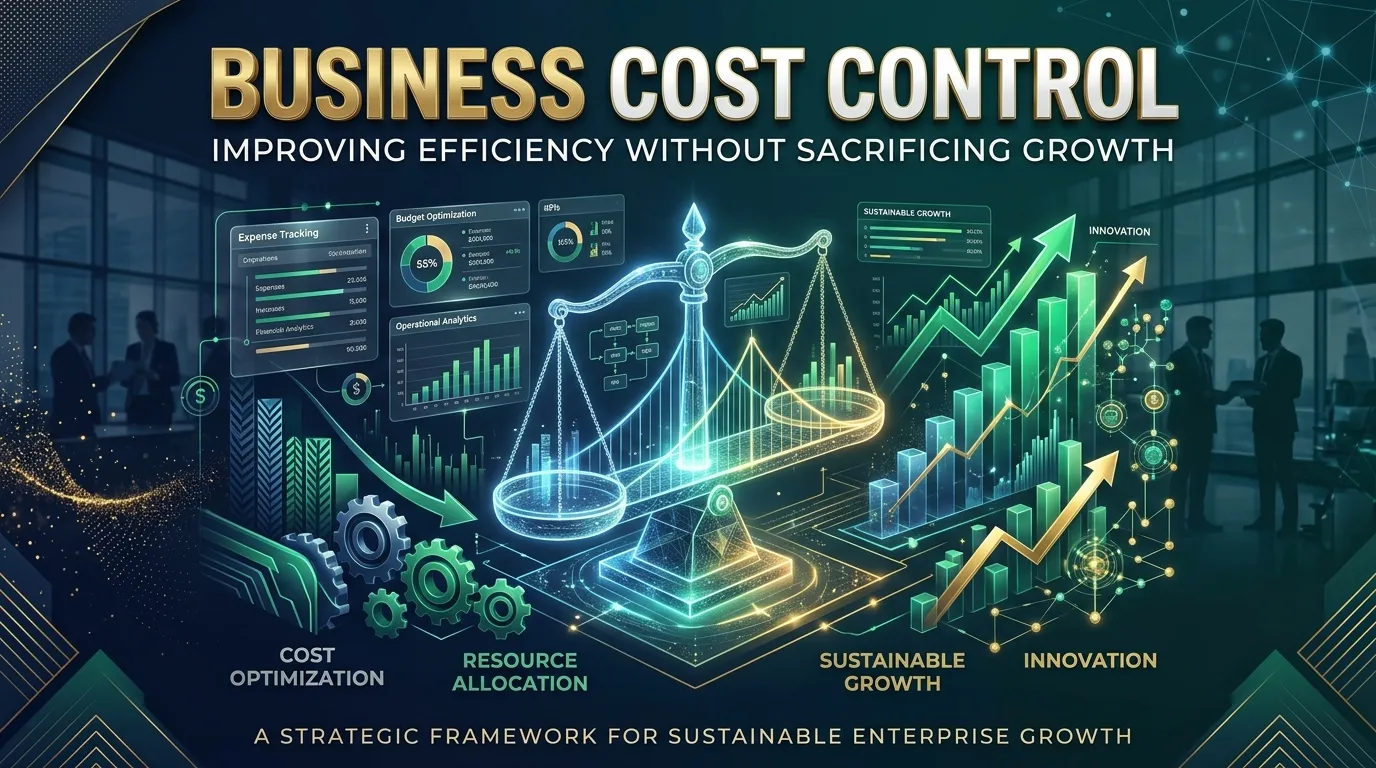
Business Cost Control helps organizations manage expenses, improve operational efficiency, and protect profitability without sacrificing quality or customer trust. Effective cost management combines realistic budgeting, expense monitoring, process improvement, overhead reviews, and informed financial decisions. By focusing on value rather than indiscriminate spending cuts, businesses can improve financial efficiency, strengthen resilience, and support sustainable growth.
A business can generate strong sales, attract new customers, and expand its operations while still struggling to maintain healthy profitability. The reason is often hidden in the expenses behind everyday activities. Rising supplier prices, inefficient workflows, unnecessary subscriptions, and poorly managed budgets can gradually reduce the financial strength of an otherwise successful company.
Business Cost Control helps organizations understand where their money goes, which expenses create genuine value, and where improvements can protect profitability. It is not simply about spending less. Effective cost control means making better financial decisions while preserving the resources, people, and processes that support business performance.
For a growing company, the challenge is finding the right balance. Cutting too aggressively may weaken customer service or slow innovation. Allowing expenses to increase without review can create financial pressure that becomes difficult to reverse.
A thoughtful cost control approach gives businesses greater visibility, stronger financial discipline, and the flexibility to respond when market conditions change.
Why Cost Control Is More Than Reducing Expenses
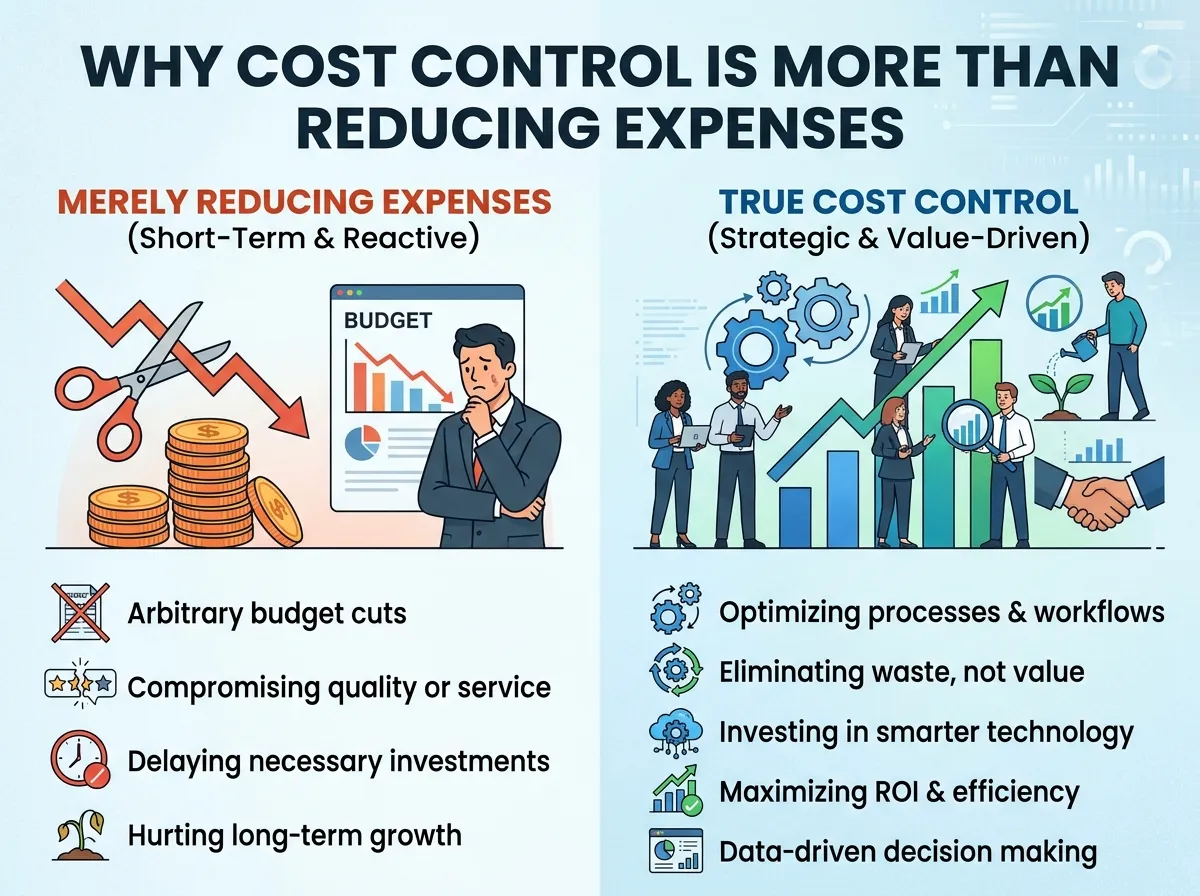
The simplest approach to cost control is to look at a company’s spending and identify items that can be removed. However, this method often overlooks the reason an expense exists.
A marketing campaign, for example, may appear costly when viewed only through its monthly invoice. If it consistently generates profitable customers, reducing that expense without examining its results could damage revenue.
The same principle applies to employee training, technology investments, equipment maintenance, and customer support. These activities may require significant spending, but they can also prevent larger costs or create long-term value.
Effective Cost Control Strategies for Businesses begin with understanding the relationship between spending and performance. Every major expense should have a clear purpose, whether it supports revenue, improves productivity, reduces risk, or strengthens customer relationships.
This perspective allows managers to distinguish between wasteful spending and valuable investment.
A company that controls costs intelligently can become more efficient without becoming less capable. It can maintain quality, respond to customer needs, and invest in opportunities that support sustainable growth.
The Hidden Cost of Everyday Business Operations
Many financial problems develop through small, repeated expenses rather than one major purchase.
A business might continue paying for software that employees rarely use. Its warehouse may hold excess inventory that ties up working capital. A department may repeat manual tasks that could be handled more efficiently through better systems.
These expenses often remain unnoticed because they are distributed across different teams and budgets.
Operational Cost Reduction involves examining how work is performed and identifying opportunities to improve efficiency. This requires looking beyond invoices to understand the processes that generate them.
For example, a company experiencing high delivery expenses might initially negotiate lower transportation rates. A deeper review could reveal that poor inventory planning is causing frequent urgent shipments. Correcting the planning problem may provide a more lasting improvement than negotiating a small discount.
Operational efficiency also depends on coordination. When departments work independently, they may purchase similar tools, duplicate activities, or make decisions that increase costs elsewhere.
A broader view of operations helps businesses identify these connections and make improvements that benefit the organization as a whole.
Business Budget Management Starts With Realistic Planning
A budget provides a financial framework for business decisions. It helps organizations estimate income, plan spending, allocate resources, and prepare for changing conditions.
However, a budget is only useful when it reflects how the business actually operates.
Business Budget Management should connect financial expectations with operational priorities. Revenue forecasts need to be realistic, expense assumptions should be based on reliable information, and departments should understand the limits of their spending authority.
A company that builds its budget around overly optimistic sales expectations may commit to expenses it cannot comfortably support. On the other hand, a budget that is too restrictive may prevent teams from responding to genuine opportunities.
Good budgeting also recognizes that business conditions can change. Supplier costs may increase, customer demand may shift, or unexpected maintenance may become necessary.
Rather than treating the budget as a fixed document, businesses can review it regularly and adjust forecasts when new information becomes available.
This approach creates a more useful connection between planning and cost control. Managers can identify potential problems earlier and make decisions before financial pressure becomes severe.
Corporate Cost Optimization Without Weakening Performance
Large organizations often manage complex expense structures involving multiple departments, locations, suppliers, and technology systems. Even small inefficiencies can become significant when they are repeated across the business.
Corporate Cost Optimization focuses on improving the relationship between resources and results.
One opportunity may involve procurement. When different departments purchase similar products or services independently, the organization may lose the benefits of coordinated purchasing. Consolidating requirements can improve negotiation power and simplify supplier management.
Another opportunity involves process design. A company may use several systems to manage related activities, creating unnecessary administrative work and additional software costs. Reviewing the technology environment can reveal whether existing tools can be integrated or whether certain systems are no longer needed.
Cost optimization also requires careful consideration of business risk. Replacing a reliable supplier with a cheaper alternative may create delivery problems or quality concerns. Reducing staffing in a critical department may increase workloads and lead to errors.
The objective is not to achieve the lowest possible expense in every category. It is to build an efficient cost structure that supports the company’s strategic priorities.
Financial Cost Control Techniques That Improve Decision-Making
Financial discipline becomes stronger when businesses use consistent methods to evaluate expenses.
Financial Cost Control Techniques can include budget variance analysis, expense approval processes, supplier reviews, cash flow forecasting, and profitability analysis.
Budget variance analysis compares actual spending with planned spending. It helps managers identify where expenses differ from expectations and investigate the reasons behind those differences.
Expense approval systems can also prevent unnecessary purchases. A clear process ensures that significant spending receives appropriate review before commitments are made.
Cash flow forecasting provides another important perspective. A company may appear profitable on paper but still experience difficulty paying suppliers or employees if cash arrives later than expected.
Profitability analysis helps managers understand which products, services, customers, or business activities contribute the most value. This information can guide decisions about pricing, resource allocation, and operational priorities.
These techniques work best when they support timely decisions rather than creating additional paperwork. Financial reporting should make important information easier to understand and act upon.
Monitoring Expenses Before They Become Problems
Cost control becomes difficult when managers discover financial issues only after the money has been spent.
Business Expense Monitoring provides ongoing visibility into spending patterns. It helps organizations recognize unusual charges, rising costs, duplicate payments, and expenses that no longer match business requirements.
For example, a company may notice that its monthly software expenses have increased gradually over several quarters. Reviewing the changes could reveal additional licenses, automatic renewals, or overlapping tools.
Monitoring can also help identify seasonal patterns. A retailer may expect higher inventory and shipping expenses during busy periods, while a service business may experience changes in contractor costs during project peaks.
The important distinction is between expected variation and avoidable spending.
Businesses should establish a regular review process for significant expense categories. Department managers can examine their budgets, finance teams can identify broader trends, and leadership can evaluate whether spending remains aligned with business objectives.
When expense information is clear and accessible, organizations can respond faster and make more confident decisions.
Cost Management for Small Businesses Requires Practical Priorities

Small businesses often operate with limited financial resources and fewer dedicated finance professionals. Their cost control process needs to be practical, easy to maintain, and focused on the expenses that have the greatest impact.
Cost Management for Small Businesses begins with understanding the essential costs of operating the company.
Rent, payroll, inventory, utilities, technology, marketing, and supplier payments may all require attention. However, their importance depends on the business model.
A small online retailer may focus heavily on inventory and delivery expenses. A consulting firm may place greater emphasis on payroll, project utilization, and software subscriptions.
Owners should avoid making decisions based only on the size of an expense. A relatively small recurring payment may deserve attention if it provides no value, while a large investment may be justified if it supports reliable revenue.
Simple financial routines can make a substantial difference. Reviewing bank transactions, comparing supplier prices, checking recurring subscriptions, and maintaining a realistic cash flow forecast can help small businesses stay informed.
The most effective system is one that the business can follow consistently without creating unnecessary administrative complexity.
Overhead Costs and the Importance of Resource Allocation
Overhead expenses support the operation of a business but are not always directly connected to a specific product or sale. These may include office rent, administration, insurance, utilities, communication services, and general technology expenses.
Overhead Cost Reduction Strategies should focus on improving how these resources are used.
A company might reconsider its office space if employees work remotely or if its current location is larger than necessary. It may review energy consumption, renegotiate service contracts, or consolidate administrative systems.
Technology can also influence overhead. Businesses sometimes accumulate multiple tools for communication, file management, reporting, and project coordination. A careful review may identify opportunities to simplify the system and reduce recurring fees.
However, overhead reduction should not create new operational problems. Moving to a cheaper office may increase transportation difficulties. Removing administrative support may cause managers to spend more time on routine tasks.
The best decisions consider the total effect on the business rather than the immediate savings alone.
Protecting Business Reputation While Controlling Costs
Financial efficiency and brand reputation are closely connected. Customers may not see a company’s internal budget, but they experience the results of its spending decisions through product quality, service reliability, delivery performance, and communication.
A business that reduces costs by using inferior materials or providing inadequate support may damage customer confidence. Those savings can quickly disappear if customers leave, request refunds, or share negative experiences.
Cost control should therefore protect the elements that make the business valuable to its audience.
A strong understanding of Business Reputation Management can help organizations recognize how operational decisions influence public trust and customer relationships.
Brand-related expenses also require thoughtful management. Businesses should ensure that marketing materials, logos, and other brand assets are used correctly and consistently. Clear Brand Permissions can prevent avoidable legal issues, rework, and confusion when multiple teams or external partners use company materials.
Maintaining a reliable reputation is not separate from financial efficiency. It is one of the outcomes that responsible cost management should protect.
Resilience Comes From a Flexible Cost Structure
Unexpected events can put pressure on even well-managed businesses. Changes in demand, supplier disruptions, economic uncertainty, and new regulations may affect both revenue and expenses.
Companies with rigid cost structures often have fewer options when conditions become difficult.
Building flexibility into spending can help organizations respond more effectively. This might involve maintaining appropriate cash reserves, reviewing supplier dependencies, avoiding unnecessary long-term commitments, and developing alternative operating arrangements.
The goal is not to eliminate every risk. It is to ensure that the business can adapt without making damaging decisions under pressure.
These ideas connect with Building Brand Resilience Strategies, where long-term stability depends on the ability to respond to change while maintaining trust and business continuity.
A resilient cost structure supports more than short-term savings. It gives leadership the freedom to protect important operations, invest when opportunities appear, and manage uncertainty with greater confidence.
Using Cost Control to Improve Financial Efficiency
The real value of cost control becomes visible when spending decisions improve the company’s overall financial performance.
Business Financial Efficiency Improvement means generating stronger results from the resources available to the organization. This may involve increasing productivity, reducing waste, improving cash flow, strengthening margins, or allocating resources toward more valuable activities.
Efficiency should be measured in relation to outcomes.
For example, reducing customer support expenses may appear successful until response times increase and customer satisfaction declines. A more useful measure would examine support costs alongside service quality and customer retention.
Similarly, reducing production expenses should be evaluated against product quality, delivery reliability, and waste levels.
Businesses can use performance indicators to understand these relationships. Cost per unit, operating expense ratios, budget variance, inventory turnover, and operating margins may provide useful insights, depending on the organization’s goals.
The right measurements help managers avoid short-term decisions that create long-term disadvantages.
Creating a Cost-Conscious Business Culture

Cost control becomes more sustainable when employees understand how their decisions affect the organization.
A cost-conscious culture does not mean encouraging people to avoid every purchase or treat spending as inherently negative. It means helping teams recognize the difference between necessary investment and avoidable waste.
Employees often have valuable insight into operational inefficiencies because they work directly with everyday processes. They may identify unnecessary approvals, repeated manual tasks, outdated equipment, or supplier problems that management has not noticed.
Encouraging practical suggestions can create improvements across departments.
Leadership also plays an important role. When managers explain financial priorities clearly and make consistent decisions, employees are more likely to understand why certain expenses are approved while others are reviewed.
A healthy cost-conscious culture protects quality and encourages responsibility. It supports the idea that resources should be used carefully because they contribute to the company’s ability to serve customers and maintain long-term stability.
Conclusion: Cost Control Is About Making Better Business Choices
Business Cost Control is most effective when it connects financial discipline with operational performance and long-term strategy.
By understanding spending patterns, improving processes, managing budgets, monitoring expenses, and protecting customer value, organizations can build a healthier financial foundation.
The strongest cost control decisions do not simply remove expenses. They identify where resources create value, where inefficiencies exist, and how the business can operate more effectively.
For small businesses, this approach can protect cash flow and support steady growth. For larger organizations, it can improve coordination, reduce unnecessary complexity, and strengthen financial accountability.
Ultimately, cost control is not a temporary response to financial pressure. It is an ongoing business practice that helps companies remain efficient, resilient, and prepared for future opportunities.
Frequently Asked Questions
1. What is Business Cost Control?
Business Cost Control is the process of monitoring, evaluating, and managing company expenses to improve financial efficiency and maintain profitability while supporting business objectives.
2. Why is cost control important for businesses?
It helps businesses reduce unnecessary spending, protect cash flow, improve profit margins, allocate resources effectively, and prepare for changing market conditions.
3. What are common cost control strategies for businesses?
Common strategies include budget reviews, supplier negotiations, expense monitoring, process improvement, subscription audits, inventory management, and financial performance analysis.
4. How is cost control different from cost cutting?
Cost control focuses on managing expenses in relation to business value and performance. Cost cutting usually refers to reducing specific expenses, which may or may not improve overall efficiency.
5. How can small businesses manage costs effectively?
Small businesses can review recurring expenses, maintain realistic budgets, monitor cash flow, compare supplier options, reduce waste, and prioritize spending that supports revenue and customer service.
6. What is operational cost reduction?
Operational cost reduction involves improving business processes and resource use to lower expenses without weakening productivity, quality, or service reliability.
7. How often should businesses review their expenses?
Businesses should monitor important expenses regularly and conduct more detailed budget and financial reviews monthly or quarterly, depending on their size and operating needs.
8. What are overhead costs?
Overhead costs are expenses required to support business operations but not directly linked to producing a specific product or service. Examples include rent, utilities, administration, and general software.
9. Can cost control affect brand reputation?
Yes. Poorly planned cost reductions can damage product quality, customer service, and reliability. Responsible cost control protects the experiences that build customer trust.
10. How can businesses measure cost control success?
Businesses can review operating margins, cost per unit, budget variance, cash flow, productivity, inventory efficiency, and customer satisfaction to evaluate whether cost control is improving overall performance.