This blog explains a brand awareness strategy to boost visibility, trust, and sales using digital marketing, social media, content, and consistency. It helps businesses build recognition, strengthen customer relationships, and achieve long-term sustainable growth.
Understanding Brand Awareness Strategy Fundamentals
A brand awareness strategy refers to a structured approach used to increase how familiar people are with a brand. It focuses on creating consistent messaging, strong visual identity, and unified communication across multiple platforms. The main goal is to ensure customers recognize your brand even before making a purchase decision. In modern marketing, this strategy plays a crucial role in shaping customer perception and building trust. Businesses use storytelling, design elements, and repeated messaging to stay memorable. Strong Brand Awareness in Marketing helps customers easily identify a business among competitors. When implemented correctly, it strengthens loyalty, improves recognition, and builds long-term relationships with the target audience.
Brand Identity as the Core of Awareness
A successful brand awareness strategy always starts with a strong brand identity. This includes your logo, color scheme, typography, tone of voice, and messaging style. Brand identity is what people visually and emotionally remember about your business. Without consistency, customers may feel confused, which reduces trust and recognition. A clear identity ensures that all marketing efforts feel connected and professional. Businesses focusing on Brand Awareness Through Digital Marketing must maintain uniform branding across websites, ads, and social media platforms. When identity is strong and consistent, it becomes easier to leave a lasting impression, improve recognition, and build deeper emotional connections with the audience.
Brand Awareness Through Digital Marketing
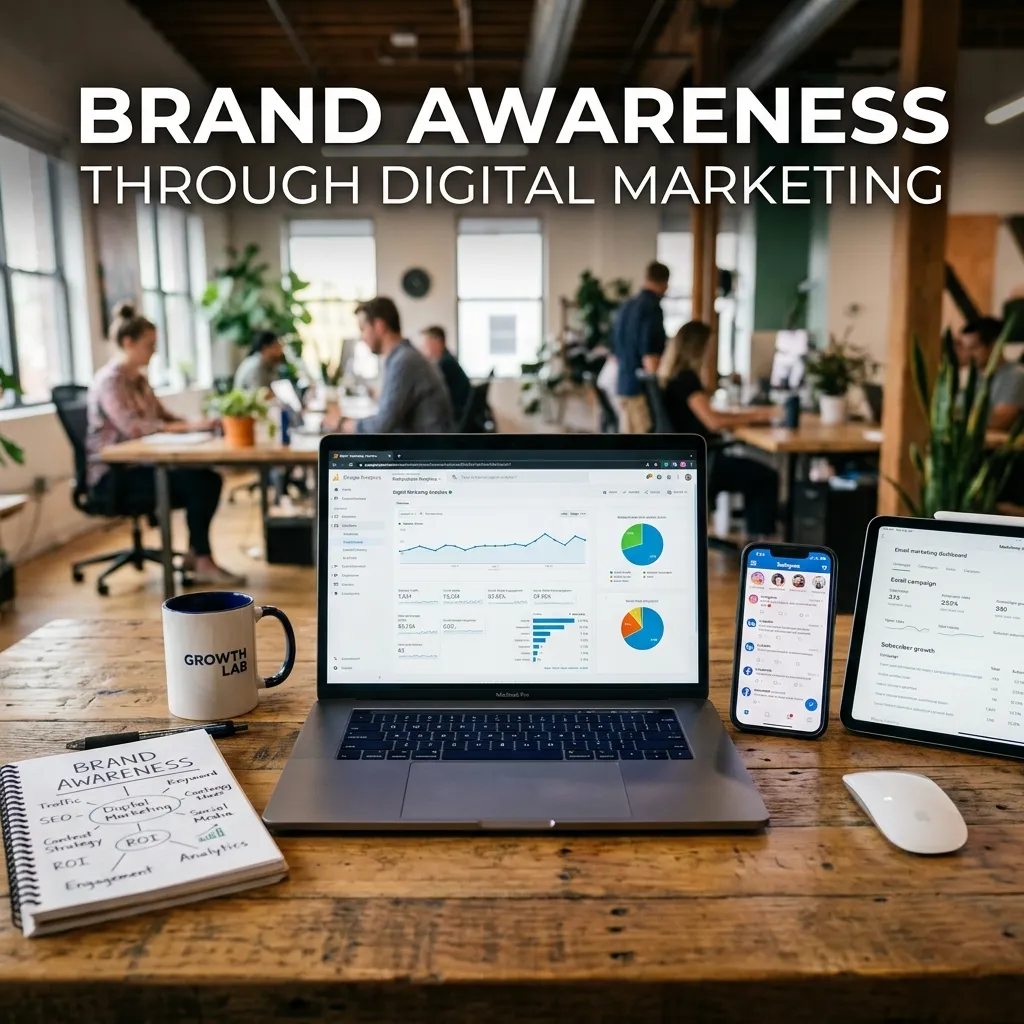 Digital platforms are essential for a modern brand awareness strategy. Websites, search engines, social media, and paid ads help businesses reach global audiences quickly and efficiently. Through SEO, email campaigns, and content marketing, brands can stay visible 24/7. Digital marketing also provides real-time analytics to measure performance and improve strategies. Companies investing in Brand Awareness Through Digital Marketing often experience faster growth because they target the right audience. Blogs, landing pages, and optimized content help improve organic visibility. This makes digital marketing one of the most powerful tools for building long-term recognition, engagement, and sustainable brand growth in competitive markets.
Social Media for Brand Awareness Growth
Social media is a powerful driver of any brand awareness strategy. Platforms like Facebook, Instagram, LinkedIn, and TikTok allow brands to connect directly with their audience. Through consistent posting, storytelling, and interactive content, businesses build emotional relationships with users. Brand Awareness Through Social Media Marketing works best when content is engaging and consistent. Videos, reels, polls, and live sessions increase reach and engagement significantly. Social sharing also helps content go viral, expanding brand visibility organically. Over time, social media strengthens trust, improves recognition, and keeps the brand active in the minds of customers, leading to stronger long-term engagement.
Content Marketing for Strong Visibility
Content marketing is a core part of any effective brand awareness strategy. High-quality blogs, videos, infographics, and guides help educate audiences and attract potential customers. When a business provides valuable and helpful information, it naturally builds authority and trust in its industry. This strengthens Brand Awareness in Marketing by positioning the brand as a reliable source. Consistent content also improves search engine rankings, increasing organic traffic. Educational and problem-solving content keeps users engaged longer, improving brand recall. Over time, content marketing builds a strong digital presence that continuously attracts new audiences without relying heavily on paid advertising.
Influencer Marketing and Brand Collaboration
Influencer marketing plays an important role in a modern brand awareness strategy. Influencers already have loyal audiences who trust their opinions and recommendations. By collaborating with them, businesses can quickly increase visibility and credibility. This strategy works especially well in Brand Awareness Through Social Media Marketing, where authenticity matters most. Influencers can promote products through reviews, tutorials, or lifestyle content. These partnerships help brands reach targeted niche audiences more effectively. When chosen wisely, influencer collaborations build emotional trust, enhance reputation, and create stronger connections between the brand and potential customers across different digital platforms.
Role of SEO in Brand Awareness Strategy
 A strong brand awareness strategy is incomplete without Search Engine Optimization (SEO). SEO helps your brand appear in search results when people look for relevant products or services. This increases organic visibility and builds trust because users often trust Google rankings. By optimizing keywords, content, and website structure, businesses can attract targeted traffic without heavy advertising costs. SEO also supports Brand Awareness Through Digital Marketing by ensuring your brand stays discoverable 24/7. Over time, higher rankings lead to stronger recognition, more clicks, and better engagement, making SEO a long-term growth engine for brand success.
Key Points:
- Improves organic visibility on search engines
- Builds trust through higher rankings
- Supports long-term brand awareness strategy growth
- Increases targeted website traffic
- Reduces dependency on paid ads
| SEO Element | Impact on Brand Awareness |
|---|---|
| Keywords | Improves search visibility |
| Backlinks | Builds authority & trust |
| Content SEO | Increases engagement |
| Technical SEO | Enhances user experience |
| On-page SEO | Strengthens brand ranking |
Consistency in Messaging and Communication
Consistency is a key element of a successful brand awareness strategy. Every message, post, advertisement, and campaign should maintain the same tone, voice, and visual identity. Inconsistent communication can confuse customers and weaken brand trust. A unified approach ensures better recognition across all marketing channels. Whether it is email marketing, websites, or social media, consistency strengthens Brand Awareness in Marketing. Businesses that remain consistent build familiarity over time, which leads to stronger customer loyalty. Repetition of key messages helps audiences remember the brand more easily and improves long-term engagement, making the brand more reliable and recognizable in the market.
Customer Experience and Brand Trust
Customer experience is a vital part of any brand awareness strategy. Every interaction a customer has with a brand shapes their perception and emotional connection. Positive experiences lead to satisfaction, loyalty, and word-of-mouth promotion. Fast response times, quality products, and smooth service help build trust and credibility. When customers trust a brand, they are more likely to recommend it to others. This strengthens both Brand Awareness Through Digital Marketing and offline visibility. A strong customer experience turns buyers into loyal advocates who actively promote the brand, helping businesses grow organically through referrals and repeat engagement.
Advertising Channels for Brand Awareness Growth
Paid advertising plays a major role in scaling a brand awareness strategy quickly. Platforms like Google Ads, Facebook Ads, and YouTube Ads allow businesses to reach targeted audiences instantly. These ads help introduce your brand to new users and increase recognition in a short time. When combined with organic strategies, advertising strengthens Brand Awareness in Marketing by creating repeated exposure. Retargeting campaigns also ensure users see your brand multiple times, improving recall and trust. A balanced advertising approach helps businesses achieve faster visibility, stronger engagement, and higher conversion rates in competitive markets.
Key Points:
- Provides instant brand visibility
- Targets specific audience segments
- Enhances brand awareness strategy effectiveness
- Supports retargeting and remarketing efforts
- Works best with organic marketing
| Channel | Purpose of Use |
|---|---|
| Google Ads | Search visibility & leads |
| Facebook Ads | Audience targeting & engagement |
| Instagram Ads | Visual brand promotion |
| YouTube Ads | Video-based awareness |
| Display Ads | Broad audience reach |
Measuring Brand Awareness Performance
 Measuring performance is essential in any brand awareness strategy. Businesses must track key metrics such as reach, engagement, website traffic, and brand recall. Analytics tools help identify which strategies are effective and which need improvement. Regular monitoring allows better decision-making and resource allocation. Strong Brand Awareness in Marketing is achieved when data-driven insights guide all campaigns. Performance evaluation helps refine content strategies, improve targeting, and increase return on investment. Without measurement, it is difficult to understand branding impact. Continuous optimization ensures long-term success, stronger visibility, and better positioning in a highly competitive digital marketplace.
Conclusion
A well-executed brand awareness strategy is essential for building visibility, trust, and long-term business success. By combining digital marketing, social media, content creation, and customer experience, businesses can create a powerful brand presence. Consistency and strategic planning ensure that your brand stays memorable in a competitive market. Whether through Brand Awareness Through Social Media Marketing or digital campaigns, every effort contributes to stronger recognition. Over time, a solid strategy transforms your brand into a trusted name that attracts loyal customers and drives sustainable growth.
Frequently Asked Questions
1:What is a brand awareness strategy?
A brand awareness strategy is a planned approach used to increase how familiar people are with a brand. It focuses on visibility, recognition, and consistent messaging across platforms. The goal is to make customers easily recognize and remember the brand before purchase decisions.
2: Why is brand awareness important for businesses?
Brand awareness is important because it builds trust, recognition, and credibility. A strong brand awareness strategy helps businesses stay top-of-mind, attract new customers, and improve loyalty. It also increases the chances of customers choosing your brand over competitors in a crowded market.
3: How does Brand Awareness in Marketing work?
Brand Awareness in Marketing works by using consistent messaging, advertising, and content across multiple channels. It helps customers become familiar with a brand through repeated exposure. Over time, this builds trust, recognition, and emotional connection, leading to stronger customer relationships and conversions.
4: What is Brand Awareness Through Digital Marketing?
Brand Awareness Through Digital Marketing uses online platforms like websites, SEO, email, and ads to increase visibility. It allows brands to reach global audiences quickly. This method improves engagement, builds trust, and helps businesses grow by targeting the right customers effectively.
5: How does social media help brand awareness?
Social media supports a brand awareness strategy by enabling direct engagement with audiences. Platforms like Facebook and Instagram allow brands to share content, stories, and videos. This increases visibility, encourages sharing, and builds stronger emotional connections with customers over time.
6: What are the best content types for brand awareness?
Blogs, videos, infographics, and social media posts are effective for building awareness. These content types educate, entertain, and engage audiences. A strong brand awareness strategy uses consistent, valuable content to increase trust, improve visibility, and attract potential customers organically.
7: How long does it take to build brand awareness?
Building brand awareness takes time and consistency. Depending on strategy and industry, it may take several months to years. A strong brand awareness strategy focuses on regular content, engagement, and marketing efforts to gradually improve recognition and customer trust.
8: What role do influencers play in brand awareness?
Influencers help increase visibility by promoting brands to their followers. Their recommendations feel authentic and trustworthy. In a brand awareness strategy, influencer marketing builds credibility, expands reach, and connects brands with targeted audiences more quickly and effectively across digital platforms.
9: How do you measure brand awareness success?
Brand awareness is measured using metrics like reach, engagement, website traffic, and brand mentions. Analytics tools help track performance. A strong brand awareness strategy uses these insights to improve campaigns, optimize content, and increase overall visibility and audience recognition.
10: Can small businesses use brand awareness strategies?
Yes, small businesses can successfully use a brand awareness strategy. By using social media, content marketing, and digital tools, they can build visibility even on a low budget. Consistency and engagement are key to growing recognition and attracting loyal customers over time.