
Brand consistency creates a unified identity across marketing channels and customer touchpoints. Consistent messaging, visual identity, brand voice, communication, and customer experiences can strengthen recognition, improve trust, and make a business easier for customers to remember.
Brand consistency is one of the foundations of a strong and recognizable business. Customers interact with brands through websites, social media, advertisements, emails, packaging, sales teams, customer service, and many other touchpoints. When these experiences feel connected, customers can more easily recognize the brand and understand what it represents.
Consistency does not mean using exactly the same content everywhere. Instead, it means maintaining the same core identity, values, messaging, visual direction, and personality while adapting communication to different platforms and audiences.
A consistent brand can appear more professional, reliable, and memorable. It can also make marketing activities more effective because customers repeatedly encounter familiar signals across their journey.
What Is Brand Consistency?

Brand consistency is the practice of presenting a recognizable and unified brand identity across different channels and customer interactions. It includes visual elements such as logos, colors, typography, and imagery as well as messaging, tone, values, and customer experience.
When these elements work together, customers can identify a business more easily.
For example, a company may use a professional and authoritative tone on its website but communicate in a completely casual and unrelated way on social media. Even if both channels contain useful information, the difference can make the brand feel disconnected.
Consistency creates continuity. Customers should feel that they are interacting with the same organization regardless of where they encounter it.
The Importance of a Brand Consistency Strategy
A brand consistency strategy provides a framework for maintaining a unified identity across marketing and customer-facing activities.
Without a defined strategy, different teams may create content according to their own preferences. Over time, logos may be used differently, messaging may become inconsistent, and the brand’s personality may change from one channel to another.
A strategy helps establish common expectations.
It can define how the brand should look, sound, communicate, and position itself. This allows marketing, sales, customer service, design, and other teams to work from the same foundation.
Consistency also becomes increasingly important as a business expands. The more employees, products, channels, and locations a company has, the more opportunities there are for inconsistent communication.
Building Brand Identity Consistency
Brand identity consistency involves maintaining the core characteristics that make a brand recognizable.
Visual identity is an important part of this process. Consistent use of colors, fonts, logos, photography styles, illustrations, and design elements can create recognizable visual patterns.
However, identity extends beyond design. A brand’s purpose, values, positioning, personality, and communication style should also remain aligned.
A company may adapt its content for LinkedIn, Instagram, email, or its website, but the fundamental identity should remain recognizable across each platform.
This creates familiarity and helps customers develop stronger associations with the brand.
Creating Consistent Brand Messaging
Consistent brand messaging ensures that the central ideas communicated by a company remain aligned across different channels.
This does not require repeating the same sentence everywhere. Instead, different pieces of content should communicate compatible ideas about what the brand offers, who it serves, and why customers should choose it.
For example, a company positioned around simplicity should avoid creating complicated, confusing messaging across its marketing channels. Similarly, a premium brand should ensure that its communication reflects the level of quality it wants customers to associate with its products.
When the message remains coherent, customers can develop a clearer understanding of the brand.
The Role of Brand Guidelines
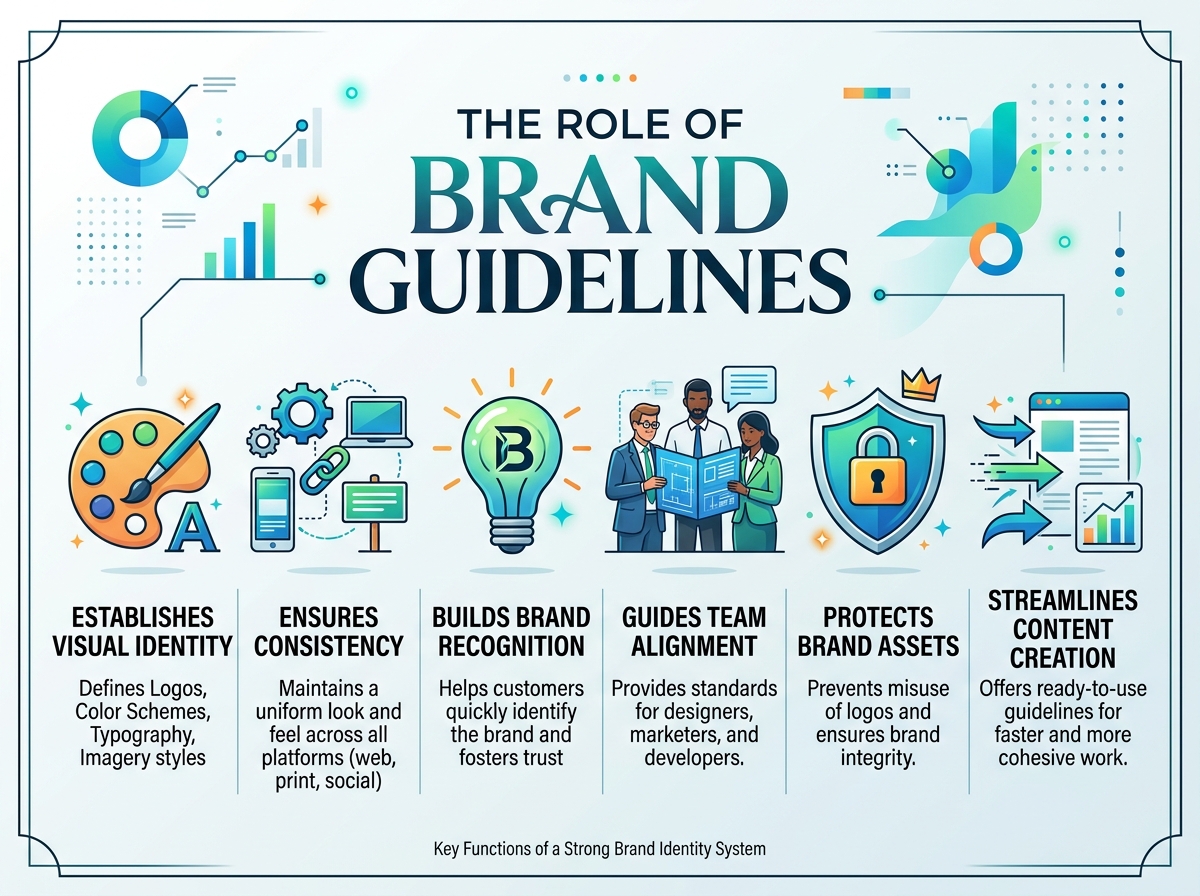
Brand guidelines provide practical standards for maintaining consistency. They can document visual identity, typography, color usage, logo placement, imagery, tone of voice, messaging principles, and other important brand elements.
Good guidelines should be useful rather than unnecessarily restrictive. Employees and external partners need enough direction to maintain consistency while still having room to create relevant content.
Brand guidelines can also reduce uncertainty for teams. Designers know how visual assets should be created, writers understand the expected tone, and marketers can develop campaigns without constantly redefining the brand.
As a business grows, these guidelines become an important reference for maintaining a unified identity.
Developing a Brand Communication Strategy
A brand communication strategy connects the brand’s identity with the way it communicates with its audiences.
Different channels may require different formats and styles. A social media post, email, product page, advertisement, and customer support message should not necessarily look identical.
However, they should still feel as though they come from the same organization.
The communication strategy should establish the key messages, audience priorities, tone, positioning, and communication principles that remain consistent regardless of format.
This helps prevent fragmented communication and creates a smoother customer experience.
Creating a Consistent Brand Experience
A consistent brand experience goes beyond marketing content. Customers form opinions based on every interaction they have with a business.
A website that promises exceptional service but provides slow responses can create a disconnect. Similarly, an advertisement that communicates simplicity may conflict with a complicated purchasing process.
Consistency therefore requires alignment between what the brand promises and what customers actually experience.
Marketing, sales, customer service, product teams, and other departments all contribute to this experience. When these areas work together, customers are more likely to encounter a coherent brand throughout their journey.
Maintaining Brand Voice Consistency
Brand voice consistency gives the organization a recognizable personality in written and spoken communication.
A brand may be friendly, professional, educational, confident, conversational, innovative, or authoritative. The appropriate voice depends on its positioning and audience.
Once the voice is established, it should remain recognizable across websites, advertisements, emails, social media, videos, and customer communications.
The tone can still change according to context. For example, a customer service response may need to be more empathetic than an advertisement. What matters is that the underlying personality remains recognizable.
Cross-Channel Brand Consistency
Cross-channel brand consistency is particularly important because modern customers rarely interact with a company through only one platform.
Someone might discover a brand through search, visit its website, follow it on social media, receive an email, watch a video, and eventually speak with a sales representative.
If each interaction feels completely different, the customer may struggle to understand the company’s identity.
Maintaining consistent visual elements, messaging, positioning, and voice across channels helps create continuity. Each platform can have its own format while still contributing to the same overall brand experience.
Brand Recognition Strategy and Customer Memory
A brand recognition strategy focuses on making a business easier for customers to identify and remember.
Consistent branding contributes to recognition because customers repeatedly encounter familiar visual and verbal signals. Over time, these signals can become associated with the company.
Recognition is particularly valuable in competitive markets. When customers are familiar with a brand, they may be more likely to notice its content or consider it when making purchasing decisions.
Consistency does not guarantee recognition, but it provides the repeated structure needed for a brand identity to become familiar.
Brand Management Strategy
A brand management strategy helps organizations protect and develop their identity over time.
Brand management involves monitoring how the brand appears across channels, reviewing marketing materials, maintaining guidelines, evaluating customer perceptions, and making adjustments when necessary.
Consistency does not mean refusing to evolve. Brands can refresh their visual identity, change their messaging, launch new products, or enter new markets while preserving their core identity.
The challenge is to evolve without creating unnecessary confusion.
For businesses interested in building long-term stability, Building Brand Resilience Strategies provides additional insight into maintaining brand strength during changing market conditions.
Brand Consistency During a Crisis
Consistency becomes particularly important during difficult situations. When a brand faces criticism or a public issue, customers often pay close attention to how the organization communicates.
A company’s response should reflect its established values and communication principles while addressing the situation honestly and appropriately.
Brand Crisis Management in the Social Media Era explores how businesses can protect their reputation when facing challenges across social platforms.
A consistent response can help demonstrate that the organization is acting according to its established principles rather than reacting randomly to pressure.
Brand Personality and Brand Archetypes
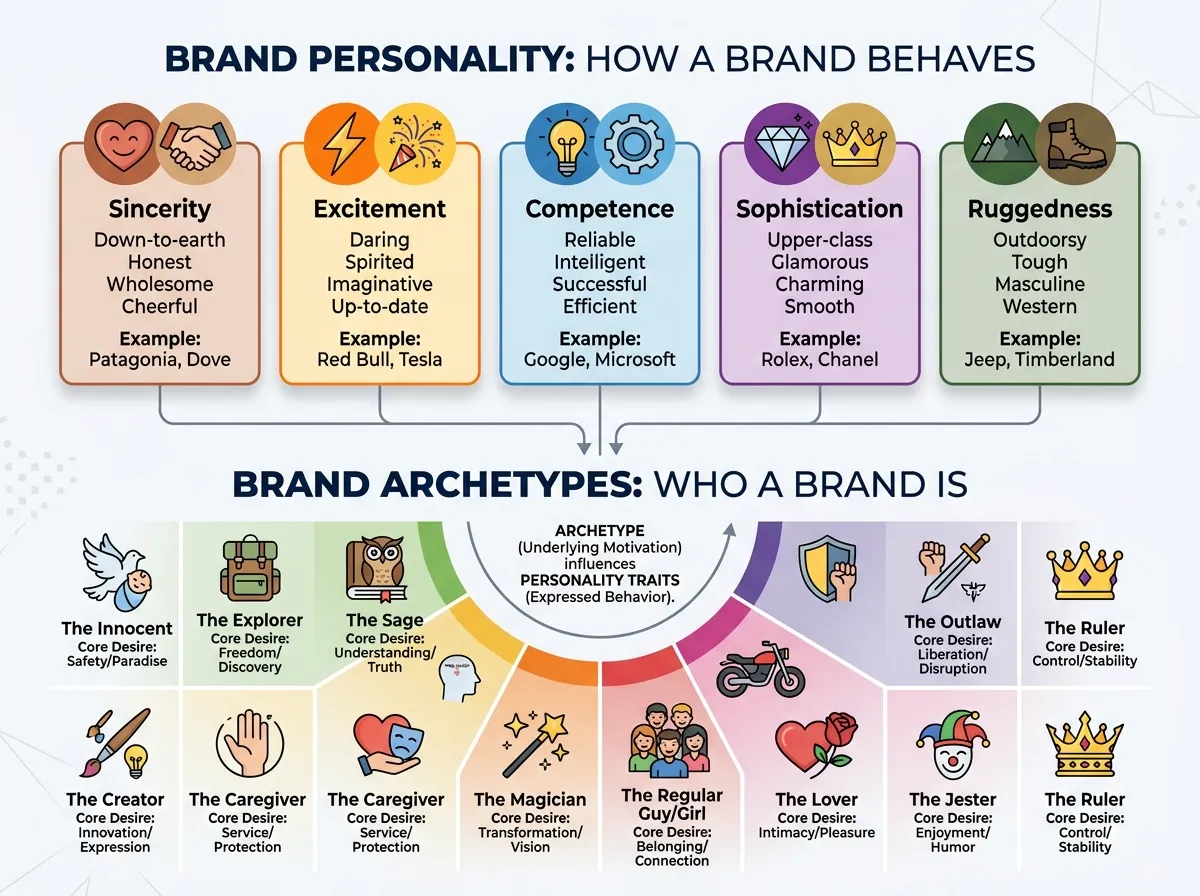
Brand personality can also contribute to consistency. Understanding the personality a business wants to communicate helps teams create content that feels connected.
Brand Archetypes in Marketing explores different brand personalities and how archetypes can influence marketing communication.
The important point is that personality should support the brand’s overall positioning. A company should not constantly switch between unrelated personalities simply because different trends become popular.
Brand Architecture and Consistency
As businesses expand into multiple products, services, or sub-brands, consistency can become more complicated.
Brand Architecture helps organizations structure relationships between a parent brand, products, services, and sub-brands.
A clear architecture can make it easier to determine which elements should remain consistent across the organization and where individual brands require their own identities.
This is particularly useful for larger organizations with multiple offerings.
Why Brand Consistency Builds Trust
Trust develops through repeated experiences. When a company’s communication, appearance, and customer experience remain aligned, customers can develop clearer expectations.
If the brand consistently delivers what it promises, those expectations can become stronger.
In contrast, inconsistent messaging can create uncertainty. Customers may wonder which version of the brand represents the company’s actual values or quality.
Consistency therefore supports credibility by reducing unnecessary contradictions.
Final Thoughts
Brand consistency helps businesses create recognizable identities and more connected customer experiences. From visual design and messaging to voice, communication, and customer interactions, every touchpoint contributes to how people perceive a brand.
A strong brand consistency strategy does not require every channel to look identical. Instead, it ensures that the core identity remains recognizable while communication adapts to different audiences and platforms.
When businesses consistently communicate who they are, what they offer, and what they stand for, they can create stronger recognition, clearer positioning, and greater confidence among their audiences.
10 Frequently Asked Questions
1. What is brand consistency?
Brand consistency is the practice of maintaining a recognizable and unified identity across different marketing channels and customer interactions. It includes visual elements such as logos and colors as well as messaging, tone, values, positioning, and customer experience. The goal is to make every interaction feel connected to the same brand.
2. Why is brand consistency important?
Brand consistency helps customers recognize and remember a business. When customers repeatedly encounter similar visual and verbal signals, they can develop stronger associations with the brand. Consistency can also make a company appear more professional and reliable while reducing confusion across different marketing channels.
3. What should be included in brand guidelines?
Brand guidelines can include logo usage, color palettes, typography, imagery, design principles, messaging, tone of voice, brand values, positioning, and examples of appropriate communication. The guidelines should provide enough information for teams and partners to represent the brand consistently without making content creation unnecessarily restrictive.
4. How does brand consistency improve customer trust?
Consistent communication helps customers develop predictable expectations about a business. When the brand’s messaging and actual customer experience remain aligned, customers can have greater confidence in what the company represents and what it promises. Repeated positive experiences can strengthen that confidence over time.
5. Does brand consistency mean using the same content everywhere?
No. Brand consistency does not mean publishing identical content on every platform. Each channel has different audiences, formats, and communication requirements. The important factor is maintaining the same core identity, positioning, values, messaging principles, and recognizable personality while adapting the content to each channel.
6. How can businesses maintain brand voice consistency?
Businesses can define their desired personality and communication style within their brand guidelines. Teams can then use these principles when creating website content, social media posts, advertisements, emails, and customer communications. Reviewing content regularly can also help identify communication that does not match the established voice.
7. What is cross-channel brand consistency?
Cross-channel brand consistency means maintaining a connected brand identity across different platforms such as websites, social media, email, advertising, video, and offline communications. The design and format may change between channels, but customers should still be able to recognize the same brand and understand its core message.
8. How does brand consistency affect brand recognition?
Consistent branding gives customers repeated exposure to familiar visual and verbal elements. Logos, colors, typography, messaging, imagery, and brand voice can become recognizable signals associated with the business. Over time, this familiarity can make it easier for customers to identify the brand among competitors.
9. Can a brand change while maintaining consistency?
Yes. Brands can evolve their identity, introduce new products, update visual elements, or change their positioning while maintaining consistency. Successful evolution usually preserves important elements of the brand’s underlying identity so customers can recognize the connection between the previous and updated versions.
10. Who is responsible for maintaining brand consistency?
Brand consistency is usually a shared responsibility across marketing, design, sales, customer service, communications, product teams, and external partners. A dedicated brand or marketing team may establish the standards, but everyone who communicates with customers can influence how consistently the brand is represented.