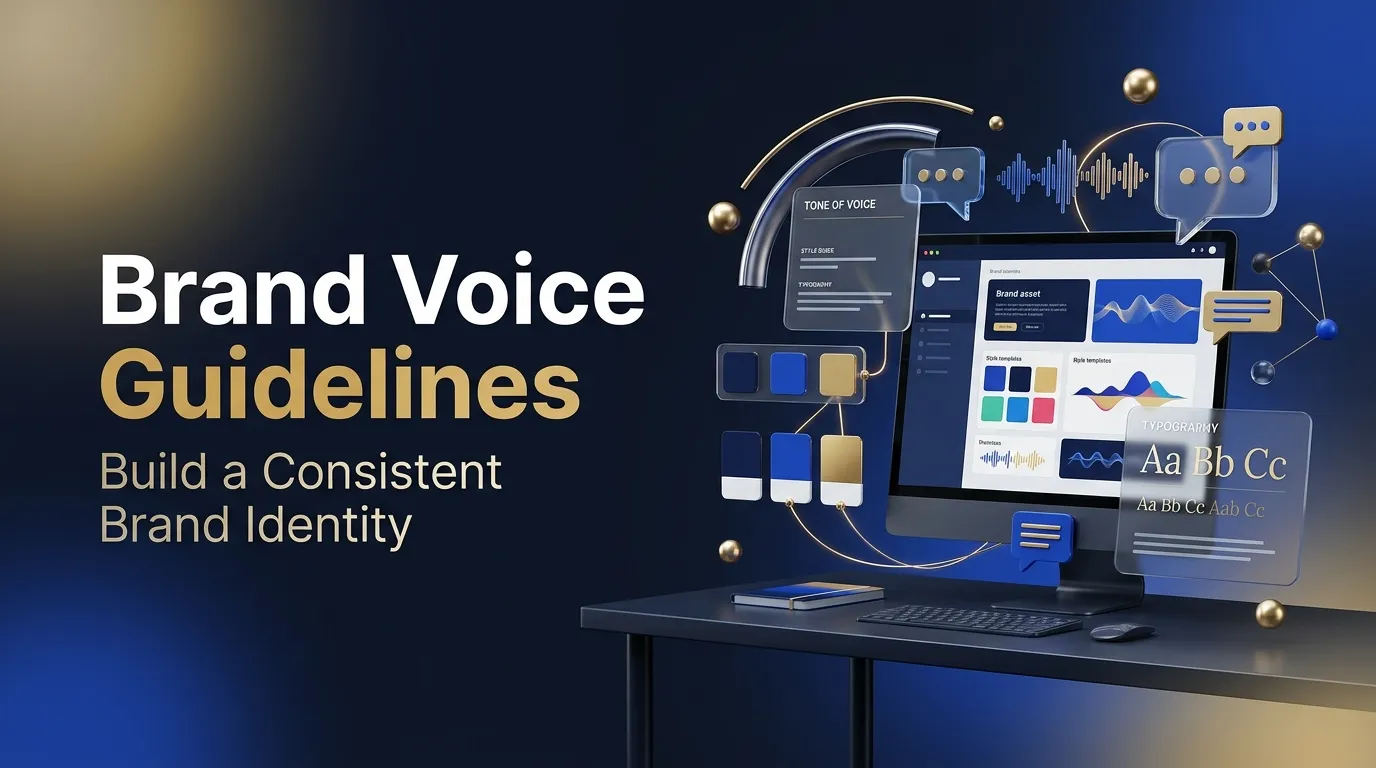
Brand Voice Guidelines help businesses establish a recognizable communication style that reflects their personality, values, and audience expectations. By defining brand tone, language, messaging, and communication standards, companies can maintain consistency across marketing channels while adapting to different customer situations. Clear and accessible brand communication strengthens recognition, supports customer trust, and helps businesses build meaningful relationships. Regular reviews ensure that brand voice guidelines remain relevant as the company grows and customer expectations change.
A strong brand is recognized not only by its logo, colors, or visual design but also by the way it communicates with its audience. The words a business chooses, the tone it uses, and the personality expressed in its messages all influence how customers perceive the brand. When communication feels consistent across websites, social media, emails, advertisements, and customer support, people can develop a clearer understanding of what the business represents. This is why Brand Voice Guidelines are an important part of a successful branding strategy.
Brand Voice Guidelines define how a business communicates with customers and how its personality should appear in written and spoken messages. They help teams maintain a recognizable communication style while adapting individual messages to different audiences, platforms, and situations. Without clear guidelines, one department might communicate in a formal and technical manner while another uses a casual and playful approach, creating an inconsistent experience.
Effective guidelines provide a shared foundation for communication without making every message sound identical. They establish the characteristics that define the brand, explain how those characteristics influence language and tone, and help employees and content creators make appropriate communication decisions. When supported by a clear brand identity and a genuine understanding of customer expectations, Brand Voice Guidelines can strengthen recognition, build trust, and create more meaningful customer relationships.
Understanding the Purpose of Brand Voice Guidelines

Brand Voice Guidelines are a documented reference for the language, personality, and communication principles a business wants to maintain. They help explain how the brand should sound when introducing a product, publishing educational content, responding to customer feedback, or communicating during a difficult situation.
A brand voice represents the underlying personality of the business. For example, a financial services company might prioritize clarity, reliability, and professionalism, while a lifestyle brand may communicate with warmth, creativity, and enthusiasm. Neither approach is automatically better than the other. The right voice depends on the company’s values, audience expectations, industry, and overall positioning.
Well-developed guidelines translate these characteristics into practical communication choices. If a brand aims to sound approachable, its content might use clear explanations, conversational language, and supportive phrasing. If expertise is central to its identity, the brand may use precise terminology and informative explanations without becoming unnecessarily complicated.
These guidelines also reduce uncertainty for employees, writers, marketers, and external agencies. Everyone working on brand communication has a common reference for choosing language and expressing the company’s personality. This makes content production more efficient while protecting the identity customers have come to recognize.
Brand Voice Development and Business Identity
Brand Voice Development begins with understanding what makes a business distinctive. Before choosing adjectives or writing sample messages, companies need to identify their mission, values, positioning, and relationship with their target audience. These elements provide the foundation for a voice that feels authentic rather than artificially created.
A business that promises simplicity should communicate in a way that makes information easy to understand. A brand built around innovation might use forward-looking language while remaining credible and practical. Similarly, a company that emphasizes personal service should communicate with empathy and demonstrate that it understands customer concerns.
Audience research is equally important. Customers may respond differently to technical terminology, humor, formality, or emotional language depending on their needs and familiarity with the product. Reviewing customer feedback, support conversations, interviews, and existing content can help businesses understand which communication characteristics feel natural and useful to their audiences.
Brand voice should also reflect competitive positioning. A company operating in a crowded market needs a recognizable way to express its value without copying the language of competitors. Research into competitor messaging can reveal common industry patterns and opportunities to communicate more distinctly. The goal is not to sound different in every sentence but to establish a meaningful personality that supports the brand’s broader identity.
Brand Tone of Voice and Contextual Communication
Although voice and tone are closely connected, they serve different purposes. Brand Tone of Voice describes how a brand’s personality is expressed in a particular situation, while the underlying voice remains relatively stable. Tone can become more serious, reassuring, enthusiastic, or informative depending on the message and the customer’s circumstances.
For example, a brand may normally use friendly, conversational language in its social media content. When responding to a customer complaint, however, it should prioritize empathy, clarity, and responsibility. The business can retain its recognizable personality without using jokes or promotional language in a situation that requires sensitivity.
Similarly, an announcement about a new product may call for excitement, while a technical explanation may require precision and a more measured approach. A customer support response should focus on helping the customer rather than promoting unrelated products.
Clear guidelines explain these distinctions so employees can adapt their communication without losing the brand’s identity. This flexibility is essential because customers interact with businesses in many different situations. A consistent personality combined with an appropriate tone creates communication that feels both recognizable and considerate.
Brand Communication Guidelines Across Marketing Channels
Brand Communication Guidelines help businesses maintain a coherent identity across every channel where customers encounter their messages. A company may communicate through its website, social media accounts, email campaigns, paid advertisements, sales presentations, customer service channels, and printed materials. Each platform has different requirements, but the brand should still feel like the same organization.
A website may need detailed explanations and clear navigation language, while a social media post may require a shorter and more conversational message. An email campaign might use a personalized introduction, and a sales presentation may emphasize business outcomes. These differences are natural and necessary, provided the underlying personality remains recognizable.
Communication guidelines establish shared expectations for language, formality, terminology, sentence structure, and customer interaction. They can also clarify preferred expressions, words to avoid, capitalization, and how the brand refers to its products or customers. These details reduce inconsistencies that may otherwise appear when multiple people create content independently.
Brand consistency is especially important when a business expands its marketing activity across new channels. Teams can refer to established principles instead of developing a different communication style for each platform. Companies seeking to strengthen this broader approach can explore Mastering Brand Consistency for additional context on maintaining a cohesive identity across customer touchpoints.
Consistent Brand Messaging and Customer Trust
Consistent Brand Messaging helps customers understand what a business stands for and what they can reasonably expect from it. When a brand communicates its values, benefits, and personality in a coherent way, its messages become easier to recognize and interpret.
Inconsistent communication can create uncertainty. If a company presents itself as highly professional in its advertising but uses confusing or dismissive language in customer support, the experience may weaken its credibility. Similarly, if product descriptions and promotional messages use different terminology for the same offering, customers may struggle to understand what is being promised.
Brand voice guidelines reduce these problems by establishing a shared communication foundation. They help teams express the same core ideas in different formats without repeating identical wording. This distinction matters because consistency is not about making every message sound the same. It is about preserving the brand’s values and personality while allowing content to serve its specific purpose.
Over time, consistent messaging can strengthen brand recognition and make communication feel more dependable. Customers may become more comfortable engaging with a business when its language is familiar, its claims are clear, and its responses reflect its stated values. This trust must be supported by actual product quality and customer experience, but consistent communication helps reinforce the relationship.
Building a Distinctive Brand Voice Identity
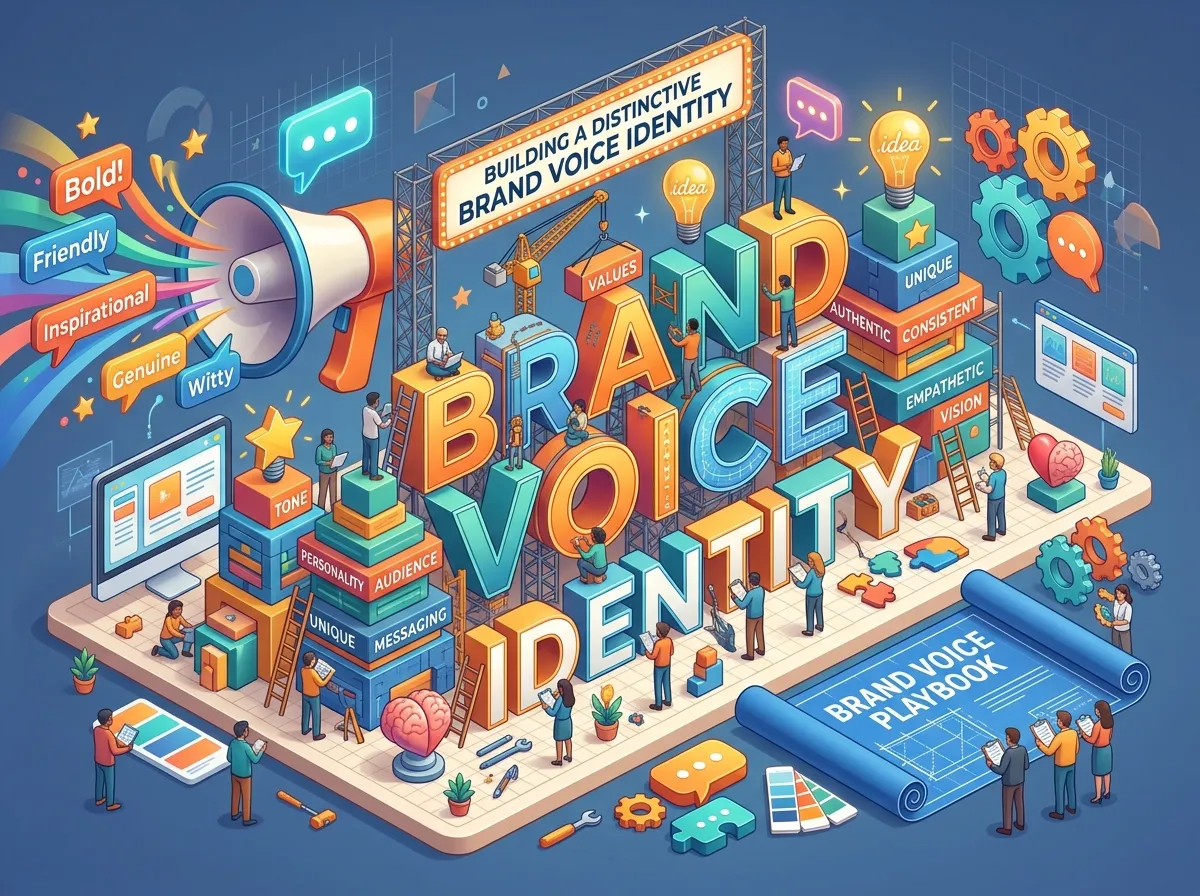
Brand Voice Identity is the recognizable personality customers experience through a company’s communication. It influences whether the brand feels authoritative, friendly, innovative, practical, luxurious, playful, or supportive. A clear identity helps the business communicate in a way that aligns with its positioning and creates meaningful distinctions from competitors.
A useful brand voice identity is based on a small set of meaningful characteristics. For example, a company may want to sound knowledgeable, approachable, and direct. Each characteristic should have a practical interpretation. Being knowledgeable might mean providing accurate explanations, while being approachable could involve using accessible language and acknowledging customer concerns. Being direct might mean removing unnecessary wording and explaining important information clearly.
Examples can make these characteristics easier to apply. A guideline might show how the brand introduces a new service, responds to a complaint, explains a complicated feature, or communicates an unexpected delay. These examples help teams understand how abstract qualities translate into real messages.
The identity should remain authentic to the organization. A brand does not need to adopt humor because competitors use it or sound highly formal simply because it operates in a professional industry. Its voice should reflect its actual values, audience needs, and customer relationships.
Brand Personality and Tone in Customer Relationships
Brand Personality and Tone influence how customers emotionally experience communication. A brand that consistently sounds helpful and respectful may feel more approachable, while one that uses precise and confident language may communicate expertise. These perceptions can influence whether customers feel comfortable asking questions, exploring products, or seeking assistance.
Personality should be visible in everyday interactions rather than limited to promotional campaigns. Product descriptions, confirmation emails, customer support responses, and service updates all provide opportunities to demonstrate the brand’s character. A business that values transparency should explain limitations clearly, while a company that prioritizes customer care should respond thoughtfully when problems arise.
Tone must also reflect the emotional context of the interaction. A cheerful promotional voice may be suitable for announcing a new feature but inappropriate when addressing a service disruption. Guidelines should explain how the brand responds in sensitive circumstances, including complaints, mistakes, delays, and situations where customers need reassurance.
This balance helps businesses remain recognizable without appearing insensitive or overly scripted. Customers should feel that the brand has a consistent personality while still responding to their individual circumstances. When personality and tone work together, communication can become more human, useful, and memorable.
Creating a Practical Brand Messaging Framework
A Brand Messaging Framework connects the brand’s voice with its core messages, value proposition, audience needs, and communication goals. While voice guidelines explain how the brand sounds, the messaging framework helps clarify what the brand needs to communicate and which ideas should remain consistent across its content.
For example, a company might define its central promise, the problems it solves, the benefits customers receive, and the evidence supporting its claims. These elements provide a foundation for product pages, sales content, email campaigns, and educational resources. The brand voice then shapes how those messages are expressed for different audiences and situations.
A useful framework also clarifies terminology. If the business uses particular names for its services, product features, or customer groups, those terms should be applied consistently. This makes communication easier to follow and helps prevent different teams from describing the same offering in conflicting ways.
The framework should remain flexible enough to accommodate new campaigns, products, and customer needs. Its purpose is to align communication, not restrict creativity. Content creators should be able to adapt examples and formats while maintaining the brand’s core message and personality.
Maintaining Brand Voice Consistency as Businesses Grow
Brand Voice Consistency becomes more challenging as businesses expand their teams, introduce new products, enter additional markets, or work with external content creators. Without a shared reference, individual contributors may interpret the brand’s personality differently, gradually creating variations that weaken recognition.
A central set of guidelines provides a reliable starting point for writers, designers, marketers, customer service employees, and agency partners. Regular onboarding and content reviews help ensure that people understand how to apply the voice in practice. Reviewing actual examples is often more effective than simply asking employees to memorize a list of brand adjectives.
Businesses should also evaluate their content across channels. A website may maintain a clear and professional voice while social media posts become overly casual or email campaigns rely on exaggerated promotional language. Periodic reviews help identify these differences and determine whether they reflect intentional adaptations or unintended inconsistency.
At the same time, guidelines should evolve when the brand’s positioning or audience changes. New customer research, product developments, and market conditions may reveal that some language no longer represents the company accurately. Updating the guidelines helps preserve their relevance while retaining the characteristics that customers recognize.
Brand Language Guidelines and Accessibility
Brand Language Guidelines establish the vocabulary, sentence patterns, terminology, and writing conventions used in brand communication. They may explain whether the brand prefers plain language, how technical concepts should be introduced, which expressions should be avoided, and how product names should appear in written content.
Clear language is particularly important when businesses communicate with audiences who have different levels of knowledge or familiarity with the industry. Unexplained jargon can make a message feel exclusive or confusing, even when the underlying product is useful. Using familiar terms, defining necessary technical language, and organizing information logically can improve comprehension.
Accessibility should also influence communication decisions. Content should be understandable to a broad range of people, including those who use assistive technologies or have different reading needs. Descriptive links, meaningful headings, clear instructions, and concise explanations can make digital content easier to navigate and interpret.
Businesses can explore these considerations further through The Ultimate Guide to Brand Accessibility, which discusses inclusive customer experiences. Accessibility is not separate from brand voice; it helps ensure that the brand’s personality and messages can be understood by more people.
Brand Communication Style and Digital Engagement
A recognizable Brand Communication Style can strengthen digital engagement by making interactions more relevant and consistent. Customers may encounter a brand through a search result, a social media post, an email, a chatbot, or a customer service conversation. Each interaction contributes to their overall impression of the business.
A strong communication style makes it easier to carry the brand’s personality across these different experiences. It can also support more thoughtful responses to comments, questions, and feedback. Rather than relying on generic messages, teams can use the brand’s established voice to respond in ways that feel appropriate and genuine.
However, engagement should not be measured only by the number of likes, comments, or clicks a message receives. Businesses should also consider whether their communication answers customer questions, encourages meaningful conversations, and supports long-term relationships. A message that attracts attention but misrepresents the brand may create short-term activity without building trust.
Companies looking to connect brand communication with stronger digital relationships can explore Digital Customer Engagement. A clear voice can support these efforts by making communication more recognizable, accessible, and aligned with customer expectations.
Evaluating Brand Voice and Improving Its Effectiveness
Brand Voice Guidelines should be evaluated through real communication rather than treated as a document that never changes. Businesses can review customer feedback, content quality, engagement patterns, support conversations, and internal feedback to understand whether their voice is working as intended.
Brand benchmarking can provide additional perspective. Comparing the company’s communication with that of relevant competitors may reveal differences in clarity, tone, terminology, and positioning. The goal is not to copy another brand’s personality but to understand how the company’s communication stands out and where it could become more distinctive. Brand Benchmarking offers related insight into evaluating a brand’s competitive position.
Internal reviews are also valuable. Content creators and customer-facing employees can identify areas where the guidelines are unclear or difficult to apply. For example, a team may understand the desired personality but struggle to express it when responding to complaints or explaining complex services. Adding practical examples can make the guidelines more useful.
Businesses should assess whether customers recognize the brand, understand its messages, and receive a consistent experience across channels. These findings can inform updates to vocabulary, tone examples, and communication standards. Regular improvement allows the brand voice to remain relevant while protecting the identity that distinguishes the business.
Conclusion
Brand Voice Guidelines help businesses communicate with a recognizable personality, maintain consistent messaging, and build stronger relationships with their audiences. By connecting brand voice development with tone, language, messaging, and accessibility, companies can create communication that reflects their values while responding appropriately to different customer needs.
A successful brand voice is not simply a collection of preferred words or adjectives. It is a practical expression of the company’s identity across everyday interactions. When employees understand how the brand should sound and why that voice matters, communication becomes more cohesive and purposeful.
As customer expectations and business priorities evolve, regular reviews help keep the guidelines useful and authentic. With a clear communication foundation, businesses can strengthen recognition, support customer trust, and create a more consistent brand experience across every channel.
1. What are Brand Voice Guidelines?
Brand Voice Guidelines are a set of principles that explain how a business should communicate with its audience. They define the brand’s personality, preferred language, tone, and communication style across channels such as websites, social media, email, advertising, and customer support. These guidelines help teams create consistent messages that reflect the company’s identity.
2. Why are Brand Voice Guidelines important for businesses?
Brand Voice Guidelines help businesses communicate more consistently, build recognition, and create a more dependable customer experience. They also make content creation easier by giving employees and external partners a shared reference for writing and communication decisions.
3. What is the difference between brand voice and brand tone?
Brand voice represents the brand’s underlying personality and remains relatively stable across communication channels. Brand tone describes how that personality is expressed in a specific situation. For example, a brand can remain friendly and professional while using a more reassuring tone when responding to a complaint.
4. How can a business develop a strong brand voice?
A business can develop a strong brand voice by understanding its mission, values, target audience, and competitive position. Reviewing existing content and customer feedback can reveal which communication characteristics feel authentic. These insights can then be translated into clear voice traits, preferred language, and practical examples.
5. How do Brand Voice Guidelines improve brand consistency?
They provide a common communication standard for everyone creating brand content. Employees and external partners can use the same principles for language, tone, terminology, and messaging. This helps prevent conflicting communication styles across websites, social media, advertisements, emails, and customer support.
6. What should be included in Brand Voice Guidelines?
Brand Voice Guidelines commonly include brand personality traits, tone principles, audience considerations, preferred vocabulary, terminology rules, writing conventions, and examples of suitable communication. They may also explain how the voice should adapt to customer complaints, product announcements, technical explanations, and other situations.
7. How does brand voice affect customer engagement?
Brand voice influences how customers perceive and interact with a business. Clear, relevant, and recognizable communication can make customers feel more comfortable asking questions, exploring products, and sharing feedback. An appropriate tone also helps businesses respond to customer needs in a way that feels genuine.
8. How often should Brand Voice Guidelines be updated?
Businesses should review their guidelines periodically and whenever significant changes occur in brand positioning, products, audiences, or communication channels. Customer feedback and content reviews can reveal areas that need clarification. Updates should improve relevance without unnecessarily changing the characteristics customers already recognize.
9. How can businesses measure the effectiveness of their brand voice?
Businesses can review customer feedback, content consistency, engagement quality, message clarity, and customer support interactions. Brand recognition research and competitor benchmarking can provide additional insight. These measures help determine whether the brand communicates distinctively and consistently across customer touchpoints.
10. How do Brand Voice Guidelines support accessibility?
Brand Voice Guidelines can encourage plain language, clear explanations, descriptive links, meaningful headings, and inclusive terminology. These practices make communication easier to understand and navigate for people with different reading abilities and needs. Accessible communication helps more customers engage with the brand and understand its messages.