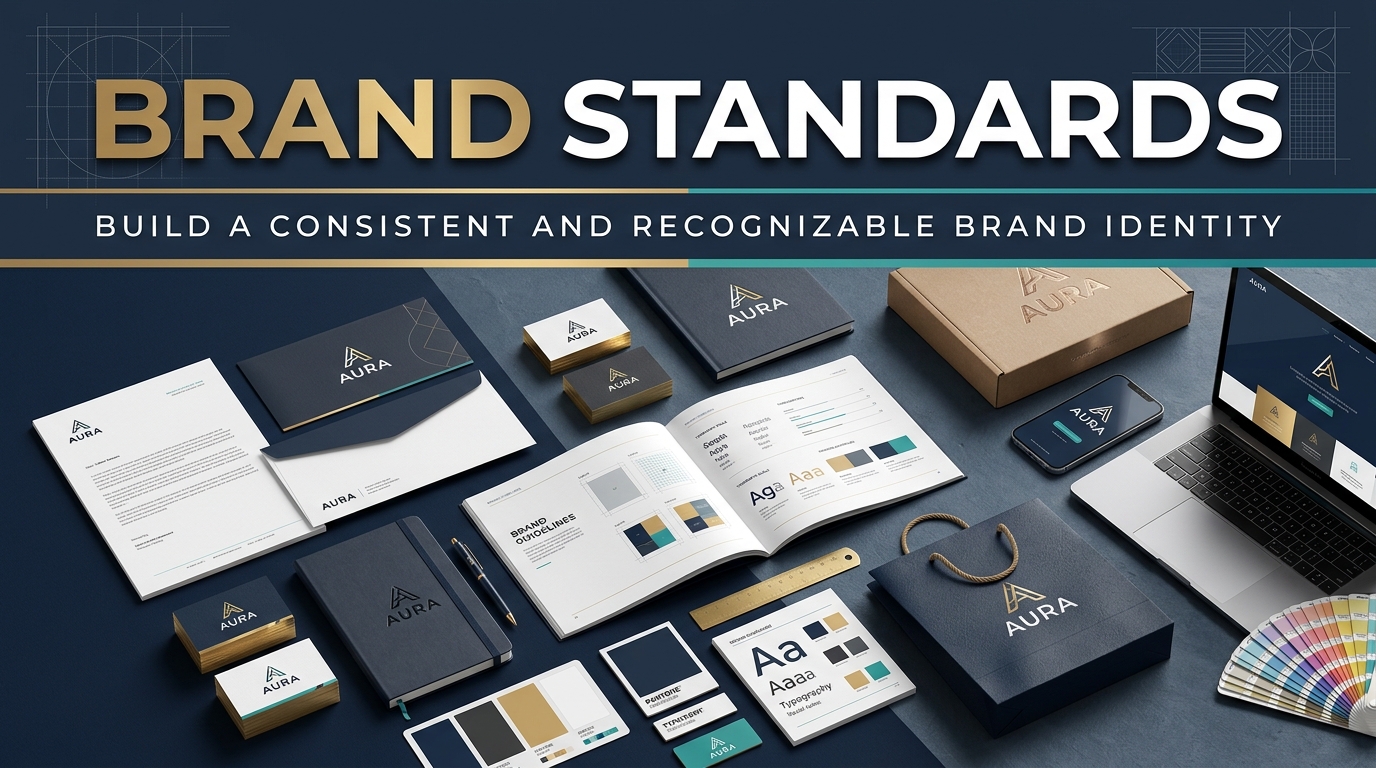
Brand standards play an important role in how a business presents itself to customers, employees, partners, and the wider market. They establish a consistent approach to visual design, communication, messaging, and brand representation across different platforms. When a company follows clear standards, customers can recognize its identity more easily, while employees and marketing teams gain a shared understanding of how the brand should appear and communicate.
As businesses expand across websites, social media, advertising, packaging, and other customer touchpoints, maintaining a unified identity becomes increasingly important. Without clear standards, logos may appear in different formats, colors may vary between marketing materials, and messages may communicate conflicting ideas. These inconsistencies can weaken brand recognition and make a business appear less professional.
Brand standards provide a common foundation that helps organizations maintain a recognizable identity while adapting to different communication needs. They define the essential elements of a brand and explain how those elements should be applied. From brand identity standards and visual design specifications to brand voice standards and communication rules, a well-developed framework helps every customer interaction reflect the same core identity.
Why Brand Standards Matter for Business Recognition
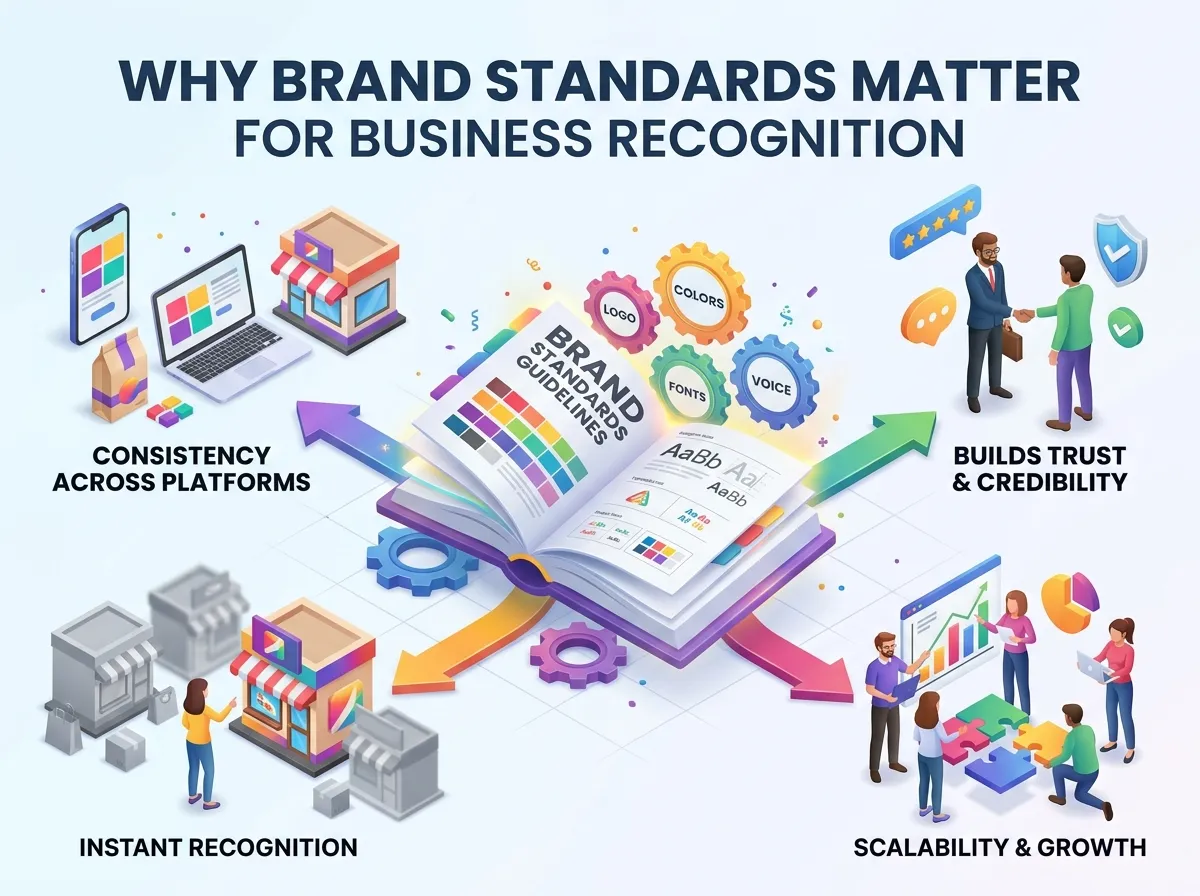
Brand standards help businesses create a consistent impression across every channel where customers encounter them. Whether someone visits a company’s website, sees an advertisement, reads an email, or interacts with a sales representative, the experience should feel connected to the same organization. This consistency helps customers recognize the business and understand what it represents.
A recognizable identity also supports customer trust. When visual elements, messaging, and service communication remain consistent, customers can develop clearer expectations about the brand. In contrast, frequent changes in presentation or conflicting messages may create uncertainty about the company’s values and professionalism.
Brand standards are also valuable internally. Employees, designers, content creators, and external agencies may all contribute to brand communication. Without a shared reference, each person may interpret the brand differently. Clearly documented expectations reduce confusion and make collaboration more efficient.
As a company grows, these standards become even more useful. New products, locations, campaigns, and partnerships can follow the same foundational principles without requiring every decision to start from scratch. The result is a more coordinated brand presence that supports recognition and long-term business development.
Creating Brand Identity Standards That Reflect Your Business
Brand identity standards define the essential characteristics that make a company recognizable. These may include its logo, color palette, typography, imagery, messaging style, and overall personality. Together, these elements communicate what the brand represents and distinguish it from competitors.
A business should begin by identifying the qualities it wants customers to associate with its name. A professional services company may emphasize expertise, reliability, and clarity, while a creative brand might communicate originality, energy, and experimentation. These characteristics influence the way the brand looks, sounds, and behaves across customer interactions.
Brand identity standards translate these qualities into practical decisions. They explain which visual elements should be used, how messaging should reflect the brand personality, and which design choices are appropriate for different communication channels. This helps ensure that individual marketing materials contribute to a unified identity.
A strong identity framework should also remain flexible enough to accommodate growth. Businesses may introduce new products, enter different markets, or communicate with new audiences over time. Standards should preserve the essential character of the brand while allowing reasonable adaptations to meet changing business needs.
Developing Brand Style Guidelines for Everyday Use
Brand style guidelines provide practical direction for applying the brand consistently. They help marketing teams, designers, writers, and other contributors understand how to use approved visual and verbal elements in their work. Rather than relying on assumptions, everyone can refer to a shared source of information when creating brand materials.
Visual guidance commonly covers approved colors, typography, logo placement, image selection, spacing, and layout principles. Written guidance may explain preferred terminology, capitalization, tone, formatting, and the way the business describes its products or services. The level of detail depends on the organization’s size, complexity, and communication needs.
For example, a company’s website, promotional email, and printed brochure may have different layouts, but they should still reflect the same visual identity. The logo should remain recognizable, the typography should follow established rules, and the messaging should sound like it comes from the same organization.
Accessible, clearly organized guidelines make these expectations easier to follow. A document that is difficult to navigate may be ignored, even if it contains useful information. Businesses should therefore present standards in a practical format, with clear examples that show how brand elements should appear in real situations.
Maintaining Brand Consistency Across Different Channels
Brand consistency rules help ensure that customers experience the same core identity across websites, social platforms, advertising campaigns, sales materials, and customer service interactions. Consistency does not mean every piece of content must look identical. Instead, the recognizable characteristics of the brand should remain stable while the presentation adapts to the channel and audience.
For example, a social media post may use a more conversational tone than a formal business proposal. Both can still reflect the same brand personality if the underlying voice, values, and messaging principles remain consistent. Similarly, a digital advertisement may use a different layout from a brochure while maintaining the same color palette, typography, and visual style.
Clear rules help teams distinguish between essential brand elements and areas where creative flexibility is appropriate. This balance is important because overly rigid standards can make communication repetitive, while a complete lack of direction can lead to a fragmented identity.
Businesses with several products or sub-brands should pay particular attention to consistency. Companies exploring how different offerings can work together may benefit from Brand Portfolio Strategy, which examines how brands can form a balanced and coherent ecosystem. A clear relationship between brand identities can make a company’s wider portfolio easier for customers to understand.
Establishing Corporate Branding Standards for Every Team
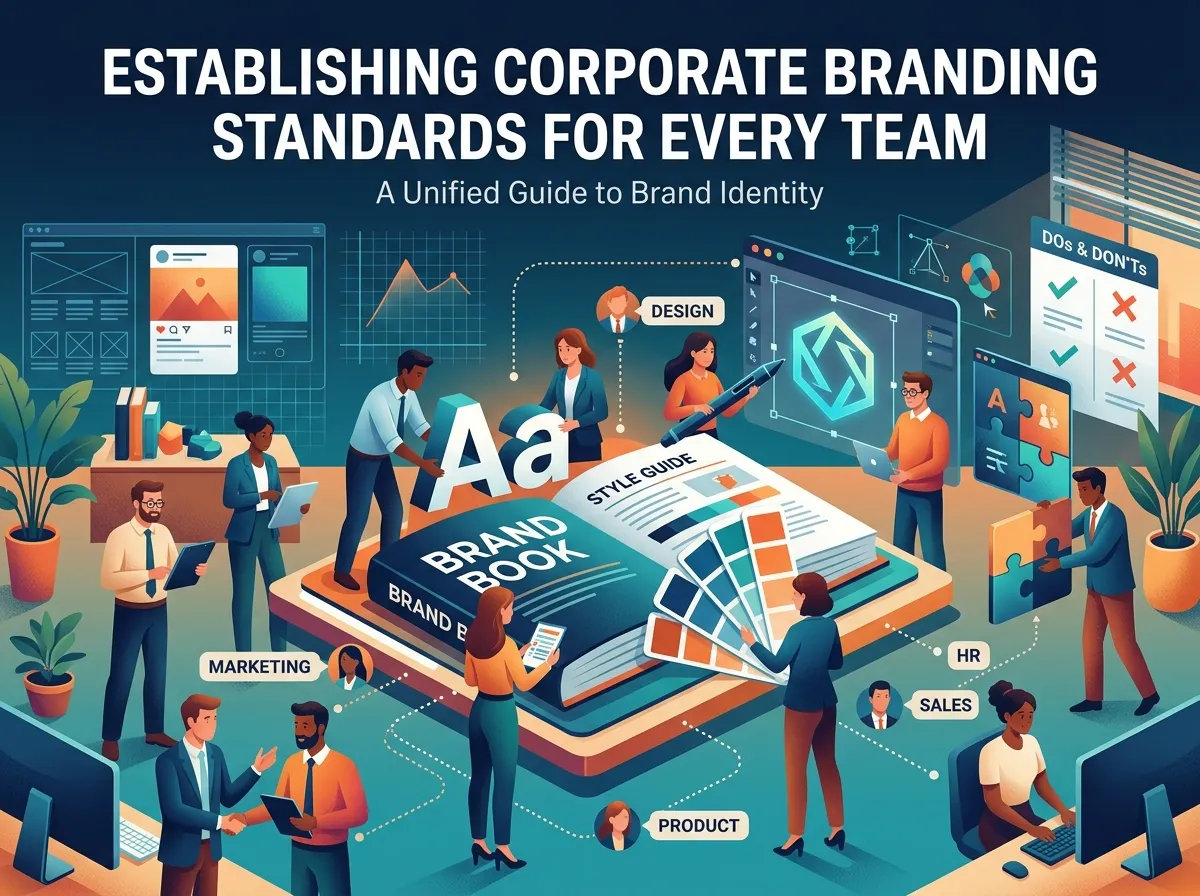
Corporate branding standards help organizations maintain a consistent identity across departments, locations, business units, and external partnerships. As a company becomes more complex, different teams may produce materials for different audiences. Shared standards help these materials communicate the same organizational values and positioning.
These standards can cover corporate presentations, employee communications, recruitment materials, sales documents, press announcements, and partnership campaigns. They may also define how the company name, logo, leadership titles, and official descriptions should appear in public-facing communication.
Internal adoption is an important part of the process. Even well-written standards provide limited value if employees do not understand them or cannot access the latest version. Organizations should make brand resources easy to find and explain how teams can apply them to everyday tasks.
Training can help employees understand not only what the rules are but why they matter. When people understand the role of consistency in recognition and trust, they are more likely to make informed decisions when creating or reviewing brand materials. This shared understanding can reduce repeated corrections and improve the quality of corporate communication.
Defining Brand Visual Identity Guidelines
Brand visual identity guidelines explain how the company’s visual elements should work together. These usually include the logo, color palette, typography, photography, illustrations, icons, layouts, and supporting graphic elements. The purpose is to create a distinctive appearance that remains recognizable across different formats and platforms.
Color selection is particularly important because colors often become strongly associated with a brand. Guidelines should identify approved color values for digital and print applications so that the same colors can be reproduced as accurately as possible. Typography standards similarly help maintain a consistent appearance and improve readability across different materials.
Image selection also contributes to brand perception. A company that wants to communicate professionalism may use clear, polished photography, while a brand that emphasizes community may prefer authentic images of people and real experiences. The selected imagery should support the brand’s personality rather than create a disconnected impression.
Digital accessibility should be part of visual standards as well. Text needs sufficient contrast against its background, typography should remain readable on smaller screens, and important information should not depend on color alone. These considerations help more people access brand communication comfortably while preserving the intended design.
Setting Brand Voice Standards for Clear Communication
Brand voice standards define how a business communicates through written and spoken language. They establish the personality, tone, and language choices that should remain recognizable across websites, advertisements, emails, social media, sales conversations, and customer support.
A brand voice may be friendly, authoritative, informative, playful, or reassuring, depending on the company’s identity and audience. These qualities should be expressed consistently without making every message sound exactly the same. Tone can change according to the situation, but the underlying brand personality should remain familiar.
For example, a company may use an approachable tone in a social media post and a more formal tone in a contract-related email. Both messages can remain consistent with the brand if they use appropriate language, communicate clearly, and reflect the same core values.
Useful voice standards explain preferred wording, common terms, sentence style, and language to avoid. They may also provide examples of suitable and unsuitable messages to make the expectations easier to understand. These references help different writers communicate with one recognizable voice, even when several people contribute to the brand’s content.
Applying Brand Logo Usage Guidelines Correctly
The logo is often one of the most recognizable elements of a company’s identity. Brand logo usage guidelines help protect its appearance and ensure that it remains clear across different applications. They explain which logo versions are approved and how each should be used in digital, print, and physical environments.
These guidelines commonly cover minimum size, clear space, approved color variations, background compatibility, and placement. They may also identify circumstances where a horizontal logo, stacked logo, icon, or monochrome version is appropriate. Having approved versions available reduces the risk of teams creating inconsistent alternatives.
Incorrect logo use can weaken recognition. Stretching the logo, changing its colors without approval, adding unapproved effects, or placing it against a busy background may make the brand appear inconsistent. Teams should use official logo files rather than recreating the artwork from screenshots or low-resolution images.
Businesses should also consider how logos appear in small digital spaces, such as profile pictures, mobile interfaces, and browser icons. Some applications may require a simplified approved version, but it should still be connected clearly to the main identity. Proper logo management makes the brand easier to recognize and protects its visual integrity.
Creating Brand Communication Standards for Every Audience
Brand communication standards help organizations deliver clear, appropriate, and consistent messages to different audiences. These standards cover how the business presents its value, describes its products or services, responds to customers, and communicates important information across channels.
Consistency in communication does not require identical wording in every situation. A message intended for existing customers may need a different emphasis from one aimed at potential buyers or business partners. However, the underlying claims, brand values, terminology, and promises should remain aligned.
Businesses should also ensure that marketing communication accurately reflects what they can deliver. Exaggerated claims or conflicting descriptions may create unrealistic expectations and damage trust. Clear standards can help teams communicate benefits responsibly while maintaining a recognizable brand voice.
The same principles apply to paid campaigns. When advertising materials reflect the established identity, audiences can connect promotional messages with the wider brand experience. Companies can explore Online Advertising Strategy for broader perspectives on developing effective campaigns. Consistent visual and verbal elements can help advertising feel like a natural extension of the brand rather than a disconnected message.
Documenting Brand Design Specifications for Reliable Results
Brand design specifications translate creative decisions into practical details that teams can apply accurately. These may include exact color codes, font families, logo dimensions, spacing requirements, image ratios, file formats, and layout rules. Clear specifications are particularly valuable when several designers or agencies work on the same brand.
Without documented specifications, small variations can accumulate. One designer may select a slightly different color, another may use a substitute font, and a third may change the logo spacing. Although each difference may appear minor, the combined effect can make the overall identity less consistent.
Design specifications should be organized according to how teams actually work. Digital designers may need web-ready color values, scalable logo files, and responsive layout examples. Print designers may need print color references, high-resolution artwork, and production requirements. Providing the right information for each use case reduces errors and unnecessary revisions.
Specifications should also be reviewed when a brand evolves. A company may introduce a new logo variation, update its typography, or adopt additional digital formats. Keeping documentation current helps teams work from approved resources and prevents outdated materials from circulating.
Supporting Brand Compliance Without Limiting Creativity
Brand compliance guidelines help ensure that internal teams, agencies, distributors, and partners follow the organization’s approved standards. They are especially important when a business has many contributors producing content or when its brand appears through third-party channels.
Compliance can involve reviewing marketing materials, checking logo use, confirming approved messaging, and ensuring that product claims follow established rules. A clear approval process helps identify problems before content is published or distributed. It also gives contributors a way to ask questions when a situation falls outside the existing guidelines.
Brand benchmarking can provide additional context for evaluating how consistently a company presents itself in the market. Businesses can explore Brand Benchmarking to understand how brand performance and competitive positioning can be assessed. Reviewing external positioning alongside internal consistency can help organizations identify opportunities to strengthen their presentation.
However, compliance should not prevent thoughtful creativity. Teams need enough freedom to develop relevant campaigns and respond to new customer interests. Effective standards distinguish between essential requirements and flexible elements, allowing creative work to evolve while protecting the brand’s recognizable identity.
Keeping Brand Standards Relevant as the Business Grows

Brand standards should evolve alongside the company. New products, changing customer expectations, emerging communication channels, and business expansion may introduce requirements that were not considered when the original standards were created. Regular reviews help ensure that the framework remains useful and aligned with the organization’s direction.
Feedback from employees, designers, marketers, and customer-facing teams can reveal where the standards are unclear or difficult to apply. Businesses may discover that a logo does not work well in a new digital format, that voice guidance needs more examples, or that teams struggle to locate approved assets. Addressing these issues makes the standards more practical.
Organizations should also monitor whether their standards are being applied consistently. Reviewing a sample of recent marketing materials, website pages, advertising campaigns, and customer communications can reveal recurring problems. The purpose is not simply to identify mistakes but to improve the resources and processes that help teams work effectively.
Gamified experiences and interactive campaigns may require new considerations as brands explore different ways to engage audiences. Gamified Branding Strategies offers ideas related to engagement and brand loyalty. Even when experimenting with new formats, businesses can retain consistent visual and verbal elements so that creative innovation supports rather than weakens brand recognition.
Conclusion
Brand standards provide the foundation for a consistent, recognizable, and professional brand identity. By defining visual elements, communication principles, logo use, design specifications, and compliance expectations, businesses can create a shared understanding of how their brand should be presented.
Clear standards improve collaboration, reduce inconsistent materials, and help customers recognize the company across different channels. They also give teams room to create relevant campaigns while preserving the identity that distinguishes the business from competitors.
The most effective brand standards are practical, accessible, and regularly updated. When employees and partners understand how to apply them, every interaction can contribute to a more coherent brand experience. Over time, this consistency supports recognition, strengthens customer confidence, and helps the organization maintain a clear identity as it grows.
Short Summary
Brand standards define how a business presents its visual identity, voice, messaging, and design across different channels. Clear brand identity standards, logo usage guidelines, communication rules, and compliance processes help maintain consistency, strengthen recognition, and support collaboration. Regular reviews ensure that the standards remain useful as the business expands and adopts new marketing approaches.
Frequently Asked Questions
1. What are brand standards?
Brand standards are documented rules and principles that explain how a business should present its identity across visual design, written communication, marketing materials, and customer interactions. They help employees and partners maintain a consistent brand experience across different channels.
2. Why are brand standards important?
Brand standards are important because they improve recognition, support a professional image, and reduce inconsistent communication. They also help different teams work from the same expectations, making it easier to produce materials that reflect the company’s identity.
3. What should brand standards include?
Brand standards commonly include logo usage guidelines, color palettes, typography, visual identity rules, brand voice standards, messaging principles, design specifications, and approval processes. The exact content depends on the organization’s size, industry, and communication requirements.
4. What is the difference between brand standards and brand guidelines?
The terms are often used interchangeably. Brand guidelines typically explain how to apply a brand’s visual and verbal identity, while brand standards may emphasize specific requirements and rules that must be followed. In practice, many organizations combine both in one document.
5. How do brand standards improve consistency?
Brand standards establish shared expectations for design, messaging, logo use, and communication. When teams follow the same principles, marketing materials and customer interactions are more likely to feel connected, even when they appear on different platforms.
6. What are brand identity standards?
Brand identity standards define the visual and verbal characteristics that make a brand recognizable. They may include the logo, colors, typography, imagery, brand personality, tone of voice, and messaging principles used across customer touchpoints.
7. How often should a business update its brand standards?
Businesses should review their brand standards periodically and whenever significant changes occur, such as a rebrand, new product launch, market expansion, or introduction of new communication channels. Updates help ensure that the standards remain relevant and practical.
8. Who is responsible for maintaining brand standards?
Responsibility often belongs to a marketing team, brand manager, or designated brand owner. However, employees, designers, content creators, agencies, and partners also play a role in following the standards when producing or distributing brand materials.
9. How can businesses ensure brand compliance?
Businesses can support compliance by providing accessible documentation, training employees, sharing approved assets, and establishing clear review procedures. Regular checks of marketing materials and customer communication can help identify inconsistencies before they become widespread.
10. Can brand standards allow creativity?
Yes. Effective brand standards protect essential elements such as identity, voice, and core messaging while allowing flexibility in layouts, campaign concepts, and channel-specific content. This balance helps businesses innovate without losing the qualities that make their brand recognizable.