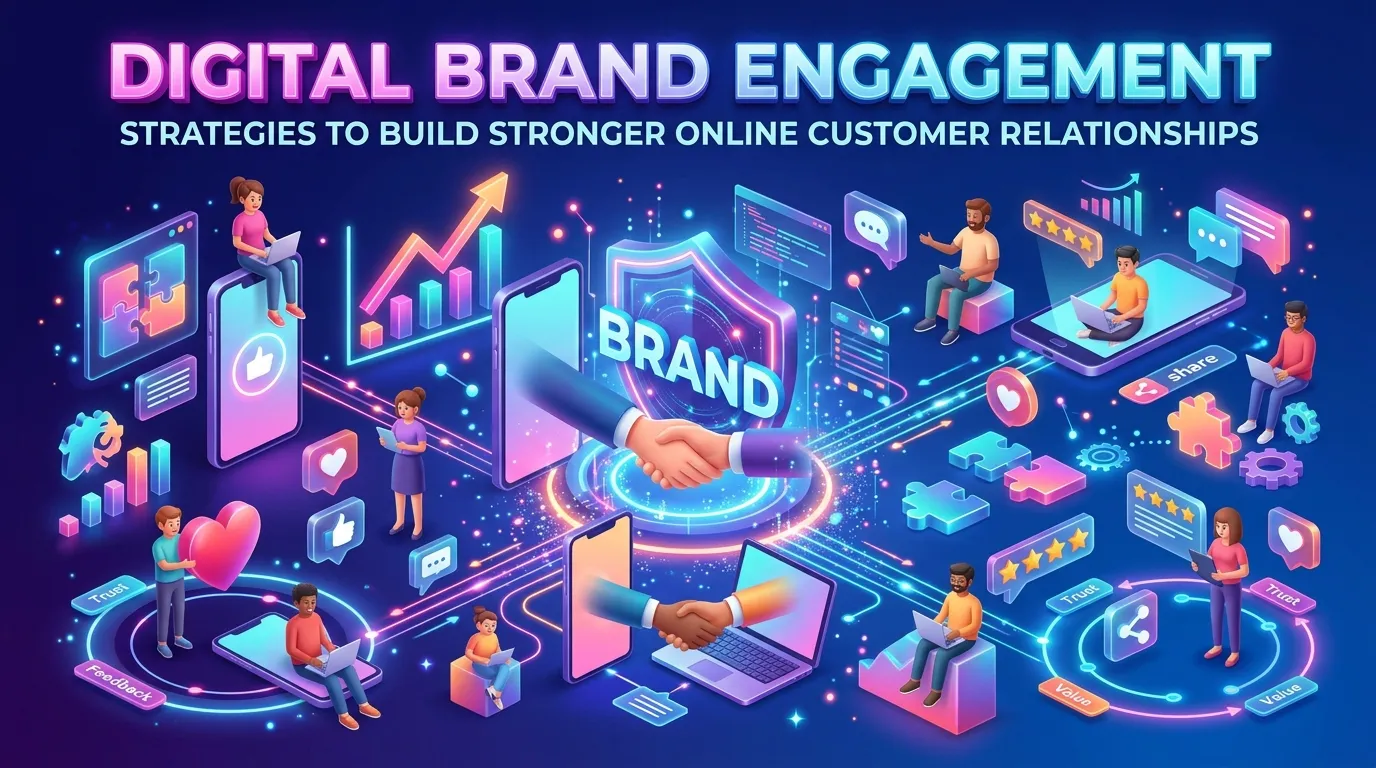
Digital brand engagement helps businesses build meaningful customer relationships through websites, social media, email, content, and online communities. It encourages customers to interact with brands, join conversations, and develop stronger connections, supporting long-term loyalty and brand growth.
Customers interact with brands through more digital channels than ever before. They may discover a company through social media, read a blog post, watch a video, visit a website, respond to an email, or communicate with a brand through messaging platforms. These interactions create opportunities for businesses to build relationships rather than simply promote products or services.
This is why digital brand engagement has become an important part of modern marketing. Engagement is not limited to likes, comments, or clicks. It represents the way customers interact with a brand and how those interactions influence awareness, trust, loyalty, and purchasing decisions.
Businesses that focus on meaningful engagement can create stronger connections with their audiences. Instead of treating customers as passive recipients of advertising, brands can invite them into conversations, provide useful information, respond to their needs, and create experiences that encourage continued interaction.
What Is Digital Brand Engagement?
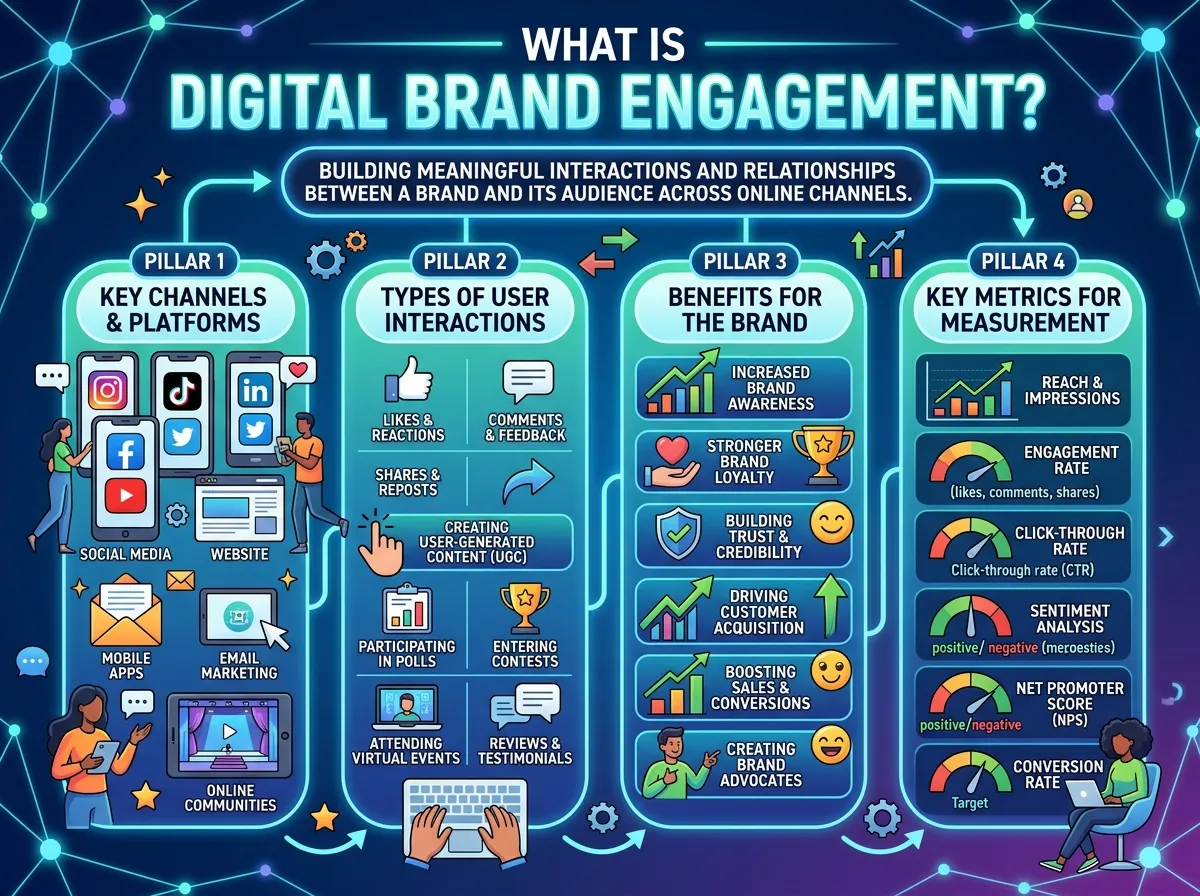
Digital brand engagement refers to the interactions between a brand and its audience through digital channels. These interactions can happen on social media, websites, email, mobile applications, online communities, video platforms, messaging services, and other digital environments.
A customer may engage with a brand by commenting on a social media post, sharing an article, watching a product video, joining an online community, responding to an email, participating in a survey, or contacting customer support.
The objective is not simply to increase the number of interactions. Effective engagement should create value for both the customer and the brand. Customers should receive useful information, relevant experiences, or meaningful communication, while businesses gain stronger relationships, valuable feedback, and greater brand loyalty.
Why Digital Brand Engagement Matters
Strong engagement can make a brand more memorable. When customers repeatedly interact with a business through valuable and relevant experiences, they are more likely to recognize and remember the brand.
Engagement can also build trust. Customers often want to understand a company before making a purchase. Helpful content, responsive communication, transparent information, and genuine interactions can make a brand appear more credible.
Another benefit is customer retention. People who feel connected to a brand may be more likely to return, recommend the company to others, and participate in future campaigns.
Engagement can also provide useful customer insights. Comments, reviews, questions, social interactions, and website behavior can reveal what customers want, what concerns them, and which topics interest them most.
Creating a Digital Brand Engagement Strategy
A successful digital brand engagement strategy starts with understanding the target audience. Businesses should identify who their customers are, what problems they face, which platforms they use, and what type of content they find valuable.
The next step is to establish clear engagement objectives. A business might want to increase social interactions, improve customer retention, build a community, encourage user-generated content, increase website engagement, or strengthen brand loyalty.
Content should then be created around these objectives. Educational articles, videos, social posts, interactive content, newsletters, polls, customer stories, and other formats can encourage audiences to participate.
Consistency is also important. A brand should maintain a recognizable voice, visual identity, and communication style across different digital channels. Customers should have a similar experience whether they interact with the brand through social media, email, or its website.
Building Online Brand Engagement
Online brand engagement depends heavily on the quality of the experience a customer receives. Businesses should give people reasons to interact rather than constantly asking them to make purchases.
Educational content is one effective way to encourage engagement. A company can answer common questions, explain industry trends, provide useful tips, or demonstrate how its products solve customer problems.
Interactive content can take engagement further. Polls, quizzes, surveys, contests, live sessions, Q&A events, and interactive videos can encourage customers to participate rather than simply consume information.
Brands should also respond to customer interactions. Answering questions and acknowledging comments shows that the business values its audience. This two-way communication can make digital experiences feel more personal.
Brand Engagement Marketing
Brand engagement marketing focuses on creating campaigns and experiences that encourage customers to interact with a brand. Instead of focusing entirely on immediate sales, engagement campaigns can aim to increase awareness, participation, trust, and emotional connection.
Storytelling can be particularly effective. Stories about a company’s purpose, customers, employees, products, or community involvement can give audiences something meaningful to connect with.
Visual and sensory experiences can also strengthen engagement. As technology develops, brands can experiment with interactive experiences, personalized visuals, augmented reality, and AI-powered experiences. For example, businesses interested in creating richer brand experiences can explore AI Sensory Branding and consider how technology can make digital interactions more memorable.
Digital Customer Engagement
Digital customer engagement involves creating ongoing interactions that help customers feel supported and connected throughout their relationship with a business.
The customer journey should not end after someone makes a purchase. Brands can continue engagement through helpful follow-up emails, product education, loyalty programs, personalized recommendations, customer communities, surveys, and useful resources.
Customer service is another important part of engagement. Quick and helpful responses can turn a frustrating experience into a positive one. Digital communication tools allow businesses to respond through channels that customers already use.
Personalization can further improve engagement. Customers may respond better when content and offers are relevant to their interests or previous interactions.
Social Media Brand Engagement

Social media brand engagement is one of the most visible forms of digital interaction. Likes, comments, shares, mentions, direct messages, saves, and other actions can indicate how audiences respond to brand content.
However, engagement should not be measured only by the number of likes a post receives. A smaller number of meaningful comments or conversations may be more valuable than thousands of passive impressions.
Businesses should create content that encourages discussion. Questions, opinions, behind-the-scenes content, customer stories, short videos, polls, and educational posts can all provide opportunities for interaction.
Responding to comments is equally important. When brands participate in conversations instead of simply publishing content, social media becomes a relationship-building channel rather than a one-way advertising platform.
Understanding Brand Audience Engagement
Brand audience engagement depends on how well a company understands the people it wants to reach. Different audience groups may have different interests, concerns, and expectations.
Segmentation can help businesses create more relevant communication. New customers may need educational content, while existing customers may be more interested in product updates, loyalty benefits, or advanced resources.
Businesses can use analytics and customer feedback to understand which topics generate the most interaction. This information can guide future content and campaign decisions.
User-generated content can also strengthen audience engagement. When customers share photos, reviews, experiences, or stories, the brand can encourage further participation by highlighting and responding to that content.
Developing a Customer Engagement Strategy
A strong customer engagement strategy should connect marketing, customer service, content, and communication. Customers do not experience these activities as separate departments. They experience one overall relationship with the brand.
Businesses should therefore aim for consistency across touchpoints. A customer who receives helpful information through email should encounter similar values and messaging when visiting the website or social media pages.
Personalization can make the experience even stronger. Brands can use customer data responsibly to provide relevant recommendations, content, and communication.
Loyalty programs and exclusive communities can also encourage continued engagement. When customers receive meaningful benefits for participating, they have stronger reasons to remain connected.
Digital Brand Interaction and Customer Experience
Digital brand interaction includes every online touchpoint where a customer communicates with or experiences a brand. This may include clicking a website button, using a chatbot, watching a video, downloading a resource, commenting on social media, or contacting customer support.
Each interaction contributes to the overall customer experience. A slow website, confusing navigation, irrelevant emails, or unanswered social comments can weaken the relationship. On the other hand, useful content, fast responses, simple navigation, and personalized experiences can strengthen it.
Businesses should therefore evaluate the complete digital experience rather than focusing on one channel. Improving individual interactions can create a more consistent and satisfying customer journey.
Creating Brand Engagement Campaigns
Brand engagement campaigns should have a clear purpose and a specific audience. A campaign might encourage customers to share their experiences, participate in a challenge, answer a question, submit content, attend an online event, or interact with a new product.
Creative campaigns often perform well because they give customers a reason to participate. However, creativity should always be connected to the brand. A campaign that receives attention but does not strengthen the brand relationship may have limited long-term value.
Influencer partnerships can also support engagement campaigns when the influencer’s audience is relevant to the brand. Instead of focusing only on reach, businesses should consider whether the partnership encourages meaningful interaction and fits the company’s identity.
Measuring campaign performance is essential. Businesses can evaluate engagement rates, comments, shares, participation, website activity, leads, conversions, and other relevant outcomes. Marketers interested in measuring partnership effectiveness can also explore The ROI of Influencer Marketing for ideas about evaluating brand impact.
Building Stronger Brand Recognition
Consistent engagement can strengthen brand recognition over time. Customers become familiar with the company’s name, visual identity, messaging, values, and personality through repeated interactions.
Brand elements can contribute to this recognition. Logos, colors, typography, packaging, visual styles, and distinctive symbols can help audiences identify a business across different channels.
A recognizable brand mark can be particularly useful when customers encounter a business across multiple digital environments. Businesses that want to understand this concept in greater detail can explore What is Brand Mark in Marketing? and how recognizable brand elements contribute to identity.
Measuring Digital Brand Engagement

Measuring engagement helps businesses understand whether their digital strategies are creating meaningful results. Useful metrics depend on the campaign and business objectives.
Social media engagement rate, comments, shares, saves, video completion rates, website engagement, email clicks, community participation, repeat visits, and customer feedback can all provide useful information.
Businesses should also connect engagement metrics with larger business outcomes. For example, increased engagement may contribute to stronger brand awareness, lead generation, customer retention, or sales.
The value of engagement should therefore be considered beyond individual clicks or likes. A campaign that creates stronger customer relationships can provide long-term value even when immediate conversions are limited.
A broader understanding of the financial value of branding can also be gained by examining The ROI of Brand Strategy, which explores how brand strategy can contribute to business performance.
Personalization and Long-Term Engagement
Personalization has become an important part of online customer experiences. Customers expect brands to understand their preferences and provide information that is relevant to their needs.
Businesses can personalize communication using customer interests, browsing behavior, purchase history, content interactions, and other appropriate data. Personalized emails, product recommendations, content suggestions, and offers can make digital experiences more useful.
However, personalization should feel helpful rather than intrusive. Businesses should be transparent about how customer data is used and avoid unnecessary personalization that may make customers uncomfortable.
The goal should be to make interactions more relevant while maintaining trust.
Improving Online Customer Engagement Strategy
An effective online customer engagement strategy should be continuously improved based on customer behavior and feedback. Digital marketing provides businesses with a large amount of information that can help identify what is working.
Businesses can test different content formats, messaging, calls to action, posting schedules, and engagement methods. They can then compare results and focus on the approaches that produce meaningful interactions.
Customer feedback should also influence strategy. Reviews, surveys, comments, support requests, and direct conversations can reveal problems that analytics alone may not identify.
Over time, these insights can help businesses develop a more customer-focused digital presence.
Common Mistakes in Digital Brand Engagement
One common mistake is treating engagement as a numbers game. High impressions or likes do not necessarily mean customers have developed a meaningful relationship with a brand.
Another mistake is focusing too heavily on promotional content. Customers generally need useful information, entertainment, education, or community experiences before they become consistently engaged.
Ignoring customer comments and questions can also damage trust. Engagement works both ways, so brands should be prepared to listen and respond.
Inconsistent communication is another challenge. Different channels should feel connected rather than presenting completely different brand personalities or messages.
Finally, businesses should avoid copying every digital trend. A strategy should be based on audience needs and brand objectives rather than simply following what other companies are doing.
Conclusion
Digital brand engagement is about creating meaningful and ongoing relationships between businesses and their audiences through digital channels. It combines content, social media, personalization, customer service, online communities, interactive experiences, and consistent communication.
The strongest brands do more than attract attention. They create opportunities for customers to participate, ask questions, share experiences, provide feedback, and develop a stronger connection with the company.
By developing a clear digital brand engagement strategy, understanding audience behavior, creating useful content, and measuring meaningful interactions, businesses can strengthen customer relationships and support long-term growth.
Engagement should be viewed as an ongoing process rather than a single campaign. Every digital interaction can contribute to how customers perceive a brand, making consistency, relevance, responsiveness, and authenticity essential parts of successful digital marketing.
Frequently Asked Questions
1. What is digital brand engagement?
Digital brand engagement refers to the interactions customers have with a brand through digital channels such as social media, websites, email, mobile applications, online communities, and messaging platforms. It focuses on creating meaningful relationships rather than simply generating impressions.
2. Why is digital brand engagement important?
Digital brand engagement can help businesses build trust, improve customer loyalty, increase brand recognition, gather customer insights, and create stronger relationships. Meaningful engagement can also support long-term marketing and business growth.
3. What is a digital brand engagement strategy?
A digital brand engagement strategy is a plan for encouraging meaningful interactions between a brand and its audience through digital channels. It can include content marketing, social media, personalization, online communities, interactive campaigns, and customer communication.
4. How can social media improve brand engagement?
Social media can improve engagement by creating opportunities for customers to comment, share, ask questions, participate in polls, watch videos, and communicate directly with brands. Consistent responses and useful content can make these interactions more meaningful.
5. What is the difference between brand awareness and brand engagement?
Brand awareness refers to whether customers recognize or know about a brand. Brand engagement goes further by focusing on how customers interact with and connect with that brand through actions, conversations, content consumption, and ongoing relationships.
6. How can businesses improve digital customer engagement?
Businesses can improve digital customer engagement by providing useful content, responding quickly to questions, personalizing experiences, creating interactive campaigns, improving customer service, and maintaining consistent communication across digital channels.
7. What are examples of digital brand interaction?
Examples include commenting on social media posts, sharing branded content, watching videos, clicking website content, joining online communities, responding to emails, using chatbots, completing surveys, and participating in online events.
8. How do brand engagement campaigns work?
Brand engagement campaigns encourage customers to participate in activities connected to a brand. These may include contests, challenges, interactive content, influencer campaigns, user-generated content initiatives, surveys, and social media conversations.
9. How can digital brand engagement be measured?
Businesses can measure engagement through metrics such as social media interactions, engagement rates, website behavior, video views, email clicks, comments, shares, community participation, repeat visits, customer feedback, leads, and conversions.
10. How does digital brand engagement support business growth?
Strong engagement can increase customer trust, loyalty, brand recognition, and advocacy. When customers develop meaningful relationships with a brand, they may be more likely to return, recommend the company, and remain engaged with its products or services.