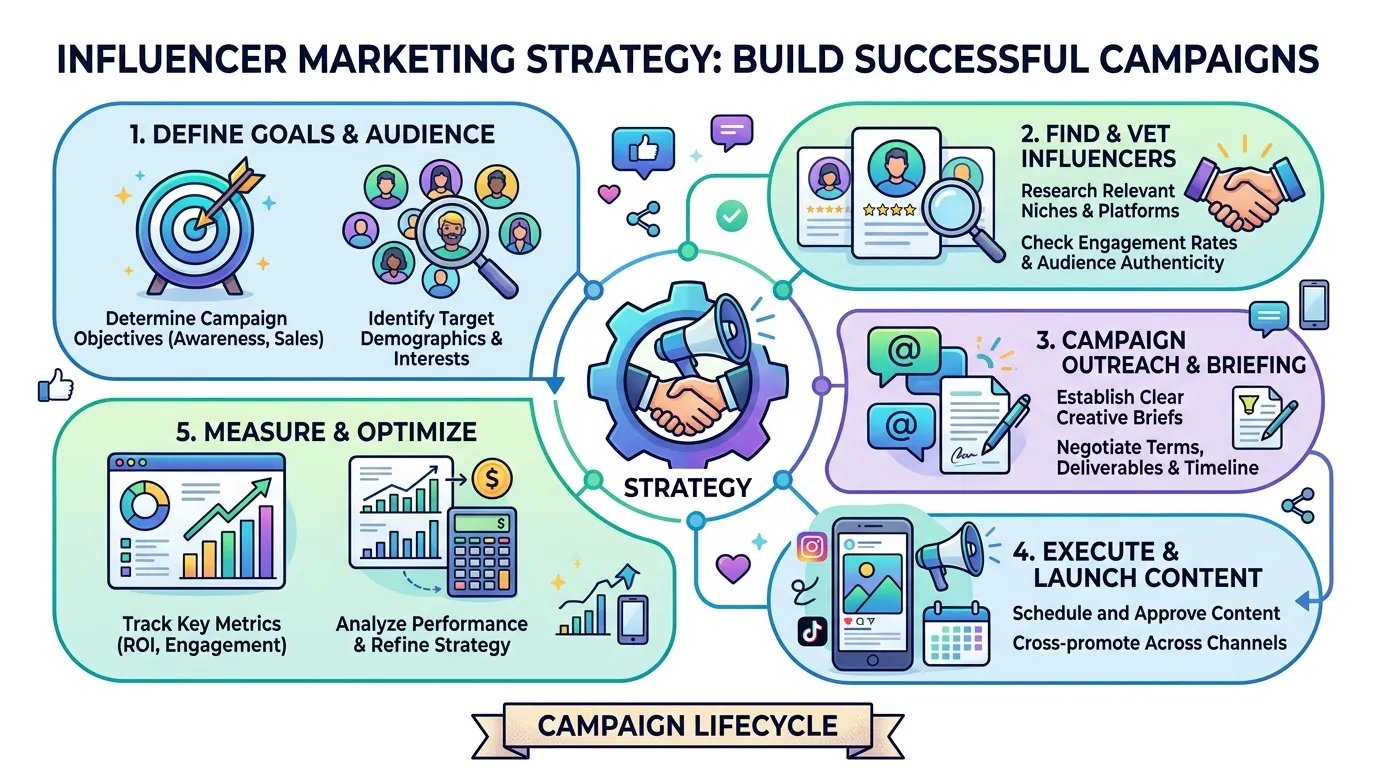
An influencer marketing strategy helps businesses plan creator partnerships, develop effective campaigns, engage relevant audiences, and measure marketing performance. By combining careful influencer selection, personalized outreach, authentic collaboration, clear campaign planning, and meaningful performance measurement, brands can create influencer campaigns that support broader marketing and brand-building goals.
An influencer marketing strategy is a structured approach businesses use to work with influential creators and connect their products or services with relevant audiences. Instead of relying only on traditional advertising, brands can collaborate with creators who already have established relationships with their followers. When the partnership is relevant and authentic, influencer marketing can support brand awareness, audience engagement, trust, and customer acquisition.
The growth of social media has made influencer marketing an important part of many digital marketing programs. Consumers regularly discover products through creators on platforms such as Instagram, YouTube, TikTok, Facebook, and other social channels. However, successful influencer marketing requires more than selecting someone with a large follower count. Brands need to understand their audience, define clear objectives, choose suitable creators, develop meaningful partnerships, and measure results.
Why an Influencer Marketing Strategy Matters
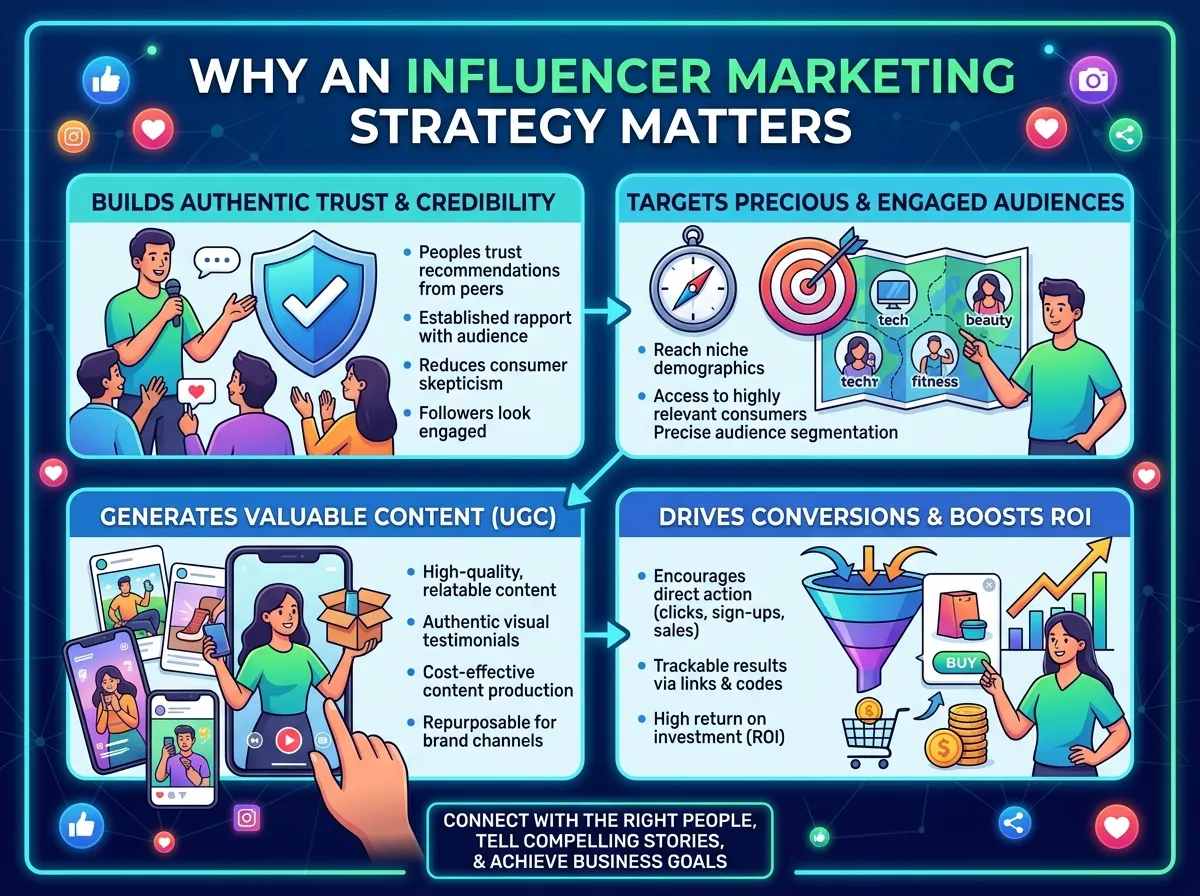
A strong influencer marketing strategy helps a business approach creator partnerships with a clear purpose. Without a strategy, influencer campaigns can become focused mainly on follower counts, likes, or individual posts without establishing how the activity supports broader marketing goals.
Influencer marketing can support several objectives, including increasing brand awareness, promoting a product launch, generating website traffic, introducing a brand to a new audience, encouraging engagement, and supporting sales. The appropriate objective depends on the business and the stage of the customer journey being targeted.
Strategy also helps businesses maintain consistency. When influencer activity is connected to the brand’s broader messaging, creators can communicate the campaign in their own style while still reinforcing the core identity of the company.
Building an Influencer Marketing Campaign
An influencer marketing campaign should begin with a clearly defined goal. A brand might want to increase awareness of a new product, generate engagement around a specific service, attract website visitors, or encourage customers to try an offer. Establishing the objective first makes it easier to choose creators, content formats, and performance metrics.
The audience should also be clearly understood. A creator may have a large following, but that audience may not be relevant to the brand. Businesses should consider demographics, interests, content preferences, location, purchasing behavior, and the type of conversations taking place within the creator’s community.
Campaign messaging should provide enough direction without making the content feel overly controlled. Influencers usually understand how their audience responds to their content, so allowing room for their natural voice can make sponsored content feel more authentic.
Choosing the Right Influencer Marketing Tactics
Different influencer marketing tactics can be used depending on campaign objectives and audience behavior. Product reviews, tutorials, demonstrations, sponsored posts, short-form videos, live sessions, giveaways, testimonials, unboxing content, and educational collaborations can all serve different purposes.
The most suitable tactic depends on the relationship between the creator, audience, product, and campaign goal. A technical product may benefit from a detailed demonstration, while a visually oriented consumer product might work well with short-form video or lifestyle content.
Brands should also consider the creator’s previous content. Looking at how they communicate with followers, handle comments, disclose partnerships, and discuss products can provide valuable context before beginning a collaboration.
Developing a Social Media Influencer Strategy
A social media influencer strategy should consider the specific characteristics of each platform. Audiences may interact differently with short videos, long-form videos, live streams, stories, images, and written posts.
For example, a creator might use short-form video to introduce a product and longer content to explain how it works. Another creator may have an audience that prefers educational posts or detailed reviews. The strategy should therefore match the content format with audience behavior rather than using exactly the same approach across every platform.
Businesses should also consider how influencer content fits into their existing social media activity. Influencer posts can be supported through brand-owned channels, paid amplification, website content, email marketing, or other promotional activities.
Creating an Influencer Marketing Plan
An influencer marketing plan brings the campaign together into a clear structure. It can define the campaign objective, target audience, creator criteria, content requirements, timeline, budget, messaging, publishing schedule, and measurement approach.
The plan should also establish expectations before content production begins. Brands and creators should understand deliverables, deadlines, approval processes, disclosure requirements, usage rights, payment arrangements, and campaign goals.
Clear communication can prevent misunderstandings later. At the same time, brands should avoid making the plan unnecessarily restrictive. Influencers have developed their own communication styles, and giving creators reasonable creative freedom can help preserve authenticity.
Building an Influencer Partnership Strategy
An influencer partnership strategy focuses on developing relationships that can extend beyond a single sponsored post. Long-term partnerships may allow creators to become more familiar with the brand, product, and audience, which can lead to more consistent communication.
Businesses should evaluate creators based on more than audience size. Engagement quality, content relevance, audience alignment, professionalism, communication style, and previous partnerships can all be useful considerations.
Long-term relationships can also help brands develop a more consistent presence within a creator’s community. Instead of introducing a product once, recurring collaborations can give audiences multiple opportunities to understand the brand.
Brands should also consider how reputation and resilience relate to influencer partnerships. A creator’s public content and behavior can affect how audiences perceive associated brands, making careful partnership evaluation an important part of risk management. Businesses interested in strengthening their wider brand approach can explore building brand resilience strategies as part of their broader marketing planning.
Creating an Effective Influencer Outreach Strategy
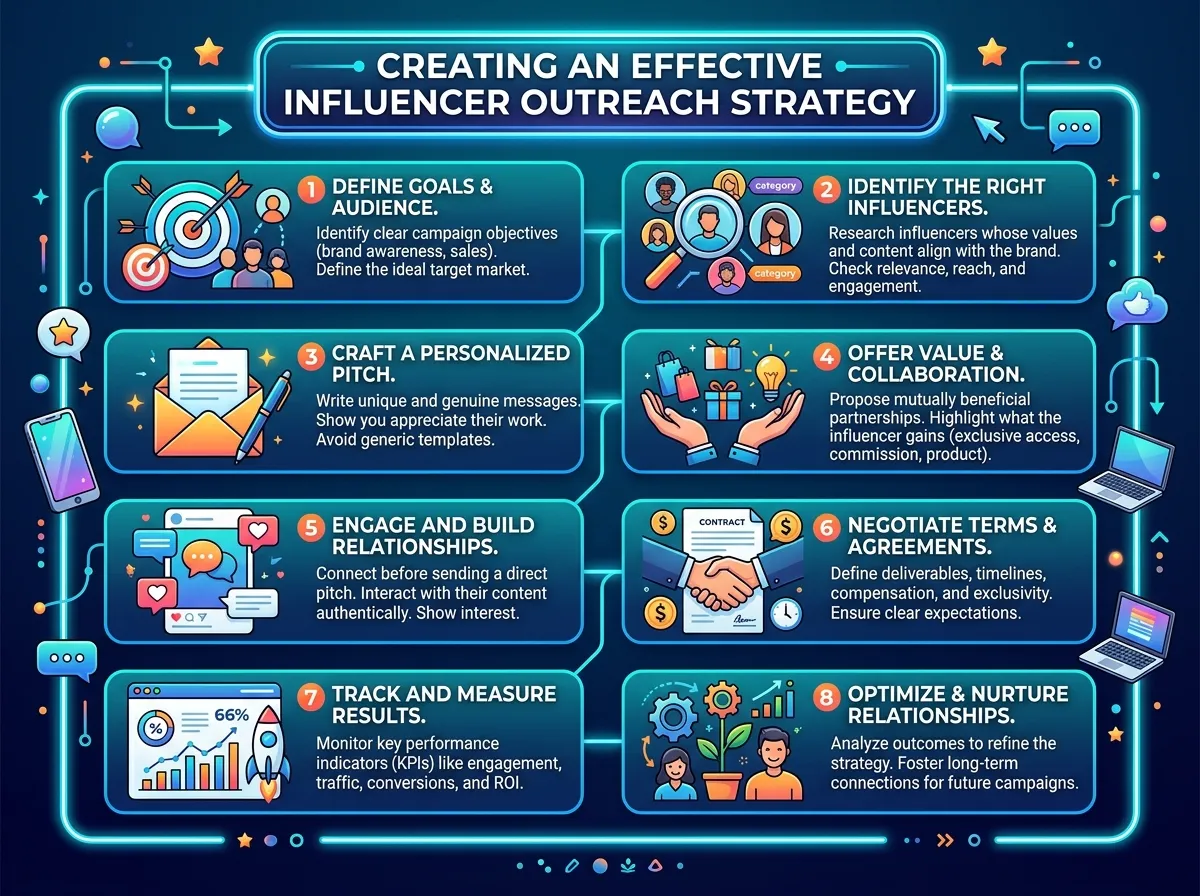
An influencer outreach strategy should be personalized and focused on relevance. Generic messages sent to large numbers of creators may be less effective than thoughtful outreach that demonstrates an understanding of the creator’s content and audience.
A strong outreach message can briefly introduce the brand, explain why the creator appears relevant, describe the potential collaboration, and provide the basic campaign details. The goal is to start a professional conversation rather than immediately overwhelm the creator with a long list of requirements.
Businesses should also respect creators’ time and communication preferences. Follow-ups can be appropriate, but repeated messages after a creator has clearly declined or shown no interest can damage the potential relationship.
Making Influencer Brand Collaboration More Authentic
Influencer brand collaboration works best when the creator and product have a natural connection. Audiences can often recognize when a promotion feels disconnected from a creator’s usual content.
Brands should therefore look for creators who genuinely fit their category and communication style. A creator who regularly discusses a relevant topic may be able to explain a product naturally because the subject already fits their content.
Authenticity does not mean removing structure from a campaign. Businesses still need clear objectives and requirements, but the creator should have enough freedom to communicate the message in a way that feels appropriate for their audience.
Influencer marketing can also contribute to broader brand-building efforts. Consistent creator communication can reinforce brand associations and help audiences remember a company over time. Understanding principles such as the science of brand memory can provide additional context for developing memorable brand communication.
Understanding Influencer Marketing Trends
Influencer marketing trends continue to change as social platforms, content formats, and audience expectations evolve. Short-form video has become an important format across several major platforms, while live content, educational collaborations, user-generated content, and creator-led storytelling remain relevant to many campaigns.
Another important development is the growing attention toward smaller creators and niche communities. A creator with a highly relevant audience can provide meaningful engagement even when their follower count is much smaller than that of a celebrity or large creator.
Brands are also increasingly considering creator relationships as part of their broader content ecosystems. Influencer content can be repurposed, with appropriate permissions, across social media, websites, advertisements, email campaigns, and other marketing channels.
Virtual environments can also create new opportunities for creator-led experiences. Brands exploring emerging digital spaces may find concepts such as metaverse branding and virtual experiences useful when considering how influencer collaborations could evolve alongside new forms of digital interaction.
Increasing Influencer Audience Engagement
Influencer audience engagement is one of the most valuable aspects of creator marketing because it shows how audiences interact with content rather than simply how many people potentially saw it.
Comments, shares, saves, direct messages, video interactions, clicks, and other actions can provide insight into audience interest. However, engagement should always be interpreted in relation to the campaign objective.
Brands can encourage engagement by creating content that invites discussion, answers audience questions, demonstrates products, presents useful information, or gives followers a reason to participate. Interactive formats can also create opportunities for creators to communicate directly with their communities.
The quality of engagement matters as well. A large number of low-value interactions may not provide the same business value as meaningful conversations from people who are genuinely interested in the product or service.
Measuring Influencer Marketing Performance Metrics
Influencer marketing performance metrics help businesses understand whether campaigns are achieving their intended objectives. The appropriate metrics depend on what the campaign was designed to accomplish.
For awareness campaigns, businesses may examine reach, impressions, video views, audience growth, and brand mentions. Engagement-focused campaigns may look at comments, shares, saves, reactions, and other interactions.
Traffic-focused campaigns can measure link clicks, referral traffic, landing-page activity, and other website actions. When influencer campaigns are designed to support sales, businesses may use tracked links, discount codes, conversions, revenue, or customer acquisition data.
It is important to establish measurement methods before a campaign launches. Unique tracking links, creator-specific codes, campaign landing pages, and platform analytics can help businesses connect influencer activity with measurable outcomes.
Balancing Creativity and Brand Consistency
Influencer marketing requires a balance between creative freedom and brand consistency. If a business controls every word, image, and action, the resulting content may feel unnatural to the creator’s audience.
At the same time, creators need enough information to communicate accurate product details and avoid misleading claims. A campaign brief can provide the necessary brand information, key messages, prohibited claims, visual requirements, and other important guidelines.
The best approach is often collaborative. The brand understands its products and objectives, while the creator understands the audience and content environment. Combining these perspectives can produce content that supports the campaign without losing the creator’s natural style.
Managing Influencer Campaign Relationships
Successful influencer marketing also depends on professional relationship management. Creators should receive clear information about deadlines, compensation, content expectations, approval processes, and campaign requirements.
Businesses should communicate promptly and respect agreed terms. When a collaboration performs well, maintaining the relationship can create opportunities for future campaigns.
Brands can also review campaign results with creators. Sharing useful performance insights can help both sides understand what resonated with the audience and identify opportunities for future content.
Making Influencer Marketing Part of a Larger Brand Strategy

Influencer marketing should not always operate separately from other marketing activities. Creator campaigns can support product launches, content marketing, social media campaigns, public relations, community building, and other brand initiatives.
For example, a business could work with influencers to introduce a new product, use creator content on its social channels, publish related educational content on its website, and encourage customers to share their own experiences.
This integrated approach can create multiple touchpoints between a customer and the brand. When these interactions communicate consistent ideas, the overall campaign can become easier for audiences to understand and remember.
Common Challenges in Influencer Marketing
Influencer marketing can present several challenges. Selecting creators based only on follower numbers may result in poor audience alignment. Similarly, unclear campaign requirements can create problems with content quality, deadlines, or expectations.
Another challenge is measuring actual business impact. Engagement statistics can be useful, but they do not automatically demonstrate sales or long-term customer value. Businesses should connect campaign metrics with the specific objective established at the beginning.
Reputation is another consideration. A creator’s actions can influence how audiences perceive a partnered brand. Careful research, clear agreements, ongoing communication, and appropriate monitoring can help businesses manage these risks.
The Future of Influencer Marketing Strategy
The future of influencer marketing will continue to be shaped by changing social platforms, content formats, technology, and audience expectations. Creators are increasingly becoming important sources of product discovery, education, entertainment, and community interaction.
Businesses may also continue moving toward longer-term creator relationships instead of relying exclusively on one-time campaigns. Niche creators, specialized communities, short-form video, live experiences, and creator-led content can all play roles in evolving strategies.
For businesses, the central focus should remain relevance and measurable value. A successful influencer marketing strategy connects the right creator with the right audience, message, content format, and business objective.
Frequently Asked Questions
1. What is an influencer marketing strategy?
An influencer marketing strategy is a structured plan for using creators to promote a brand, product, or service. It typically includes audience research, influencer selection, campaign objectives, content planning, outreach, collaboration, and performance measurement.
2. Why is an influencer marketing strategy important?
An influencer marketing strategy gives businesses a clear framework for working with creators. It helps align influencer partnerships with marketing objectives while making it easier to select relevant creators, organize campaigns, and evaluate results.
3. What is an influencer marketing campaign?
An influencer marketing campaign is a coordinated promotional activity involving one or more influencers. It may include sponsored posts, videos, product demonstrations, reviews, live content, giveaways, or other creator-led formats.
4. How do businesses choose the right influencers?
Businesses can consider audience relevance, content quality, engagement, communication style, creator reputation, previous partnerships, and alignment with the brand. Follower count can be useful, but it should not be the only consideration.
5. What is an influencer outreach strategy?
An influencer outreach strategy is the process businesses use to identify and contact suitable creators for potential collaborations. Personalized communication that explains the reason for the partnership can help establish a professional relationship.
6. How can brands improve influencer audience engagement?
Brands can support engagement by working with relevant creators and encouraging useful, entertaining, educational, or interactive content. Questions, demonstrations, discussions, live sessions, and community-focused content can create opportunities for meaningful interaction.
7. What are common influencer marketing tactics?
Common influencer marketing tactics include sponsored posts, product reviews, tutorials, demonstrations, giveaways, unboxing videos, live streams, testimonials, short-form videos, and long-term creator partnerships.
8. What are influencer marketing performance metrics?
Influencer marketing performance metrics can include reach, impressions, views, engagement, shares, saves, comments, clicks, website traffic, conversions, revenue, and customer acquisition. The appropriate metrics depend on the campaign’s objective.
9. Are smaller influencers useful for influencer marketing?
Smaller influencers can be useful when their audiences closely match a brand’s target market. Niche creators may have highly relevant communities and strong audience relationships, making them suitable for campaigns focused on specific interests or customer groups.
10. How can businesses build long-term influencer partnerships?
Businesses can build long-term partnerships by selecting relevant creators, communicating clearly, respecting agreements, providing creative flexibility, sharing campaign insights, and developing collaborations that offer value to both the brand and creator.