A strong Brand Recall Strategy helps customers remember a business when they need a particular product, service, or solution. Consistent branding, meaningful customer experiences, valuable content, repeated exposure, and emotional connections can strengthen how a brand stays in the customer’s memory. When businesses combine awareness, recognition, engagement, and visibility efforts, they can create stronger and more lasting brand associations.
Understanding Brand Recall Strategy
Customers encounter hundreds of brands through websites, social media, advertising, search results, emails, videos, stores, events, and everyday experiences. With so many messages competing for attention, simply making a brand visible does not guarantee that customers will remember it later.
This is why a Brand Recall Strategy is important. Brand recall refers to a customer’s ability to remember a brand when thinking about a particular product, service, category, or need. A business with strong recall is more likely to come to mind when customers begin looking for a solution.
Brand recall is different from simply recognizing a logo or business name. Recognition occurs when customers identify a brand after seeing or hearing it. Recall involves remembering the brand without necessarily being shown a specific visual or name.
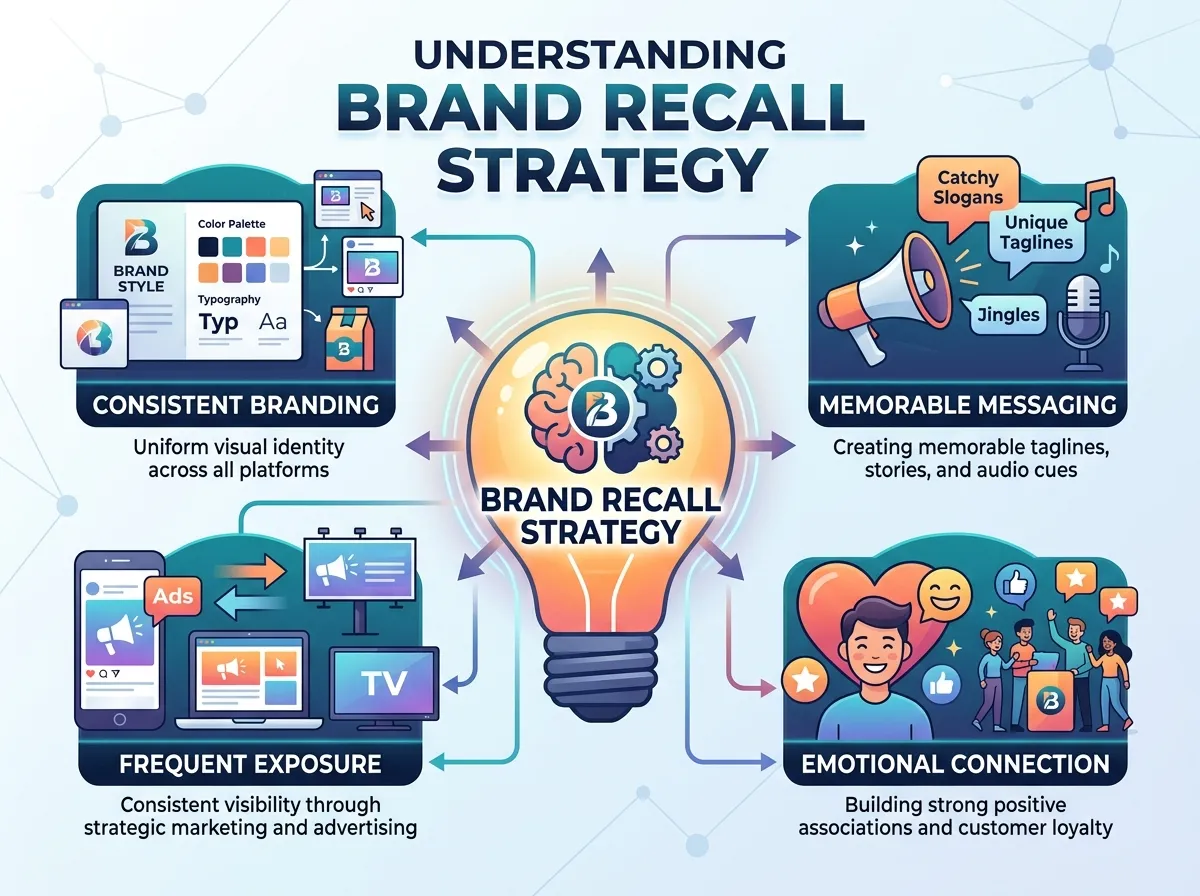
A successful recall strategy therefore focuses on creating strong associations in the customer’s memory. These associations can come from consistent messaging, distinctive visual identity, memorable experiences, useful content, emotional connections, and repeated interactions.
Brand Recall Marketing Strategy
A Brand Recall Marketing Strategy brings different marketing activities together to strengthen memory and familiarity.
Businesses can use advertising, social media, content marketing, email, search visibility, video, events, partnerships, and customer experiences to create repeated brand exposure.
However, repetition alone is not enough. If customers repeatedly see a message that has little relevance or value, they may ignore it. Effective recall marketing combines consistency with usefulness.
For example, a company might consistently communicate around a particular customer problem while using recognizable visual elements and a distinctive tone. Over time, customers may begin associating that message with the business.
The strategy should also remain consistent across channels. If a brand looks and sounds completely different on its website, social media accounts, emails, and advertisements, customers may have difficulty building a clear mental association.
Brand Awareness Strategy and Long-Term Recall
A Brand Awareness Strategy creates the foundation for brand recall. Before customers can remember a brand, they generally need opportunities to encounter and understand it.
Awareness can be developed through organic search, social media, advertising, content marketing, public relations, partnerships, events, and customer referrals.
The quality of exposure matters. A brand that consistently communicates a clear value proposition can become easier to associate with a particular category or customer need.
Digital channels provide many opportunities to increase awareness. A business can publish educational content, create videos, participate in relevant conversations, and maintain a consistent presence across platforms.
Digital customer experiences are also part of awareness. Businesses interested in strengthening this area can explore Digital Customer Engagement to understand how ongoing digital interactions can contribute to stronger customer relationships.
Awareness becomes more valuable when it develops into familiarity and eventually contributes to recall.
Brand Recognition Strategy
A Brand Recognition Strategy focuses on helping customers identify a brand when they encounter its visual or verbal elements.
Logos, colors, typography, packaging, slogans, photography styles, product designs, and distinctive messaging can all contribute to recognition.
Consistency is particularly important. When the same visual and verbal identity appears across multiple touchpoints, customers have more opportunities to connect those elements with the business.
Recognition can also support recall. When customers repeatedly encounter familiar brand elements, those elements can become associated with the company and its offerings.
A strong recognition strategy should therefore avoid unnecessary inconsistency. Frequent changes to logos, colors, messaging, or brand positioning can make it harder for customers to form stable associations.
Brand Recall Techniques That Strengthen Memory
Businesses can use several Brand Recall Techniques to make their brands more memorable.
One technique is developing distinctive brand assets. A recognizable visual identity, memorable phrase, unique content style, or consistent communication pattern can help customers identify and remember the brand.
Another technique is storytelling. Stories can provide context and meaning that simple promotional messages may not create. A brand story can explain why the business exists, the problem it addresses, or the values it represents.
Repetition also plays a role. Consistent exposure across relevant channels can increase familiarity, particularly when the message remains useful and recognizable.
Businesses can also use memorable customer experiences. When customers have a positive and distinctive interaction with a brand, the experience itself can become part of their memory.
The most effective techniques depend on the audience, industry, and nature of the product or service.
Customer Brand Recall and Buying Decisions
Customer Brand Recall can influence which brands customers consider when they have a particular need.
Imagine a person deciding that they need a new software solution, restaurant, clothing product, marketing service, or professional provider. Several brands may be available, but only some may immediately come to mind.
A business that has established strong associations with that category may have a greater chance of entering the customer’s consideration set.
Recall does not guarantee a purchase. Customers can still compare price, quality, reviews, availability, features, convenience, and other factors.
However, being remembered can provide an important starting point. If a customer does not remember a brand when a need arises, that brand may not be considered at all.
This makes recall particularly relevant for businesses competing in crowded markets.
Brand Memory Strategy
A Brand Memory Strategy focuses on creating associations that customers can retain over time.
Memory can be strengthened when information is meaningful, repeated, distinctive, and connected to existing experiences.
Businesses can build memory around specific ideas rather than trying to communicate everything at once. For example, a company might become strongly associated with a particular type of service, customer benefit, experience, or area of expertise.
Content can support this process by repeatedly addressing relevant topics. A brand that consistently provides useful information around a particular customer problem can gradually become associated with that subject.
Emotional experiences can also contribute to memory. Customers may remember how a business made them feel, especially when the experience was meaningful or distinctive.
Brand Visibility Strategy
A Brand Visibility Strategy ensures that customers encounter a business consistently across relevant channels.
Visibility can come from organic search, social media, advertising, content marketing, partnerships, public relations, email, events, online communities, and other channels.
The objective is not to appear everywhere without purpose. Businesses should focus on channels where their target customers actually spend time.
Search visibility can be particularly valuable because customers may encounter a brand while actively researching a problem or solution.
Social media can support repeated exposure and conversation, while email can create direct ongoing communication. Events and partnerships can provide opportunities for more personal interaction.
A coordinated visibility strategy can increase the number of meaningful brand touchpoints and create more opportunities for recall.
Digital Branding and Brand Recall
Digital channels have become an important part of how customers discover and remember brands. Websites, social media profiles, online content, videos, search results, and digital advertising all contribute to the perception of a business.
A consistent approach to Digital Branding can help businesses establish recognizable visual and verbal elements across online platforms.
The website should communicate the same core identity as social profiles and other digital channels. Differences in design, messaging, tone, or positioning can create confusion.
Digital branding also involves the customer experience. A website that is difficult to navigate, slow, or unclear can create a negative association even when the visual identity is strong.
Brand recall therefore depends on both what customers see and what they experience.
Brand Recall Campaigns
A Brand Recall Campaign is designed specifically to increase familiarity and strengthen memory around a brand.
Campaigns can use advertising, social content, video, influencer partnerships, email, search campaigns, events, or other channels.
The campaign message should be clear and consistent. Instead of communicating many unrelated ideas, businesses can focus on a central association they want customers to remember.
Creative elements can reinforce this association. Repeated use of recognizable visual assets, messaging themes, sounds, characters, or storytelling formats can create continuity.
Campaigns can also be adapted to different stages of the customer relationship. New audiences may need introductory information, while existing customers may respond better to reminders, new experiences, or loyalty-focused messages.
Top-of-Mind Awareness
Top-of-Mind Awareness describes a situation in which a brand is among the first brands that customers think of within a particular category or context.
For example, when someone thinks about a specific type of product or service, several businesses may come to mind. The brand recalled first can be described as having top-of-mind awareness within that context.
Businesses can work toward stronger top-of-mind awareness through consistent positioning, memorable experiences, relevant content, advertising, customer engagement, and continued visibility.
However, top-of-mind awareness should not be confused with automatic customer preference. Being remembered first does not necessarily mean a customer will choose the brand. Other factors can influence the final decision.
The role of recall is primarily to ensure that the brand enters the customer’s consideration process.
Brand Engagement Strategy and Stronger Recall
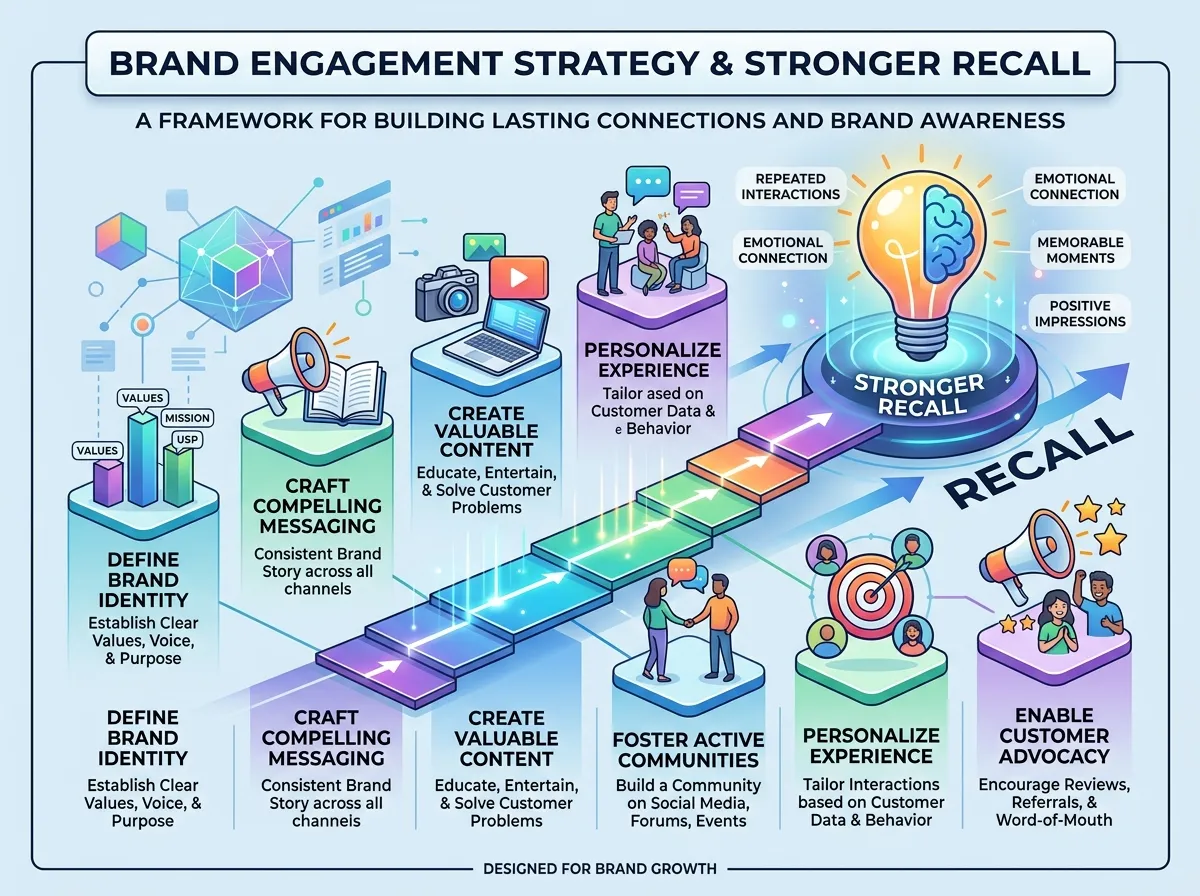
A Brand Engagement Strategy focuses on creating meaningful interactions between a business and its audience.
Engagement can include social media conversations, comments, email interactions, events, community participation, surveys, content responses, user-generated content, and customer service experiences.
When customers actively interact with a brand, they are doing more than passively seeing an advertisement. They are creating experiences and associations connected with the business.
Community building can be particularly useful for sustained engagement. Businesses can explore Building Brand Communities to understand how communities can help create stronger relationships between brands and customers.
Engagement should provide value to the audience. Useful information, entertaining content, meaningful conversations, and responsive customer service can encourage people to interact naturally.
Emotional Connections and Brand Recall
Emotions can play an important role in how customers remember experiences. Brands that create meaningful, positive, surprising, inspiring, or personally relevant experiences may become more memorable.
Emotional branding does not necessarily mean using dramatic storytelling in every campaign. Even small experiences can create emotional associations.
A helpful customer service interaction, a thoughtful message, a memorable event, or a brand story that reflects customer values can contribute to stronger memory.
Businesses should ensure that emotional communication remains authentic. Messages that feel disconnected from the actual customer experience can weaken trust rather than strengthen recall.
Content Marketing and Brand Memory
Content marketing can support brand recall by repeatedly associating a business with useful information and expertise.
A company that consistently publishes relevant articles, videos, research, social posts, case studies, or educational resources can become familiar to its audience.
Content can also reinforce specific brand associations. For example, a business might consistently create content around a particular industry problem, customer challenge, or area of expertise.
The goal is not simply to publish more content. Quality, relevance, consistency, and a recognizable perspective are important.
When customers repeatedly encounter useful content from the same business, they may begin associating that business with the subject being discussed.
Brand Equity and Long-Term Brand Value
Brand recall can contribute to broader brand value. When customers recognize and remember a brand, those associations can become part of its overall market presence.
Brand Equity provides a broader perspective on how brand awareness, customer perceptions, loyalty, and other factors can contribute to the value of a brand.
Strong recall alone does not create brand equity. Customer experiences, perceived quality, reputation, differentiation, trust, and loyalty also matter.
However, being consistently remembered can support these broader brand relationships because customers need to recognize and consider a brand before they can develop deeper associations with it.
Measuring Brand Recall
Businesses can use several methods to evaluate whether their brand is becoming more memorable.
Surveys can ask customers which brands they remember within a specific category. Unaided recall questions can reveal which brands come to mind without showing a list of names, while aided recognition questions can determine whether customers recognize a brand when shown its name or visual identity.
Digital metrics can provide additional context. Search volume, branded search activity, direct website visits, social mentions, engagement, repeat visits, and campaign interactions can help businesses understand changes in brand visibility.
No single metric provides a complete picture. Combining customer research with behavioral data can provide a more useful understanding of brand recall.
Businesses should also compare results over time to identify whether awareness and recall are changing.
Common Challenges in Building Brand Recall
One challenge is inconsistent branding. If customers encounter different messages and visual identities across channels, it may be harder to form a clear memory.
Another challenge is excessive messaging. Businesses sometimes try to communicate too many benefits at once. This can make it difficult for customers to understand what the brand is particularly known for.
Lack of differentiation can create another problem. If a brand communicates in the same way as its competitors, customers may have difficulty forming a distinctive association.
Businesses may also focus heavily on short-term promotional campaigns without maintaining consistent long-term communication. Temporary visibility can create awareness, but lasting recall generally requires continued reinforcement.
Creating a Consistent Brand Recall Strategy

Consistency is one of the most important principles behind long-term recall.
A business should have a recognizable identity, clear positioning, consistent messaging, and a coherent customer experience. These elements should appear across the website, social media, advertising, content, email, customer service, packaging, and other relevant touchpoints.
Consistency does not mean every piece of content must look identical. Instead, customers should be able to recognize the underlying brand identity even when the format changes.
A strong brand recall strategy also evolves when customer expectations and market conditions change. Businesses can update creative formats, campaigns, and channels while maintaining their core identity and associations.
Conclusion
A strong Brand Recall Strategy helps businesses become more memorable in competitive markets. By combining Brand Recall Marketing Strategy, Brand Awareness Strategy, and Brand Recognition Strategy, businesses can create consistent associations that remain familiar to customers.
Effective Brand Recall Techniques, Customer Brand Recall, and a clear Brand Memory Strategy can strengthen how customers remember a business. At the same time, a strong Brand Visibility Strategy, focused Brand Recall Campaign, and continued efforts to build Top-of-Mind Awareness can create more opportunities for customers to encounter and remember the brand.
A thoughtful Brand Engagement Strategy adds another layer by turning passive exposure into meaningful interaction.
Ultimately, brand recall is built over time. Consistent identity, relevant communication, distinctive experiences, useful content, and strong customer relationships can help a brand remain memorable long after an individual marketing message has been seen.
FAQs
1. What is a brand recall strategy?
A brand recall strategy is a planned approach to helping customers remember a brand when they think about a particular product, service, category, or customer need.
2. Why is brand recall important?
Brand recall is important because customers are more likely to consider brands that come to mind when they begin looking for a product or service. Strong recall can help a business remain visible within a competitive category.
3. What is the difference between brand recall and brand recognition?
Brand recall involves remembering a brand without necessarily being shown its name or visual identity. Brand recognition occurs when customers identify a brand after encountering recognizable elements such as a logo, name, packaging, or design.
4. How can businesses improve customer brand recall?
Businesses can improve customer brand recall through consistent branding, memorable experiences, relevant content, distinctive visual assets, repeated exposure, meaningful engagement, and clear positioning.
5. What are effective brand recall techniques?
Effective techniques can include storytelling, consistent brand assets, repeated messaging, memorable customer experiences, distinctive creative elements, useful content, and emotional connections.
6. How does brand awareness contribute to recall?
Brand awareness gives customers opportunities to encounter and become familiar with a business. Continued relevant exposure can help move a brand from simple awareness toward stronger recognition and recall.
7. What is top-of-mind awareness?
Top-of-mind awareness refers to a brand being among the first brands that customers remember within a particular product or service category.
8. How does digital branding affect brand recall?
Digital branding helps create consistent visual and verbal associations across websites, social media, content, advertising, and other online channels. Consistency can make it easier for customers to recognize and remember a brand.
9. How can businesses measure brand recall?
Businesses can use customer surveys, unaided recall studies, aided recognition tests, branded search activity, direct website traffic, social mentions, engagement metrics, and other indicators to evaluate brand recall.
10. How long does it take to build brand recall?
There is no universal timeframe. Brand recall develops through repeated and meaningful customer exposure over time. Industry competition, audience behavior, marketing consistency, customer experience, and brand differentiation can all affect the process.