What Is a Brand Expansion Strategy?
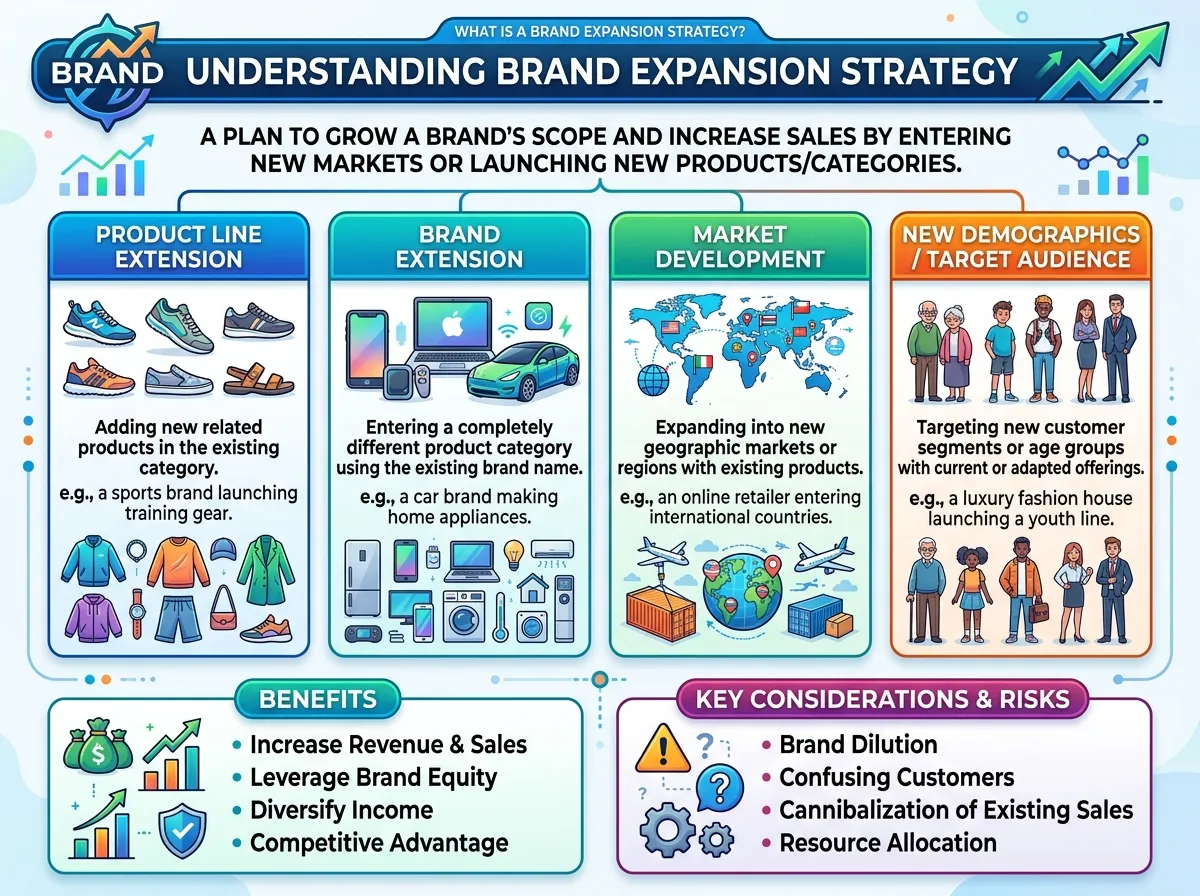
A Brand Expansion Strategy is a structured approach to growing a brand beyond its current market, audience, products, or geographic reach. Businesses may pursue expansion when they have established a strong foundation in their existing market and want to explore additional opportunities.
Expansion does not necessarily mean entering another country or launching a completely new product. A company may expand by entering a new city, targeting a different customer segment, adding complementary products, developing new distribution channels, or strengthening its presence in an existing market.
The central challenge is maintaining a recognizable and trustworthy brand while adapting to new opportunities. Customers should still understand what the brand represents, even when the company enters a different market or introduces something new.
A successful expansion strategy therefore connects growth ambitions with brand identity. It considers where the company wants to grow, why the opportunity exists, what customers need, and how the business can deliver value consistently.
The Importance of a Brand Growth Strategy
A Brand Growth Strategy provides a broader framework for increasing a brand’s reach, relevance, customer base, and commercial opportunities. Expansion can be one component of this broader growth process.
Brands often reach a point where growth within their existing market becomes more difficult. Customer demand may stabilize, competition may increase, or the business may identify opportunities in other markets. Expansion can create additional avenues for growth when the organization has the resources and capabilities to support them.
However, growth should not be based solely on entering as many markets as possible. Sustainable brand growth depends on understanding customer needs and determining whether the brand can provide meaningful value in the new market.
A strong growth strategy also considers existing customers. Expansion should not unintentionally weaken the experience of the people who already support the brand. Maintaining customer relationships while developing new opportunities can create a more balanced approach to long-term growth.
Businesses can strengthen this foundation by investing in customer relationships and retention. For example, developing strong Brand Loyalty can help a growing company maintain customer trust while it expands into new opportunities.
Brand Expansion Planning and Business Readiness
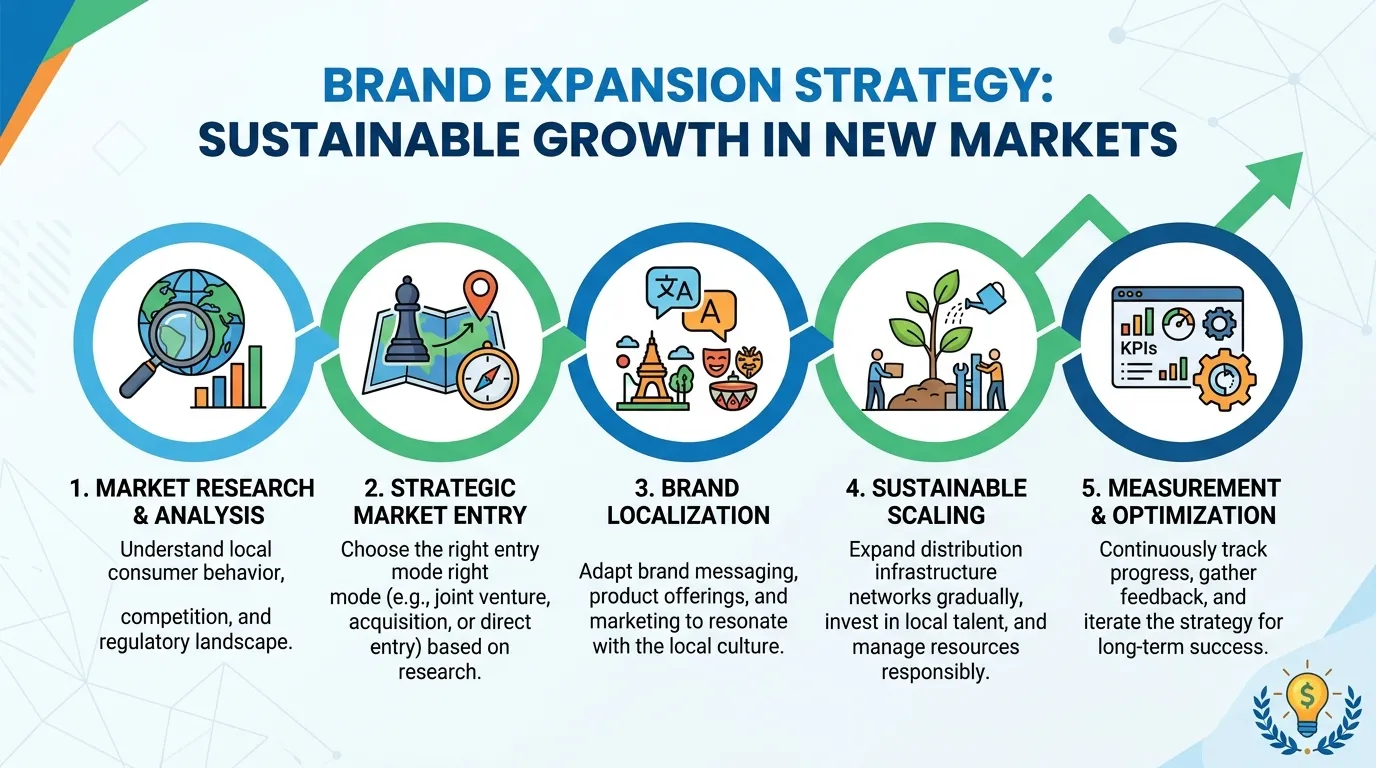
Brand Expansion Planning helps businesses determine whether they are prepared to enter a new market or pursue a new growth opportunity. Expansion can require financial resources, additional employees, new suppliers, technology, marketing investment, operational capabilities, and customer support.
Before entering a new market, a business should understand its current position. Strong brand awareness and customer demand can provide a useful foundation, but they do not automatically guarantee success in a different market.
Internal capabilities are equally important. A company that expands too quickly may struggle to maintain product quality, customer service, communication, or brand consistency.
Planning should therefore consider both opportunity and capacity. The organization needs to understand what it can realistically support and where additional resources may be necessary.
Brand expansion planning also provides an opportunity to identify potential risks. These may include market differences, regulatory requirements, cultural expectations, increased competition, operational challenges, or difficulty establishing awareness among new audiences.
Market Expansion Strategy and New Opportunities
A Market Expansion Strategy focuses on identifying and entering markets where the brand’s products or services may have potential demand. The target market could be geographic, demographic, industry-based, or defined by customer behavior.
Market expansion requires research because customers in different markets may have different expectations. A product that performs well in one market may require changes in pricing, messaging, distribution, packaging, or positioning elsewhere.
Customer research can provide insights into these differences. Businesses can examine search behavior, customer feedback, competitor positioning, market trends, purchasing patterns, and other relevant information.
Understanding competitors is also important. A new market may already have established brands with strong customer relationships. Rather than simply copying existing competitors, businesses can identify gaps where their own value proposition may be relevant.
The brand’s existing identity should remain recognizable while the communication is adapted to the needs of the new audience.
Brand Market Development and Customer Relevance
Brand Market Development involves creating opportunities to introduce an existing brand to new audiences or strengthen its position within an emerging market.
This process can involve identifying underserved customer groups, developing new distribution partnerships, entering new regions, or adapting marketing communication for different audiences.
Brand market development should remain closely connected to customer needs. A business should be able to explain why its existing brand is relevant to the new audience and what value it can provide.
Marketing communication may need to change without completely changing the brand itself. For example, different audiences may respond to different messages, content formats, communication channels, or value propositions.
This is where brand consistency becomes important. Customers should be able to recognize the company while still seeing communication that feels relevant to their particular needs.
Business Brand Expansion and Maintaining Brand Identity
Business Brand Expansion can create significant opportunities, but it also introduces the challenge of maintaining a consistent identity across different markets.
As a company grows, different teams may begin creating their own marketing materials, campaigns, websites, social media profiles, and customer communications. Without clear brand standards, the customer experience can become inconsistent.
Brand guidelines can help establish expectations for visual identity, tone of voice, messaging, positioning, customer communication, and other important elements.
At the same time, consistency should not prevent reasonable adaptation. Different markets may require different language, cultural references, customer support methods, or marketing channels.
The objective is to maintain the core identity while allowing appropriate local relevance.
Personal branding can also become important when company leaders or employees represent the expanding organization publicly. Understanding What Is Personal Branding? can help businesses recognize how individual professional identities may interact with a broader corporate brand.
Brand Diversification Strategy and Reducing Dependence
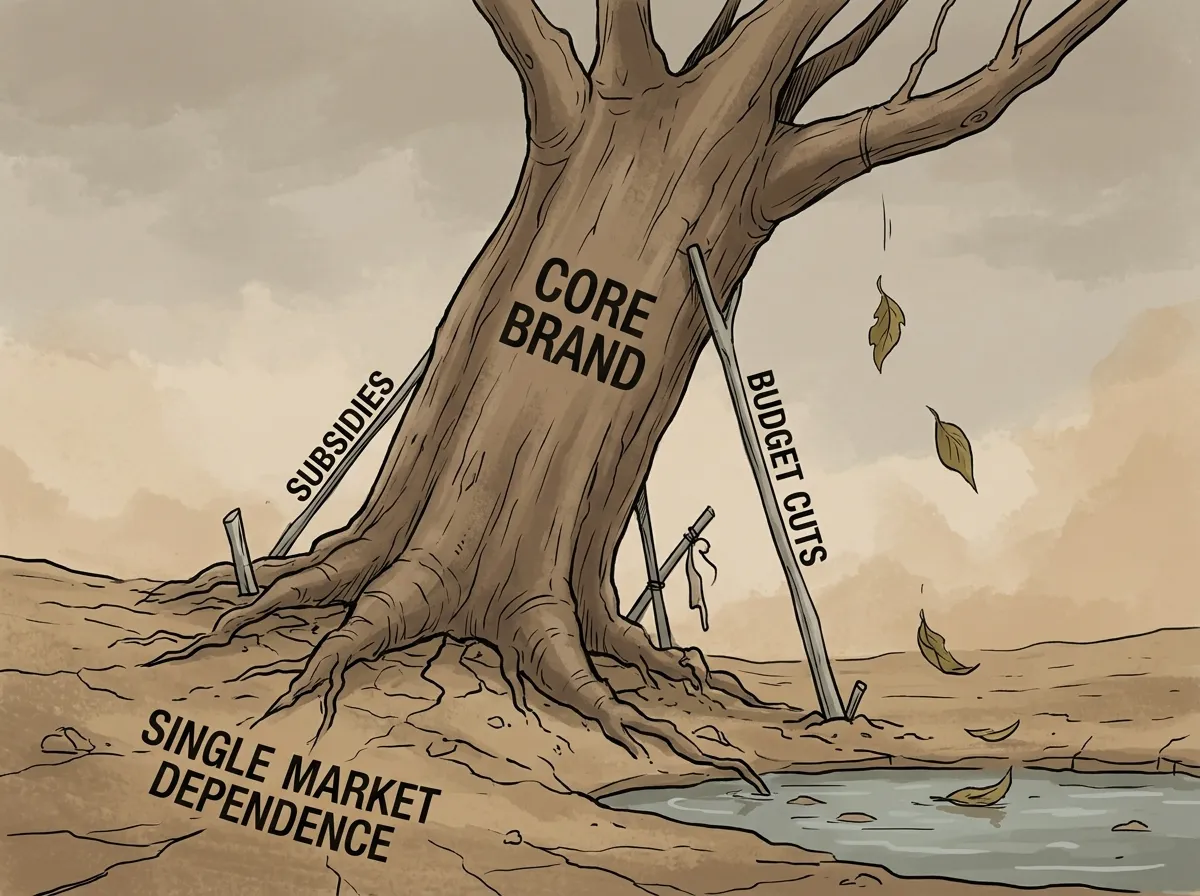
A Brand Diversification Strategy involves expanding into new products, services, markets, or business areas. Diversification can create additional revenue opportunities and reduce reliance on a single market or product category.
However, diversification can also create complexity. A new offering should make sense for the brand and provide a clear reason for customers to consider it.
There should be some logical connection between the existing brand and the new opportunity. This connection may come from shared customers, complementary products, existing capabilities, technology, expertise, or a similar value proposition.
For example, a company known for a particular service may expand into a complementary service that solves another customer problem. This can allow the business to use existing customer relationships while creating an additional source of value.
Diversification should therefore be considered in terms of strategic fit rather than simply the number of new products or markets a company can add.
New Market Entry Strategy and Positioning
A New Market Entry Strategy determines how a brand will introduce itself to a market where it does not yet have a strong presence. Market entry can take different forms depending on the business model and available resources.
A company might enter independently, work with local partners, use distributors, form strategic relationships, launch through digital channels, or acquire an existing business.
Positioning is particularly important during market entry. New customers need to understand what the brand offers, who it serves, and why it is relevant to them.
Marketing communication should address the specific needs of the new audience rather than assuming that existing messaging will automatically work everywhere.
Digital channels can provide valuable opportunities for testing market interest before making larger investments. Search, social media, content marketing, email, advertising, and other channels can help businesses learn how new audiences respond to the brand.
Brand Scaling Strategy and Operational Growth
A Brand Scaling Strategy focuses on growing the brand while maintaining operational quality and customer experience.
Scaling is different from simply becoming larger. As customer numbers increase, the company needs systems that can support greater demand without creating significant declines in quality.
This can involve improving customer support, developing repeatable processes, investing in technology, strengthening supply chains, hiring additional employees, and establishing clearer internal responsibilities.
Marketing also needs to scale effectively. A campaign that works for a small customer base may require different systems when the audience becomes significantly larger.
Brand consistency becomes increasingly important during this stage. More employees, partners, agencies, and regional teams can mean more people are communicating on behalf of the brand.
A clear brand framework can help ensure that expansion does not result in fragmented messaging or inconsistent customer experiences.
Identifying Brand Growth Opportunities
Brand Growth Opportunities can emerge from many sources. Customer feedback may reveal an unmet need, while market research may identify a growing customer segment. Changes in technology can create new distribution channels, while geographic trends may reveal opportunities for expansion.
Existing customers can also provide valuable insights. Businesses can analyze what customers purchase, what additional services they request, and which problems remain unresolved.
Content and digital marketing data can provide another source of information. Search behavior, website traffic, engagement patterns, and conversion data can help identify topics and products that attract interest.
Businesses can also look at partnerships. Collaborating with another organization may provide access to customers, expertise, distribution, or technology that would otherwise take significant time to develop independently.
Not every opportunity needs to become an expansion project. Opportunities should be assessed based on strategic fit, customer value, operational feasibility, investment requirements, and long-term potential.
Global Brand Expansion Strategy
A Global Brand Expansion Strategy involves taking a brand into international markets. Global expansion introduces additional considerations because customers, regulations, cultures, languages, currencies, and competitive environments can vary significantly between countries.
A brand that succeeds domestically may need to adapt its communication and operations for international audiences. Translation alone may not be sufficient because messaging, imagery, customer expectations, purchasing behavior, and cultural context can differ.
Businesses should research each target market individually while maintaining a recognizable global identity.
Legal and regulatory considerations are also important. Companies may need to understand local requirements related to advertising, consumer protection, data privacy, taxation, employment, product standards, and other areas.
Global expansion can therefore require collaboration between marketing, legal, operations, finance, technology, and customer service teams.
The brand should remain recognizable while respecting the expectations and requirements of the markets it enters.
Building Customer Engagement During Expansion
Customer engagement becomes particularly important when a brand enters a new market. New customers may have limited awareness of the company, meaning the brand needs to establish familiarity and credibility over time.
Content marketing, social media, email communication, community engagement, events, partnerships, and other channels can help introduce the brand to new audiences.
Interactive approaches can also increase engagement when they fit the brand and audience. For example, Gamified Branding Strategies can help businesses explore ways of making brand interactions more engaging while supporting customer relationships.
The right approach depends on the target audience. Expansion should not be driven by trends alone. Customer preferences and brand positioning should determine which engagement methods are appropriate.
Protecting Brand Reputation During Expansion
Expansion can increase the number of customers, employees, partners, markets, and public interactions associated with a brand. As a result, reputation management becomes increasingly important.
A company entering a new market needs to understand how customers perceive it and how quickly concerns can spread through digital channels.
Consistent customer service, transparent communication, reliable products, and responsible business practices can contribute to a stronger reputation.
Reputation management should also be considered when entering markets where the brand has limited recognition. New customers may rely heavily on reviews, online information, media coverage, social platforms, and recommendations when deciding whether to trust an unfamiliar company.
Businesses can therefore integrate Business Reputation Management into their broader expansion planning. Reputation considerations should be part of the growth process rather than treated only as a response to negative attention.
Measuring Brand Expansion Performance
Brand expansion should be evaluated using metrics that reflect the specific goals of the expansion. These may include brand awareness, website traffic, customer acquisition, sales, market share, engagement, repeat purchases, customer retention, and other relevant measures.
Early-stage expansion may focus more heavily on awareness and customer engagement because revenue can take time to develop. More established markets may place greater emphasis on sales, retention, profitability, or market share.
Businesses should also compare results with the original objectives of the expansion. If the goal was to reach a new customer segment, for example, the organization should assess whether the new audience is actually engaging with the brand.
Customer feedback is another important source of information. Quantitative metrics show what is happening, while customer feedback can help explain why.
Regular evaluation allows businesses to identify what needs to be adjusted as the expansion develops.
Creating Sustainable Brand Expansion

Sustainable expansion requires balance. Businesses need to pursue growth opportunities while protecting the qualities that made the brand successful in the first place.
Strong customer relationships, consistent branding, reliable operations, appropriate investment, and market understanding can all contribute to sustainable growth.
Expansion should also be treated as an ongoing process rather than a single launch. Markets change, customer expectations evolve, competitors respond, and new technologies create additional opportunities.
A business that continuously monitors its markets and customers can make more informed decisions about where to expand next.
The strongest expansion strategies are therefore connected to the broader identity and purpose of the business. Growth becomes more sustainable when new markets and products strengthen the brand rather than pulling it in unrelated directions.
Conclusion
A well-developed Brand Expansion Strategy can help businesses discover new markets, reach additional customers, diversify opportunities, and build a stronger long-term presence. From Brand Growth Strategy and Brand Expansion Planning to Market Expansion Strategy, New Market Entry Strategy, and Brand Scaling Strategy, each component contributes to the wider expansion process.
Successful expansion requires more than identifying a promising market. Businesses also need to understand customer needs, maintain brand consistency, develop appropriate operations, manage reputation, and measure results.
Whether expansion takes place in a new city, customer segment, product category, or international market, the underlying principle remains the same: growth should create meaningful value while protecting the trust and identity associated with the brand.
By combining research, customer understanding, strong positioning, operational readiness, and continuous performance measurement, businesses can create a foundation for expansion that supports both immediate opportunities and long-term brand development.
Frequently Asked Questions
1. What is a Brand Expansion Strategy?
A Brand Expansion Strategy is a plan for growing a brand beyond its current market, audience, products, services, or geographic reach. It helps businesses identify expansion opportunities while considering customer needs, resources, competition, brand identity, and operational requirements.
2. Why is a Brand Growth Strategy important?
A Brand Growth Strategy provides a broader framework for increasing customer reach, market presence, awareness, and business opportunities. It can include market expansion, product development, diversification, partnerships, and other growth activities.
3. What is Brand Expansion Planning?
Brand Expansion Planning involves evaluating potential markets and determining whether a business has the resources, capabilities, positioning, and operational support needed to expand. It can also identify potential risks and resource requirements.
4. How does a Market Expansion Strategy work?
A Market Expansion Strategy identifies new markets where a company’s products or services may have potential demand. It considers customer needs, competition, market conditions, positioning, distribution, and the resources required to establish a presence.
5. What is a Brand Diversification Strategy?
A Brand Diversification Strategy involves expanding into new products, services, markets, or business areas. The new opportunity should ideally have a logical connection to the brand, its customers, capabilities, or existing value proposition.
6. What should a New Market Entry Strategy include?
A New Market Entry Strategy can consider the target audience, market demand, competition, positioning, distribution, pricing, partnerships, marketing channels, operational requirements, and resources needed to establish the brand in the new market.
7. How can businesses maintain brand consistency while expanding?
Businesses can maintain consistency through clear brand guidelines covering visual identity, messaging, tone, positioning, and customer communication. At the same time, appropriate local adaptation can help the brand remain relevant to different audiences.
8. What is a Brand Scaling Strategy?
A Brand Scaling Strategy focuses on growing a brand while maintaining customer experience, product or service quality, operational efficiency, and brand consistency. It often involves stronger processes, technology, staffing, and organizational systems.
9. How can a business identify Brand Growth Opportunities?
Businesses can identify growth opportunities through customer feedback, market research, search behavior, sales data, competitor analysis, emerging trends, partnerships, and changes in customer needs. Potential opportunities should then be assessed for strategic and operational fit.
10. What does Global Brand Expansion Strategy involve?
Global Brand Expansion Strategy involves introducing a brand into international markets while considering cultural differences, customer expectations, competition, regulations, language, pricing, distribution, and operational requirements. The brand can maintain a consistent core identity while adapting appropriately to individual markets.