
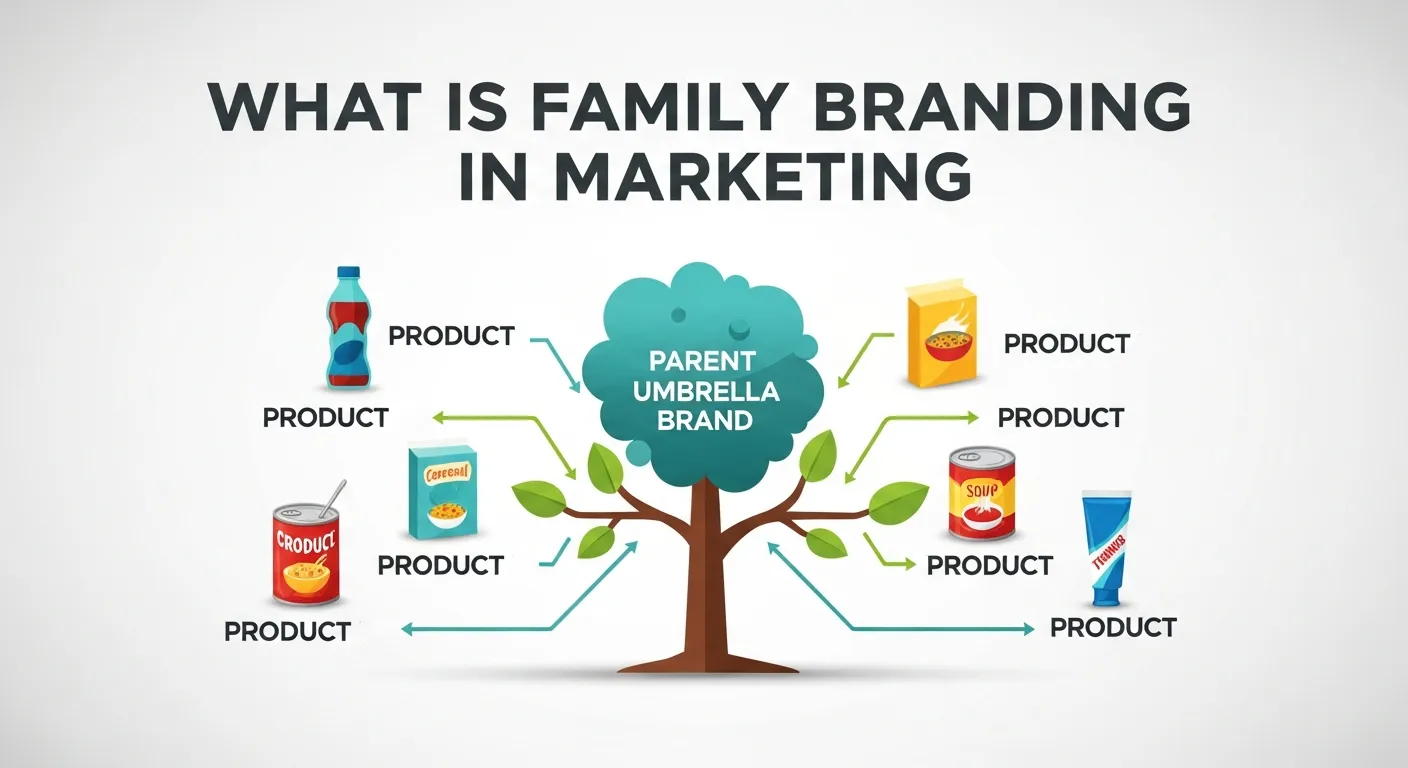
Family branding is a powerful strategy that builds trust and loyalty by uniting multiple products under one name. Let’s explore how it can transform your business.
This guide demystifies family branding in marketing, also known as umbrella branding. We will uncover its benefits, share real-world examples from successful family brands, and provide actionable solutions for common challenges. This is your blueprint for understanding and implementing a successful family branding strategy.
Understanding Family Branding
Family branding in marketing, often called umbrella branding, is a strategy where a company uses a single, established brand name for multiple related products. Instead of creating a unique identity for each new item, the business leverages the reputation and goodwill of its parent brand to promote the entire product line. This approach creates a cohesive identity, making it easier for consumers to recognize and trust new offerings.
Think of major players like Apple or Samsung. They place their iconic brand names on a diverse range of devices, including smartphones, tablets, and wearables. This consistency builds a powerful sense of trust and quality across their entire portfolio. Customers come to associate every product with the innovation and dependability of the parent brand. This is the core principle of family branding in marketing: creating a unified front that strengthens each individual product.
While family branding in marketing focuses on consistency across a product range, it differs from other strategies. For instance, luxury brand marketing often emphasizes exclusivity and prestige for individual high-end items, sometimes keeping them distinct to maintain an aura of rarity. In contrast, family branding in marketing aims for broad recognition and shared equity.
The primary goal is to create a positive feedback loop. A customer’s good experience with one product, like a Heinz ketchup bottle, instantly builds trust for other products under the same name, such as Heinz mustard or relish. This strategy is a cornerstone of CPG brand marketing (Consumer Packaged Goods), where brands like Procter & Gamble or Unilever manage vast portfolios.
Effective family branding in marketing requires a deep understanding of brand architecture. This involves structuring brands and sub-brands in a way that is clear to the consumer and beneficial for the company. Should all products carry the exact same name, or should there be sub-brands that still clearly link back to the parent? These are critical questions in developing a brand strategy framework that supports family branding.
The Fundamental Elements of Family Branding
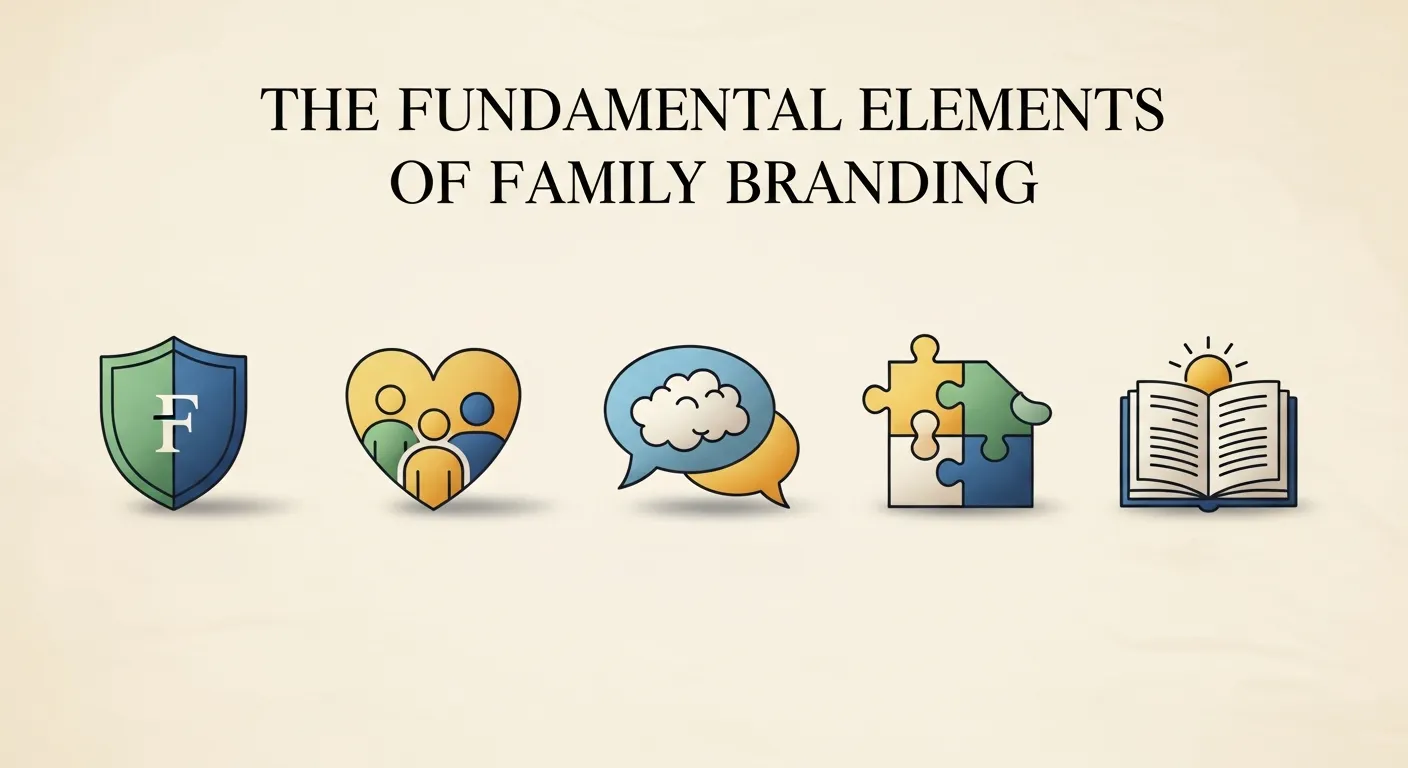
To successfully implement family branding in marketing, you need to master several core concepts. These elements work together to create a strong, unified brand presence that resonates with consumers and provides a competitive advantage.
1. Unified Brand Messaging
This is the bedrock of family branding in marketing. All marketing efforts, from advertising campaigns to social media posts, must align with a common message and a consistent set of values. This ensures coherence across all products. The brand voice, tone, and visual identity should be the same whether you are promoting a flagship product or a new extension. This consistency is crucial for building brand consistency and reinforcing the brand’s core promise in the consumer’s mind.
A unified message prevents customer confusion and solidifies the brand personality in marketing. If one product is marketed as “fun and youthful” while another is “serious and professional” under the same family brand, it creates a jarring disconnect that weakens brand perception in marketing.
2. Cross-Product Reputation Transfer
This is the synergetic effect at the heart of family branding in marketing. The positive reputation of one successful product automatically enhances the perceived quality of other products in the same brand family. This is sometimes called the “halo effect.” When a consumer trusts your brand because of one great product, they are more willing to try another, assuming it will meet the same standard of quality.
This element is particularly powerful for brand extension marketing. Launching a new product under an established family brand is significantly easier because it doesn’t start from zero. It inherits the trust and reputation built by its sibling products. This is a key reason why family branding in marketing accelerates product adoption.
3. Centralized Brand Equity Building
With family branding in marketing, investment is focused on strengthening a single parent brand rather than being diluted across multiple, disparate brands. Every dollar spent on marketing contributes to the overall brand equity in marketing of the family brand. This concentrated effort builds a much stronger and more valuable brand over time.
Instead of funding separate campaigns for each product, the budget can be used to elevate the parent brand’s status, which in turn lifts all products under its umbrella. This strategic focus is a core tenet of effective brand marketing and is often detailed in a comprehensive brand strategy guide. It ensures that every marketing action contributes to a single, powerful asset: the family brand itself. This approach simplifies the brand marketing strategy and often leads to a higher return on investment.
Advantages of Family Branding in Marketing
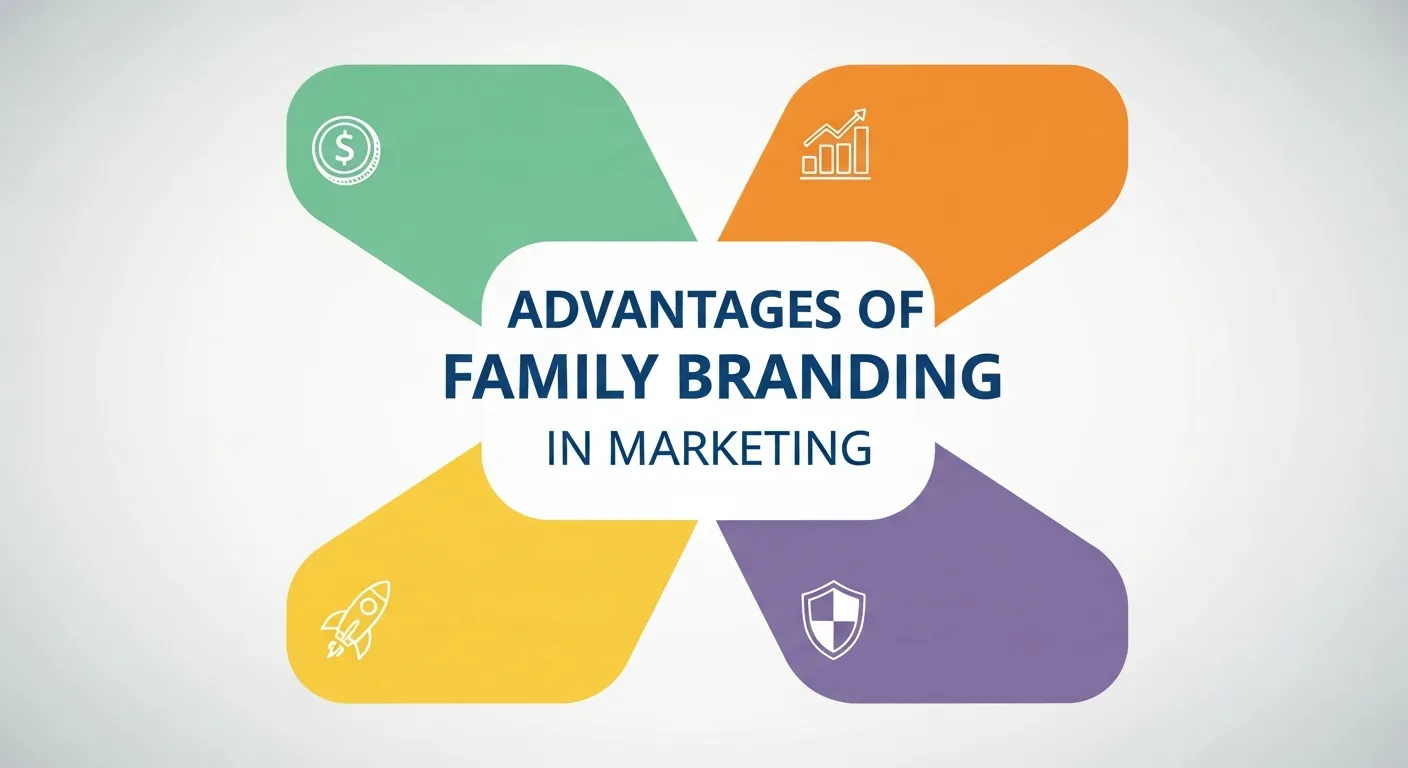
Adopting a family branding in marketing strategy offers numerous benefits, ranging from significant cost savings to deeper consumer trust. Understanding these advantages can help businesses decide if this approach aligns with their long-term goals.
1. Enhanced Brand Recognition and Trust
One of the most significant benefits is immediate brand awareness. When all products share a name and visual identity, consumers can easily recognize them on crowded store shelves or in online marketplaces. This familiarity breeds trust. A shopper who regularly buys and loves a product from a specific brand family is far more likely to try a new product from that same family.
For example, a consumer who trusts Dove soap for its gentle formula is predisposed to trust Dove deodorant, shampoo, and body wash. This automatic trust transfer is a powerful asset that individual brands must spend years and millions of dollars to build. Family branding in marketing provides a shortcut to that trust.
2. Significant Cost Efficiency
From a financial perspective, family branding in marketing is incredibly efficient. Marketing and advertising costs are consolidated. Instead of creating, launching, and sustaining separate campaigns for dozens of individual products, a company can run a single, powerful campaign that promotes the entire brand family.
This consolidation applies to:
- Advertising: A single TV spot or digital ad can showcase multiple products, reinforcing the family connection.
- Packaging: Design costs are reduced as templates and core visual elements are shared across the product line.
- Promotional Materials: Brochures, point-of-sale displays, and other materials can be produced more economically.
This efficiency allows companies to allocate their marketing budget toward strengthening the core brand, which, as mentioned, elevates the entire product portfolio.
3. Accelerated and Less Risky Product Launches
Launching a new product is notoriously risky and expensive. However, family branding in marketing dramatically reduces both the risk and the time to market. A new product launched under a trusted family brand doesn’t need to build credibility from scratch. It instantly leverages the established trust and distribution channels of the parent brand.
Companies like Nestlé or Kraft can introduce new food products with relative ease because consumers already know and trust the parent brand. They are more willing to try a “New!” product from a familiar family than from a completely unknown entity. This accelerates customer adoption and reduces the likelihood of a costly product launch failure. This is a key component of a successful brand extension marketing plan.
4. Powerful Synergy Between Products
Family branding in marketing creates a synergistic ecosystem where products support and promote each other. A customer who loves their iPhone is more likely to buy an Apple Watch, AirPods, and a MacBook. The seamless integration and shared design language encourage customers to stay within the brand’s ecosystem.
This synergy fosters deep customer loyalty and increases the lifetime value of each customer. It encourages repeat purchases across different categories, transforming a one-time buyer into a lifelong brand advocate. This is a critical goal of consumer brand marketing.
5. Stronger Competitive Edge
In oversaturated markets, a clear and unified brand identity cuts through the noise. Family branding in marketing simplifies the consumer’s choice. Instead of having to evaluate dozens of unknown brands, a consumer can gravitate toward the one they know and trust. This mental shortcut is a powerful competitive advantage.
A strong family brand is easier for customers to remember, resonate with, and connect with on an emotional level. This emotional marketing aspect builds a moat around the brand that competitors find difficult to penetrate.
Real-World Examples of Successful Family Branding
To truly grasp the power of family branding in marketing, it’s best to see it in action. Here’s a closer look at some industry titans that have masterfully implemented this strategy.
Apple
Apple is perhaps the quintessential example of family branding in marketing. Every product, from the iPhone and iPad to the MacBook and Apple Watch, proudly bears the simple, powerful Apple name and logo. The brand has cultivated an identity synonymous with innovation, minimalist design, and premium quality.
- Unified Experience: The products are designed to work together seamlessly within a single ecosystem, reinforcing the family concept.
- Trust Transfer: The immense loyalty commanded by the iPhone creates a halo effect that drives sales for every other product. A customer trusts that a new Apple product will deliver the same user-friendly experience they have come to expect.
- Brand Equity: Apple’s brand equity in marketing is astronomical, allowing it to command premium prices and maintain a devoted following.
Nike
Nike’s “Just Do It” slogan and iconic “swoosh” logo serve as the umbrella for a vast range of products, from running shoes and athletic apparel to sports equipment. The family branding in marketing strategy unites everything under the theme of athletic achievement and determination.
- Consistent Message: Whether selling a basketball or a pair of sneakers, Nike’s message is about empowering athletes to perform their best.
- Archetype Alignment: The brand consistently embodies the “Hero” archetype, which resonates across all its product categories and reinforces its brand personality in marketing.
- Sub-Branding: Nike effectively uses sub-brands like “Air Jordan” that have their own identity but are still clearly part of the Nike family, showcasing a sophisticated brand architecture.
Unilever
Unilever provides a fascinating case study in hybrid family branding in marketing. While many of its products, like Dove, Axe, and Knorr, operate as distinct sub-brands, the subtle Unilever logo on the packaging acts as a corporate endorsement.
- Corporate Endorsement Model: This “house of brands” approach allows individual products to have unique personalities while still benefiting from the parent company’s reputation for quality and sustainability.
- Building Trust: The Unilever logo signals to consumers that the product is backed by a large, reputable global company, which can be a deciding factor in a purchase. This is a nuanced but powerful form of family branding in marketing.
Sony
From PlayStation gaming consoles and Bravia TVs to professional cameras and high-fidelity audio equipment, Sony’s family branding in marketing is built on a reputation for cutting-edge technology and entertainment.
- Reputation for Innovation: The Sony name is a promise of quality engineering and innovation, a promise that extends across its diverse product lines.
- Market Domination: By leveraging its brand across multiple high-growth sectors, Sony has established itself as a leader in both consumer and professional electronics. The brand is a seal of quality that consumers and professionals alike have come to trust.
These companies demonstrate that when executed correctly, family branding in marketing can build a memorable and trustworthy empire that spans continents and product categories.
Challenges and Solutions in Family Branding
Despite its many advantages, family branding in marketing is not without its risks. A single misstep can have far-reaching consequences. Understanding these potential pitfalls and planning accordingly is essential for protecting your brand.
Challenge 1: Reputation Risk and Negative Spillover
This is the most significant downside of family branding in marketing. Because all products are bundled under one name, a problem with a single product can tarnish the entire brand family. A product recall, a safety issue, or even a poorly received new item can create a negative “spillover” effect, damaging the reputation of all other products.
- Solution: Rigorous Quality Control and Crisis Management
-
- Quality Assurance: Implement stringent quality control measures across all product lines. The brand’s reputation is only as strong as its weakest product.
- Proactive Crisis Management: Have a brand crisis management plan in place. Address any issues quickly, transparently, and decisively. A swift and honest response can mitigate damage and sometimes even strengthen customer trust. Negative content management and online PR services are crucial here.
Challenge 2: Brand Dilution
Stretching a brand name across too many disparate or unrelated product categories can dilute its core meaning and confuse customers. If a brand known for high-performance sports cars (a “Ruler” or “Hero” archetype) suddenly launches a line of budget-friendly diapers, it can weaken the brand’s original positioning.
- Solution: Maintain Brand Coherence and Alignment
-
- Strategic Extensions: Ensure that all new products align with the core brand’s values, promise, and archetype. A brand audit can help determine if a potential extension is a good fit.
- Clear Brand Architecture: Use sub-brands for products that venture further from the core. This allows for diversification without diluting the parent brand. A clear brand strategy road map is essential.
Challenge 3: Inflexibility and Niche Market Failure
A single family brand may not resonate with all target audiences or fit within specific market sectors. A brand identity that works well for the mass market may fail in a niche or luxury segment that demands a more specialized or exclusive appeal. Family branding in marketing can sometimes feel too generic for these audiences.
- Solution: Thorough Market Research
-
- Audience Segmentation: Conduct in-depth market research to ensure that the family brand identity is appropriate for each target segment.
- Consider a Hybrid Approach: For certain niche markets, it may be better to launch a separate, individual brand. A good brand strategy consulting guide can help make this determination.
Challenge 4: Scaling Globally
Taking a family brand international introduces a new layer of complexity, including cultural differences, language barriers, and legal constraints. A brand name or message that works in one country might be inappropriate or even offensive in another.
- Solution: Global Strategy with Local Adaptation
-
- Cultural Branding: Tailor the marketing mix—messaging, imagery, and promotions—to fit the cultural nuances of each region. This is known as “glocalization.”
- Legal Diligence: Work with local experts to ensure the brand name, trademarks, and marketing practices comply with all regional laws.
By anticipating these challenges and implementing proactive solutions, businesses can navigate the complexities of family branding in marketing and build a more resilient and successful brand.
How to Evaluate the Success of Your Family Branding Campaign
Implementing a family branding in marketing strategy is only half the battle. To ensure it’s working effectively, you need to continuously measure its impact. Tracking the right metrics will provide insight into what’s working and where adjustments are needed.
|
Metric |
What it Measures |
How to Track It |
|---|---|---|
|
Brand Equity |
The overall value and perception of the family brand. |
Customer surveys (brand preference, perceived quality), market valuation analysis, and tools like YouGov BrandIndex. |
|
Brand Awareness |
The extent to which the target audience recognizes and recalls the brand. |
Brand tracking surveys, social listening (mentions, share of voice), and website analytics (direct traffic). |
|
Sales Lift Across Categories |
The synergistic effect of the family brand on overall revenue. |
Analyze sales data to see if promotions for one product category lead to increased sales in others. Track cross-selling and up-selling rates. |
|
Customer Lifetime Value (CLV) |
The total revenue a business can expect from a single customer account. |
CRM data analysis. A rising CLV suggests customers are buying more products across the family over time. |
|
Marketing Cost Per Acquisition |
The cost-efficiency of your marketing efforts. |
Divide total marketing spend by the number of new customers acquired. Family branding in marketing should lower this metric over time. |
In-Depth Metrics for Deeper Analysis:
- Customer Retention and Loyalty Rates: Use your CRM to determine if customers are making repeat purchases within your brand’s suite of products. High retention rates are a strong indicator of successful family branding in marketing.
- Net Promoter Score (NPS): This measures customer loyalty by asking how likely they are to recommend your brand to others. A high NPS for the family brand as a whole is a key sign of success.
- Engagement Metrics: Monitor the performance of your branding campaigns. Track ad performance, click-through rates, social media engagement (likes, shares, comments), and website engagement (time on site, bounce rate). These metrics, available through tools like Google Analytics, gauge how effectively your messaging is resonating.
- Search Volume Trends: Use tools from sources like SEMrush or Ahrefs to track the search volume for your brand name over time. A steady increase indicates growing brand awareness.
By regularly monitoring this mix of financial, brand, and customer metrics, you can get a holistic view of your family branding in marketing performance and make data-driven decisions to optimize your strategy.
The Future of Family Branding in Marketing
The principles of family branding in marketing are timeless, but its application is continually evolving with consumer trends and technology. To remain effective, brands must be agile while maintaining their core consistency.
Personalization at Scale
The future of family branding in marketing lies in delivering personalized experiences under a unified brand umbrella. AI and big data are enabling companies to understand customer preferences on a granular level. A brand like Nike can use its app data to send a runner personalized training tips and product recommendations, all while reinforcing the overarching Nike brand promise. This creates a deeply personal connection within a massive brand family.
The Rise of Ethical and Purpose-Driven Branding
Modern consumers, particularly Millennials and Gen Z, increasingly choose brands that align with their personal values. A family brand’s reputation is now tied not just to product quality, but also to its ethical standards, sustainability practices, and social impact. The future of successful family branding in marketing will require a genuine and transparent commitment to a brand purpose that extends across all products and operations. This is a key part of ethical branding.
The Omnichannel Experience
The line between digital and physical shopping has blurred. Family branding in marketing must now provide a seamless and consistent experience across every touchpoint, from the mobile app and website to the physical retail store. The brand voice, visual identity, and customer service quality must be identical whether a customer is interacting with a chatbot, a social media manager, or an in-store employee.
Whether you’re a multinational conglomerate or a nimble startup, family branding in marketing remains a potent strategy for unifying your product lines, achieving cost efficiencies, and building enduring customer loyalty. By adopting best practices and proactively addressing challenges, your business can unlock the immense long-term potential of this powerful approach.
Conclusion
Family branding in marketing offers a strategic path to building a powerful, recognizable, and trusted presence in the marketplace. By uniting multiple products under a single, coherent brand identity, companies can achieve significant cost savings, accelerate product launches, and foster deep, lasting customer loyalty. While the strategy carries risks like brand dilution and reputational spillover, these can be mitigated through rigorous quality control, strategic alignment, and proactive crisis management.
Frequently Asked Questions (FAQs)
1. What is the difference between family branding and individual branding?
Family branding in marketing (umbrella branding) uses one brand name for multiple products (e.g., Apple). Individual branding gives each product its own unique brand name (e.g., Procter & Gamble’s Tide, Pampers, and Gillette). The choice depends on the company’s brand architecture and strategy.
2. Is family branding suitable for a small business?
Yes, it can be highly effective. For a small business with a limited budget, family branding in marketing consolidates marketing spend and helps build brand awareness much faster than trying to support multiple individual brands.
3. Can a service-based business use family branding?
Absolutely. A consulting firm might offer “Strategy Consulting,” “Marketing Consulting,” and “HR Consulting” all under the same family brand name. This signals a consistent level of quality and expertise across all service lines.
4. What is brand extension, and how does it relate to family branding?
Brand extension marketing is the act of using an established brand name to launch a new product in a different category. It is the primary tactic used within a family branding in marketing strategy. For example, when Honda (known for cars) launched lawnmowers, that was a brand extension under its family brand.
5. What is brand dilution and how can I avoid it?
Brand dilution occurs when a brand is stretched too far, weakening its meaning. Avoid it by ensuring all new products are logically connected to the parent brand’s core promise and expertise. Don’t launch a product that contradicts your brand personality in marketing.
6. Does family branding mean all my products must be identical?
No. Products can have different features and target slightly different segments. The key is that they share a consistent level of quality and align with the core values of the family brand. A unified brand voice and visual system are what tie them together.
7. What is the “halo effect” in family branding?
The halo effect is the cognitive bias where a consumer’s positive feelings about one product positively influence their perception of all other products in the same brand family. This is a primary psychological driver behind the success of family branding in marketing.
8. How does family branding affect my brand’s SEO strategy?
It simplifies it. You can focus your SEO services and link-building efforts on a single, powerful domain. The authority built for the parent brand benefits all product pages on the site, improving their search rankings. You can learn more about this on sites like Backlinko.
9. What if one product in the family fails?
This is the biggest risk. You must have a strong crisis management services plan. Be prepared to address the issue transparently and, if necessary, distance the failed product from the rest of the family to protect the parent brand’s reputation.
10. Can a company use both family branding and individual branding?
Yes. This is called a hybrid strategy. A company like Unilever uses the corporate brand as a subtle endorsement (family branding) while allowing products like Dove to have their own strong individual identities. This complex approach is detailed in many brand strategy consulting guides.

[…] broader branding concepts can also improve mobile planning. For example, What is Family Branding in Marketing explains how brands can create relationships among multiple products or offerings. This type of […]