

Brand loyalty helps businesses develop lasting customer relationships that support repeat purchases, retention, engagement, and advocacy. By combining a strong brand loyalty strategy with customer loyalty programs, personalized marketing, trustworthy experiences, CRM, and effective retention initiatives, businesses can create deeper connections with customers and build sustainable long-term growth.
Brand loyalty is one of the most valuable assets a business can develop. Customers who feel connected to a brand are more likely to continue purchasing from it, recommend it to others, engage with its content, and remain loyal even when competing alternatives are available. While price, convenience, and product quality influence purchasing decisions, strong emotional connections and positive experiences can make customers choose the same brand repeatedly.
In competitive markets, attracting new customers can require significant time and marketing investment. Retaining existing customers can therefore become an important part of sustainable business growth. Brand loyalty helps businesses create relationships that extend beyond individual transactions and develop a customer base that supports the brand over time.
Modern customers also have more choices than ever. They can compare products, read reviews, switch providers, and discover new brands through social media and online communities. This makes loyalty increasingly dependent on trust, consistent experiences, relevant communication, and the overall value a brand provides.
Understanding Brand Loyalty
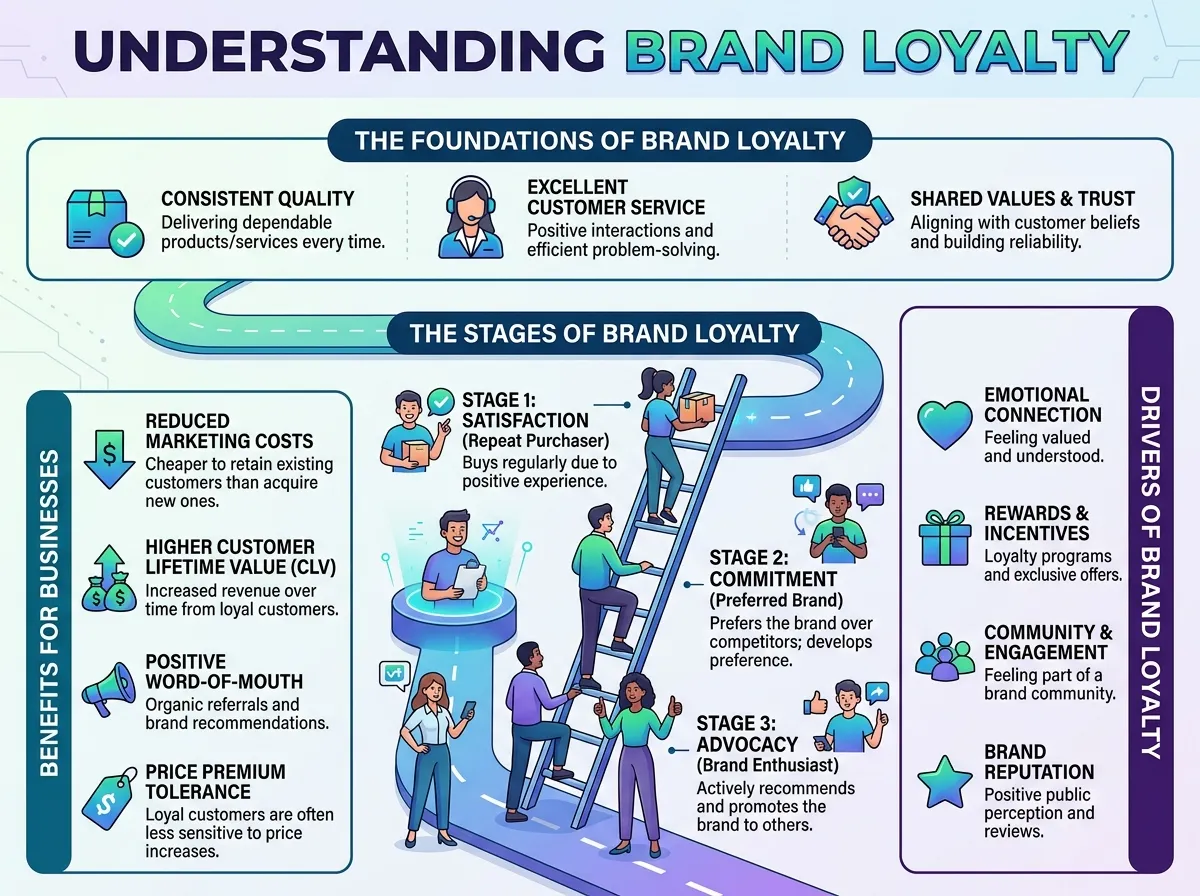
Brand loyalty describes a customer’s ongoing preference and commitment toward a particular brand. A loyal customer does not simply purchase a product once. They are more likely to return to the brand because they have developed positive associations with its products, services, values, or customer experience.
Loyalty can be practical, emotional, or a combination of both. Some customers remain loyal because a brand consistently delivers quality and convenience. Others develop an emotional connection based on shared values, community, identity, or memorable experiences.
Strong brand loyalty can influence purchasing behavior, customer retention, referrals, and advocacy. It can also reduce the likelihood that customers will immediately switch to competitors when another company offers a similar product or a temporary discount.
The Importance of a Brand Loyalty Strategy
A brand loyalty strategy provides a framework for strengthening relationships between a business and its customers. Rather than focusing exclusively on acquiring new buyers, the strategy considers how a company can create reasons for customers to remain engaged over time.
A successful strategy typically connects product quality, customer service, communication, personalization, rewards, brand values, and customer experience.
Businesses should also recognize that loyalty is not created through a single campaign. It develops through repeated positive interactions. Every customer touchpoint can influence loyalty, from the first website visit and purchase experience to customer support, follow-up communication, social media interactions, and future purchases.
Consistency is particularly important. If a company delivers excellent service one day but provides a frustrating experience later, customer confidence can decline. Strong loyalty therefore requires businesses to maintain quality throughout the customer journey.
Customer Loyalty Programs and Their Role
Customer loyalty programs are widely used to encourage repeat purchases and ongoing engagement. These programs can provide customers with rewards, exclusive offers, points, discounts, early access, personalized benefits, or special experiences.
However, an effective loyalty program should offer meaningful value rather than simply encouraging customers to collect points. Customers need to understand the benefits and feel that participation is worthwhile.
Modern loyalty programs can also go beyond discounts. Businesses can reward customers for referrals, reviews, social engagement, event participation, content interaction, or other valuable activities.
Personalization can make these programs even more effective. A customer may respond more positively to rewards related to their previous purchases or preferences than to generic offers.
The strongest programs complement the overall brand experience rather than functioning as a separate promotional system.
Customer Retention Strategy and Sustainable Growth
A customer retention strategy focuses on keeping existing customers engaged and reducing unnecessary customer loss. Retention and loyalty are closely connected, although they are not identical.
A customer may continue buying from a business because switching is inconvenient, while a loyal customer actively prefers that brand. The objective of retention is therefore not only to prevent customers from leaving but also to create stronger reasons for them to stay.
Businesses can strengthen retention through reliable products, responsive customer support, personalized experiences, useful communication, loyalty benefits, and ongoing improvements.
Customer feedback is also important. When businesses understand why customers leave or become less engaged, they can identify weaknesses in the customer experience and address them.
Retention becomes particularly valuable when customers have the potential to make repeat purchases or maintain long-term subscriptions.
Brand Loyalty Marketing
Brand loyalty marketing focuses on communication and campaigns designed to strengthen relationships with existing customers. Instead of constantly emphasizing acquisition, loyalty marketing recognizes the value of people who have already interacted with the brand.
Personalized email campaigns, exclusive content, customer appreciation campaigns, loyalty offers, community initiatives, and product updates can help maintain customer relationships.
The messaging should feel relevant rather than repetitive. Customers who regularly receive generic promotional messages may become disengaged. Communication that reflects customer interests, purchase history, preferences, and lifecycle stage can create a more meaningful experience.
Brand loyalty marketing can also highlight the identity and values of the company. Customers who feel aligned with a brand’s personality or mission may develop stronger emotional connections with it.
Customer Engagement Strategy and Emotional Connection
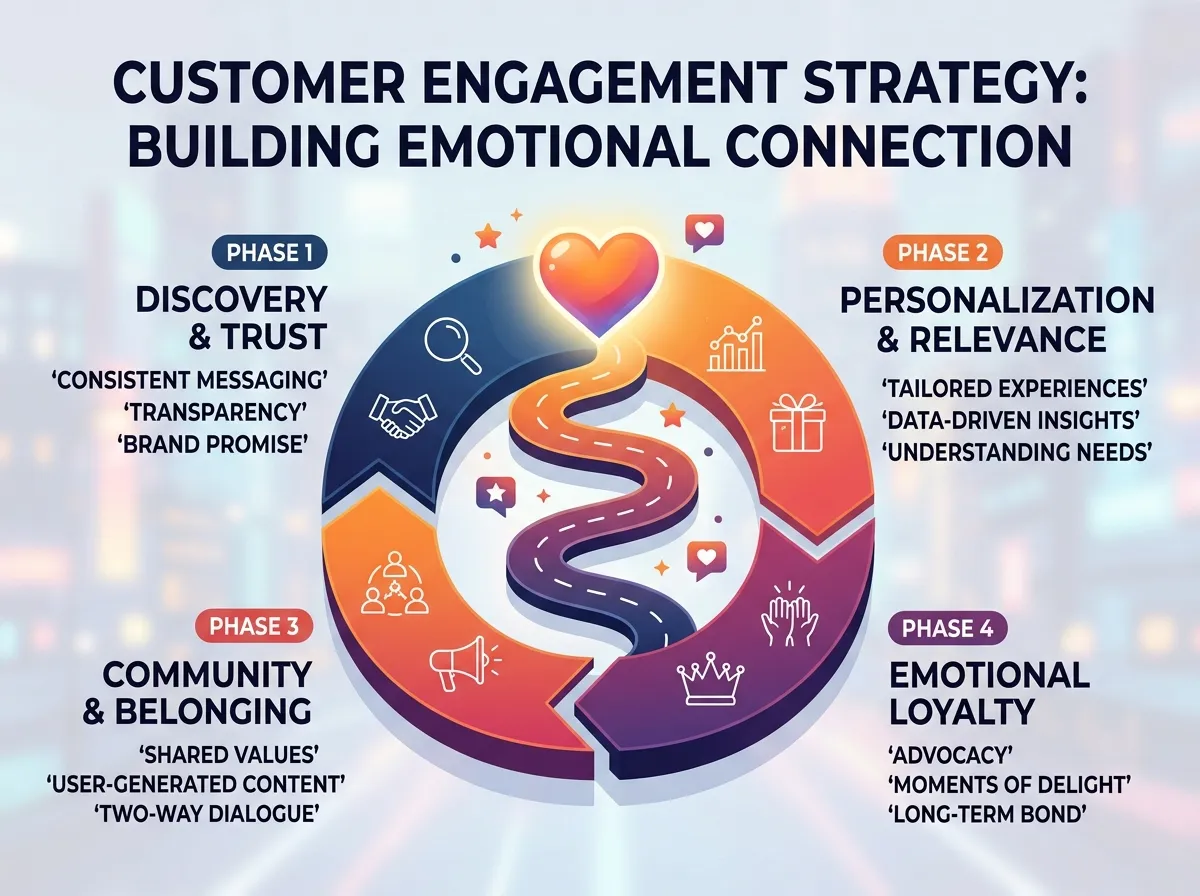
A customer engagement strategy helps brands maintain meaningful interactions with customers across different channels. Engagement can take place through websites, social media, email, mobile applications, communities, events, customer service, and content.
Engagement becomes more valuable when it provides customers with something useful. Educational content, helpful recommendations, entertaining experiences, interactive campaigns, and responsive conversations can create stronger relationships.
Emotional connection is another important element. Customers often remember how a brand made them feel, especially when the company responds thoughtfully during important moments.
A strong customer engagement strategy therefore goes beyond increasing clicks or impressions. It aims to create interactions that strengthen familiarity, trust, satisfaction, and long-term connection.
Brand Trust and Loyalty
Brand trust and loyalty are strongly connected. Customers are more likely to remain loyal when they believe a business will consistently deliver on its promises.
Trust can develop through product quality, transparent communication, reliable customer service, responsible business practices, accurate information, and consistent experiences.
A brand can lose trust quickly when it makes misleading claims, mishandles customer information, provides inconsistent service, or fails to address problems appropriately.
Transparency is particularly important in the digital environment. Customers can easily share both positive and negative experiences online. Businesses that communicate honestly and take responsibility when problems occur can often protect relationships more effectively than brands that ignore criticism.
Trust does not necessarily mean that customers expect perfection. Instead, they want confidence that the company will act responsibly and provide appropriate support when something goes wrong. Developing brand resilience strategies can help businesses prepare for challenges while protecting customer confidence and long-term brand relationships.
Customer Relationship Management and Loyalty
Customer relationship management plays an important role in understanding and developing customer relationships. CRM systems can help businesses organize customer information, track interactions, understand purchasing patterns, and manage communications.
When customer data is used responsibly, businesses can create more relevant experiences. For example, a company may recognize a customer’s previous interactions and provide more appropriate recommendations or support.
CRM also helps businesses understand different customer segments. New customers, repeat buyers, high-value customers, inactive customers, and loyal advocates may require different types of communication.
The purpose of CRM should not simply be collecting large amounts of information. Its real value comes from using relevant insights to improve customer experiences and strengthen relationships.
Customer Loyalty Initiatives
Customer loyalty initiatives can take many forms depending on the business model and audience. Exclusive experiences, personalized recommendations, early product access, community programs, referral rewards, special events, and customer appreciation campaigns can all contribute to loyalty.
Some businesses create communities where customers can interact with each other and the brand. These communities can strengthen belonging and encourage customers to become more involved with the company.
Customer recognition can also be powerful. Long-term customers may appreciate being acknowledged through special benefits, personalized communication, or exclusive access.
The most effective initiatives are aligned with what customers actually value. A reward that looks attractive from the company’s perspective may have little impact if customers do not find it useful.
Brand Advocacy Strategy
A brand advocacy strategy focuses on turning satisfied customers into active supporters of the brand. Loyal customers can become powerful advocates because their recommendations may feel more authentic to friends, colleagues, and online communities.
Advocacy can include referrals, reviews, testimonials, user-generated content, social media recommendations, community participation, and word-of-mouth conversations.
Customers are more likely to advocate for a company when they have experienced consistent value. This means advocacy should generally be viewed as an outcome of strong customer relationships rather than something that can be forced through promotional messaging.
Businesses can encourage advocacy by making it easy for satisfied customers to share experiences, participate in referral programs, provide feedback, or contribute content.
Recognition can further strengthen the relationship between a brand and its advocates.
Customer Retention Marketing and Personalization
Customer retention marketing focuses on maintaining relationships with existing customers through relevant and timely communication.
Personalization can play an important role in this process. Customers may respond differently depending on where they are in their relationship with a brand.
A new customer may need educational information and onboarding support, while an established customer may be more interested in advanced products, exclusive benefits, or relevant recommendations.
Inactive customers may require different communication designed to reintroduce value without overwhelming them with promotions.
Marketing automation can support these experiences by delivering appropriate messages based on customer behavior and lifecycle stages. However, automation should support relevance rather than replace genuine customer understanding.
The Role of Customer Experience in Brand Loyalty
Customer experience is one of the strongest foundations of brand loyalty. Customers evaluate more than the product itself. They also consider how easy it is to find information, make a purchase, receive support, solve problems, and interact with the company.
A seamless experience can strengthen positive perceptions of a brand. Conversely, unnecessary friction can damage loyalty even when the underlying product is good.
Businesses therefore need to consider the entire customer journey. Website usability, checkout processes, communication, delivery, customer support, returns, and post-purchase experiences can all influence loyalty.
Improving these experiences can create value that competitors may find difficult to replicate. For brands creating digital experiences, emerging technologies such as metaverse branding can also provide new ways to build immersive interactions when they align with customer expectations.
Measuring Brand Loyalty
Businesses need meaningful metrics to understand whether their loyalty efforts are producing results. Repeat purchase rate, customer retention rate, customer lifetime value, churn rate, referral activity, engagement, and loyalty program participation can provide useful insights.
Customer feedback and satisfaction measurements can add another layer of understanding. Businesses can use surveys, reviews, support interactions, and customer interviews to discover how customers perceive their experiences.
No single metric completely represents loyalty. A customer may purchase frequently but have little emotional connection to a brand, while another customer may purchase less often but actively recommend the company.
Combining behavioral and customer feedback data provides a more complete view. AI-powered brand analysis can also help businesses evaluate brand-related data and identify patterns that may support more informed decisions.
Brand Loyalty in the Digital Era
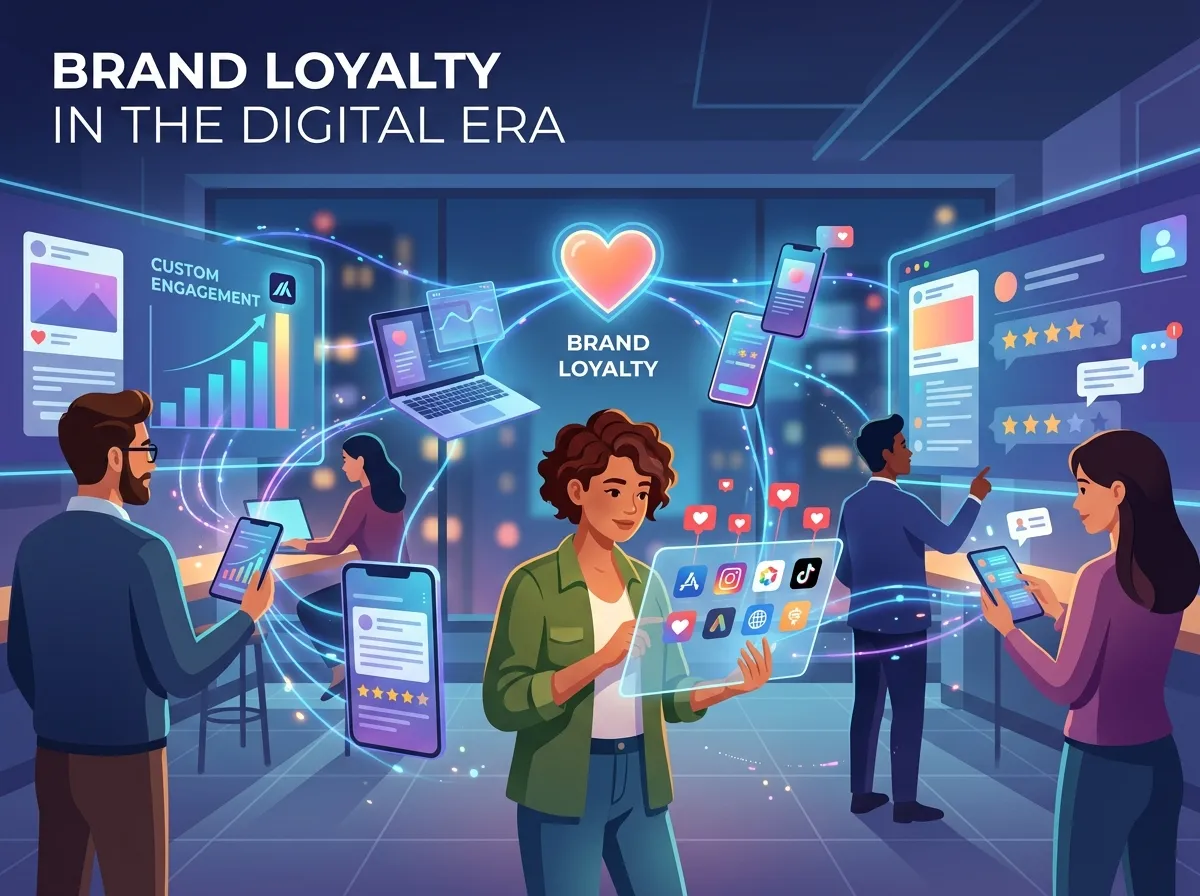
Digital channels have transformed how customers develop relationships with brands. Social media, online communities, email, mobile applications, review platforms, and personalized websites provide more opportunities for interaction.
At the same time, digital competition makes loyalty more difficult to maintain. Customers can discover alternatives quickly and compare brands with minimal effort.
Businesses therefore need to provide experiences that are consistent, useful, personalized, and trustworthy across digital touchpoints.
Social media can be especially valuable for community building. Rather than using every interaction as a sales opportunity, brands can use social platforms to educate, entertain, respond to customers, highlight customer stories, and demonstrate their personality. Understanding brand archetypes in marketing can also help businesses develop a recognizable personality and create more consistent communication across digital channels.
Long-Term Value of Brand Loyalty
The long-term value of brand loyalty extends beyond repeat purchases. Loyal customers can contribute to revenue stability, referrals, positive reviews, stronger brand reputation, and lower dependence on constant acquisition campaigns.
A loyal customer base can also provide valuable feedback. Customers who care about a brand may be more willing to explain what they like, what they dislike, and what they would like to see improved.
This creates a feedback loop in which stronger relationships lead to better insights, better experiences, and potentially even stronger loyalty.
Ultimately, loyalty is about creating a relationship where customers have compelling reasons to continue choosing a brand.
Conclusion
Brand loyalty is built through consistent value, trust, engagement, positive experiences, and meaningful customer relationships. Businesses that focus only on transactions may struggle to create lasting connections, while organizations that understand customer needs can develop relationships that extend well beyond individual purchases.
A strong brand loyalty strategy can combine customer loyalty programs, retention efforts, personalized marketing, customer engagement, CRM, advocacy, and customer-focused experiences. Each element can contribute to a stronger relationship between the customer and the brand.
In competitive markets, loyalty can become a powerful source of sustainable growth. When customers trust a company, enjoy its experiences, recognize its value, and feel connected to its identity, they are more likely to stay, return, recommend, and advocate for the brand.
Frequently Asked Questions
1. What is brand loyalty?
Brand loyalty is a customer’s ongoing preference and commitment to a particular brand, often demonstrated through repeat purchases, continued engagement, positive recommendations, and resistance to competing alternatives.
2. Why is brand loyalty important for businesses?
Brand loyalty can improve customer retention, encourage repeat purchases, generate referrals, strengthen brand reputation, and contribute to more sustainable long-term business growth.
3. What is a brand loyalty strategy?
A brand loyalty strategy is an approach businesses use to strengthen customer relationships through consistent experiences, trust, engagement, personalization, rewards, customer service, and relevant communication.
4. Do customer loyalty programs increase brand loyalty?
Customer loyalty programs can support brand loyalty when they provide meaningful and relevant benefits. However, long-term loyalty also depends on product quality, customer experience, trust, and overall brand value.
5. How does customer retention affect brand loyalty?
Customer retention and brand loyalty are closely related. Retention focuses on keeping customers, while loyalty reflects a customer’s stronger preference and commitment toward a particular brand.
6. How can businesses build brand trust?
Businesses can build brand trust through reliable products, transparent communication, consistent service, responsible data practices, accurate claims, and responsive handling of customer problems.
7. What is brand loyalty marketing?
Brand loyalty marketing focuses on maintaining and strengthening relationships with existing customers through personalized communication, exclusive benefits, valuable content, appreciation campaigns, and relevant experiences.
8. What is a brand advocacy strategy?
A brand advocacy strategy encourages satisfied customers to support and recommend a brand through referrals, reviews, testimonials, user-generated content, social sharing, and word-of-mouth.
9. How can businesses measure brand loyalty?
Brand loyalty can be evaluated using repeat purchase rates, retention rates, customer lifetime value, churn, referrals, engagement, loyalty program activity, reviews, and customer feedback.
10. What is the difference between customer retention and brand loyalty?
Customer retention means keeping customers from leaving, while brand loyalty represents a stronger preference or commitment that makes customers more likely to repeatedly choose, recommend, and advocate for a brand.




[…] foundation by investing in customer relationships and retention. For example, developing strong Brand Loyalty can help a growing company maintain customer trust while it expands into new […]