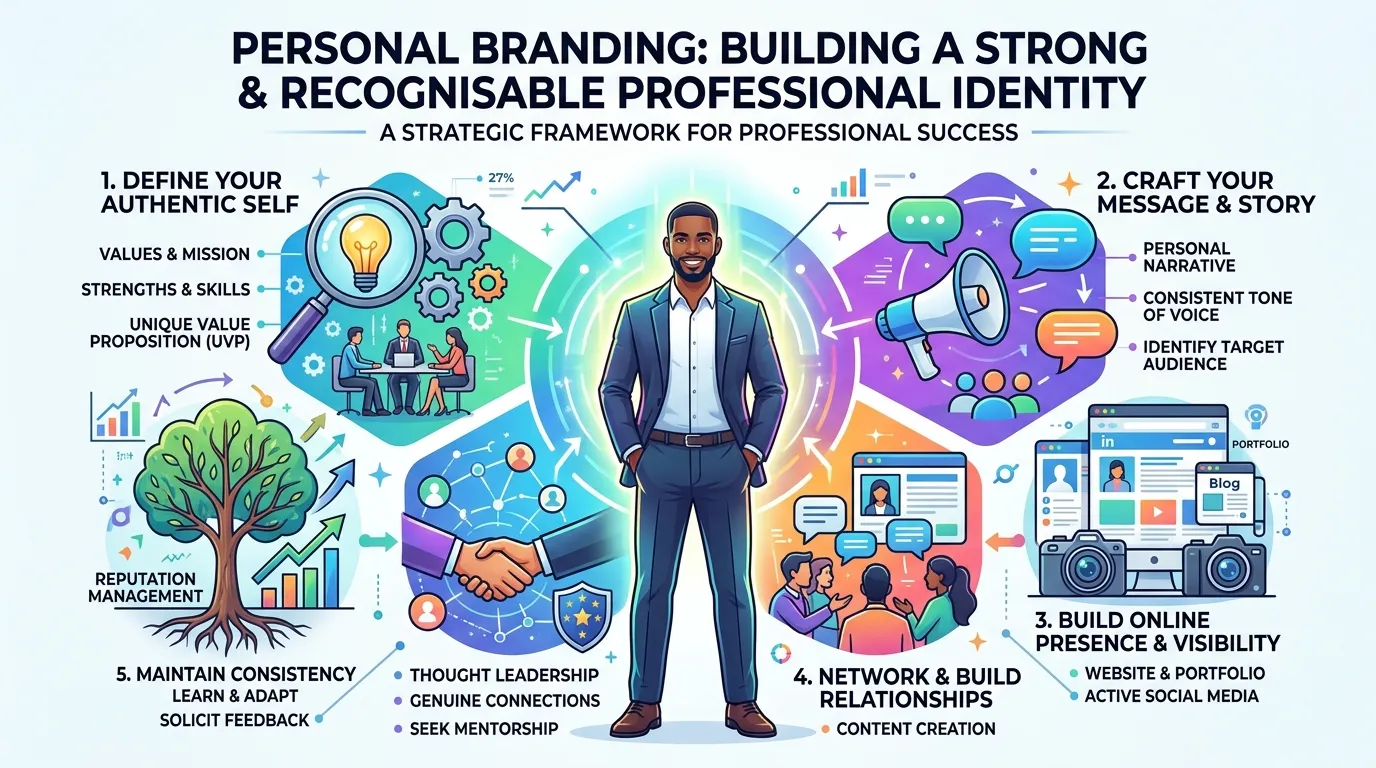
Personal branding helps individuals communicate their expertise, values, personality, and professional strengths to the right audience. A strong personal brand can improve credibility, increase visibility, build trust, and create new career or business opportunities.
What Is Personal Branding?
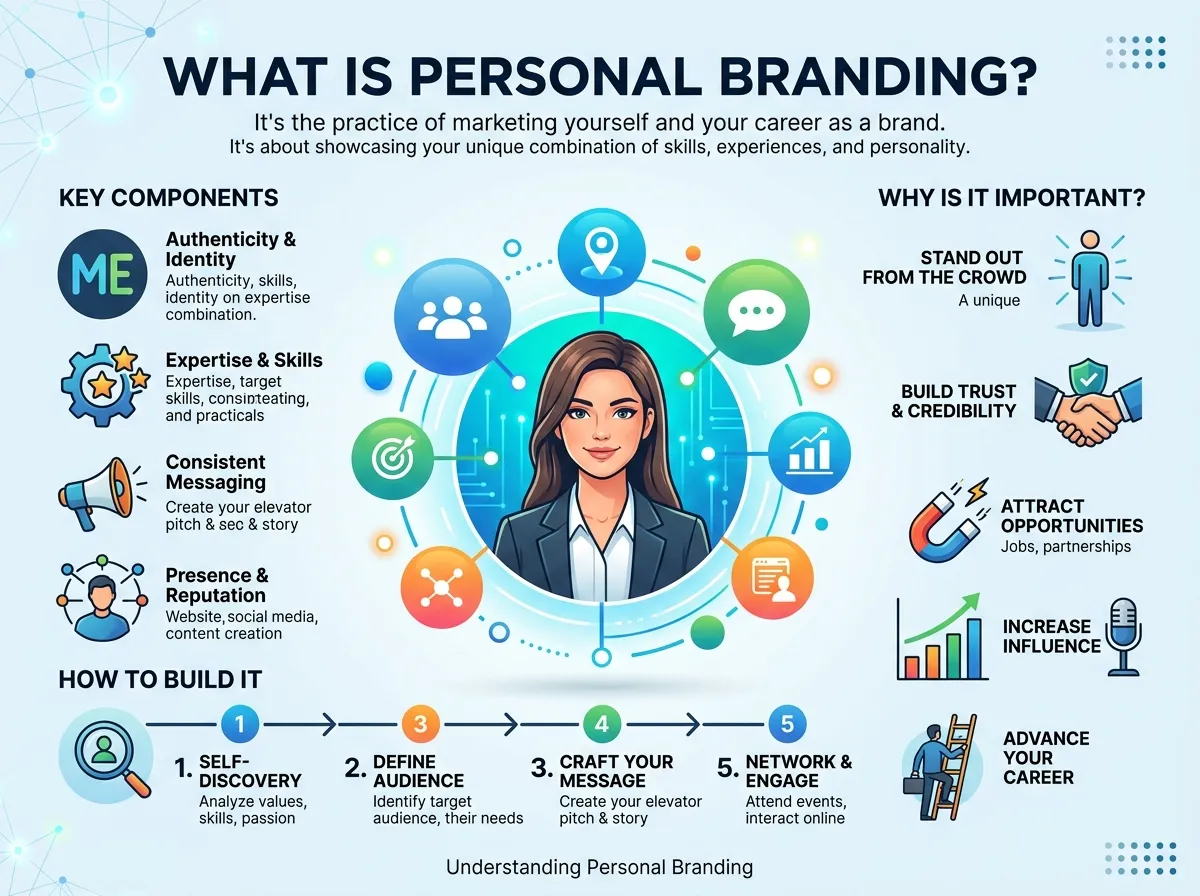
Personal branding is the process of intentionally shaping how people recognize and perceive you professionally or publicly. It combines your expertise, experience, personality, values, communication style, and reputation into a recognizable identity.
A personal brand is not simply a logo, professional photo, or social media profile. It is the overall impression people develop from your knowledge, content, communication, work, and interactions.
For example, a marketing professional may become known for practical SEO insights, while a technology consultant may build a reputation around explaining complex technical subjects in simple language.
The strongest personal brands are usually consistent and authentic. They give people a clear reason to remember you and understand what you can offer.
Why Personal Branding Matters
A strong personal brand can help you stand out in competitive professional environments. When many people offer similar skills or services, a recognizable reputation can make it easier for employers, customers, partners, and industry peers to understand your value.
Personal branding can also strengthen credibility. Consistently sharing useful knowledge demonstrates expertise over time and gives audiences opportunities to become familiar with your perspective.
For entrepreneurs, consultants, freelancers, creators, and professionals, personal branding can support networking, business development, career growth, and thought leadership.
The objective is not to become visible everywhere. It is to become recognizable and trusted by the people who matter to your goals.
Developing a Personal Branding Strategy
A personal branding strategy provides direction for how you want to build and communicate your professional identity.
Start by identifying your expertise and the subjects you want to be associated with. Then consider your target audience and the problems you can help them solve.
Your strategy should also define the type of content you want to create, the platforms where you will communicate, and the tone you will use.
For example, a business consultant might focus on leadership, growth strategy, and entrepreneurship while publishing educational posts on LinkedIn and longer articles on a personal website.
A clear strategy prevents your content from becoming disconnected. Each piece of communication should gradually reinforce the same professional identity.
Personal Brand Development

Personal brand development is an ongoing process rather than a one-time project. Your experience, knowledge, interests, and professional goals can change, so your brand may need to evolve as well.
Start with a clear understanding of your strengths. Consider the skills you consistently demonstrate, the topics you enjoy discussing, and the areas where you can provide genuine value.
Feedback can also help. Ask colleagues, customers, or professional contacts what they believe you are particularly good at. Sometimes other people recognize strengths that you take for granted.
As your reputation develops, look for opportunities to demonstrate your expertise through projects, presentations, articles, interviews, networking, and other professional activities.
Creating a Personal Brand Identity
Your personal brand identity represents how you visually and verbally present yourself to your audience. It includes your professional image, messaging, tone of voice, positioning, content style, and the subjects you regularly discuss.
A clear personal identity should communicate what makes you different and why people should remember you. One useful way to define this is through a strong personal brand statement, which can summarize your expertise, audience, and unique value.
Consistency helps create recognition. Using similar information, imagery, and messaging across professional platforms makes it easier for people to connect different profiles and pieces of content with the same person.
Personal Branding for Professionals
Personal branding for professionals can be particularly valuable in industries where expertise and reputation influence career opportunities.
Employees can use personal branding to demonstrate knowledge within their field, while job seekers can use it to showcase skills and experience beyond a traditional résumé.
Professionals can publish industry insights, explain lessons from their work, discuss trends, share project experiences, or contribute to professional conversations.
Over time, this activity can create a visible record of expertise. Recruiters, potential employers, clients, and industry peers may discover this content when researching the individual.
A professional brand should remain credible and appropriate for the person’s industry. Accuracy, professionalism, and authenticity are more valuable than trying to appear impressive.
Building an Online Personal Brand
Online personal branding involves creating a professional presence across digital channels. This may include a personal website, LinkedIn profile, social media accounts, online portfolios, industry publications, and professional communities.
Your online profiles should clearly communicate who you are, what you do, and what you are known for. A confusing or incomplete profile can make it difficult for people to understand your expertise.
Your website can serve as a central destination where visitors can find your biography, portfolio, articles, projects, services, and contact information.
Search visibility can also matter. Using relevant professional keywords naturally in profile descriptions, articles, and website content can help people discover your expertise through search engines.
Personal Brand Marketing
Personal brand marketing involves communicating your expertise and value to the audience you want to reach. Content is one of the most effective ways to demonstrate what you know without relying on constant self-promotion.
Your personal brand should also connect with a clear overall brand direction. Learning about brand strategy services can provide useful context for understanding how positioning, messaging, and brand identity work together.
You might publish educational articles, short-form posts, videos, case studies, interviews, newsletters, or industry commentary. Speaking opportunities, podcasts, webinars, guest articles, collaborations, and professional networking can further expand your visibility.
Personal Branding on Social Media

Personal branding on social media allows professionals to communicate directly with audiences and participate in industry conversations.
Different platforms support different types of communication. LinkedIn may be useful for professional insights, while platforms focused on short-form video or visual content may work better for creators and other professionals.
Rather than trying to maintain an active presence on every platform, focus on the channels where your target audience actually spends time.
Your social content should reflect your expertise and personality. You can share professional lessons, opinions, educational information, project experiences, industry observations, and occasional personal perspectives that support your broader identity.
Consistency matters more than posting excessively. A sustainable publishing schedule is easier to maintain and can gradually strengthen recognition.
Building Personal Brand Awareness
Personal brand awareness refers to how familiar your target audience is with your name, expertise, and professional identity. Awareness grows through repeated exposure, useful content, consistent communication, and a clear position within your industry. A strong brand awareness strategy can also help connect personal visibility with broader marketing goals.
People may discover your content through search engines, social media, referrals, industry events, guest posts, or professional communities. To strengthen awareness, focus on a few recognizable topics instead of discussing everything. When people repeatedly see you providing useful insights about a particular subject, they can begin associating your name with that expertise.
Effective Personal Branding Techniques
Several personal branding techniques can help strengthen your professional reputation without making your communication feel overly promotional.
One useful approach is thought leadership. Share original opinions, observations, research, or practical lessons that help your audience understand a topic differently.
Storytelling is another effective technique. Explaining how you solved a problem, learned a skill, handled a challenge, or completed a project can make professional content more memorable.
You can also demonstrate expertise through case studies and examples. Instead of simply saying that you understand a subject, show how your knowledge has been applied.
Networking is equally important. A personal brand develops through relationships as well as content. Meaningful conversations, collaborations, recommendations, and professional communities can expand your reputation.
Finally, remain consistent. A strong reputation usually develops gradually through repeated actions rather than a single viral post.
Personal Branding and Content Creation
Content creation can provide a foundation for long-term personal branding. Each useful article, video, post, presentation, or newsletter gives your audience another opportunity to understand your expertise.
The content does not always need to be highly polished. Practical insights and genuine experience can often be more valuable than generic motivational content.
Consider creating several content categories around your expertise. For example, a digital marketer might publish educational content about SEO, practical campaign lessons, marketing trends, and common mistakes.
This creates a recognizable content theme while giving the audience multiple reasons to engage.
Content can also be repurposed. A detailed article can become several social posts, a video topic, an email newsletter, or a presentation.
Common Personal Branding Mistakes
Personal branding can become ineffective when people focus too heavily on self-promotion.
Constantly discussing your achievements without providing useful information can make audiences lose interest. A stronger approach is to connect your experience with lessons that others can use.
Another common mistake is inconsistency. Frequently changing your professional focus can make it difficult for people to understand what you represent.
Trying to copy another person’s personality can also weaken authenticity. Your brand should reflect your actual strengths, interests, and communication style.
Finally, avoid making exaggerated claims. Trust is difficult to build and easy to damage. Your professional reputation should be supported by genuine experience and evidence.
Measuring Personal Branding Success
Personal branding should be connected to meaningful outcomes rather than vanity metrics alone.
You can monitor website visits, profile views, content engagement, newsletter subscribers, search visibility, mentions, referrals, speaking opportunities, job inquiries, leads, and professional connections.
The right measurements depend on your objective. Someone building a career may focus on recruiter interest and professional opportunities, while a consultant may prioritize qualified leads and client inquiries.
Qualitative feedback is valuable too. If people begin contacting you specifically because they recognize your expertise in a particular area, that can be a strong indication that your positioning is working.
Conclusion
Personal branding is the long-term process of building a recognizable and credible professional identity. It combines expertise, communication, personality, content, relationships, and reputation.
A clear personal branding strategy can help professionals decide what they want to be known for and how they should communicate that expertise. Consistent online personal branding, useful content, and thoughtful personal branding on social media can gradually increase visibility and trust.
The strongest personal brands are not created by trying to impress everyone. They are built by consistently providing value to the right audience and demonstrating genuine expertise over time.
Frequently Asked Questions
What is personal branding?
Personal branding is the process of building and communicating a recognizable professional identity based on your expertise, experience, values, and personality.
Why is personal branding important?
It can help you stand out, demonstrate expertise, build credibility, expand your network, and create professional or business opportunities.
What is a personal branding strategy?
A personal branding strategy defines what you want to be known for, who you want to reach, what content you will create, and how you will communicate your expertise.
How do I develop a personal brand?
Identify your strengths, choose your areas of expertise, understand your audience, create useful content, maintain consistent communication, and build meaningful professional relationships.
What is a personal brand identity?
A personal brand identity includes the visual and verbal elements that represent you, including your professional image, messaging, tone, content style, and positioning.
Is personal branding useful for professionals?
Yes. Personal branding for professionals can help demonstrate expertise, improve visibility, strengthen credibility, and create new career opportunities.
Which platforms are best for online personal branding?
The best platforms depend on your audience and profession. LinkedIn, personal websites, industry communities, newsletters, and relevant social networks can all support online personal branding.
How often should I post personal branding content?
There is no universal schedule. A consistent publishing frequency that you can maintain over time is generally more useful than posting frequently and stopping later.
How can I improve personal brand awareness?
Focus on consistent topics, publish useful content, participate in relevant conversations, network with industry professionals, and maintain a recognizable professional identity.
What are the most effective personal branding techniques?
Useful techniques include thought leadership, storytelling, educational content, case studies, networking, public speaking, collaborations, and consistent communication.