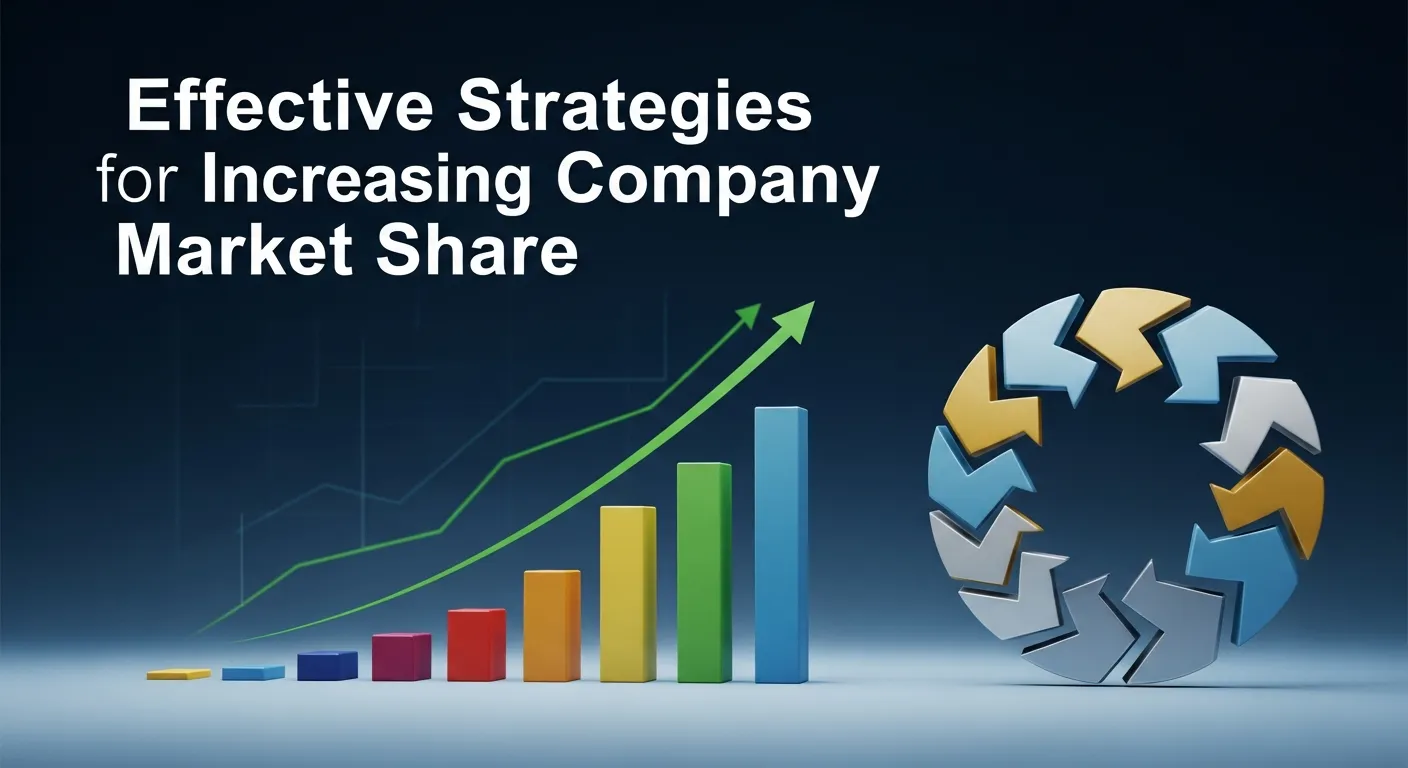
Unlock your business’s true potential. This guide reveals powerful tactics to outperform competitors, capture new audiences, and secure a dominant position in your industry through strategic growth.
This comprehensive guide explores effective strategies for increasing company market share, covering essential areas like competitive analysis, innovation, and digital marketing techniques. You will learn how to leverage customer retention strategies, optimize pricing, and build a strong brand identity to drive sustainable growth and profitability.
Understanding the Landscape: What is Market Share?
Before diving into the specific effective strategies for increasing company market share, it is crucial to understand what market share represents. Simply put, market share is the percentage of total sales in an industry generated by a specific company. It is a key indicator of your company’s competitiveness and health. A higher market share usually translates to greater scale economies, stronger brand recognition, and increased profitability.
However, gaining market share is a zero-sum game in a stagnant market; for you to win, someone else often has to lose. In a growing market, you must grow faster than the overall industry. Whether you are a startup looking to disrupt or an established enterprise aiming to consolidate power, the core principles of market positioning and execution remain vital.
1. Conduct a Deep Competitive Analysis

You cannot beat an opponent you do not understand. One of the most critical steps in deploying effective strategies for increasing company market share is conducting a rigorous competitive analysis. This goes beyond just knowing who your competitors are; it involves understanding their strengths, weaknesses, pricing structures, and marketing tactics.
- Identify Direct and Indirect Competitors: Don’t just look at the obvious players. Consider indirect competitors who solve the same problem differently.
- Analyze Their Digital Footprint: Use tools like SEMrush or Ahrefs to spy on their SEO strategies. What keywords are they ranking for? Where are they getting their backlinks?
- SWOT Analysis: Perform a Strengths, Weaknesses, Opportunities, and Threats (SWOT) analysis for your top three competitors. This will reveal gaps in their offerings that you can exploit.
By understanding the battlefield, you can position your brand to offer something your competitors cannot, which is the first step in executing effective strategies for increasing company market share.
2. Innovate Your Product or Service
Stagnation is the enemy of growth. To capture more of the market, you must offer superior value. Innovation is one of the most reliable effective strategies for increasing company market share. This doesn’t always mean inventing a brand-new technology; it can be a simple improvement in user experience, packaging, or delivery speed.
- Feature Expansion: Add features that customers have been clamoring for.
- Quality Improvement: Enhance the durability or performance of your product.
- Service Innovation: If you sell a commodity, differentiate through exceptional service.
Apple didn’t invent the smartphone, but they innovated the interface and ecosystem, capturing a massive share of the mobile market. Innovation creates a “moat” around your business, making it harder for competitors to steal your customers and easier for you to attract theirs.
3. Master Digital Marketing Techniques

In the modern era, visibility equals opportunity. Mastering digital marketing techniques is non-negotiable when discussing effective strategies for increasing company market share. If your potential customers can’t find you online, you don’t exist to them.
Search Engine Optimization (SEO)
Organic traffic is a long-term asset. By optimizing your website for high-intent keywords, you ensure that customers looking for solutions land on your page. This involves:
- On-Page SEO: Optimizing content, meta tags, and images.
- Technical SEO: Ensuring your site is fast, mobile-friendly, and crawlable.
- Content Marketing: Creating high-quality blog posts and guides that answer customer questions.
Pay-Per-Click (PPC) Advertising
While SEO takes time, PPC offers immediate visibility. Platforms like Google Ads allow you to bid on keywords related to your business. This is one of the most direct effective strategies for increasing company market share because it puts your brand in front of users who are ready to buy.
Social Media Marketing
Social platforms are where brands are built. Engaging content on Instagram, LinkedIn, or TikTok can drive brand awareness and direct traffic. Utilizing influencer marketing can also exponentially increase your reach by tapping into established audiences.
4. Implement Robust Customer Retention Strategies

Acquiring a new customer can cost five times more than retaining an existing one. Therefore, customer retention strategies are arguably more cost-efficient than acquisition strategies when it comes to building market share. If you are pouring water into a leaky bucket, you will never fill it.
- Loyalty Programs: Reward repeat purchases with points, discounts, or exclusive access.
- Excellent Customer Support: Solve problems quickly and empathetically. A happy customer is a walking advertisement.
- Personalized Communication: Use email marketing to send personalized recommendations based on past behavior.
By reducing churn, every new customer you acquire actually contributes to growth rather than just replacing a lost one. This stability allows you to focus resources on aggressive acquisition, making retention one of the most effective strategies for increasing company market share.
5. Optimize Your Pricing Strategy
Pricing is a powerful lever. Your pricing strategy must align with your market positioning. Are you the luxury option or the value leader?
- Penetration Pricing: Temporarily lowering prices to gain rapid adoption. This is risky but can be one of the most effective strategies for increasing company market share for new entrants.
- Value-Based Pricing: Pricing based on the perceived value to the customer rather than cost-plus.
- Bundling: Offering multiple products together at a discount to increase the average order value and lock customers into your ecosystem.
Analyze your competitors’ pricing carefully. Sometimes, a slight adjustment can make your product significantly more attractive to price-sensitive segments of the market.
6. Expand into New Markets
If you have saturated your current market, it is time to look outward. Geographic expansion or targeting new demographics are classic effective strategies for increasing company market share.
- Geographic Expansion: Taking your local success to a national or global level. This requires understanding local cultures and regulations, often referred to as Global Brand Localization.
- Demographic Expansion: If you primarily sell to millennials, can you adapt your messaging to appeal to Gen Z or Boomers?
- Diversification: Developing new products for your existing market or new products for new markets.
According to Wikipedia, diversification is a corporate strategy to enter into a new market or industry in which the business doesn’t currently operate, while also creating a new product for that new market. This high-risk, high-reward approach can lead to massive jumps in market share.
7. Strategic Acquisitions and Partnerships
Sometimes, the fastest way to grow is to buy growth. Mergers and acquisitions (M&A) allow you to instantly absorb a competitor’s customer base and technology. While capital-intensive, this is one of the fastest effective strategies for increasing company market share.
Alternatively, strategic partnerships can offer similar benefits with less risk. Co-branding in Marketing allows two brands to leverage each other’s audiences. For example, a fitness apparel brand partnering with a health food company creates mutual value and exposes both brands to new potential customers.
8. Focus on Brand Positioning and Awareness
Your brand is your promise. Strong brand positioning in marketing ensures that when a customer thinks of your industry, they think of you first.
- Brand Storytelling: Craft a narrative that resonates emotionally. Mastering Brand Storytelling connects your values with the customer’s identity.
- Consistency: Ensure your visual identity and tone of voice are consistent across all channels.
- Thought Leadership: Publish white papers, speak at conferences, and contribute to industry publications to establish authority.
Building brand equity takes time, but it creates a resilient market share that is resistant to price wars. When customers trust your brand, they are less likely to switch to a cheaper competitor.
9. Enhance Your Sales Process
Your marketing team generates leads, but your sales team closes them. An inefficient sales process is a bottleneck to growth. Streamlining this process is one of the most practical effective strategies for increasing company market share.
- Sales Training: Regularly train your team on negotiation, product knowledge, and closing techniques.
- CRM Implementation: Use Customer Relationship Management (CRM) tools like Salesforce or HubSpot to track leads and ensure no opportunity falls through the cracks.
- Incentive Structures: Align sales commissions with company goals. Reward not just volume, but also long-term contract value and customer fit.
10. Leverage Data and Analytics
In the digital age, gut feeling is not enough. You need data. Using tools like Google Analytics allows you to track user behavior, conversion rates, and campaign performance.
- A/B Testing: Test different headlines, landing pages, and ad creatives to see what converts best. Continuous optimization is key to implementing effective strategies for increasing company market share.
- Predictive Analytics: Use data to forecast trends and customer needs before they arise. Predictive Analytics in Trend Marketing can give you a first-mover advantage.
- Customer Feedback Loops: actively solicit and analyze feedback to identify areas for improvement.
Data-driven decision-making minimizes risk and maximizes the impact of your growth initiatives.
Comparison of Growth Tactics
To help you visualize which path might be best for your current stage, here is a comparison of different approaches to gaining market share.
|
Strategy |
Speed of Impact |
Cost |
Sustainability |
Key Risk |
|---|---|---|---|---|
|
Penetration Pricing |
High |
Medium |
Low |
Price wars, brand devaluation |
|
Product Innovation |
Low/Medium |
High |
High |
R&D failure, slow adoption |
|
Acquisitions (M&A) |
Very High |
Very High |
High |
Integration failure, culture clash |
|
Digital Marketing |
Medium |
Variable |
Medium |
Algorithm changes, ad fatigue |
|
Customer Retention |
Medium |
Low |
Very High |
Neglecting new acquisition |
The Role of Employee Engagement
Your employees are the engine of your company. Disengaged employees lead to poor customer service, lower productivity, and higher turnover—all of which hurt your market share. Creating a culture of excellence is an internal, yet highly effective strategy for increasing company market share.
- Internal Branding: Treat your employees as your first customers. Ensure they believe in the brand mission.
- Professional Development: Invest in their growth. Skilled employees drive innovation.
- Empowerment: Give frontline staff the authority to solve customer problems instantly.
Case Studies: Success in Action

Looking at real-world examples helps illustrate these effective strategies for increasing company market share.
- Netflix: By pivoting from DVD rentals to streaming and investing heavily in original content (Innovation), Netflix captured a dominant share of the entertainment market, decimating traditional cable.
- Amazon: Through relentless focus on customer experience and logistics (Service Innovation), Amazon became the default choice for online shopping. Their use of Amazon Brand Promotion and Prime membership (Retention) creates a flywheel effect.
- Coca-Cola: Through consistent emotional branding and global distribution, Coca-Cola maintains a massive market share despite intense competition. Their Brand Storytelling focuses on happiness and connection.
Navigating Challenges
Implementing effective strategies for increasing company market share is not without hurdles.
- Regulatory Scrutiny: As you grow, you may face antitrust concerns.
- Operational Strain: Rapid growth can break your supply chain or customer service infrastructure.
- Competitor Retaliation: Your competitors will not sit idly by. Be prepared for counter-attacks in the form of price cuts or negative PR.
Building Brand Resilience is essential to weathering these storms. This involves having crisis management plans in place and maintaining a strong financial reserve.
The Importance of Adaptability
The market is a living organism. Consumer preferences change, technologies evolve, and new competitors emerge. The most effective strategies for increasing company market share today might be obsolete tomorrow.
- Agile Methodology: Adopt agile practices in marketing and product development to pivot quickly.
- Trend Monitoring: Keep a pulse on Trend Marketing to spot shifts in consumer behavior early.
- Continuous Learning: Foster a culture of curiosity where failure is seen as a learning opportunity.
Integrating Offline and Online Efforts
While digital is huge, don’t neglect the physical world. Integrated Marketing ensures that your online and offline efforts reinforce each other.
- Events: Trade shows and conferences are great for B2B relationship building.
- Direct Mail: In a digital world, a physical letter can stand out.
- OOH Advertising: Billboards and transit ads can build broad brand awareness in specific geographies.
A cohesive strategy that spans all touchpoints is crucial for deploying effective strategies for increasing company market share.
Conclusion
Increasing market share is a multifaceted endeavor that requires a blend of creativity, data analysis, and ruthless execution. By employing effective strategies for increasing company market share—such as deep competitive analysis, relentless product innovation, and mastering digital marketing techniques—you can carve out a larger slice of the pie. Remember, growth is not just about acquiring new customers; it’s about keeping the ones you have through superior customer retention strategies and building a brand that resonates. Start today by analyzing your current position, identifying the gaps, and relentlessly pursuing the opportunities that others miss.
FAQs
1. What is the fastest way to increase market share?
The fastest way is typically through acquisition (M&A) or aggressive penetration pricing. Buying a competitor instantly adds their market share to yours. Lowering prices can rapidly attract price-sensitive customers, though it impacts margins. However, for sustainable growth, a mix of innovation and marketing is better.
2. How does customer retention affect market share?
Customer retention protects your existing market share. It is far cheaper to keep a customer than to get a new one. High retention rates mean that your marketing efforts for new customer acquisition result in net growth rather than just replacing lost business. It stabilizes your revenue base.
3. Can a small business increase market share against large competitors?
Yes, by focusing on niche markets and agility. Small businesses can offer personalized service, faster innovation, and specialized products that large corporations cannot match. Utilizing local SEO and community engagement are effective strategies for increasing company market share for smaller players.
4. What role does digital marketing play in market share growth?
Digital marketing allows for precise targeting and measurement. It levels the playing field, allowing companies to reach specific demographics efficiently. SEO, PPC, and social media are essential tools for building awareness and driving conversions, directly impacting market share.
5. Is lowering prices always a good strategy to gain market share?
No. While it can drive volume, it can trigger price wars where everyone loses profits. It can also devalue your brand perception. It is best used strategically as a short-term tactic or for entry into a new market, rather than a long-term strategy.
6. How often should I conduct a competitive analysis?
You should conduct a deep dive at least annually, but monitor key competitors quarterly or even monthly. Tools like Backlinko suggest continuous monitoring of competitors’ backlink profiles and content strategies to stay ahead in SEO.
7. What is the difference between market share and brand awareness?
Market share is the percentage of sales you have in the market. Brand awareness is the percentage of the target audience that knows your brand exists. You can have high awareness but low market share if your product doesn’t convert interest into sales.
8. How does innovation drive market share?
Innovation differentiates your product. If you solve a problem better, faster, or cheaper than the competition through technology or design, customers will naturally migrate to you. It creates a competitive advantage that is hard to replicate quickly.
9. Why is employee engagement important for market share?
Engaged employees provide better customer service, which improves retention. They are also more productive and innovative. A toxic culture leads to high turnover and poor performance, which eventually erodes market share as customers experience the decline in quality.
10. What metrics should I track to measure market share growth?
Track your total revenue relative to total industry revenue. Also, monitor unit sales, share of voice (media mentions), website traffic share compared to competitors, and customer acquisition cost vs. lifetime value.