Unlock the secret to building deeper customer connections. Brand archetypes in marketing provide a proven framework to define your identity, humanize your business, and drive lasting loyalty.
This comprehensive guide explores the power of brand archetypes in marketing and how they shape consumer perception. We will dissect the 12 classic archetypes—from the Hero to the Caregiver—providing real-world examples and actionable strategies. You will learn how to align your brand personality with audience desires, leverage emotional branding, and use these personas to create a cohesive, high-impact marketing strategy that stands out in a crowded digital landscape.
The Psychology Behind Brand Archetypes in Marketing
At the core of every successful brand lies a story that resonates on a subconscious level. Brand archetypes in marketing are not just fancy labels; they are rooted in the psychological theories of Carl Jung. Jung believed that humans share a collective unconscious, populated by universal symbols and character types that we instinctively understand. When a brand embodies one of these archetypes effectively, it bypasses the logical brain and connects directly with the consumer’s emotions.
In an era of digital noise, brand perception in marketing is everything. Consumers are no longer just buying products; they are buying into identities and values. Brand archetypes in marketing act as a shortcut to meaning. They help answer the fundamental question: “Who are you, and why should I care?” By anchoring your brand personality in marketing to a familiar archetype, you make your brand instantly recognizable and relatable. This is the essence of neuromarketing techniques—using psychology to influence buyer behavior.
Why is this crucial for brand building and performance marketing? Because consistency builds trust. If your messaging is scattered—sometimes funny, sometimes serious, sometimes rebellious—consumers get confused. A defined archetype acts as a compass for your brand voice strategy, ensuring that every tweet, email, and ad aligns with a singular, powerful persona. This consistency is the golden rule for building brand resilience and long-term equity.
The 12 Brand Archetypes: A Detailed Breakdown
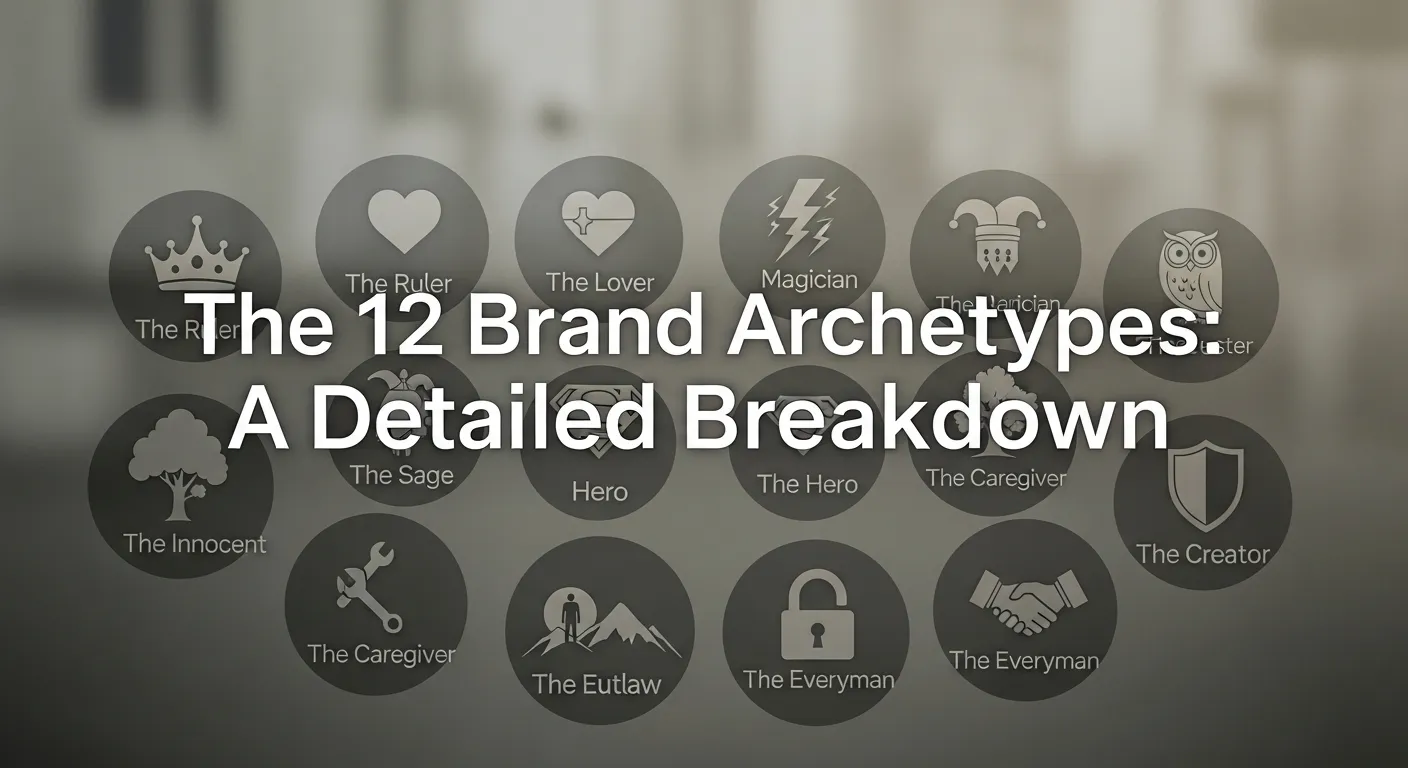
To master brand archetypes in marketing, we must explore the 12 distinct personalities. These are generally categorized into four groups based on their core motivations: Structure, Spirituality, Ego, and Freedom.
Group 1: The Order & Structure Seekers
1. The Caregiver (The Altruist)
- Motto: Love your neighbor as yourself.
- Goal: To help others and protect people from harm.
- Strategy: Doing things for others.
- Brand Voice: Compassionate, warm, reassuring, and maternal.
The Caregiver is driven by the desire to nurture. In brand archetypes in marketing, this persona is common among nonprofits, healthcare, and baby products. They promise safety and support. - Example: Johnson & Johnson, WWF, TOMS.
- Marketing Tip: Focus on inclusive brand strategies and emotional branding. Highlight how your product makes life safer or easier for loved ones.
2. The Ruler (The Leader)
- Motto: Power isn’t everything, it’s the only thing.
- Goal: Create a prosperous, successful family or community.
- Strategy: Exercise power and leadership.
- Brand Voice: Commanding, refined, articulate, and authoritative.
The Ruler desires control and stability. They offer high-quality products that help customers gain or maintain power. This is a staple in luxury brand marketing and high-end automotive industries. - Example: Mercedes-Benz, Rolex, Microsoft.
- Marketing Tip: Use imagery that suggests prestige and exclusivity. Your brand positioning in marketing should emphasize status, success, and industry dominance.
3. The Creator (The Artist)
- Motto: If you can imagine it, it can be done.
- Goal: To realize a vision.
- Strategy: Develop artistic control and skill.
- Brand Voice: Inspirational, daring, provocative, and unique.
The Creator fears mediocrity. They are innovators who help customers express themselves. This archetype is powerful in design, technology, and marketing agencies. - Example: Lego, Adobe, Apple.
- Marketing Tip: Focus on interactive storytelling in branding. Encourage user-generated content and show how your tool unlocks the user’s potential.
Group 2: The Social Connectors
4. The Everyman (The Regular Guy/Gal)
- Motto: All men and women are created equal.
- Goal: To belong and fit in.
- Strategy: Develop ordinary solid virtues, be down to earth.
- Brand Voice: Humble, honest, practical, and friendly.
The Everyman rejects pretension. They want to be one of the people. This is common in CPG brand marketing (Consumer Packaged Goods) and family-oriented brands. - Example: IKEA, Gap, Target.
- Marketing Tip: Avoid luxury brand marketing tactics. Focus on affordability, reliability, and family branding in marketing. Use inclusive language and relatable scenarios.
5. The Jester (The Entertainer)
- Motto: You only live once.
- Goal: To have a great time and lighten up the world.
- Strategy: Play, make jokes, be funny.
- Brand Voice: Enthusiastic, self-deprecating, irreverent, and fun.
The Jester lives in the moment. They fear boredom above all else. Brands using this archetype often go viral because they understand meme marketing 2.0 and digital marketing success stories. - Example: Old Spice, Dollar Shave Club, M&Ms.
- Marketing Tip: Don’t be afraid to be silly. High energy and humor are key. This archetype excels in social media marketing to increase brand awareness.
6. The Lover (The Romantic)
- Motto: You’re the only one.
- Goal: Being in a relationship with the people, work, and surroundings they love.
- Strategy: Become more and more physically and emotionally attractive.
- Brand Voice: Affectionate, indulgent, sensual, and intimate.
The Lover seeks intimacy. While often associated with romance, it also applies to brands that appreciate beauty and sensory pleasure. Sensory branding and emotional branding are critical here. - Example: Victoria’s Secret, Chanel, Godiva.
- Marketing Tip: Use the psychology of color in branding (deep reds, golds, blacks). Focus on the sensory experience of the product and how it makes the user feel special.
Group 3: The Risk Takers & Changemakers
7. The Hero (The Warrior)
- Motto: Where there’s a will, there’s a way.
- Goal: Exert mastery in a way that improves the world.
- Strategy: To be as strong and competent as possible.
- Brand Voice: Motivational, confident, disciplined, and direct.
The Hero wants to prove their worth through courageous action. This is the archetype of brand marketing vs performance marketing—it’s all about results. - Example: Nike, FedEx, Duracell.
- Marketing Tip: Challenge your audience. Use high-contrast visuals and powerful calls to action. Frame your product as the tool that helps the customer overcome adversity.
8. The Outlaw (The Rebel)
- Motto: Rules are made to be broken.
- Goal: Overturn what isn’t working.
- Strategy: Disrupt, destroy, or shock.
- Brand Voice: Rebellious, gritty, raw, and aggressive.
The Outlaw appeals to the hidden desire for revolution. They are the misfits and the disruptors. This archetype is perfect for brands challenging the status quo or the truth behind branded sustainability and environmental harm. - Example: Harley-Davidson, Virgin, Diesel.
- Marketing Tip: Take a stand. Don’t be afraid of controversy. Brand distinctiveness and salience are achieved here by being different from the “safe” competitors.
9. The Magician (The Visionary)
- Motto: I make things happen.
- Goal: To make dreams come true.
- Strategy: Develop a vision and live by it.
- Brand Voice: Mystical, reassuring, transformative, and charismatic.
The Magician promises transformation. They turn problems into solutions. This is often seen in technology and wellness brands that offer “magical” ease of use. - Example: Disney, Tesla, Dyson.
- Marketing Tip: Focus on the “wow” factor. Use digital marketing strategies that highlight transformation and vision.
Group 4: The Knowledge Seekers
10. The Innocent (The Idealist)
- Motto: Free to be you and me.
- Goal: To be happy.
- Strategy: Do things right.
- Brand Voice: Optimistic, honest, pure, and simple.
The Innocent fears doing something wrong. They are associated with goodness, nostalgia, and purity. Green marketing and sustainable branding strategies often align well here. - Example: Dove, Coca-Cola, Aveeno.
- Marketing Tip: Keep it simple. Avoid complex jargon. Use imagery of nature, happiness, and simplicity. Lean into nostalgia in digital branding.
11. The Explorer (The Seeker)
- Motto: Don’t fence me in.
- Goal: To experience a better, more authentic, more fulfilling life.
- Strategy: Journey, seek out and experience new things.
- Brand Voice: Exciting, fearless, daring, and authentic.
The Explorer yearns for freedom. They help people feel free and nonconformist. This fits outdoor brands and travel companies perfectly. - Example: The North Face, Jeep, Patagonia.
- Marketing Tip: Focus on the journey, not just the destination. Use breathtaking visuals and user experience and branding that feels adventurous.
12. The Sage (The Scholar)
- Motto: The truth will set you free.
- Goal: To use intelligence and analysis to understand the world.
- Strategy: Seek out information and knowledge; self-reflection and understanding thought processes.
- Brand Voice: Knowledgeable, assured, guiding, and analytical.
The Sage believes that knowledge is power. They are the experts. This is common in news organizations, universities, and consulting firms. - Example: Google, BBC, The Wall Street Journal.
- Marketing Tip: Provide high-value content. Use white papers, webinars for B2B lead generation, and data-backed insights. Prove your expertise.
How to Identify Your Brand Archetype
Choosing one of the brand archetypes in marketing isn’t about picking the one you like best; it’s about discovering the soul of your company. It requires a deep dive into your major objective of all brand marketing.
Step 1: Analyze Your Mission and Values
Look at your mission statement. Why does your company exist beyond making money? If your goal is to “disrupt the industry,” you might be an Outlaw or Creator. If it is to “empower professionals,” you might be a Sage or Ruler. This aligns with brand purpose development.
Step 2: Understand Your Audience
Who are you trying to reach? A customer-centric brand development strategy requires mirroring the desires of your audience. If your audience seeks safety and reliability (like new parents), a Jester archetype will alienate them. They need a Caregiver. Use AI-powered brand analysis and tools like Google Analytics to understand demographic and psychographic data.
Step 3: Analyze Your Competitors
Conduct a competitive brand analysis. If everyone in your industry is playing the Sage (serious, data-driven), there might be an opening for a Jester (fun, accessible) or an Everyman (relatable). This is how you achieve brand distinctiveness and salience. Different archetypes allow you to occupy a unique space in the market, known as brand positioning in marketing.
Step 4: The “Cocktail Party” Test
Imagine your brand is a person at a party. How do they act? Are they the loud life of the party (Jester)? The person in the corner having a deep philosophical conversation (Sage)? The one making sure everyone has a drink (Caregiver)? This visualization helps distinct brand personality in marketing.
Implementing Brand Archetypes in Your Marketing Strategy
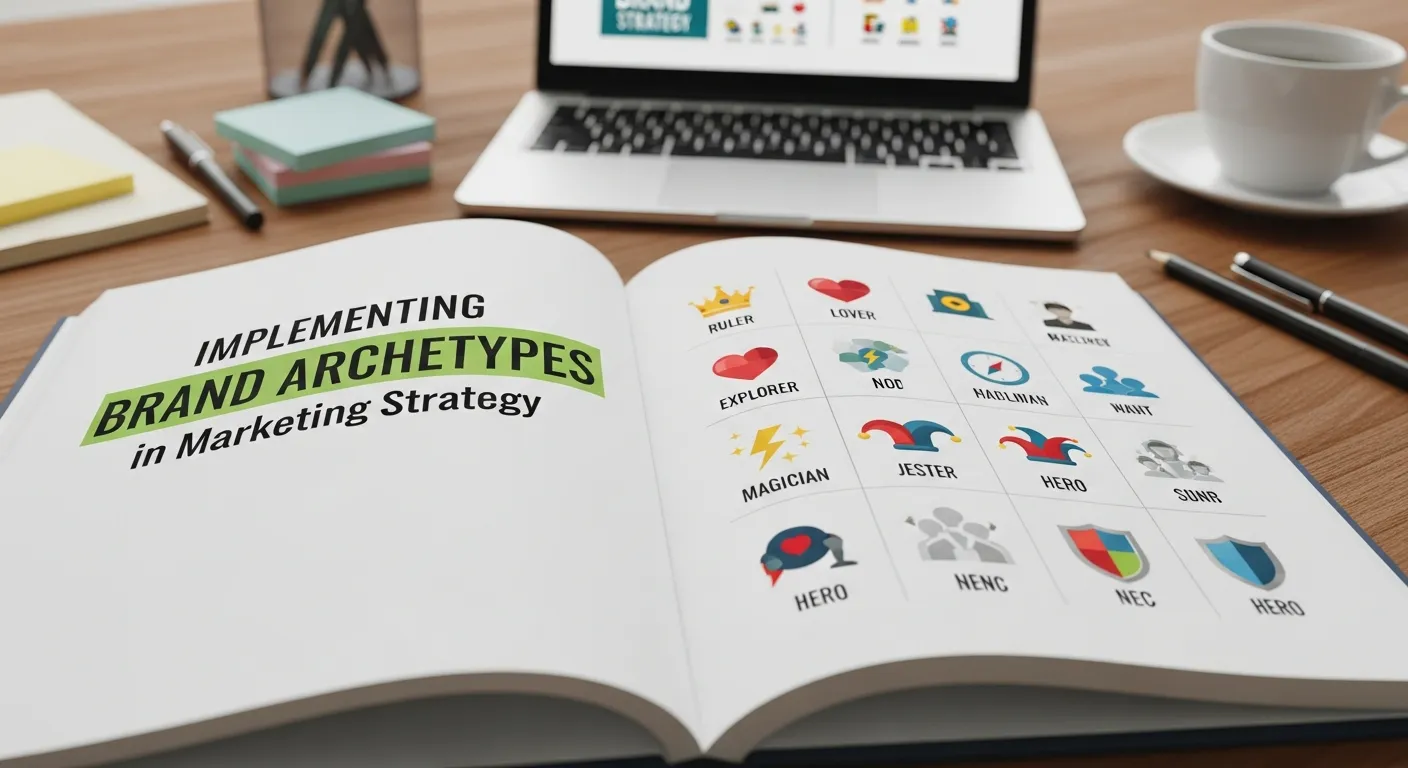
Once you have identified your archetype, the real work begins: implementation. This is where brand archetypes in marketing transition from theory to practice.
Visual Identity and Design
Your archetype dictates your aesthetic.
- Colors: A Ruler might use black and gold (luxury), while an Innocent uses white and soft pastels. This ties into the psychology of color in branding.
- Typography: An Outlaw uses bold, jagged fonts; a Caregiver uses rounded, soft typefaces.
- Imagery: An Explorer uses vast landscapes; a Sage uses charts and clean, minimalist offices.
These elements create sensory congruence mapping, ensuring your visual identity matches your message.
Content Strategy and Voice
Your brand voice strategy must be filtered through your archetype.
- The Sage: Writes long-form, researched articles (like this one!) and uses data from sources like Wikipedia or SEMrush to build authority.
- The Jester: Uses memes, short videos, and witty copy on social media.
- The Caregiver: Writes empathetic emails and helpful “how-to” guides.
This consistency across channels is vital for integrated brand promotion.
Customer Interaction
How you handle customer service is part of brand archetypes in marketing.
- A Hero brand fixes the problem aggressively and efficiently (“We solved it!”).
- A Caregiver brand listens and empathizes (“We are so sorry you’re going through this”).
- An Everyman brand treats the customer like a friend (“Hey, let’s get this sorted for you”).
This influences brand trust and customer perception.
Case Studies: Brand Archetypes in Action
To truly understand brand archetypes in marketing, let’s look at digital marketing success stories through the lens of archetypes.
Nike (The Hero)
Nike doesn’t just sell shoes; they sell the ability to overcome. Their “Just Do It” slogan is the ultimate Hero mantra. Their marketing features athletes pushing past pain and adversity. They use high-contrast photography and inspirational music. By consistently embodying the Hero, they have built immense brand equity in marketing. They don’t sell the product; they sell the result of the product—victory.
Apple (The Creator)
Apple’s “Think Different” campaign is the epitome of the Creator archetype. They position their products as tools for unlocking creativity. Their design is sleek, minimalist, and innovative. They don’t talk about specs (Sage) or price (Everyman); they talk about imagination. This brand positioning in marketing allows them to charge a premium because they are selling an identity of innovation.
Old Spice (The Jester)
Old Spice was a dusty, “old man” brand until they pivoted to the Jester. Their “The Man Your Man Could Smell Like” campaign was absurd, fast-paced, and hilarious. It broke every rule of traditional hygiene advertising. By embracing the Jester, they revitalized the brand and captured a younger audience, showcasing the power of rebranding case studies.
Integrating Archetypes with Modern Digital Trends

As we move into 2026, brand archetypes in marketing must adapt to new technologies and trends.
AI and Personalization
With the rise of AI in branding, archetypes help guide the algorithms. If you use a chatbot, its personality should match your archetype. A Jester chatbot should crack jokes; a Sage chatbot should provide detailed data. This ensures brand voice in the era of conversational AI and chatbots remains consistent.
Sustainability and The Innocent/Caregiver
Sustainable branding strategies are no longer optional. Brands adopting the Caregiver or Innocent archetypes have a natural advantage here. However, any archetype can be sustainable. An Explorer protects nature to explore it; a Hero fights climate change. Authentic green marketing requires aligning your sustainability efforts with your archetype’s motivation to avoid accusations of the truth behind branded sustainability and environmental harm (greenwashing).
Influencer Marketing
When choosing influencers, look for archetype alignment. A Ruler brand shouldn’t partner with a Jester influencer (unless it’s a very specific subversive campaign). An Explorer brand should partner with travel bloggers and outdoor enthusiasts. This ensures the ROI of influencer marketing is maximized because the audience overlap is psychological, not just demographic.
The Metaverse and Virtual Worlds
As we explore mastering metaverse branding, archetypes provide a blueprint for virtual spaces. A Magician brand might create a fantastical, gravity-defying virtual store. An Everyman brand might create a virtual replica of a cozy living room. Archetypes ground the virtual experience in emotional reality.
Common Pitfalls in Using Brand Archetypes
While brand archetypes in marketing are powerful, there are traps to avoid.
- The “Confused Brand” Syndrome: Mixing archetypes too heavily. Trying to be the Jester (funny) and the Ruler (exclusive) often leads to a disjointed message. Stick to a primary archetype (80%) and maybe a secondary one (20%) for nuance. This preserves brand consistency.
- Stereotyping: Using the archetype too rigidly can make your brand feel like a caricature. A Sage doesn’t have to be boring. A Hero doesn’t always have to be aggressive. Add depth to your persona.
- Disconnect from Reality: If you market yourself as a Caregiver but have terrible customer service, you create a “brand gap.” This destroys brand authenticity. Your internal culture (internal branding) must match your external archetype.
- Ignoring Data: Don’t pick an archetype just because you like it. Use data-driven inbound marketing to validate that this personality resonates with your actual customers. Use tools like Ahrefs to see what content performs best in your niche.
Measuring the Impact of Your Archetype
How do you know if your use of brand archetypes in marketing is working? You need to track brand equity KPIs.
- Brand Awareness: Is your unique personality making you more memorable?
- Engagement: Are people interacting with your content more because it feels more human?
- Sentiment Analysis: Use social listening as a brand strategy tool. Are people using words associated with your archetype when they talk about you?
- Customer Loyalty: Are you building a tribe? Brands with strong archetypes often have higher retention rates because consumers feel an emotional bond.
By consistently applying your archetype, you move from being a commodity to being a beloved brand. You stop competing on price and start competing on meaning. This is the major objective of all brand marketing: to become irreplaceable.
Conclusion
In the crowded marketplace of 2026, standing out requires more than just a great product; it requires a soul. Brand archetypes in marketing offer the blueprint for finding that soul. Whether you are the Rebel shaking up the industry or the Caregiver offering a helping hand, defining your archetype is the first step toward marketing success. By humanizing your brand, you build trust, foster loyalty, and create a narrative that consumers want to be a part of. Embrace your personality, stay consistent, and watch your brand transform from a business into a legacy.
FAQs
1. What are brand archetypes in marketing?
Brand archetypes in marketing are a framework of 12 personalities based on Carl Jung’s psychological theories. They represent universal character types (like the Hero, the Sage, or the Jester) that humans instinctively understand. Marketers use them to define a brand’s voice, visual identity, and values to create a deeper emotional connection with the audience.
2. Why are brand archetypes important for small businesses?
For small businesses, resources are limited. Brand archetypes in marketing act as a shortcut to building trust. They help small brands differentiate themselves from larger competitors by having a distinct personality. A clear archetype helps in brand positioning in marketing, making marketing efforts more consistent and effective without a massive budget.
3. Can a brand have more than one archetype?
Yes, but with caution. Most successful brands have one dominant archetype (about 70-80% of their identity) and one secondary archetype (20-30%) to add depth. For example, a brand might be primarily a Sage (expert) but have secondary Jester traits (witty) to make the information more accessible. Mixing too many leads to a confused brand voice strategy.
4. How do I choose the right archetype for my brand?
To choose the right archetype, analyze your mission, your product’s function, and your target audience’s desires. Ask: What problem do I solve? If you solve it through knowledge, you might be a Sage. If you solve it through structure, you might be a Ruler. Use competitive brand analysis to see where there is a gap in the market personalities.
5. Do brand archetypes affect SEO?
Indirectly, yes. A strong archetype leads to consistent content and higher user engagement. When users spend more time on your site because they connect with your brand storytelling, signals are sent to search engines that your content is valuable. Furthermore, using specific language associated with your archetype can help you rank for LSI keywords and semantic terms related to your niche.
6. What is the difference between brand personality and brand archetype?
The archetype is the foundation or the “category” of the personality. The personality is the specific execution. For example, the “Jester” is the archetype. The brand personality in marketing determines what kind of Jester—are you sarcastic, slapstick, or witty? The archetype provides the framework; the personality fills in the details.
7. How do archetypes relate to customer loyalty?
Archetypes operate on an emotional level. When a customer identifies with a brand’s archetype, they feel understood. A “Hero” customer buys Nike because they see themselves as someone who overcomes challenges. This emotional alignment creates brand loyalty that goes beyond price or features, turning customers into advocates.
8. Can a brand change its archetype?
Yes, this is called a rebrand. However, it is risky and should be done carefully. Brands usually change archetypes when their current one is no longer relevant or when they want to target a completely new demographic. Old Spice successfully switched from a Ruler/Sage mix to a Jester. See rebranding case studies for examples of how to do this correctly.
9. How do I use brand archetypes in social media marketing?
Your archetype dictates your content pillars and tone on social media. A Caregiver might share user-generated content of people helping each other. An Explorer might share breathtaking travel photos. A Jester might jump on the latest TikTok trends. It ensures your social presence contributes to integrated brand promotion rather than just being noise.
10. Are brand archetypes relevant for B2B marketing?
Absolutely. B2B buyers are still humans driven by emotion and psychology. While B2B brands often lean toward the Sage, Ruler, or Creator archetypes, they can stand out by adopting less common ones. A B2B security firm acting as a Hero or a B2B design agency acting as a Magician can be very powerful in B2B brand differentiation.